







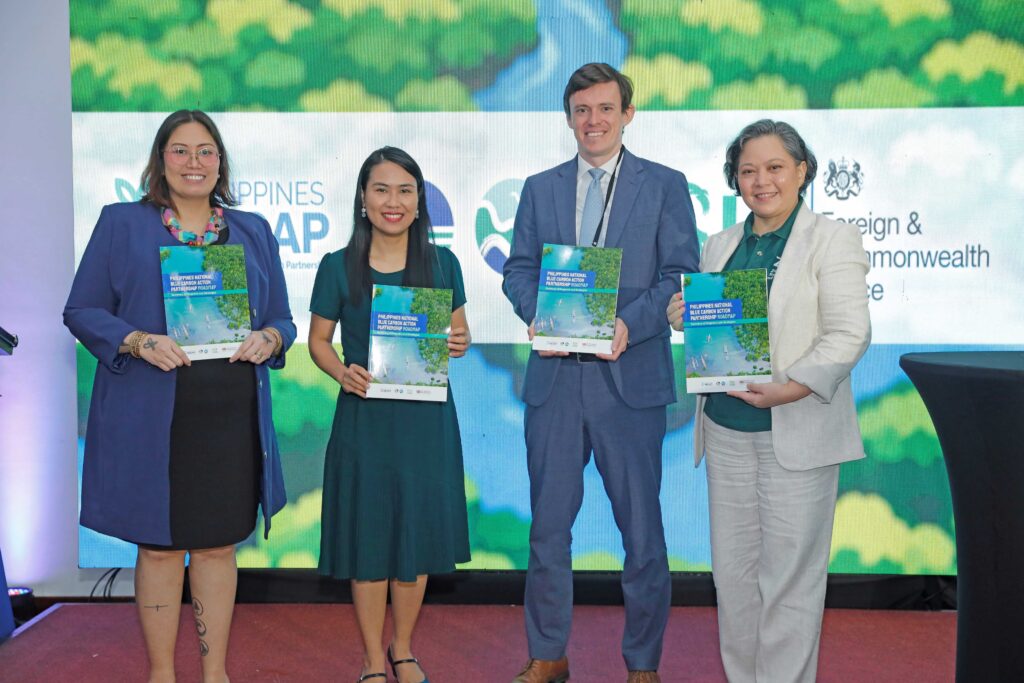
April 21, 2026 · DENRPH Laws & FrameworksDepartment of Environment and Natural Resources (DENR)The Philippine executive department managing forests, protected areas, mining permits, and pollution control. It is the primary regulatory counterparty for environmental compliance, natural capital valuation, and the issuance of permits governing resource extraction and land-use changes.Read more in the Glossary → took another step forward solidifying its intent to enter the voluntary carbon marketGlobal EssentialsVoluntary carbon market (VCM)A decentralized market where private actors buy and sell carbon credits outside of mandatory compliance regimes.Read more in the Glossary →, as the National Blue Carbon Action Partnership (NBCAP) Roadmap, developed by Zoological Society of London (ZSL) Philippines, was formally handed over to the agency.
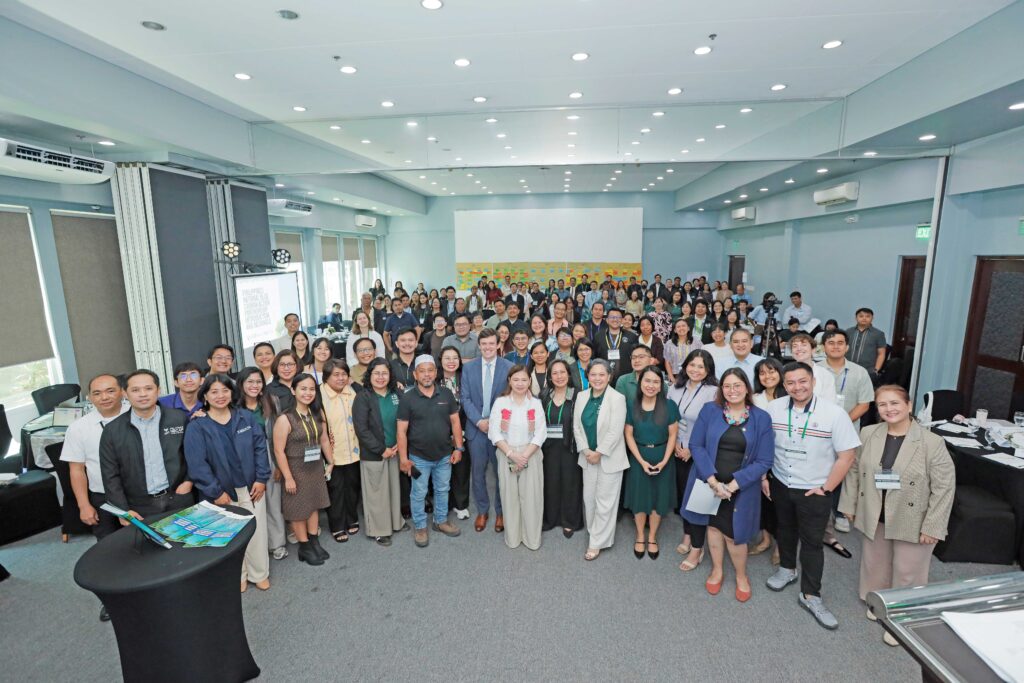
The handover took place at the Philippine MangroveLocal Climate & EcologyMangrovesCoastal wetland ecosystems capable of sequestering massive amounts of blue carbon while buffering coastlines against storm surges.Read more in the Glossary → Conference 2026 on March 26 in Quezon City. ZSL Philippines developed the Roadmap as Secretariat, with funding from the UK COAST Programme under the Blue Planet Fund and support from the World Economic Forum.
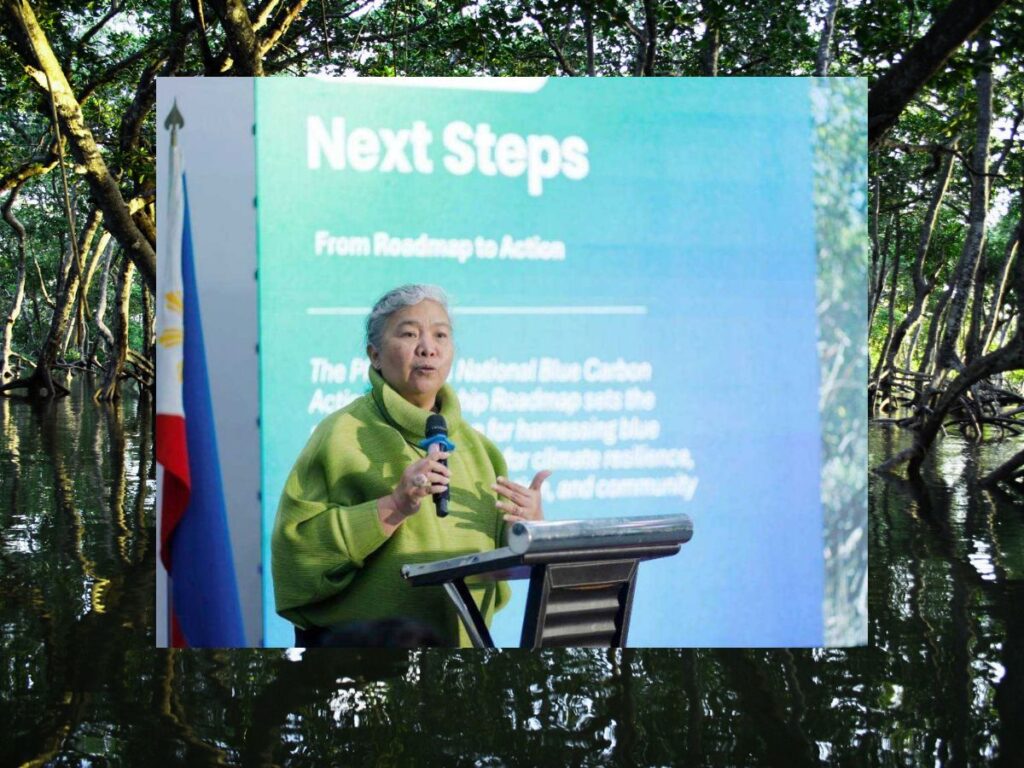
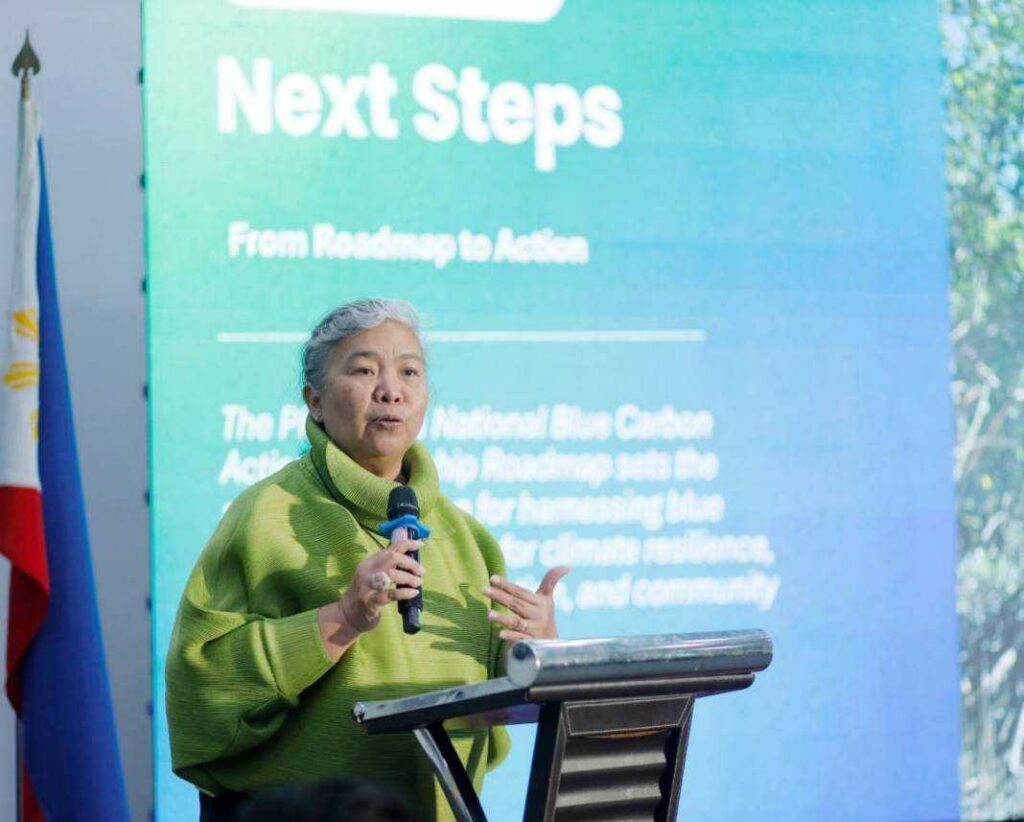
“This roadmap reflects the Philippines’ strong commitment to advancing blue carbonLocal Climate & EcologyBlue carbonCarbon sequestered and stored by coastal and marine ecosystems, primarily mangroves, seagrass meadows, and tidal marshes.Read more in the Glossary → accounting and delivering tangible impact for coastal communities,” said DENR Undersecretary Analiza Rebuelta-Teh, addressing the audience.
The NBCAP Roadmap covers the Philippines’ mangroves, seagrassLocal Climate & EcologySeagrass meadowsSubmerged marine flowering plants that provide critical nursery habitats and sequester blue carbon. Often overlooked in favor of mangroves and corals, their preservation is essential for comprehensive coastal ecosystem management.Read more in the Glossary → beds, and tidal marshes; ecosystems that store carbon, protect coastlines. The country has approximately 327,000 hectares of mangroves.
According to DAO 2026-02, which announced the intent to enter the voluntary carbon marketplace on January 20, DENR-BMB will be in charge of the “implementation for blue carbon ecosystems, including mangrove restoration and seagrass beds.” During the press conference, DENR Biodiversity Management Bureau Assistant Director Mariglo Laririt highlighted that it cannot be a standalone effort given the government’s overall push for green projects and must require coordination with other agencies, including the Department of EnergyPH Laws & FrameworksDepartment of Energy (DOE)The Philippine agency governing the national power mix, energy security, and fuel exploration. It directs the energy transition through renewable energy auctions, grid modernization policies, and the regulation of fossil fuel phase-outs, directly shaping the investment landscape for power generation and storage infrastructure.Read more in the Glossary →.
“There are renewable energies that are coming online that may coincide, location-wise, with what has been targeted as carbon projects sites. Napakarami po. Napakaraming considerations.”
Studies show that carbon markets globally face challenges
A carbon marketplace is a trading system—similar to any financial marketplace—where carbon credits are bought and sold to companies to compensate for greenhouse gas emissions. Creating a carbon marketplace in the Philippines requires national mechanisms for sequestration (or the act of capturing carbon from ecosystems like mangroves), measurement, and pricing.
Carbon markets are also notorious for creating “phantom credits,” what is known as “non-additionality.” Studies have shown that 80% of the top 50 carbon offset projects globally fail, and were found to be “environmentally worthless.” (Read: Explainer: What the Philippines needs to know about carbon markets)
In 2023, investigations into the world’s lead carbon standard found that 90% of their rainforest credits were effectively “phantom credits.”
When asked whether these challenges were being taken into consideration, Laririt responded that there were benefits to “not [being] in the forefront of carbon markets.”
“We now have the benefit of being able to observe how it’s moving along in other [countries],” Laririt said. “And just say the time comes when we deem it not compatible with the Philippines, then we should have all these other tools available to us. We would still have the tools for laying out our resources. Because this is what they are, they are resources. And then we can again think about what is the best way.”
Can science serve as the foundation for a national registry?
During the conference, technical experts made it clear that the NBCAP Roadmap recommends prioritizing science-based approaches. It puts forward the Blue Carbon Quantification Protocol (BCQP), developed by Filipino blue carbon scientists and practitioners, to establish the national standard for carbon assessment.
An official national carbon assessment or national registry does not exist at this point in time. During the conference, DENR outlined the following next steps: convening a Leadership Steering Committee and Technical Working Group in April, then formalizing the structure through a DENR Administrative Order or Executive Order.
Dr. Severino Salmo III, one of the scientists consulted on the NBCAP Roadmap, said the blue carbon projects could be a “game-changer for mangrove conservation and restoration in the country,” citing that the roadmap has been in the works for over 10 years.
The NBCAP Roadmap, if followed, encourages DENR to empower local scientists and communities and prioritize science-based evidence and mechanisms, which has so far been a challenge for carbon markets globally.
When asked about indicators on successful collaboration with scientists, Dr. Salmo said: “The direct indicator should be the number and quality of blue carbon-related publications that should be authored by Filipino scientists. The studies should be conducted in more representative sites, not [just a] few sites. Of course, if there are publications, these publications should be used in policy formulation.”