







April 27, 2026 · There is something remarkable about the people who build mission-driven organizations. They typically don’t do it for the salary. In fact, many are doing it without one. They fund the work themselves, recruit from their personal networks, and carry the weight of their mission through stretches when no one is watching and nothing is working. They keep going not because it is easy but because stepping away feels unthinkable.
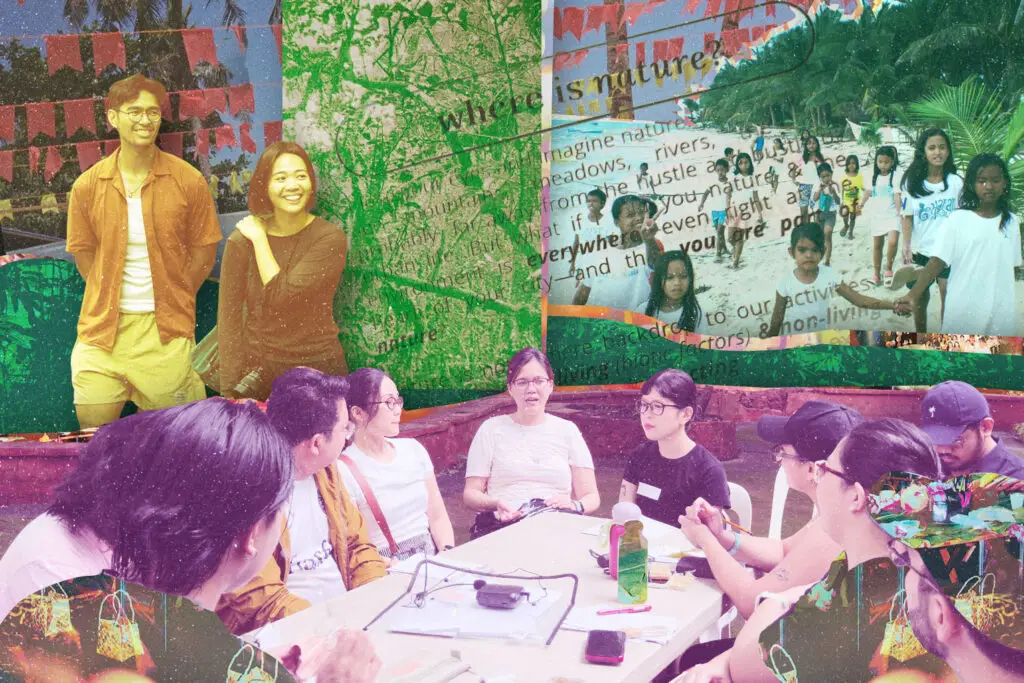
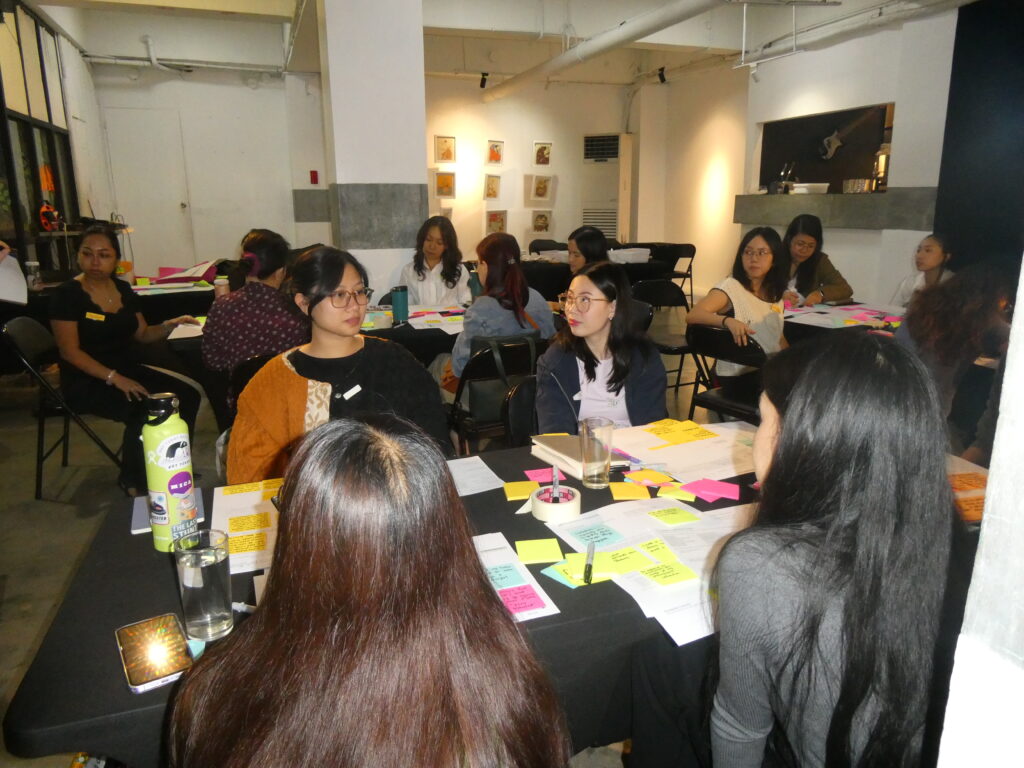
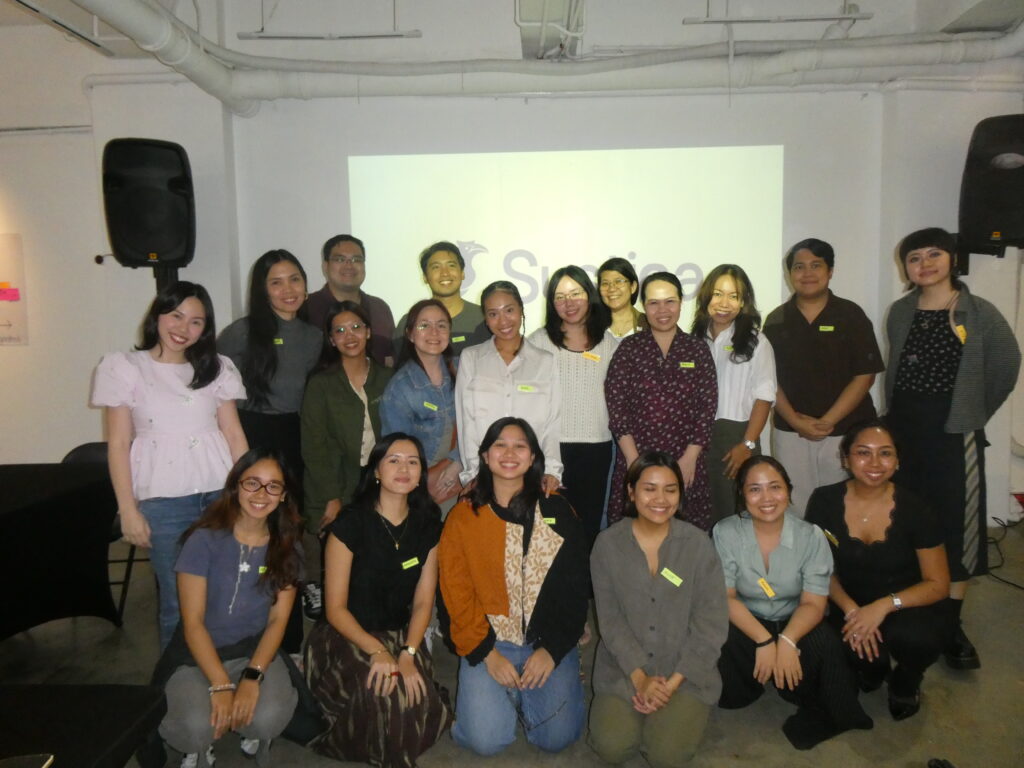
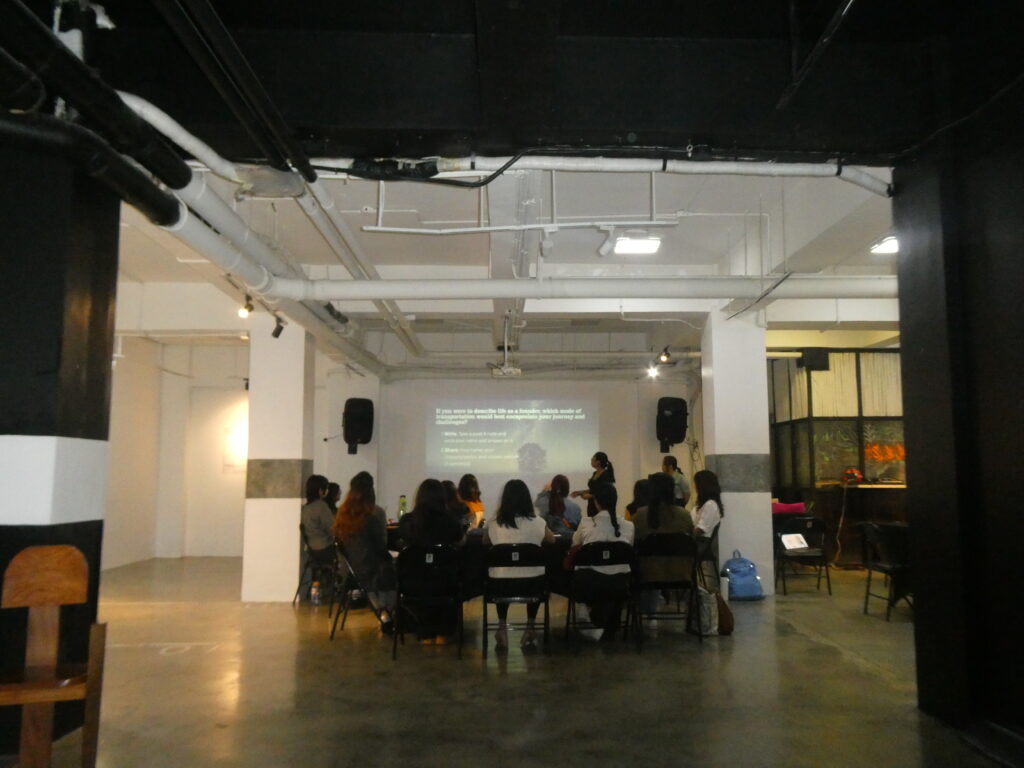
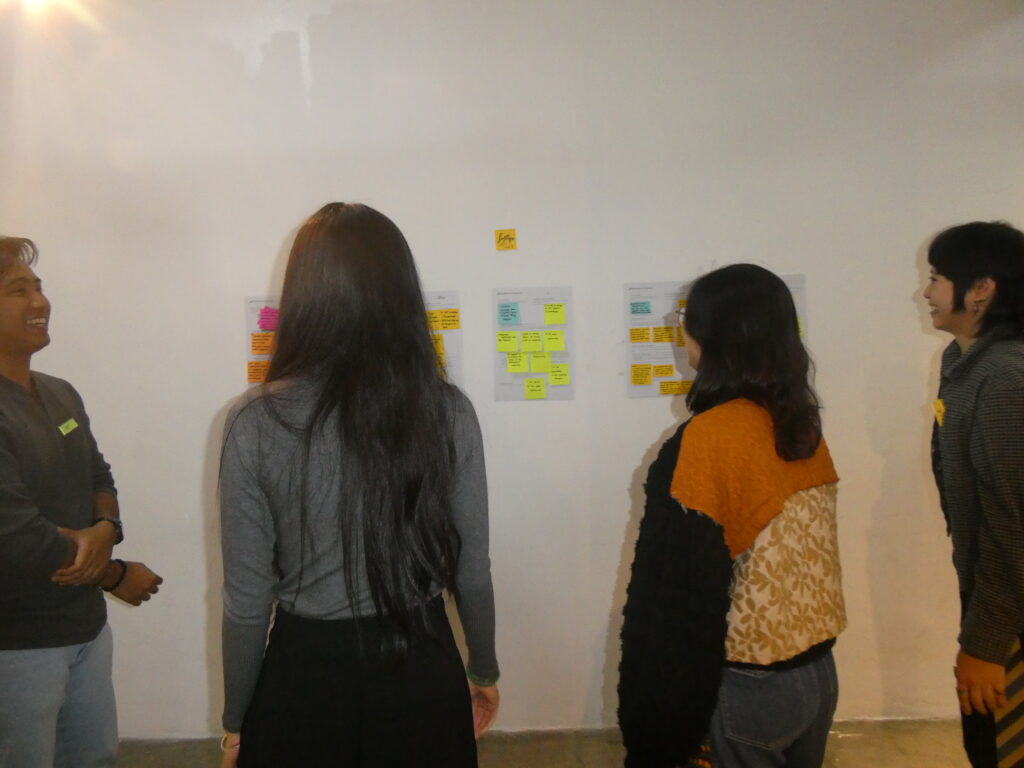
On February 13, 2026, a group of these founders spent their Valentine’s Day weekend to attend Sustina’s Sustainability for Founders Workshop at The Astbury in Makati City, Metro Manila. They came from different causes and corners of the mission-driven world. Animal welfare, queer rights, climate action, creative reuse, education, and coastal defense, among others.
But as the day unfolded, the differences mattered less and less. One founder’s frustration with delegation sounded familiar to someone running a completely different kind of organization. Another’s struggle with burnout was recognized instantly by their other groupmates. The problems they had each been carrying privately turned out to be shared ones, and that recognition alone changed something in the room.
This report presents six insights and three tensions that emerged from that day. Together, they form an honest picture of what it actually takes to build a mission-driven organization, and what it costs.
Insight 1: The founders are the organization’s infrastructure.
The gap between what these organizations aspire to do and what they can actually do is bridged by a single consistent resource: the founders themselves. Their personal funds, personal time, and personal tolerance for absorbing cost have become the de facto infrastructure of their organizations.
What makes this consequential is not that it is unsustainable in the abstract. It is that it works just enough to defer the harder work of building actual organizational infrastructure. Every month that personal resources successfully bridge the gap is a month in which the incentive to formalize, capitalize, and systematize is reduced. The operating model does not collapse dramatically. It erodes quietly, until the founder does.
Insight 2: The attributes that launch an organization often prevent it from maturing into one.
Passion is the operating fuel of most organizations in this cohort. It enables speed, absorbs cost, and sustains effort in the absence of formal structures. But it is not a substitute for organizational infrastructure, and it creates a specific trap: because passion is sufficient to keep things moving, the work of building systems that can move independently of the founder gets deferred indefinitely.
The transition from an initiative to a self-sustaining organization is not primarily a fundraising problem. It is a structural one. When the founder’s personal beliefs, work habits, and emotional bandwidth are doing the work that governance, delegation, and capitalization should be doing, the organization remains a personal project at scale.
Insight 3: These organizations have not yet been built as entities separate from the people running them.
The “Relationship With The Planet” domain was the most systematically underdeveloped area across all participant outputs. When asked to examine their organization’s relationship with the natural world—its resource flows, waste streams, and environmental dependencies—most participants responded at the level of personal consumer behavior. They described their own habits: buying second-hand, avoiding fast fashion, trying to reduce waste.
This is not a failure of commitment to sustainability. It is a diagnostic signal about organizational maturity. Mapping an organization’s ecological footprint requires treating the organization as a distinct actor—one separate from the founder, with its own institutional boundary. When that boundary does not yet exist, the organization inherits the founder’s personal values and habits rather than developing its own relationship to planetary systems.
Until these organizations are built as institutions separate from the founders who run them, sustainability will remain a personal practice rather than an institutional one.
Insight 4: Perfectionism in this cohort is a control mechanism, not a quality standard.
Perfectionism is commonly framed as high standards. In this cohort, it functions differently: as a negotiation with uncertainty. When outcomes carry reputational weight—when what you produce reflects directly on who you are—the mind looks for ways to contain the exposure. If the work is thorough enough, polished enough, airtight enough, then the reaction can be controlled.
This is why perfectionism in these participants tends to produce stasis rather than quality. Excellence orients outward, toward usefulness and impact. Perfectionism orients inward, toward defensibility and self-protection. The standard shifts from “does this work?” to “does this protect me if it doesn’t?”
Participants avoid confrontation and withhold work not out of fear of judgment per se, but because they recognize they cannot control how they are perceived. Perfectionism becomes the only available lever in an otherwise uncontrollable situation.
Insight 5: Burnout is a structural condition expressed in the language of personal wellness.
Burnout appeared across multiple participants’ outputs but consistently in personal, wellness-adjacent language: poor sleep, disrupted nutrition, isolation, anxiety, panic attacks. This framing is not inaccurate. These are real symptoms. But they are being produced by structural conditions, not personal deficits.
The conditions generating burnout are identifiable and consistent: no delegation architecture, no formalized decision rules, the same people at every decision table, volunteers who do not take ownership, founders holding full-time employment while running organizations. These are organizational design problems. They surface as personal wellness problems because there is no structural container to hold them otherwise.
A founder’s personal operating system also tends to absorb operational uncertainty as personal threat. Without structured mechanisms—decision rules, conflict protocols, cognitive offloading systems—the organization inherits the founder’s nervous system. Work that feels urgent also feels unsafe. Disagreements feel destabilizing. Execution becomes episodic.
Insight 6: Trust is not just a relational virtue but is a vital missing organizational input.
Across the cohort, a recurring pattern emerged: the recurring tensions all point to a deficit of trust, and the recurring desires all point toward wanting more of it. Self-doubt, the inability to delegate, isolation as a coping mechanism, and the “I’ll just do it myself” approach are not separate problems. They are expressions of the same root condition.
Trust here operates at two levels. The first is internal: the capacity to act without certainty, to release work before it is perfect, to accept that impact does not require control. The second is relational: the capacity to believe that others can carry the mission with comparable commitment, and to act on that belief by giving them real authority.
Delegation is not a concession. It is the mechanism through which a founder’s passion becomes something that outlasts them. The absence of delegation is not evidence of dedication but it is evidence that the organization has not yet been designed to survive without its founder.
Tension 1: Personal sustainability vs. Organizational sustainability
Every resource that goes into the organization comes directly out of the founder. There is no budget to draw from, no team to absorb the load, no systems to distribute the weight. This creates a compounding problem: the more committed the founder is to the mission, the more they deplete the only resource the organization actually runs on.
The trap is that depletion rarely announces itself as a strategic crisis. It surfaces as poor nutrition, disrupted sleep, social withdrawal, and sporadic energy. These are personal symptoms that feel separate from organizational performance when they are, in fact, the same problem. By the time the founder recognizes the cost, the operating model that produced it is already entrenched.
This is a tension between two legitimate organizational needs—mission continuity and founder continuity—drawing from the same finite pool with no mechanism to replenish it.
Tension 2: Delegation as loss of control vs. Delegation as organizational survival
Founders and leaders who struggle with self-doubt, perfectionism, and the compulsion to isolate all share one core problem: they cannot yet trust that what they release will remain intact. This makes delegation feel like risk rather than leverage.
The most consequential structural move available to this cohort is to begin separating what the organization needs from what the founder personally provides. Every function the founder performs that could be owned by a role, every expense absorbed personally that could be covered by a revenue stream, every decision routed through the founder that could be delegated to a teammate. Each of these is a structural dependency that makes the organization more fragile over time, not less.
The goal is not to remove the founder from the work. It is to ensure that when the founder shows up, it is by choice rather than by necessity.
Tension 3: Replicating what works among co-leads vs. Building incentive structures for the wider organization
In volunteer-based organizations, the co-leadership tier tends to function because it runs on shared passion and close personal relationships. The attempt to extend that dynamic to the broader organization—to ask volunteers to show up with the same commitment as founders— consistently fails, because the conditions that produce founder-level commitment are not replicable through motivation alone.
The question most leaders in this cohort ask is: “How do we get everyone to care as much as we do?” That question has no good answer, because it frames a structural problem as a cultural one. The more productive question is: What pathways exist to build tangible incentives and organizational buffers that make participation financially rational—or at minimum, not financially penalizing—for people who are not founders?
Email editor@sustina.earth to access the full report.