






November 24, 2025 · I am used to giving company-wide workshops, where the organizational goal is unified across the board. These workshops are effective, reliable. But there is a magical quality to public-facing workshops, where people from different sectors are able to converge.
Something remarkable happens when leaders from corporations, non-profits, creative studios, and social enterprisesCircular Design & EconomySocial enterpriseA revenue-generating business whose primary objective is to solve social or environmental challenges, reinvesting profits into its mission.Read more in the Glossary → gather together with the aim of solving problems. You never wind up with a collection of individual plans. What emerges is a diagnosis of the challenges we all face. A shared vision for a more sustainable future. The convergence of thinking, despite diverse contexts, is the most powerful outcome of these kinds of workshops.
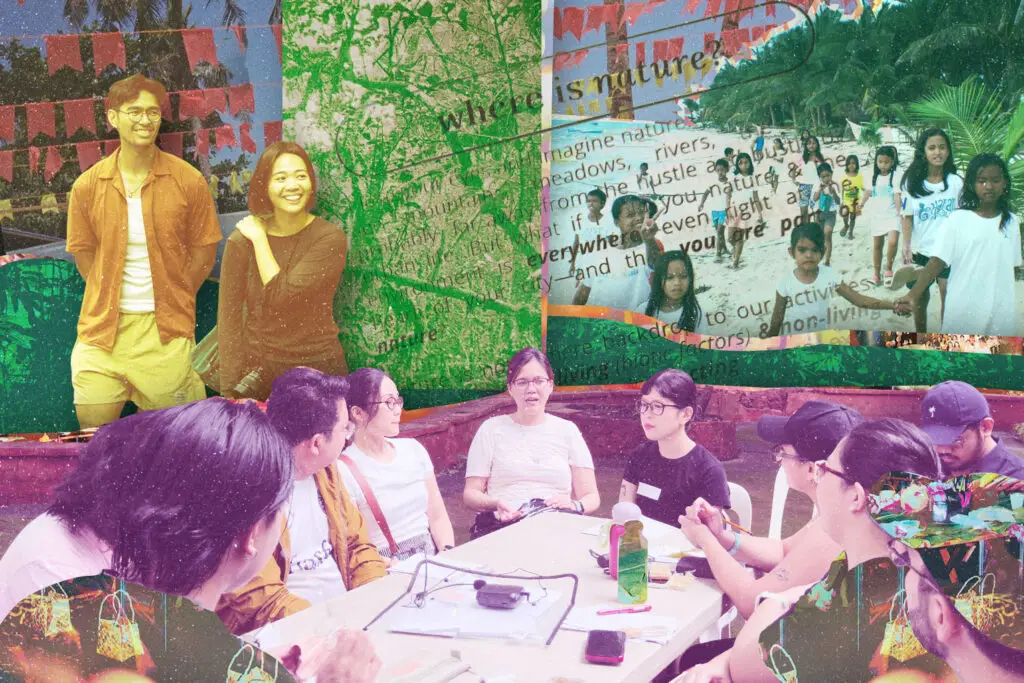
This report is an analysis of the collective intelligence that we gathered on August 27-28, 2025, at The Astbury, during Sustina Lab’s Blueprint for Sustainability Workshop.
Across all blueprints presented, the same core themes emerged with undeniable clarity. This alignment signals a fundamental shift in leadership and strategy that transcends industry boundaries.

Insight 1: The human-centric crisis is the universal bottleneck.
The most urgent “Old Story” was not about market share, but about the profound human cost of broken internal systems. This was the single most consistent theme, appearing in nearly two-thirds of all blueprints.
Leaders used a shared vocabulary of exhaustion. Words like “burnt out,” “personal tensions,” “high-stress environment,” and “overworked employees” were present regardless of sector.
While the pain was universal, its source differed slightly. Corporate participants often pointed to “outdated workflows” and inefficient processes. Non-profit and social enterprise leaders linked it to the stress of “inefficient coordination” on under-resourced teams.
In response, a significant number of leaders defined their “New Purpose” not in terms of market outcomes, but in terms of cultural health: to build a “safe space that uplifts lives” and foster “genuine” connection.
Organizational well-being is no longer a ‘soft’ topic but a primary strategic bottleneck to performance and impact.

The bottom line:
- Organizations across sectors are facing a systemic crisis of well-being, not a series of individual problems.
- These organizations are correctly diagnosing that inefficient systems are the root cause of this human cost.
- They are strategically prioritizing the creation of healthier, more humane internal cultures as a prerequisite for success.
Insight 2: The strategic pivot from provider to ecosystem architect (from “doing” to “enabling”)
A sophisticated strategic shift was visible across the room: a move away from being a siloed provider of a product or service and towards becoming an enabler of a broader ecosystem.
Over half of the blueprints used the language of creating a “platform,” “hub,” “framework,” or “community.” This mindset was just as prevalent for those serving corporate clients as it was for those serving grassroots communities.
Strategies consistently focused on distributing power through empowerment: “capacitate the youth,” “empower Orgs to design their programs,” and “equip leaders with tools.”
Organizations are moving from being the hero of the story to building the world in which new heroes can emerge.
The bottom line:
- There is a shared modern understanding that scalable and resilient impact comes from enabling others.
- Strategic focus is shifting from direct delivery to facilitation and capacity building.
- This ecosystem-based approach is becoming the new model for creating value, whether building a brand, a market, or a movement.
The work also gave voice to the critical, unresolved dilemmas that define modern leadership. Naming these tensions is the first step to mastering them.
Tension 1: Systemic ambition vs. financial fragility
This was the central tension of the workshop: the profound gap between the scale of ambitions and the precarity of the resources available.
Purposes are immense. Organizations are tackling systemic challenges, from creating “disaster-resilient housing” to fixing how “billions in funding” flow through society.
The “Old Story” is haunted by financial instability. This was felt most acutely by non-profit and social enterprise leaders, with the phrase “funding runs out” representing a collective trauma. Corporate participants felt a parallel pressure from the need to justify long-term sustainability investments against short-term financial targets.
The blueprints are artifacts of this struggle, showing a clear pivot towards entrepreneurial solutions like earned revenue models (“1000 members paying 199/month”) and the creation of “self-sustaining modules.”
The work surfaces a powerful, collective demand for new economic models that can support long-term, systemic change without being built on a foundation of financial sand.
The bottom line:
- The tension between mission and money is a universal and defining challenge.
- Organizations are actively moving away from models of dependency and towards models of financial resilience.
Tension 2: The demand for internal healing vs. the urgency of the external mission
A surprising one-third of all blueprints were dedicated primarily to internal transformation, an inward focus prioritizing things like “SOPs and Culture Docs” and “employee attrition.”
The remaining two-thirds were driven by the urgency of external challenges, an outward drive ranging from serving “urban poor communities” to addressing “climate issues.”
The most advanced thinking on the walls explicitly connected the two, with one participant noting that “inefficient coordination… affects the well-being of staff and quality of output.”
Organizational health is not a detour from the mission, but the very fuel required to complete it.
The bottom line:
- Organizations are all grappling with the “fix the engine while flying” dilemma.
- There is a growing conviction that a burnt-out, chaotic team cannot sustainably solve complex external problems.