
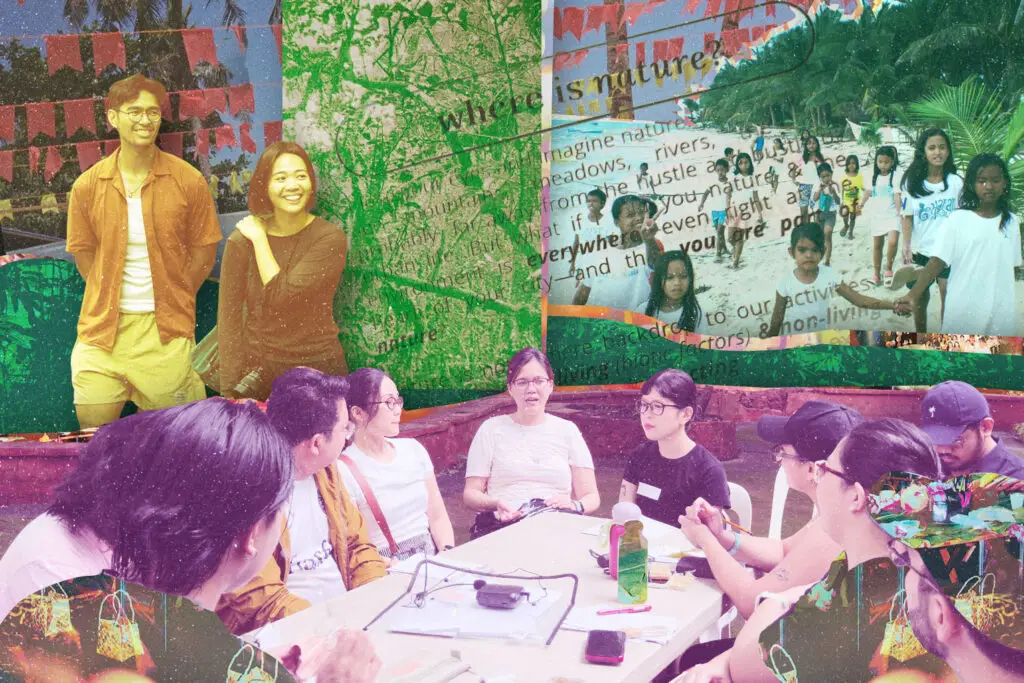




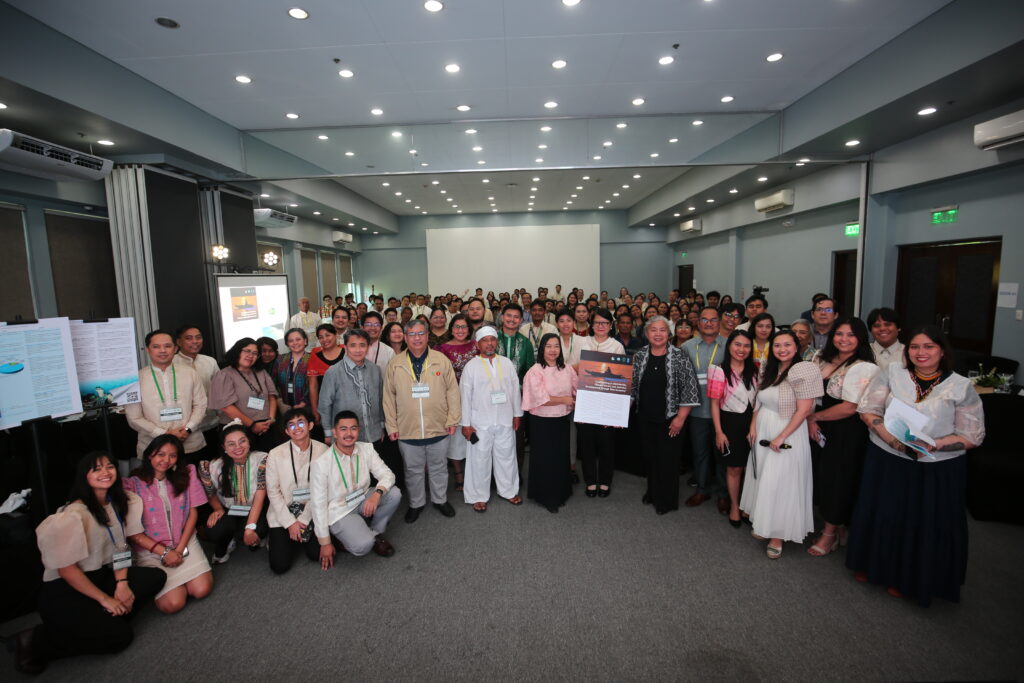
April 10, 2026 · Last March 24 to 26, the Global Mangrove Alliance Philippines and the Department of Environment and Natural ResourcesPH Laws & FrameworksDepartment of Environment and Natural Resources (DENR)The Philippine executive department managing forests, protected areas, mining permits, and pollution control. It is the primary regulatory counterparty for environmental compliance, natural capital valuation, and the issuance of permits governing resource extraction and land-use changes.Read more in the Glossary →’ Biodiversity Management Bureau (DENR-BMB) hosted the Philippine MangroveLocal Climate & EcologyMangrovesCoastal wetland ecosystems capable of sequestering massive amounts of blue carbon while buffering coastlines against storm surges.Read more in the Glossary → Conference 2026 at Microtel Technohub in Quezon City.
Since 2012, the Philippines has held four National Mangrove Conferences and a National State of the Mangrove Summit in 2019. Nine policy recommendations have been made across all four conferences, yet many remain unimplemented to this day.
Back for its first iteration in the past five years, the Philippine Mangrove Conference 2026 united government officials, stakeholders, and researchers.
“We have done mangrove restoration, we have protected, we have promised,” said Dr. Anabel Cabanban from Wetlands International Philippines, opening the conference. “And yet, the question we must honestly ask ourselves today is: Have we done enough? Have we been held accountable? Do we truly understand the cost of falling short?”
A study using satellite imagery estimates that the Philippines had approximately 400,000 to 500,000 hectares of mangroves in 1920—nearly half of which has been lost to aquaculture, coastal development, and deforestation. However, conservation and reforestationLocal Climate & EcologyReforestationThe active replanting and ecological restoration of degraded forest lands. In carbon project development, its financial viability depends on long-term survival rates, native species selection, and the prevention of leakage, moving beyond superficial tree-planting metrics to verifiable ecosystem restoration.Read more in the Glossary → efforts in the past decade have borne fruit in places such as Tacloban City, where approximately 80% of mangroves have been restored ten years after the onslaught of Typhoon Haiyan.
Mangroves are “not just trees along the shore,” said Cabanban, but necessary ecological systems that provide coastal protection against flooding, behave as nurseries for marine species, and are one of the biggest carbon sinks on Earth.
Reducing mangrove losses by 2030
Jocel Pangilinan, Global Mangrove Alliance Philippines Coordinator, shared their organization’s goals for 2030:
- Halt Loss: To reduce human-driven mangrove losses to 0; secure 150,000km2 of mangroves
- Restore Half: To restore half of the lost mangroves globally
- Double Protection: Increase long-term conservation and protection from 40% to 80% in existing protected areasPH Laws & FrameworksProtected areas (NIPAS)Lands and waters legally set aside for conservation under the National Integrated Protected Areas System (NIPAS), from national parks to protected seascapes.Read more in the Glossary →; secure 61,000km2
To achieve these objectives, Global Mangrove Alliance Philippines is focused on the conservation and rehabilitation of mangrove ecosystems using science-based approaches and collaborative partnerships. Pangilinan stated that achieving these goals would result in three categories of co-benefits: climate action, food securityLocal Climate & EcologyFood securityThe consistent physical and economic access to sufficient, safe, and nutritious food.Read more in the Glossary →, and coastal protection.
“We aim to advance what the Philippine government has already committed to [to make it] real, measurable, and accountable,” she said. Currently, the organization is working on the Philippine Development Plan (PDP) 2023 to 2028, where mangrove restoration is determined as a key resilience and adaptation strategy.
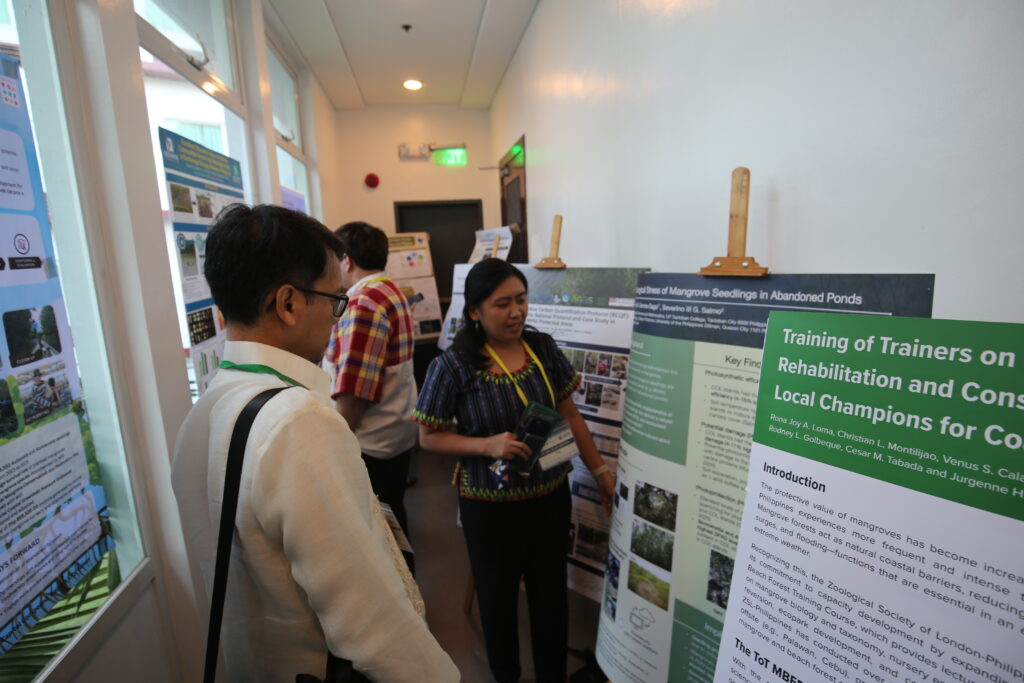
community‑driven conservation programs.
Align with local communities and science-based policies
Day two of the conference opened with speaker Dr. Jurgenne Primavera—known as the Philippines’ “mother of mangroves”—for her prominent advocacy and research work in the field.
She warned about the danger of “earth balling,” or mangrove transplanting, which has a high mortality rate in mature mangroves. Dr. Primavera urged all to sign the Global Mangrove Alliance’s petition for DENR to withdraw a recent memorandum permitting the use of earth balling or other relocation methods.
This was followed by a panel discussion moderated by Von Hernandez, Vice President of Oceana, featuring Hon. Anna Veloso-Tuazon, Hon. Lecille Lagunay, Roberto “Ka Dodoy” Ballon, and Leo Anthony Castro. These key stakeholders discussed existing mangrove policies, strategies for collaboration, and how a national law would differ from our current, underfunded local initiatives.
Hernandez commented on the difficulties of having the National Coastal Greenbelt Bill passed, which has not managed to make it through congress.
“Whether there’s going to be a national law that’s going to be passed, what’s more important is that local government units are doing their part in preserving our planet”, Lagunay said in response.
Leo Anthony Castro, Mangrove Matters PH Executive Director, emphasized the need to empower local and fisherfolk communities by letting them be “co-managers of coastal ecosystems and not just beneficiaries.” He advocated for the use of social media and technology for science communication and to engage the youth.
To conclude the event, innovators from institutes and organizations such as the University of the Philippines, Ateneo de Manila University, Blue Carbon tracker, and the World Wildlife Fund (WWF) were called to the stage to present new developments and tools for the improvement of mangrove conservation.
The Philippines National Blue Carbon Action Partnership (NBCAP) Roadmap was also unveiled. Germaine De Ruña from the Zoological Society of London (ZSL) described the roadmap as a “statement” that the Philippines values its coastal ecosystems, not only as a source for livelihoods, but also as an ally against the climate crisis.
Blue carbonLocal Climate & EcologyBlue carbonCarbon sequestered and stored by coastal and marine ecosystems, primarily mangroves, seagrass meadows, and tidal marshes.Read more in the Glossary → was further explored in a one-day event following the Philippine Mangrove Conference, which featured the theme “Towards a Sustainable Blue Carbon Future: Grounding DENR Stewardship in Stakeholder Engagement and Shared Accountability.”