






February 10, 2026 · On February 8, the Department of Environment and Natural ResourcesPH Laws & FrameworksDepartment of Environment and Natural Resources (DENR)The Philippine executive department managing forests, protected areas, mining permits, and pollution control. It is the primary regulatory counterparty for environmental compliance, natural capital valuation, and the issuance of permits governing resource extraction and land-use changes.Read more in the Glossary → (DENR) released a national readiness roadmap for the voluntary forest carbon marketGlobal EssentialsCarbon markets & carbon creditsTrading systems where verified greenhouse gas emission reductions or removals are commodified, typically representing one metric tonne of CO2 equivalent.Read more in the Glossary →, setting the stage for how the Philippines might value, govern, and trade the carbon stored in its forest and mangroveLocal Climate & EcologyMangrovesCoastal wetland ecosystems capable of sequestering massive amounts of blue carbon while buffering coastlines against storm surges.Read more in the Glossary → ecosystems.
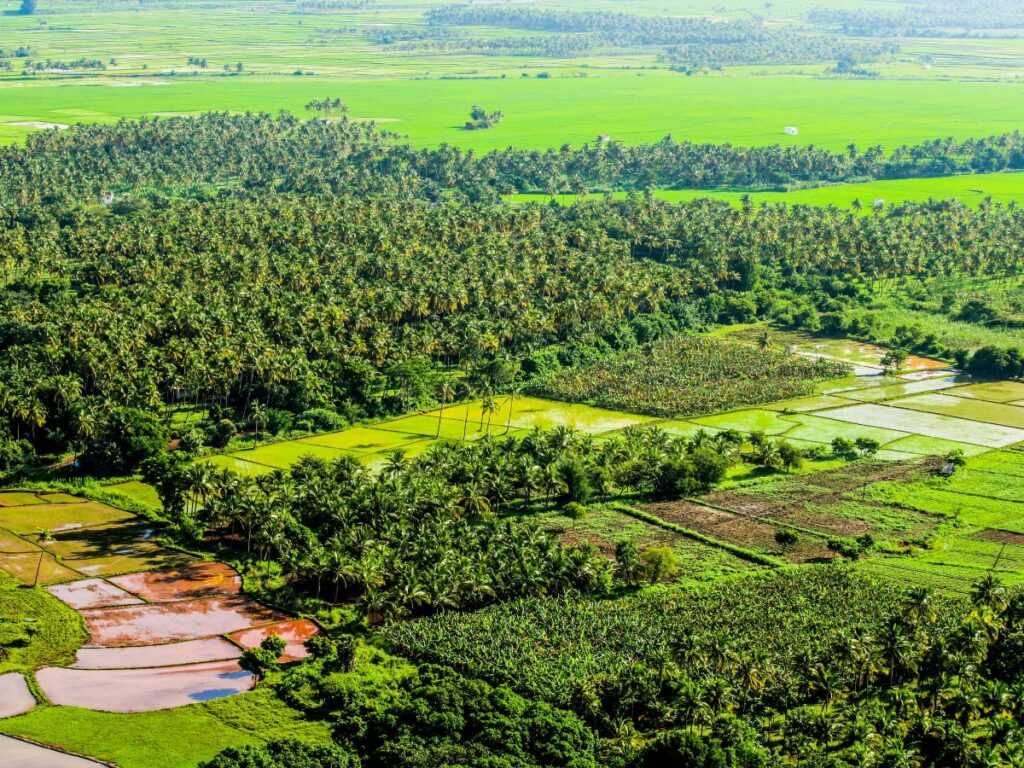
This means that seven million hectares of forest land and over 300,000 hectares of mangrove forests in the Philippines have the potential to be tagged as high-integrity assets. In carbon markets, a high-integrity asset is a verified, tradable unit representing one tonne of carbon removed or reduced from the atmosphere, according to the most stringent scientific and ethical standards.
For a country that produces less than 1% of global carbon emissions yet faces the worst impacts of climate change, decarbonizationGlobal EssentialsDecarbonizationThe systematic reduction and ultimate elimination of anthropogenic greenhouse gas emissions from an economy or corporate value chain.Read more in the Glossary → is not just another box to tick on the environmental agenda—it is the only way to survive. But the path forward is not as simple, and requires all hands on deck.
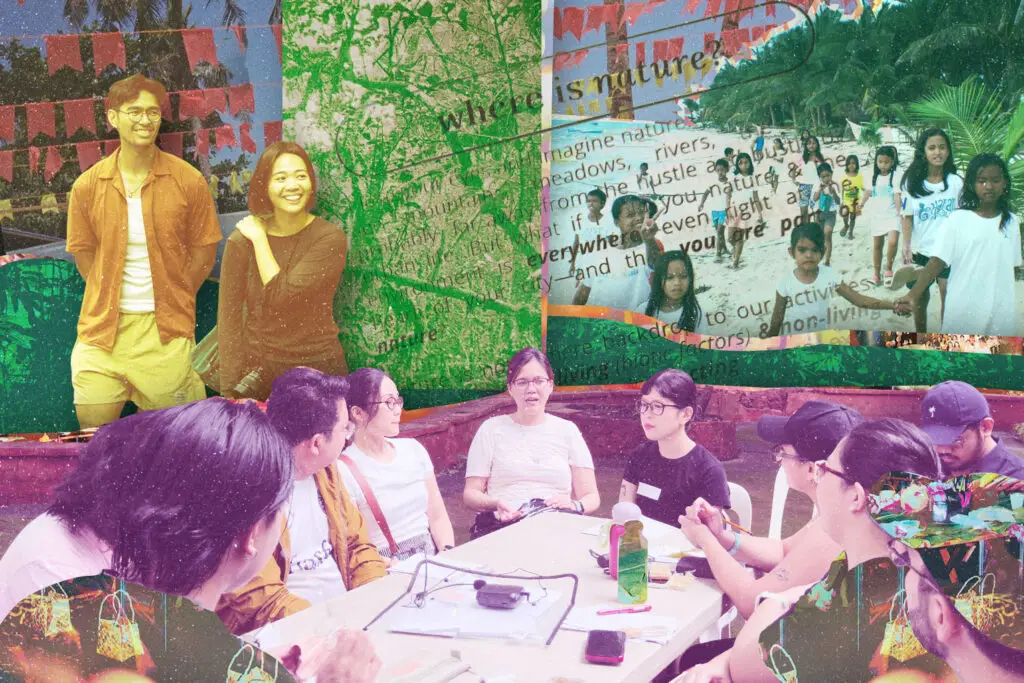
A day after the DENR announcement, government officials, business leaders, and technical experts convened at the Asian Institute of Management (AIM) for the Philippine Decarbonization Forum: Pathways Towards Carbon Neutrality. The forum dived into concrete implementation strategies, attempting to bridge the gap between high-level climate policy and corporate sustainability commitments.
During the forum, Sustina’s Executive Director Anna Reyes moderated a panel discussion on Law, Policy, and Digital Solutions. The panel included DENR Undersecretary Atty. Analiza Rebuelita-Teh, Securities and Exchange Commission (SEC) Director Atty. Rachel Esther Gumtang-Remalante, Campaign Lead for European Chamber of Commerce – Race to Net ZeroGlobal EssentialsNet zeroThe state where anthropogenic greenhouse gas emissions are reduced to the absolute minimum, with any residual emissions permanently removed from the atmosphere.Read more in the Glossary → Philippines Dawn Cabigon, and EnviroAI Co-Founder Kimberly Chen.
The following is a transcript of the conversation. Minimal edits were made to preserve the integrity of the recording.
Sustina: I would like to begin with USec Teh. The roadmap has designated four priority areas. With only four years until 2030, which policy lever has the highest return on marginal impact, and what is the biggest challenge we have in terms of implementation?
USec Teh: Let me begin by reciting the challenges. Based on our stakeholders’ consultation with indigenous peoples organizations, peoples organizations, [and] local government units, one challenge they encounter is that there is no clear policy on where the [national] government comes in. That’s why, during the stakeholders’ consultation, while the private sector says ‘this is a voluntary carbon marketGlobal EssentialsVoluntary carbon market (VCM)A decentralized market where private actors buy and sell carbon credits outside of mandatory compliance regimes.Read more in the Glossary →, why are you regulating it?’ The reality on the ground is that the peoples organizations and the local government are also looking at where the government is.
Although there are established carbon standards and verification mechanisms, we need to come up with a policy where you have them on board, and this will address one of the gaps we need to address—data gaps.
We don’t have actual data on what organization, what communities, enter into agreement with the developers and proponents. Right now, we are trying to come up with a system. As we develop the measurement, reporting, and verification (MRV), we would also like to develop our database for all these projects.
The third would be, of course, the benefit sharing. We want to ensure that this carbon market mechanism will protect the rights of the indigenous peoples and the whole Philippines. We want to make sure there is a proper benefit-sharing mechanism. Of course, we see that there are current international carbon standards and mechanisms for this, but we want to make sure that this is something aligned based on our existing laws, rules, and regulations. We do not want to impose new policies, but to make sure that they are aligned.
Finally, the legal framework for what carbon rights are. Is it something you should consider as part of the tenural rights that we issue? So if you are a holder of a community-based force management agreement, does it follow that you are also the owner of the carbon rights, or does the state own the carbon rights? But there are also views that it shouldn’t be considered as something attached to the tenural instrument, because carbon rights are not anchored on the exploration, development, and utilization of the natural resources, rather it’s a different species. All of these we need to address and learn through the process. This is something also very good for the government, especially for the DENR.
On the question of which of these [policy levers] will resort to higher returns, I think right now, we have no idea which of these will convert into actual returns. What we are after is making sure the protection and restoration of the forest will be eligible for forest carbon, and of course, protection of the communities.
Sustina: I have a follow up question because you mentioned [that] we need execution of the laws that we have, but you also mentioned we have utilization as the primary classification for the use of forest and other land uses. So if that’s the case, how do we marry those two if we don’t have a classification [under the law] for forest protection? I know we have protected areas. But under carbon credits, one of the things we look at is additionality—that these are actually places that would have been lost, if not for the carbon credit system in place. If we are opening up our forests, some of which are already protected areas, how do we ensure there’s no greenwashing in terms of additionality?
“Additionality” in carbon projects is the requirement that emission reductions or removals are new, quantifiable, and could not have happened otherwise. It ensures projects exceed “business-as-usual” scenarios, preventing the issuance of credits for initiatives that would have happened anyway.
USec Teh: Right now, we just adhere with existing rules, laws, and regulations. Because the Constitution provides that the expiration, development and utilization of natural resources shall be for 25 years, that’s the basic right we will respect, until such time that there are other views that define what’s the nature of carbon rights. It’s not only in the Philippines that we encounter this, but all other countries do not also know how to address this legal issue.
In terms of making sure there is additionality, we have formulated our blueprint for carbon policy framework and defined the different principles for additionality, permanence. We will make sure this is something we will look at as we monitor the projects under the voluntary forest carbon market. For Article 6, once we have the signed agreement with Singapore, and start looking at eligible projects, we will make sure there are criteria and standards indicators to make sure we will be able to capture them in the process.

Sustina: Atty. Remalante, you mentioned earlier that SEC MC 16 requires emissions reporting, starting this year. Now, with the roadmap that was announced yesterday, when companies purchase forest credits, how should they disclose this? Is there a plan to establish a single national carbon registry, integrating DENR’s database with the SEC so that we don’t have double reporting?
Atty. Remalante: It’s actually on the particulars of how they’re going to be reporting. If the company has forest credits, the listed company can already disclose that. They are free to include that information in their sustainability report.
In terms of pathways, we’re still having this collaboration with DENR, but I don’t recall if this is one of the particular areas we’re looking at. It’s more of aligning if we’re going to come up with a template. Our view is that there are two types of reporters. Reporters that are really advanced; they don’t just want to comply, they go beyond it. And companies that want to comply, but don’t know how to. Our way is always to have available templates for [these] companies to make it easier for them. What is the expectation of the regulator in terms of the disclosure.
This is one of the conversations we have with DENR. We have been looking at the IPPU [sector], at the very least, as one of the areas we can already have companies report on. But we find that there are few companies under the IPPU that are publicly listed companies. Soon we will find out more if they are under the LNLs [large non-listed companies].
In terms of alignment and disclosures, no straightforward hitting all the tick boxes on that one, but we’re also very open to collaborations, and looking for alignment because as a regulator, we’re always asked [about] our discussion with other regulators in terms of disclosure and reporting. It’s always a challenge to get all the important people in one room to agree on a single thing, but at least if there are efforts to identify critical areas that should be disclosed. At the very least we’ve started with a basic framework for sustainability and climate disclosure, which is the PFRS, and we’ve identified that as your basic reporting framework. And then we can add more. So we’re not restricting the companies on what they can disclose in their report.
Sustina: There is a two-year gap between now and 2028, which means there could be major forest buyers in those two years. Is SEC thinking of accelerating [the] timeline so we can track who’s genuinely reducing emissions versus just buying credits? What prevents large emitters, like companies with over 100 million revenue, for example, who have the capacity to do so, from just purchasing low-quality credits during this enforcement gap?
Atty. Remalante: You’re talking about the LNLs that will now be required in two years. Actually, they’re required in 2029 because 2020 will be the year they’re collecting the data. Because we have issued a regulation, and we’re not yet forcing the LNLs, but we are highly encouraging them to be part of that reporting. Start the process already. That’s why we’re doing some capacity building right now, not just for tier one companies. We’re actually opening it up until the tier three companies, which includes the LNL. It’s fortunate that we have a lot of collaborations, not only with the public sector, but also with the private sector, and because some firms have been telling them how they can [comply], of course, it’s compliance. It cannot be avoided. Sorry, obviously, as a regulator.
But two companies have already approached us as well, even if they’re LNL, they’re very excited. They are opening this topic with their board, that this is something that they have to do. A lot of support is also given their way. But I’m not so sure if this company has like those—I think they are very large entities, and they cannot even reduce to 50 billion just to avoid it. But they are very much encouraged in doing this journey. I’m not so sure yet whether they’re keen on the carbon credit purchases.
I think there’s an ongoing bill right now with the House of Representatives, the Low Carbon Economy Act, [that] also encourages the use of carbon credits in exchange on the voluntary credit market.
So I think if the government, together with the organizations, are working together in promoting the use of carbon credits, and for the Philippines to make use of this opportunity to sell carbon credits as well, this will always be encouraging. Right now, unfortunately, it’s more of we’re encouraging these companies to already get into this reporting, getting these credits on, but we cannot mandate them at the moment. It’s more of, we’re providing this support and opportunity for more collaboration and areas for networking, and of course, technical assistance is available. There are also international organizations that’s working with, not only SEC, but also DENR. They also want to identify which companies they can assist in order to have these credits, if they can actually produce. I’m hoping we’re not always purchasing credits. It’s more on the production side, and then adaptation more than mitigation.

Sustina: Dawn, you went to Davos, right? While it wasn’t at the Annual Meeting [of the World Economic Forum], it was the [first] pavilion of the Philippines. I wonder how the investability [comes in.] You mentioned we have a lack of investable projects. I’m wondering, what criteria are we failing in?
Cabigon: I was one of the front-facing [people] in getting inquiries, and a lot of interest is in the blockchain, into using Bitcoin as payment for investments.
Hotel 101 is a homegrown brand, and they were there as one of our partners. One of the questions thrown at them was, can I buy an asset using bitcoin? Several investors were asking us, “We want to outsource our business in the Philippines. Are your companies already accepting this?’ It’s outside of this space, but it’s really something we need to look into. Because of the fluctuations in our currency exchange, they have a lot of, you know, losses whenever they transfer their currency to our local currency. Investors are looking into the flexibility of us accepting payments.
Carbon credit, definitely a huge potential for the Philippines, because of our mangroves [and] oceans. And also, there’s The [Tropical Forest Forever Facility] that was also launched in COP30. That’s also an opportunity for us to tap into.
Sustina: In terms of risk, for example, we have Gold Standard doing audits and verification. There is a higher risk in the Philippines right now, and that scares of some of these audit firms or these registry firms. From what you’ve learned in COP or in Davos, what is the highest risk for us right now, in terms of carbon accounting?
Cabigon: I think let’s all look at the brighter side, because we’re actually way behind. The carbon credit facility and market is already mainstream, especially in Europe. Most of the regulations are coming from Europe. I wanted us to look into the bright side, that all we have to do is ask from experts from these countries. We are from the European Chamber of Commerce, we are more than willing to connect with experts to our government to facilitate this and to make it faster for all of us. Rather than, we are left behind, and we’re now policing, you know, these carbon credits being sold in the market but are not really vetted and not really accredited by our government. I think there’s just really a need to accelerate all our initiatives as soon as possible.
Sustina: Kim, as the digital solution expert, could we build a blockchain system verifying both carbon sequestration and IP benefit sharing through smart contracts? In terms of biodiversity conservation, protection for the carbon credits—which is actually a very great idea, since blockchain is a very trustworthy platform for doing credits—is that something we could do, you think? And what would be the barriers, the challenges, perhaps, or the opportunity, if we’re gonna frame it more positively?
Chen: Right now, we’re still a developing country, and the proper next step is really digitalization. First, we have to be able to build that good foundation, be able to digitalize the current traditional processes before we can actually go to the next stage of talking about blockchain. So I agree with what Dawn has mentioned. We have to accelerate whatever we’re doing right now. That’s why Enviro AI is really more on that step one. First, we need to be able to have everyone on board, all of the publicly listed companies, large non-listed SME startups, and other types of companies. They have to be able to understand how to use the tech first, how to upload their data into the current system. Then there’s also the tagging side. When everything is being tagged already, that’s the time we can actually talk about blockchain.
Sustina: I have one more question for everyone in this panel, because you come from different agencies and backgrounds. Across all of these frameworks, if you can simplify it, what single constraint, if removed, would generate the largest acceleration to our decarbonization?
Cabigon: I learned this from our positioning messaging, from the [Philippine pavilion at Davos, coinciding with the World Economic Forum.] It’s the right time, the right place, and the right people. Going back to my bus story, we just need to get the right people. If you’re not the right person, I think you need to step aside, because you’re going to drag us all down.
Atty. Remalante: I think leadership is really key. Even if you’re doing something good, but [if] there’s not one direction we have, we don’t have one voice. The one at the top [is] the one that’s really going to make sure this will all happen. It’s not with us.
USec Teh: For me, just like any developing country, now that this is what we’re fighting for, we need the means of implementation. That would be multifaceted. One, we need technology. Second, we need financing to support decarbonization and, of course, third capacity building, which, of course, will include governance and institutional frameworks.
Chen: The leaders on top that should be able to implement a top-down approach. Being able to onboard the right people at the right time is really important. Having the right physical and digital infrastructure is very important. So the interest of the supply chain is schools, and of course, the people as well.
Email editor@sustina.earth to access the full video and recording and other press materials.