





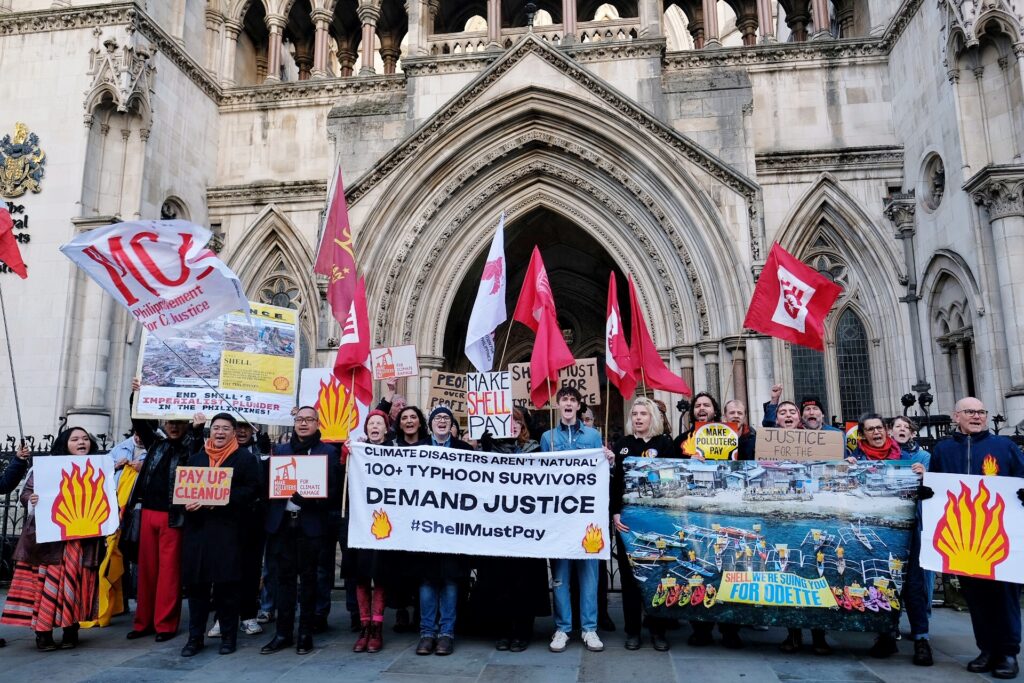
December 17, 2025 · The seal has been affixed and a historic climate lawsuit by Filipinos against Shell Plc is officially filed in UK courts, according to lead campaigner Jeff Chua of Greenpeace Philippines.
What happens now is a waiting game, Chua added. The oil and gas company is expected to respond by January 22.
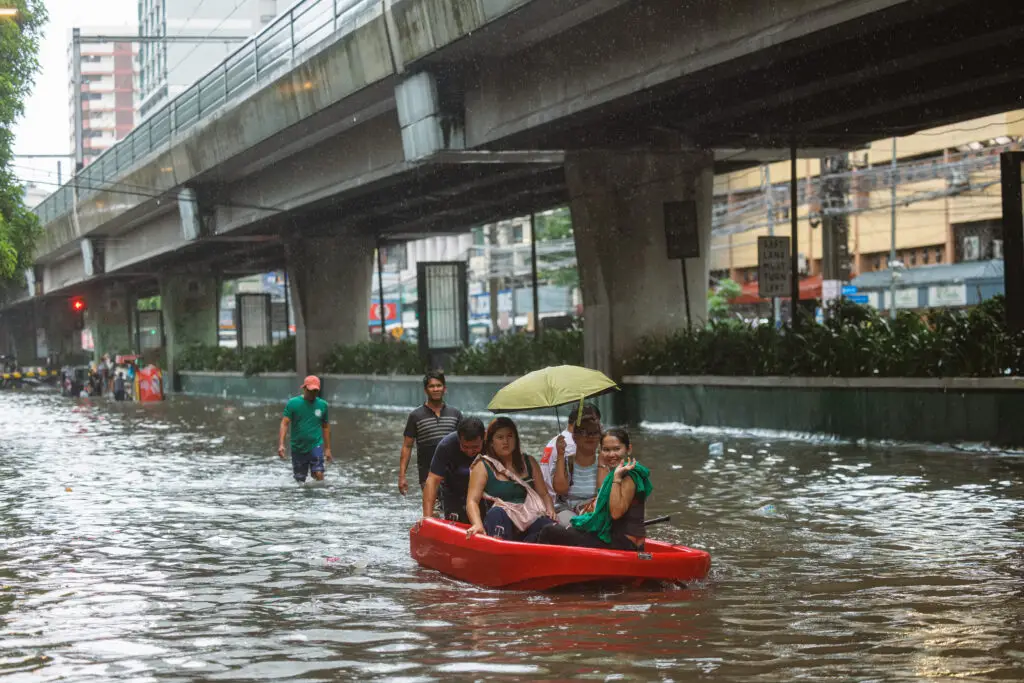
But how did we get here, in foreign civil court? There are now 103 claimants—103 Filipino citizens who are making the case that a corporate giant is accountable for their personal injuries and damages during Typhoon Odette (known internationally as Super Typhoon Rai), which made its first landfall on December 16, 2021. Initially, when the “Odette Case” was announced, there were only 67 claimants. But the word that action can bypass local courts and be placed in the hands of ordinary Filipinos is spreading fast.
Sustina: One thing I really want to understand—because in terms of the local media coverage, I feel like I haven’t seen as much as I expected to—can we get a sense of what Greenpeace’s involvement is and who the other local actors are, if any?
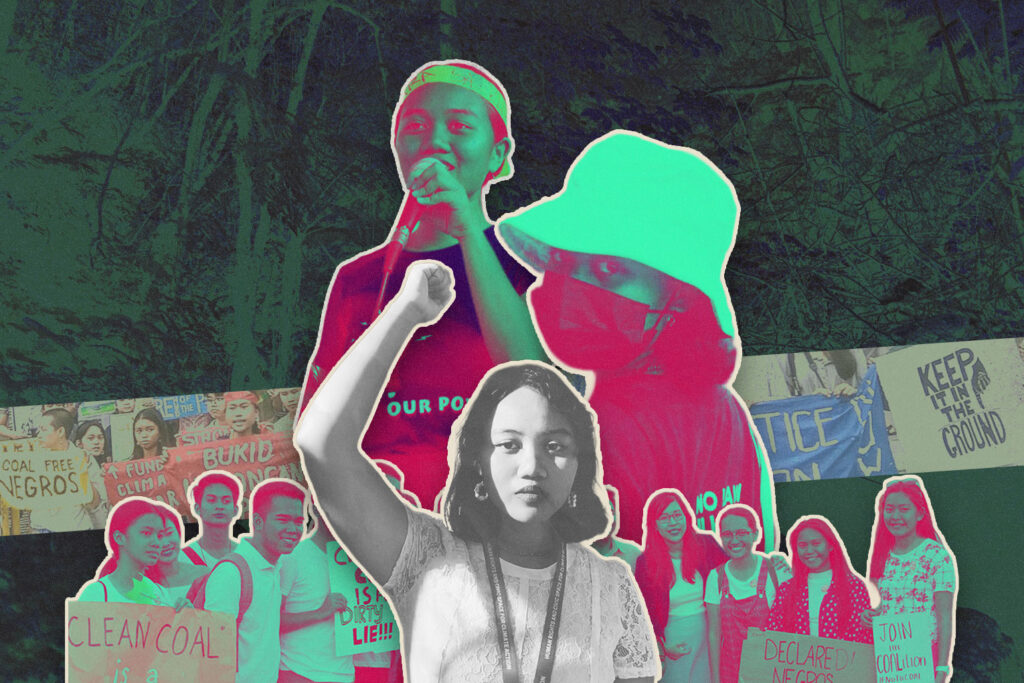
Chua: Greenpeace—along with the Philippine Movement for Climate JusticeGlobal EssentialsClimate justiceA framework approaching climate change as a systemic equity issue, asserting that populations contributing least to historical emissions bear the disproportionate burden of climate impactsRead more in the Glossary → (PMCJ) and the Legal Rights and Natural Resources Center, Friends of the Earth Philippines—are helping with the campaign around the case. We’re not involved in the legal strategy whatsoever. It’s between the claimants and their legal representatives.
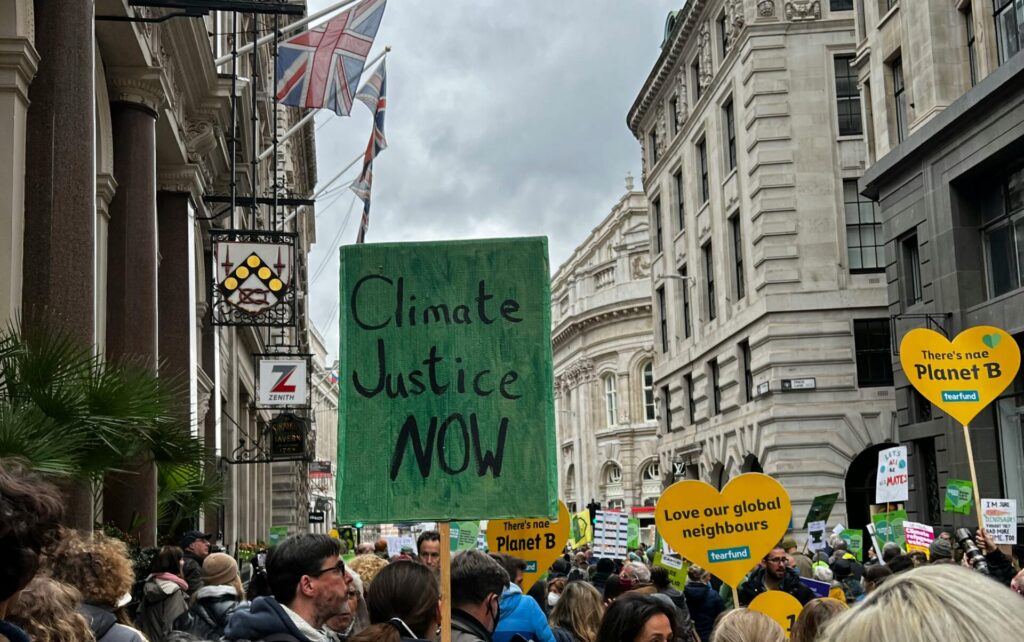
What we’re doing is supporting communities in amplifying their voices. And as you said, coverage of these kinds of [issues] is pretty difficult in the local media landscape. So, that’s really one of the responsibilities of organizations like ours, to ensure that the story gets told. Not only the stories of the case, but the stories of the claimants, because they’re really the heart and soul of this case. Especially since a lot of these stories actually resonate with a lot of Filipinos given that every one of us has had an experience of a very, very strong typhoon.
I’m curious if you’re able to expound on what the difficulty has been.
The most important element is: Why Shell? There are so many other oil and gas companies; there are local oil and gas companies that, if we’re looking at the rap sheet, have probably caused more direct physical harm to Filipinos. It’s easier to understand, for example, kapag nagkaroon ng oil spill [who] needs to be liable.
But here it’s trickier because Shell’s involvement in a typhoon involves a number of steps.
We know that Shell contributes 2% of global carbon emissions [according to reports] so that’s very big, but in itself is also hard to explain and describe. [It’s also hard to explain] how they knew about their impacts on global climate systems and yet they didn’t do anything, which have led to storms like Odette. So, that kind of laying out the causal link, I think, makes it difficult to explain.
That’s also one of the things we want to show: Decisions from boardrooms from thousands of miles away, from London, affect people who have the least amount of contribution to climate change. Unfortunately, this is the reality that every Filipino faces.
Every instance of extreme weather bears the thumbprints of these carbon majorsGlobal EssentialsClimate litigation & the Carbon MajorsThe use of judicial systems to enforce climate accountability, often targeting the "Carbon Majors"—a specific group of state and investor-owned entities responsible for the majority of historical industrial greenhouse gas emissions. Read more in the Glossary → who have been responsible.
I’ve heard people ask—and I guess I’ll get your clarity on this—as to why it’s being tried in the UK. Is it because [we’re talking about] the global Shell company?
Yes. There is nothing to do with Shell Pilipinas. While they are a subsidiary and while Shell Plc holds majority shares [of] Shell Pilipinas, they’re a different entity. The reason why the claimants are looking at Shell Plc is because the decision to not do anything about climate change comes from there. It’s top-level decision-making to profit and expand their business, while also denying their role in climate change, that is at the root of this case. So, while Shell Pilipinas of course [has] been driving the LNG industry in the Philippines, they’re not a party in this case.

Earlier when I asked about actors, you mentioned CSOs and NGOs. What about government actors?
Part of our responsibility as CSOs is essentially to ensure that the communities, the claimants, feel safe because this is a big undertaking.
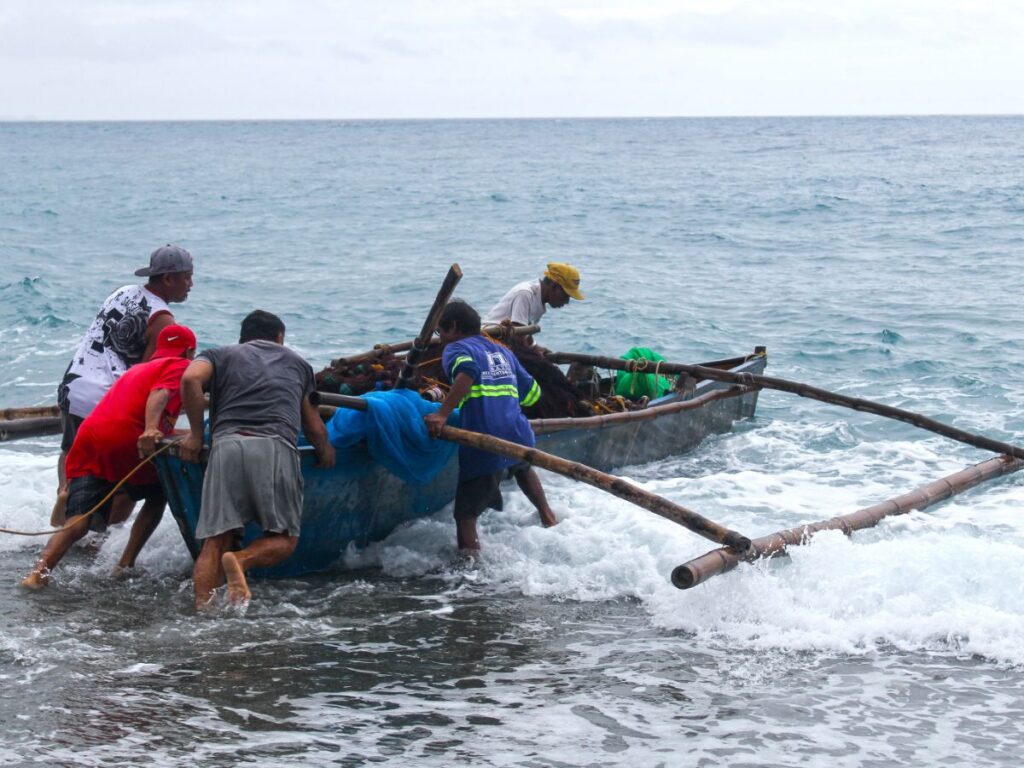
A group of fisherfolk and farmers is suing one of the biggest companies in the world. There’s really a lot of fear involved, and one of [our] tasks is to ensure they’re safe.
One of the ways we do that is to coordinate with the local government, talk to them, and say: This case is happening. You’re not a party to the case, so they’re not suing you, but it would help if you support your constituents to support this case.
So, there are efforts to seek local government support and there have been inroads to that. The municipal Sanggunian of Tubigon, Bohol, for example, where we work. The resolution to support the case is in the works, as well as with the provincial government. But in terms of concrete ways of how to help out, wala pa.
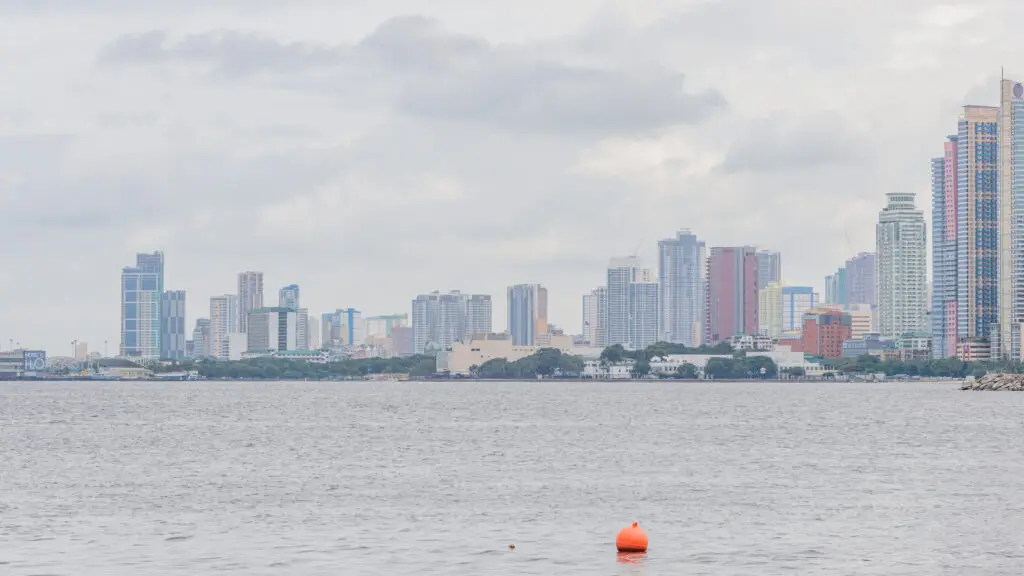
There’s also this layer of potential climate displacement because a lot of the islands where we work are facing rising sea levels. So, there is also that complex relationship between the committees and the local government. It’s really a matter of ensuring that all parties feel safe and to refocus the narrative. There’s a different adversary at play [here].
We also saw that the Commission on Human Rights (CHR) gave a statement saying it “fully supports the survivors of Super Typhoon Odette in seeking legal redress to attain effective remedies in the name of environmental justice.” Would you have clarity on what kind of support you’ve seen so far, or hope to see in the future?
At the root of this case is the National Inquiry on Climate Change (NICC) report by CHR. This case is a way forward from that report. We hope that support [is] concretized by hosting events to talk about the case because, as you said, the media landscape and the public audience landscape in the Philippines probably need a bit more understanding for these kinds of things. Amplifying the case would really help.
But I think one of the biggest gains we stand to have is for commissions like CHR or even other agencies of the government to actually explore filing cases themselves. That’s really the biggest impact that this has.
One of the reasons—and this is to go back to your question also—why the case is being filed [in the UK] is because the jurisprudence in the Philippines is simply inadequate to handle climate cases. We don’t have rules of evidence for climate cases, although we have good environmental laws. We don’t have good rules of evidence for climate.
Because we’re helping the claimants file their case here and campaigning around that, we hope to exert pressure [on] the government to update their rules of evidence, include [climate] attribution, and then properly systematize that in terms of judicial reviews in the Philippines. That’s really what we want the government to do now. We want them to actually explore filing cases themselves and to really update the judiciary to be able to hear those cases here in the Philippines.
Climate cases are being filed more quickly and more frequently now. With the Philippines among the most vulnerable to climate change, what role do we have to play [in climate litigation]?
Leadership in the climate space is not genuine leadership. One of the things we’ve seen, unfortunately, from the government is that while they put themselves [forward as] leaders in the climate space, it’s not like that. That was actually one of the platforms of President Marcos, for example, [and in] how we are hosting the board for the Loss and DamageGlobal EssentialsLoss & Damage FundThe climate harms adaptation cannot prevent — and the fund, agreed at COP27 and operationalized at COP28, that pays for them. The Philippines hosts the fund's governing board, making this the most personal line item in climate finance for a typhoon-belt nation.Read more in the Glossary → Fund. There’s really a lot of that discourse on climate leadership.
But on the other hand, Marcos just granted six exploration permits for oil and gas, which is not aligned with climate leadership.
We [also] haven’t submitted our NDCs in the Paris AgreementGlobal EssentialsConference of Parties (COP) & the Paris AgreementThe UN Conference of the Parties and its foundational 2015 treaty, which mandates limiting global temperature rise to well below 2°C, pursuing 1.5°C, and requiring ratcheting national climate pledges.Read more in the Glossary →. It’s so late already. And there have been a lot of questions on the process for consultation for CSOs from the Climate Change CommissionPH Laws & FrameworksClimate Change Commission (CCC)The primary Philippine policy-making body attached to the Office of the President, responsible for coordinating national climate programs and international negotiations.Read more in the Glossary → (CCC). Lastly, [the Philippines wasn’t] included in that statement in COP30 with like-minded countries for fossil fuel phase-outPH Laws & FrameworksCoal moratorium & fossil fuel phase-outRegulatory bans on new fossil fuel infrastructure (e.g., greenfield coal plants) and the systematic retirement of existing assets. In energy transition finance, this dictates capital allocation shifts, triggering early retirement mechanisms, just transition financing, and the repricing of fossil-fuel-dependent utility portfolios.Read more in the Glossary → which was a complete surprise.
We are, as you said, [among] the most vulnerable climate-vulnerable countries in the world and yet we don’t show that in terms of policy.
Hopefully, these kinds of efforts, these climate litigation cases, will put us on the map and show that people are taking it upon themselves to be leaders in the climate space, and the government really should follow suit. It’s embarrassing that the government is not doing anything to equal the effort and the courage of these claimants.
This interview was edited for clarity.
Dig deeper:
NICC Report: chrome-extension://nlaealbpbmpioeidemdfedkfmglobidl/https://www.ciel.org/wp-content/uploads/2023/02/CHRP-NICC-Report-2022.pdf
CHR Statement on the Odette Case: chrome-extension://nlaealbpbmpioeidemdfedkfmglobidl/https://www.greenpeace.org/static/planet4-philippines-stateless/2025/10/a509928c-chr-message-of-support.pdf