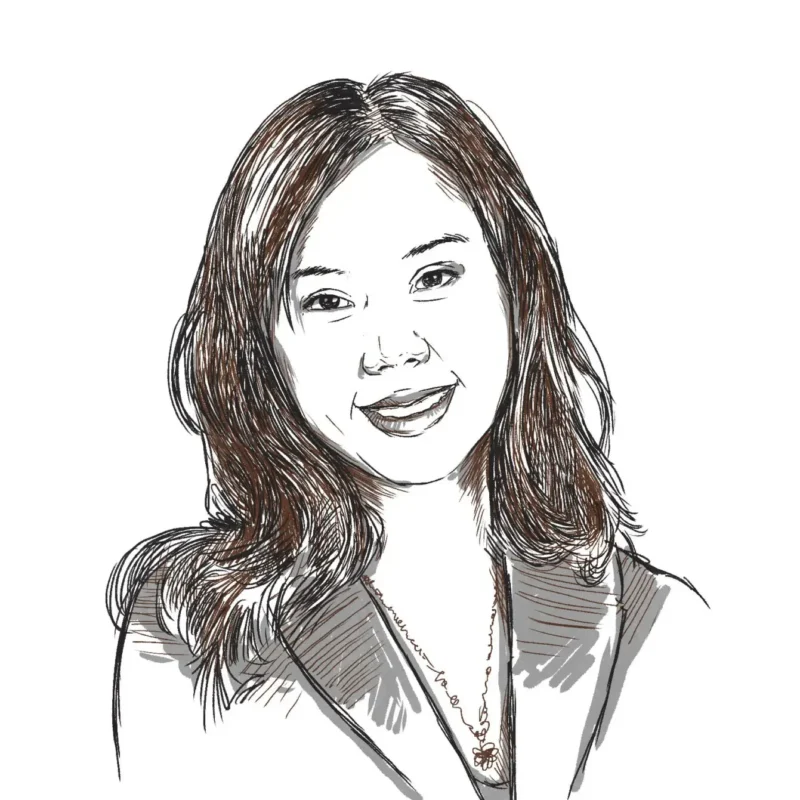




March 23, 2026 · Francelline Jimenez has spent enough time in communities without clean water to know that the person walking the farthest to fetch it is almost always a woman.
She has seen it play out the same way across provinces: women waking before sunrise to travel to a well that isn’t particularly near (sometimes mountains and hours away); women rationing how many liters their family needs for the week; women taking care of their menstrual hygiene against a dwindling supply; women cleaning the dishes and floors that somehow only one person in the house notices is dirty. And by the time the day properly starts, they’ve already done more work than most people do by noon.
It is this reality that shapes how Jimenez approaches her work as Director of Operations at Waves for Water Philippines, a non-profit implementing innovative solutions in WASH (an acronym for the interrelated areas of water, sanitation, and hygiene) for underserved communities.
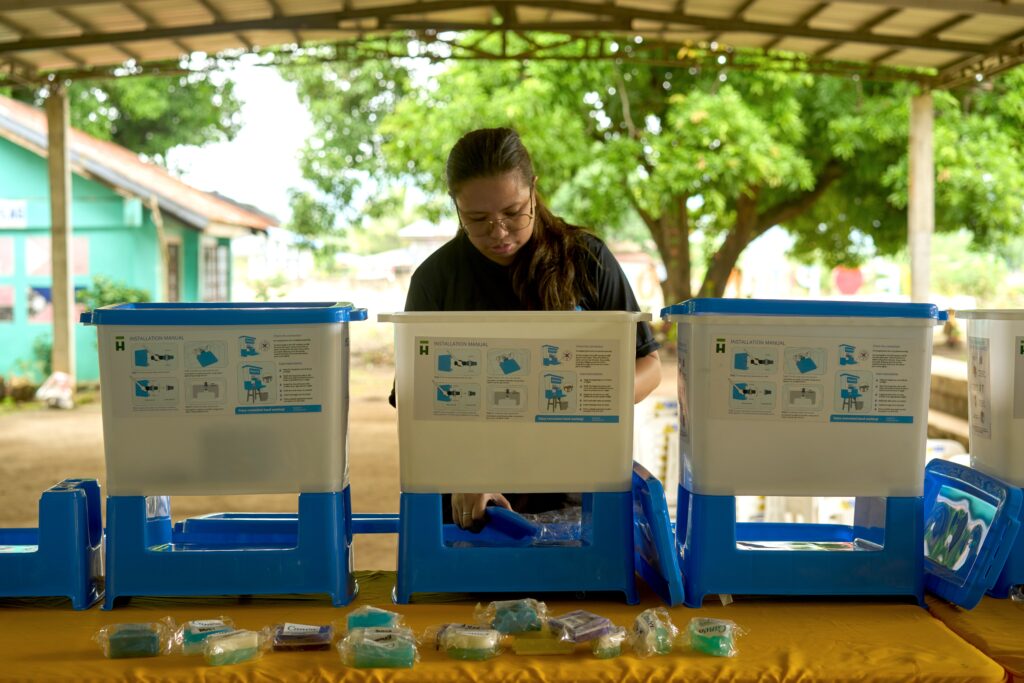
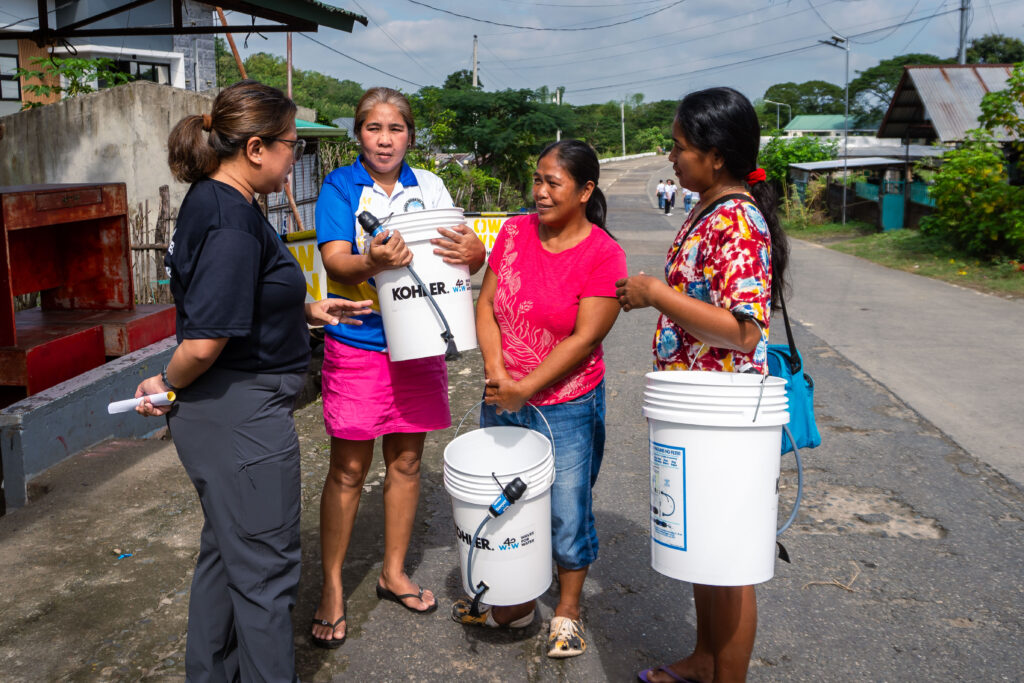
Waves for Water is founded on the belief that access to clean water is a fundamental human right. This belief—coupled with the belief that the global water crisis is a matter of access—fuels their tireless work: traveling to communities all around the Philippines to implement portable water filter systems and construct rainwater systems in places where groundwater is not accessible.
In this conversation, Jimenez makes the case that logistics have never been separate from the question of who bears the weight of water access—and who stands to gain the most when that weight is lifted.
Sustina: In places like Somalia and Rwanda, time poverty plays a big role in water issues. It takes girls more than two hours or sometimes even the whole day to fetch water or to do chores. Do you see those types of scenarios happening also in the Philippines?
Jimenez: Yes, that’s also true in the Philippine context. If you really think about it, it’s women and girls who are the primary water stewards. They collect water, because as we know, it’s the men who go out [and] work. Mothers are the ones left at home, and so the responsibility of drawing and collecting water falls on them too. And it’s a typical Filipino stereotype—the eldest daughter is the “little nanay” [little mother]. [When you’re considered a] “little nanay,” you also inherit the domestic chores, and that includes fetching water.
We can also say to a certain extent that mothers are the water managers of households because they’re the ones who actually know when the household needs water, how much water they need, where they will use it.
Interesting. They’re not just the “ilaw ng tahanan,” but they’re also water managers. I’ve read a lot about how women balance the invisible labor of care and the logistics of water. What do you think would be the most meaningful intervention that would help alleviate their load?
I think one way to address that is to ensure that women are actually in the decision-making spaces when it comes to water infrastructure. [Women] are the water managers in households, but they’re usually absent in decision-making spaces. Whether or not that’s your water cooperatives or water associations at the barangay level, or formal decision-making spaces in LGUs. Because they aren’t included in the design process, the interventions or infrastructures are not designed around their needs.
So sometimes [communities end up with] communal faucets that are located far from women. Sometimes, the roads to the water source are rough and dimly lit. These factors create risk for women. There’s potential for gender-based violence if you don’t provide enough safeguards for this kind of infrastructure.
Another point to consider is that most of the people in the WASH sector are men. They are the ones making decisions about the design of water systems and where they will be placed. Having a woman’s perspective in these spaces can help improve the design. That also applies to persons with disabilities. Their needs are also not usually included in designing this infrastructure.
So from your perspective, what is the biggest barrier from putting these women in these decision-making spaces?
I think the biggest barrier is that people see WASH only as a women’s issue at the household level. There is recognition that WASH is a women’s issue, but there is a lack of recognition that women can be part of the decision-making or problem-solving component. [We should] invite more women to be part of water cooperatives, to give their input and participate in designing water systems in their communities.
We should not only encourage participation, but also make sure that their voices and their input are actually included in the design.
How has working in Waves for Water changed your perspective on water itself?
I’ve always seen WASH from the perspective of disaster management. But working for Waves for Water, I know from a disaster preparedness and mitigation perspective, we need to ensure [and] fortify different infrastructures and utilities so that when disaster happens, communities have the capacity to bounce back.
Working for Waves for Water crystallized the specific steps on how we [can] actually fortify communities, so that they have access to potable water when disaster happens. It’s working for Waves for Water that allowed me to approach WASH from a development perspective, meaning it’s not just about making sure that they have clean water, but also making sure that the infrastructure that supports it, the behavior that supports it, is created and strengthened ahead of time.
What is your hope for the Philippines?
We roll with the punches when disasters happen. We have the capacity to anticipate disasters, we have the capacity to prepare for disasters, we have the capacity to recover [from] disasters. And however that looks for different communities, whether it’s maintaining good water access, protecting income-generating activities, or preventing loss of life and livelihood, I believe we can build that resilience in our communities.
My hope is that Filipinos become not only more knowledgeable about the issues we face, not only the ones happening now, but the ones on the horizon, like water bankruptcy, but that we also activate our creativity to find solutions. Those solutions should always come from the perspective of the local context. They should be anchored in who we are and where we are.
This interview has been edited for length and clarity.