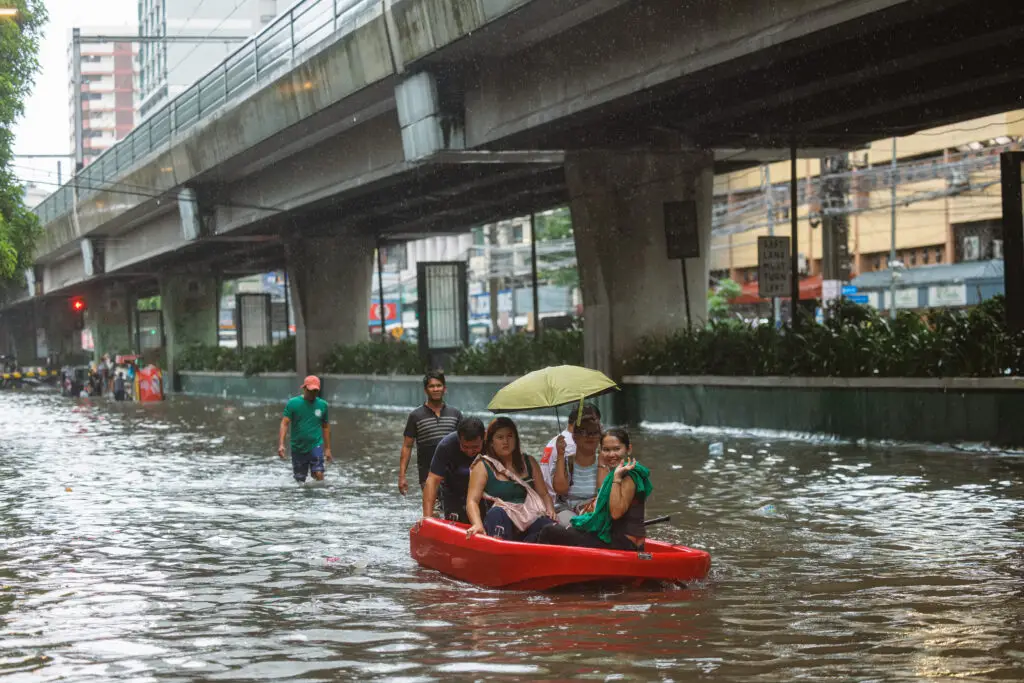







December 16, 2025 · Typhoon Rai (locally Typhoon Odette) was the strongest storm to enter the Philippines in 2021. It left thousands of Filipinos displaced, hundreds dead, and more than USD 700 million worth of damage just before Christmas.
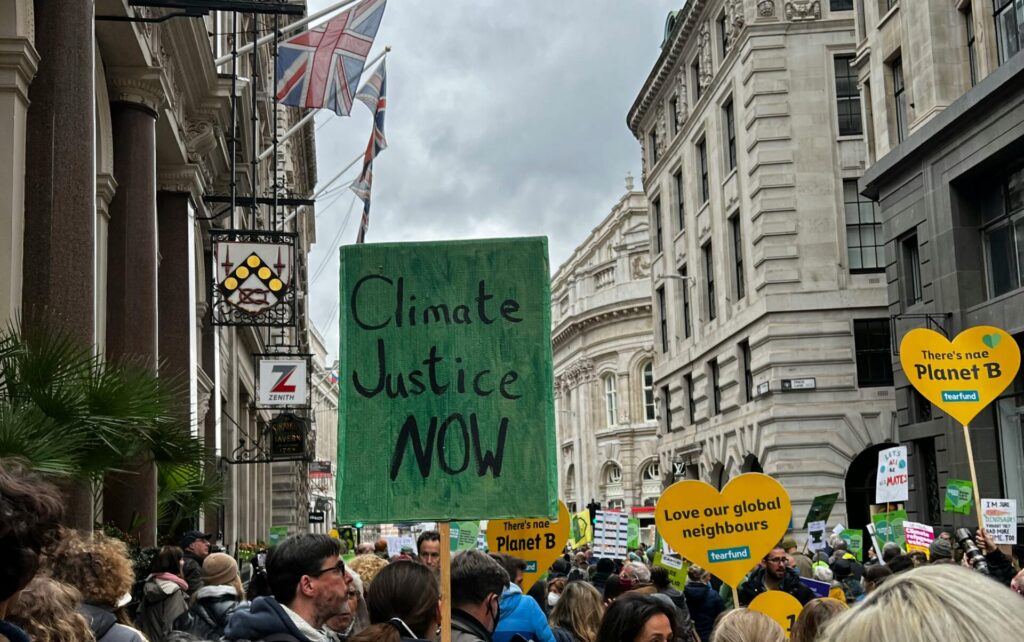
In 2025, 103 Filipinos are fighting back with the world’s first transnational lawsuit against an oil company for carbon pollution and severe impact on the climate crisis. This is a historical moment for climate justiceGlobal EssentialsClimate justiceA framework approaching climate change as a systemic equity issue, asserting that populations contributing least to historical emissions bear the disproportionate burden of climate impactsRead more in the Glossary →. Even more so for countries like the Philippines that are often victims of the planet’s increasingly unpredictable conditions.
The big picture
The Odette case is signed by typhoon survivors from the hardest-hit areas in Bohol, Cebu, and other neighboring Visayan islands. In a legal first, disaster-stricken communities are going up against oil giant Shell Plc to seek financial compensation. It is the first climate justice case against one of the biggest polluters and largest contributors to fossil fuelPH Laws & FrameworksCoal moratorium & fossil fuel phase-outRegulatory bans on new fossil fuel infrastructure (e.g., greenfield coal plants) and the systematic retirement of existing assets. In energy transition finance, this dictates capital allocation shifts, triggering early retirement mechanisms, just transition financing, and the repricing of fossil-fuel-dependent utility portfolios.Read more in the Glossary → emissions.
The group’s legal counsel, the Hausfeld Legal Team, served a formal Letter Before Action (LBA) to Shell Plc’s headquarters in the United Kingdom on October 23, 2025. This is supported by advocacy groups Greenpeace Philippines, Legal Rights and Natural Resources Center, the Philippine Movement for Climate Justice, and Uplift UK.
On December 11, 2025, the case was officially filed. The case will be heard in the United Kingdom under Philippine law.
So what?
This is a historic moment for climate justice. It is the first global case that directly links polluters to deaths and personal injuries suffered from climate-related disasters.
Greenpeace Philippines Climate Campaigner Jefferson Chua told Sustina in an interview, “One of the reasons […] why the case is being filed [in the UK] is because the jurisprudence in the Philippines is simply inadequate to handle climate cases. We don’t have rules of evidence for climate cases, although we have good environmental laws. We don’t have good rules of evidence for climate.”
He added, “Hopefully, these kinds of efforts, these climate litigationGlobal EssentialsClimate litigation & the Carbon MajorsThe use of judicial systems to enforce climate accountability, often targeting the "Carbon Majors"—a specific group of state and investor-owned entities responsible for the majority of historical industrial greenhouse gas emissions. Read more in the Glossary → cases, will put us on the map and show that people are taking it upon themselves to be leaders in the climate space, and the government really should follow suit. It’s embarrassing that the government is not doing anything to equal the effort and the courage of these claimants.”
Shell Plc is responsible for over 41 billion tonnes of carbon dioxide equivalent (CO2e). That amounts to more than 2 percent of global fossil fuel emissions, according to Carbon Major’s database.
The Odette Case website stresses Shell Plc’s continued expansion in oil and gas despite knowing its risks to the planet. This has doubled the chances for extreme weather changes to occur, resulting in events like Super Typhoon Odette.
“The claimants allege that since 1965 at the latest, Shell knew that burning fossil fuels was increasing the concentration of greenhouse gasesGlobal EssentialsGreenhouse gases (GHGs)Atmospheric gases (primarily CO2, methane, nitrous oxide) that absorb and emit radiant energy, driving the greenhouse effect.Read more in the Glossary → in the atmosphere, and that it would lead to changes in the climate. In 1988, Shell was warned that climate change would have ‘dramatic’ effects, especially on communities in the Global South. But they kept this analysis hidden and carried on,” the case site claims.
This is based on the 2022 report “National Inquiry on Climate Change” published by the Commission on Human Rights. The report stemmed from a petition by environmental groups to examine how major carbon-emitting companies affect Filipinos through the climate crisis. It found that fossil fuel companies “obfuscated, obstructed, derailed and delayed” global efforts to shift to renewable energyGlobal EssentialsRenewable energyEnergy derived from naturally replenishing sources (solar, wind, geothermal, hydro).Read more in the Glossary →.
Shell will be tried on four causes of action in Philippine law:
- Shell caused damage to the Claimants in a manner contrary to morals, good customs or public policy (under Articles 19, 20 and 21 of the Philippines Civil Code).
- Shell violated the constitutional rights of the Claimants, including their right to a balanced and healthy environment (under the 1987 Constitution of the Republic of the Philippines).
- Shell acted with negligence, as they had the opportunity to mitigate climate harm, and an obligation to refrain from obfuscating climate science, but failed to do so (under the law of quasi-delict and environmental tort under Articles 2176 and 2177 of the Philippines Civil Code and applicable precedent).
- In the alternative, Shell has been unjustly enriched, profiting enormously from their contribution to anthropogenic climate change at the expense of the Claimants (under Article 23 of the Philippines Civil Code).
Petitioners are demanding systemic accountability and justice through financial compensation for “personal injury and death, damage to their homes and property, and breach of their constitutional rights to a healthy environment.” It also seeks “potential injunctive relief” to prevent further violations of their right to a healthy environment.
Shell Plc denies claims of having unique knowledge of climate change. “This claim overlooks the benefits energy brings and the decades of choices made by governments, businesses, and consumers that have shaped our energy system. At Shell, we are reducing emissions from our operations and helping customers reduce theirs as we provide the vital energy needed today and in the future,” Shell Plc said in a statement to Inquirer.
What now?
Shell Plc is the first step in these survivors’ fight for climate justice. The results of the case will help determine the extent to which major carbon polluters can be held accountable for their emissions.
The Odette Case was filed on December 11, 2025. This story will be updated with any further developments.
Follow and support the Odette Case here.
This is a developing story.
Dig deeper:
SitRep No. 47 for Typhoon Odette (2021)
Press release – Filipino communities to sue Shell for Super Typhoon Rai damage in world first
Carbon Majors – Shell
The Odette Case
National Inquiry on Climate Change” report, published by the Commission on Human Rights
Inquirer – Odette survivors demand accountability in climate-fueled devastation