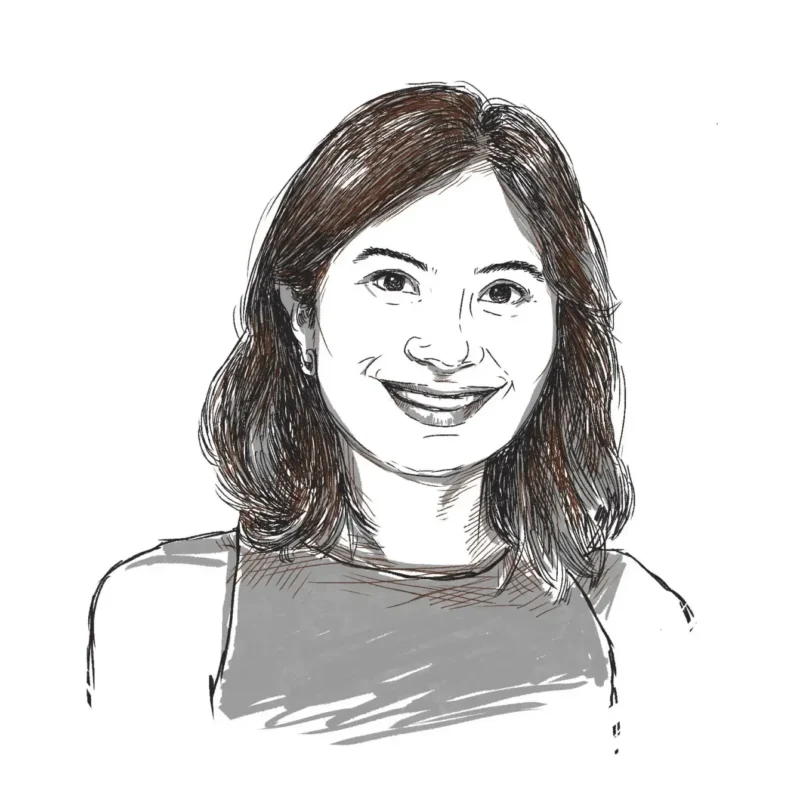



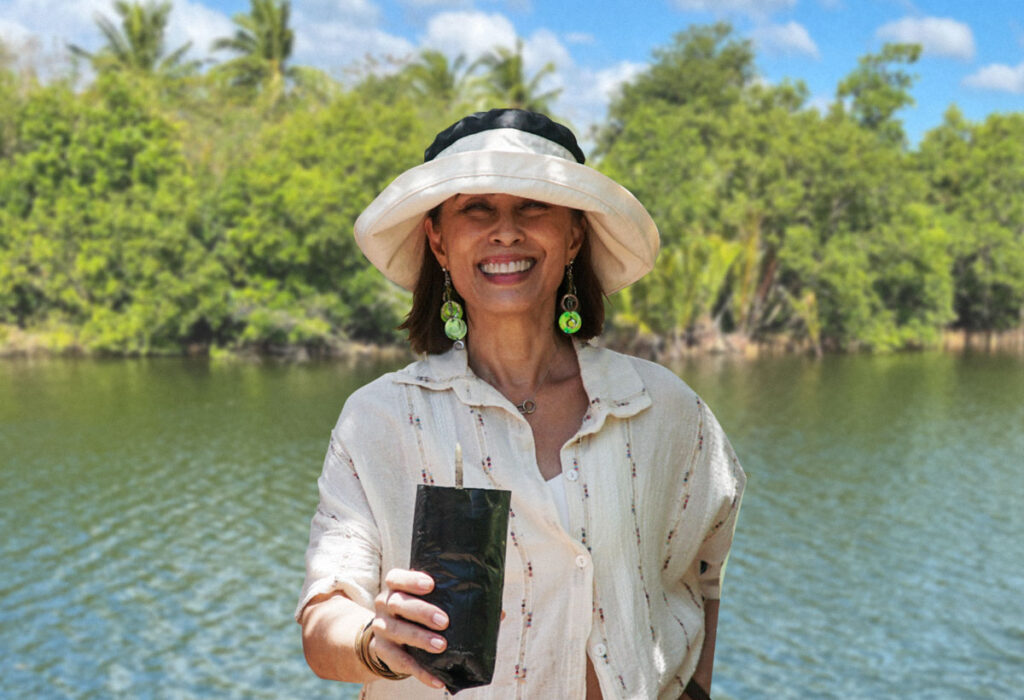
March 31, 2026 · Berta Lopez didn’t think of herself as an environmentalist. The story of how that changed will resonate with younger sisters—she was told to become one. Specifically, by her late older sister, the staunch environmental advocate Gina Lopez. “A force of nature,” is how Berta describes her. A maverick. Undeterred.
She remembers it clearly: During a trip to the United States, Gina asked Berta and her husband to drive her to a meeting with the scientists of California Academy of Sciences. Then she asked them to join the meeting. Then she volunteered Berta to take on the Verde Island Passage as an advocacy.
“[The scientists] were asking her if she would be interested in helping them gain more traction, because people didn’t really know about the Verde Island Passage. She said she was very interested, but she said, ‘I have my hands full.’ Then she just swiveled her chair, looked at my husband and me, and said, “You do it.”
Me? Berta asked. Gina responded by saying that they scuba dive and live by the beach. “Those aren’t really the requirements of being an environmentalist,” Berta quipped. But she took it on anyway, despite not fitting into the box she imagined.
In the early 2000s, few people knew much about the Verde Island Passage: How it was the center of the center of marine shorefish biodiversity in the world, with over 1,736 species recorded within just 10 square kilometers. These credentials were both an asset and a liability: It was the underwater jewel of Batangas and Mindoro, but without legal protection, the passage was susceptible to abuse.
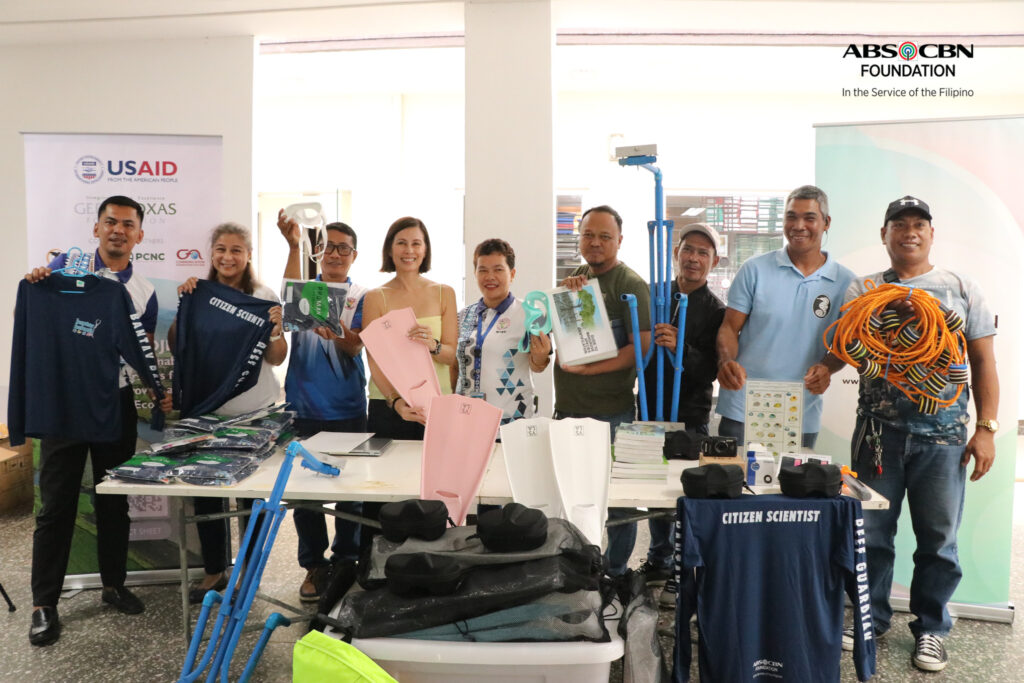
So Berta got to work: different from Gina in execution, but similar in spirit. Instead of big gestures, she focused on the details. In 2014, with the help of ABS-CBN Foundation, she established the SEA Institute—which stands for Science, Education, and Advocacy. The institute trains local community members to become citizen scientists who can monitor and assess the health of their natural ecosystems. The result is a community armed with data that knows how to advocate for themselves and protect their interests.
In 2023, those efforts bore fruit: the Verde Island Passage received the Hope Spot Award from world-renowned marine biology expert Dr. Sylvia Earle’s Mission Blue. It is a recognition given to places critical to ocean health. There are still ways to go, but the award is a step in the right direction.
“My sister always used to say, ‘If you think you’re small, then you will be small. You have to think big,'” Berta said.
Since 2019, Berta has been the Managing Director of the ABS-CBN Foundation, steering the ship with an air of quiet confidence—and thinking big in her own way.
Sustina: It’s been many years since you took over leading the ABS-CBN Foundation. How do you feel about the role you carry these days?
Berta: It was difficult in the beginning because I had never worked in a corporation. Much less with so many people. When I first entered, there were [around] 400 people. They whittled it down to 100, and now we’re around 80 people. [Working] with such a big group, I felt like I was always treading water and swimming. It was never like I was coasting along. But there came a time when I knew enough and was able to talk confidently enough about what we did that it—it didn’t become a walk in the park—but it was something that I could enjoy.
You know, in every way, I had the same values as Gina, because we grew up in the same family. I’m so grateful that we all believed in many ways about the same thing. Maybe [it just differed in] the method—you know, it’s almost like people wanted to run out of the room in our family when Gina entered because she’s going to make you do something. She’s such a force of nature. But it was her being that way that captivated a large portion of the Philippines.
I think ABS [allowed her to] really champion people. It gave her something to stand on and something to protect her as she went and did many things that were so different from the ordinary.
Until now I hear people [from communities telling me stories about her]. People still remember her, even though she passed seven years ago.
How much of the way that you do things now in your work at ABS-CBN Foundation and in your passion for the environment is influenced by her life?
We still carry on with the five advocacies that she championed. I mean, she wanted a million more, but my brother told her we can only have so many.
Her presence and what she wanted for the country is still so present in everything we do. Maybe it’s just the manner in which it’s conducted because we’re just different people. I’m not the personality like she is. I’m quieter, I do things in the background, and I’m more detail-oriented. She’s like, grand gestures.
But it [feels] the same because she brought our family wherever she was. It was almost our standard Christmas vacation [to go to all the] communities. From early on, we were exposed to everything she did, because she used us as a sounding board and almost like guinea pigs to see what was good and what was not.
So in many ways, even though I didn’t really work in the foundation, I was exposed to it early on.
How about speaking for yourself and the way that you see yourself in this role that you’re carrying? Now that it is your own, do you feel like you’ve injected your own Berta magic into it?
Maybe one thing I do really differently from her is I am usually the one [speaking] with heads of departments or program heads. I do it with everyone. Every single person in the beginning, they would be really scared or worried, like “What did I do? MD’s calling me in to talk to me one-on-one!”
But I guess they realized that it was just my way of getting to know them. Asking them what they needed to be able to do their job better.
I wanted to get to know people so that I could help them. For me, they are the experts. The specialists. A big role of mine is to empower all the people who work in the foundation and not to get in their way, you know?
Were you always a big advocate for the environment the way Gina was?
Not in a formal way the way she was. I was concerned [as an individual]. It largely has to do with the fact that many of the things I like to do involve being in the sea or being outdoors. It’s almost like I have ulterior motives—I want to keep my playground existing, so I want to make sure it will be there, not only for me, but for other people moving forward.
You mentioned your sister was the one who roped you into setting up the SEA Institute. What were those early days like for you and your husband?
Everything was a steep learning curve, so it was really a matter of establishing contacts. In the beginning, it was a slow path. But eventually, we got someone to manage the institute, and then we launched it as a project of the ABS-CBN Foundation. That’s when things started to take on steam.
By then, we had established a program with the same scientists from the California Academy of Sciences and Dr. Al Licuanan from De La Salle University. They developed the “AL-1 method”: It’s a way of scientifically monitoring the coral reefs—and also mangroves and seagrass.
This method is tailor-made for people who live in the coastal area. Basically, they use a list of fish that indicate whether the reef is healthy or not. You grid out an area of the reef, swim back and forth, and note down the types of fish and how many. Of course, it’s not exact, but the method is done in such a way that it makes allowances for differences.
We also teach this to the LGUs [Local Government Units]. For our work to be sustainable, we need to launch activities through an intermediary—either an LGU, a school, or a People’s Organization—so that it continues on. If we leave it with individuals, people lose interest or leaders move.
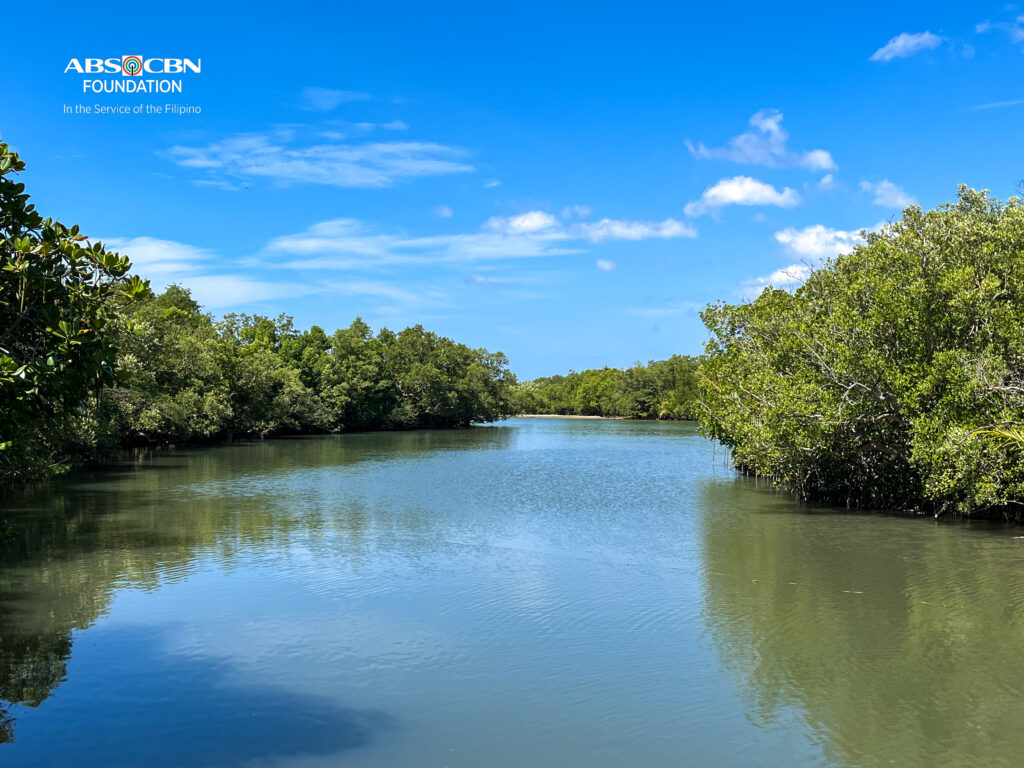
With conservation work, setbacks can be devastating. In 2023, there was a massive oil spill that happened in VIP. To this day, the passage still lacks comprehensive legal protection, and the Hope Spot is supposed to help push the inclusion of VIP into NIPAS (National Integrated Protected Areas System).
Given all these things—the slow movement and the setbacks—what keeps you returning to this work year after year?
Number one, it’s the people. When you know the stakeholders, how can you not continue to help?
Secondly, it’s nature itself. I’m an active scuba diver, and every time I go diving and see what’s there, it reinforces that this is something worth saving. I mean, we even talk with friends and we say, “My gosh, it might just be our kids who see what we see now, and their kids may not even see it.” It’s the appreciation of what we have.
I have gone diving in other places in the world, and the Philippines is really very different. It is singular in what it offers. Even foreigners say the same thing. They go to places within the Philippines, and they find places like Anilao incredible. They want to spend their time there.
This type of work is not easy and costs time and energy. How do you manage the demands? How do you ensure you don’t burn out? And what has this work given you in return?
What has it given me in return? A lot. It has given me a sense of purpose. Having the opportunity to help others is a privilege, and I’m always so grateful. I could be doing a job where I’m earning a lot of money for a company, but here, every time I go to the actual people we help, I understand why we do what we do. It sinks down deep.
Last year, we helped graduate 900 PDLs (Persons Deprived of Liberty) in Iwahig. We have a program for them. We are heavily invested in ALS (Alternative Learning System). We help train PDLs to become assistants to the actual ALS teachers because there aren’t enough teachers.
Last year, I saw an older man with his daughter. He told me that because of this ALS system, he became literate and was able to start texting his family. Before that, because he was in jail, the ties were cut. Suddenly he could be in touch with his family again. When you are part of instances like this, it makes you really understand why you do the work you do.
Is there a specific memory or interaction from the VIP community that you hold close to your heart?
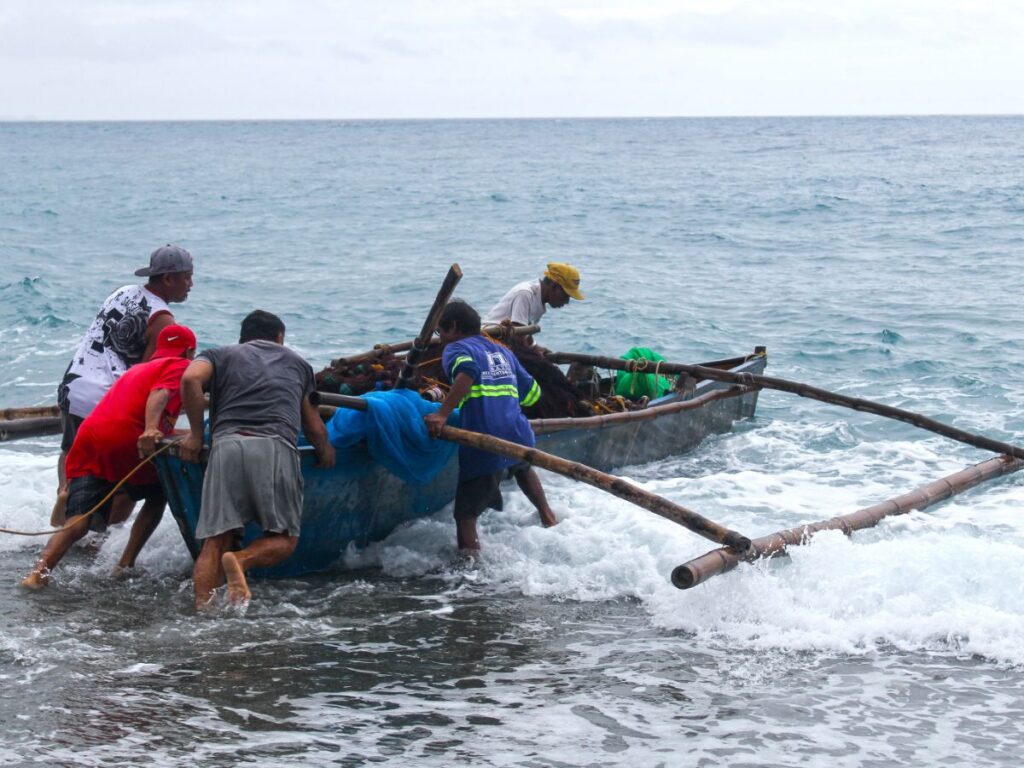
This was not necessarily due to us, but [ABS-CBN Foundation] is also partnered with a [group] in the Verde Island Passage called “The Pink Argonauts.” They hold a golf tournament every year, and the proceeds are used to pay for the education of a bangkero so he can become a Dive Master.
I was on a boat once, and [I learned that] one of the guys helping the captain was actually a graduate of that program.
For me, when I come across concrete examples like that, where efforts become reality and you change somebody’s life, it [reminds me] how a tiny ripple creates big changes. That’s how I think about our work. It may not be big in the grand scheme of things, but it’s these small things, incremental things, that eventually, when put together, they make a difference.
What would you say to young conservationists who are just starting out and might feel overwhelmed by the scale of the problem?
I would say go with your gut, because that’s the thing that propels you. If you go with your mind and what you think is right or wrong, many times, of course, it will steer you in the right direction. But it’s what you have in your heart and gut that tells you this is the right thing to do. I would trust that feeling. Those are the real decisions that are true for you, and not necessarily an academic or theoretical thing that is good for everyone.
And start small. Look for where there is an issue or a problem, because those are the things that need solving.
If the communities in VIP were to remember you for one thing, what would it be?
My gosh, I would say my smile. I hope they always remember me smiling at them. When I’m with them, I always have a good time. They make me smile.