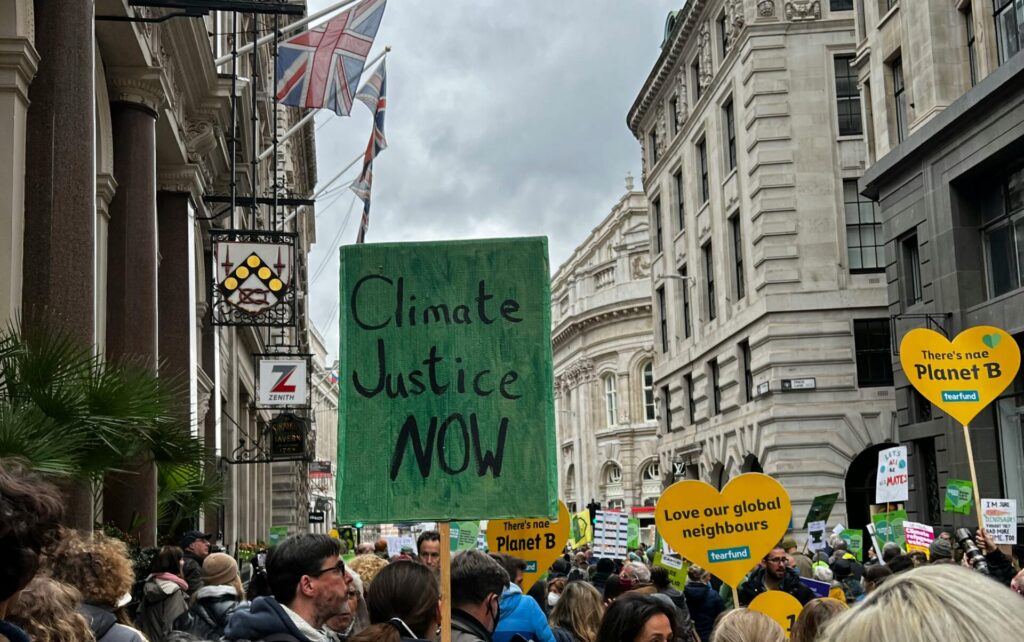






December 17, 2025 · As the climate crisis intensifies, discussions about who is responsible are gaining traction. More than 3,000 climate-related cases were filed across 55 national jurisdictions and 24 international courts, as of June 2025, according to a report by the UN Environment Programme (UNEP). This means the total number of climate change cases has more than doubled in the last eight years.
In the Philippines, climate cases remain more a concept than reality. But there is a growing number of environmental lawyers working to give climate litigationGlobal EssentialsClimate litigation & the Carbon MajorsThe use of judicial systems to enforce climate accountability, often targeting the "Carbon Majors"—a specific group of state and investor-owned entities responsible for the majority of historical industrial greenhouse gas emissions. Read more in the Glossary → teeth.
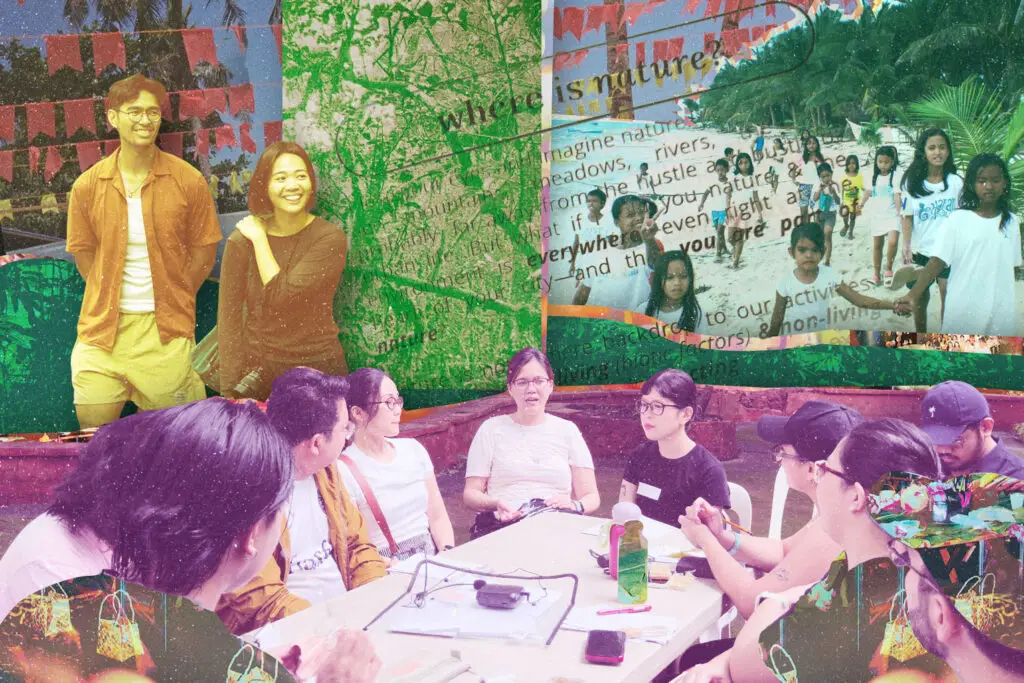
Around 40 legal professionals gathered at the Asian Institute of Management on December 11 for an inaugural learning session on climate attribution science in the Philippines. Organized by the Environmental Law and Justice Circle (ELJC) and the Alliance of Youth, Organizations, and Students (AYOS), the program aimed to strengthen awareness of current climate attribution tools.
Attribution science links greenhouse gasGlobal EssentialsGreenhouse gases (GHGs)Atmospheric gases (primarily CO2, methane, nitrous oxide) that absorb and emit radiant energy, driving the greenhouse effect.Read more in the Glossary → emissions to climate impacts—data-driven evidence increasingly used in litigation.
The groundwork for climate attribution science in the Philippines has been laid since 2015, said Lea Guerrero, Country Director of Greenpeace Philippines, referring to the National Inquiry on Climate Change (NICC).
The NICC is a landmark report by the Commission on Human Rights (CHR) that first established the link between the climate crisis and human rights. It identified “carbon majors,” or major corporate carbon emitters, based on research by climate scientist Richard Heede, a principal investigator at the Climate Accountability Institute (CAI). Heede’s research found that 90 carbon emitters were responsible for roughly two-thirds (63%) of all industrial greenhouse gas emissions since the start of the Industrial Revolution.
Today, all the research we need to prove the causal links in climate accountability already exists, said Emmet Connaire, Senior Analyst at InfluenceMap, a UK-based climate think tank and Lead Researcher of the Carbon Majors database. The Carbon Majors database is a continuation of Heede’s research.
The most recent report gathers data until 2024. Among the top 32 investor-owned carbon emitters named in the data from 1854 to 2024 are Chevron, ExxonMobil, BP, and Shell.
“Climate attribution science is the critical link between emissions and accountability […] it shows how human-caused warming is changing our world,” said Connaire. “We now have the science, the data, and the tools to clearly connect greenhouse gas emissions to specific companies and to the rising risks that communities are facing from extreme weather.”
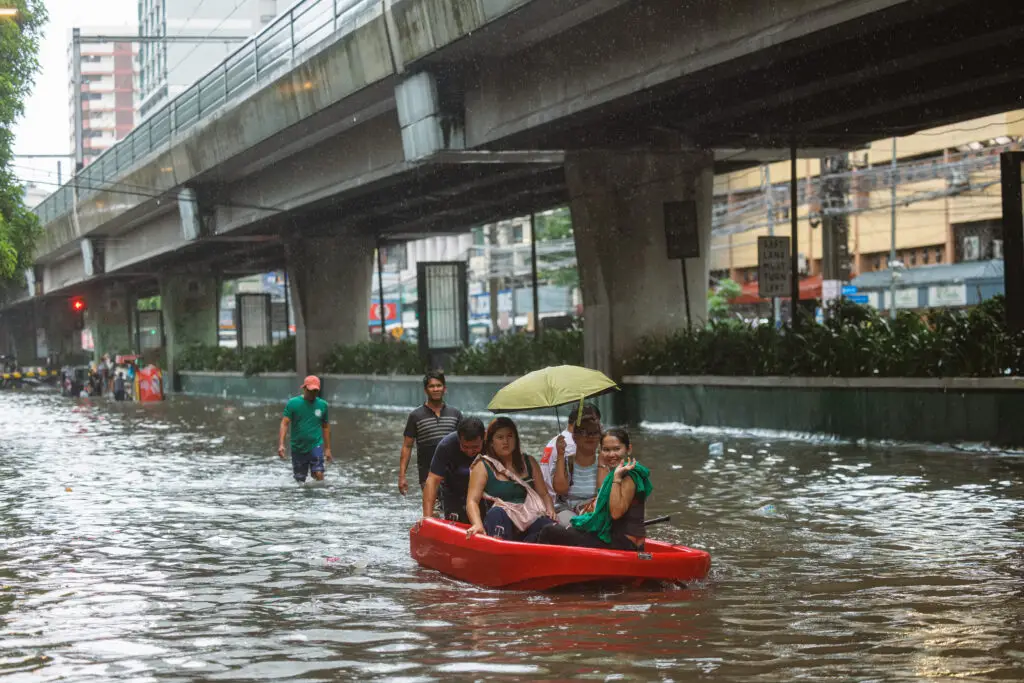
In other parts of the world, attribution science is increasingly being used by climate victims in legal battles against polluting corporations. For example, the landmark “Odette Case”—a case filed by Filipino survivors of Typhoon Odette in UK courts against the global oil and gas company Shell Plc. In 2021, Typhoon Odette developed into a category 5 typhoon overnight and devastated coastal communities in central Visayas, killing nearly 400 people.
“Depending on the outcome, this case can determine the future [for climate reparation cases] and open up the possibility of holding more companies accountable for their conduct, and possibly change their behavior,” said Atty. Ryan Roset, senior legal fellow at Legal Rights and Natural Resources Center (LRC).
In the Philippines, the rules of procedure for environmental cases already emphasize our constitutional rights. According to Atty. Grizelda ‘Gerthie’ Mayo-Anda, Executive Director and Co-Founder of Environmental Legal Assistance Center (ELAC), domestic legal measures, such as the Writ of KalikasanPH Laws & FrameworksWrit of KalikasanA unique Philippine legal remedy providing citizens a direct avenue to seek judicial relief against environmental damage that threatens life, health, or property across multiple jurisdictions.Read more in the Glossary →, can serve as a model for international mechanisms to address large-scale environmental damage as a result of climate change. This idea was presented during hearings related to the submission of the International Court of JusticeGlobal EssentialsICJ Climate Advisory OpinionThe International Court of Justice's 2025 advisory opinion confirming that states already carry binding legal obligations, under existing international law, to prevent climate harm.Read more in the Glossary → (ICJ) advisory opinion.
Released in July 2025, the ICJ advisory opinion outlines the obligation of states in respect to climate change; affirming that states have the legal obligation to prevent and remedy climate harm, cut greenhouse gas emissions, and support more vulnerable countries.
Atty. Nicole Ponce, Philippines Advocacy Lead of World’s Youth for Climate JusticeGlobal EssentialsClimate justiceA framework approaching climate change as a systemic equity issue, asserting that populations contributing least to historical emissions bear the disproportionate burden of climate impactsRead more in the Glossary →, discussed the national and regional pathways currently underway to operationalize and implement this opinion. She notes that within the ASEAN region, many constitutions already integrate environmental rights and interpret these as climate obligations under the right to life, health, violence, ecology, environment; what is needed is for states to align their climate policies with scientific requirements.
There is also a need to shift the burden of proof from the victims to the perpetrators: “Communities already harmed should not be required to prove harm. Instead, the burden [should] shift to decision-makers and industries,” she said.
The Philippines is one of the most at-risk countries to climate change impacts, losing as much PHP 48.9 billion per year and displacing millions of people. As attribution science continues to develop, the challenge is to strengthen existing national rules of procedure to make it a more potent weapon in legal courts. “Laws are only as good as their implementation,” added Mayo-Anda.
Paulo Burro, co-convenor of EJLC, hopes that the inaugural learning session will be, “the beginning of a practice of knowledge sharing and capacity building within the environmental law space, where people don’t usually convene.”
Dig deeper:
Grantham Research Institute on Climate Change and the Environment (2024). What is climate litigation?
International Court of Justice (2025). Obligations of states in respect to climate change