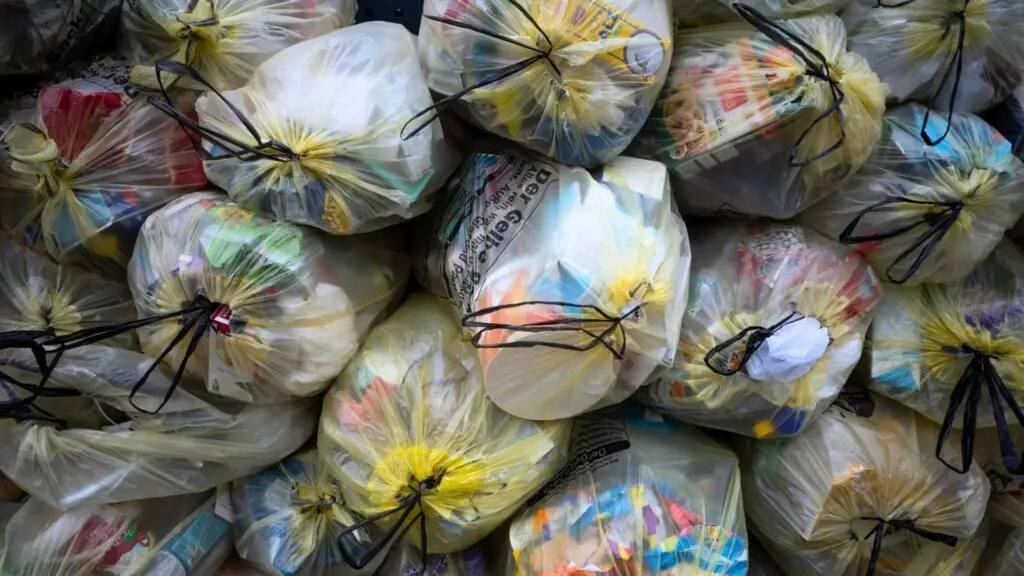





February 5, 2026 · On January 8, 2026, the sanitary landfillLocal Climate & EcologySanitary landfill vs open dumpsiteEngineered waste disposal facilities designed with liners and leachate management (sanitary) versus unregulated, uncontained waste piles (open dumps).Read more in the Glossary → in Binaliw village, Cebu City, collapsed, bringing down a mountain of waste on the 100 workers on site. When rescue and search operations ended on January 19, the death toll amounted to 37, including one rescue volunteer who died from septic shock.
The tragedy sparked crucial discussions on solid waste management in the Philippines—from proper collection and storage, to the big question: what do we do with all the waste that’s already here?
The big picture
Before its collapse, the Binaliw landfill was privately operated by Prime Waste Solutions, Inc., a unit of Prime Infra Capital, Inc. This was the case until the Department of Environment and Natural Disasters (DENRPH Laws & FrameworksDepartment of Environment and Natural Resources (DENR)The Philippine executive department managing forests, protected areas, mining permits, and pollution control. It is the primary regulatory counterparty for environmental compliance, natural capital valuation, and the issuance of permits governing resource extraction and land-use changes.Read more in the Glossary →) issued an immediate Cease-and-Desist Order following the landslide. The landfill receives an estimated 573 metric tons of waste daily from Cebu City, Mandaue, and Lapu-Lapu.
With Binaliw’s shutdown, Cebu City Mayor Nestor Archival confirmed that the closed Inayawan landfill will be used as a temporary transfer station to consolidate waste before transporting it to final sites outside Cebu City.
Ahead of the incident, the landfill had already been subject to numerous controversies. In May 2019, the Environmental Management BureauPH Laws & FrameworksDENR-Environmental Management Bureau (EMB)The DENR bureau enforcing environmental compliance, monitoring air and water quality, and managing hazardous waste. It executes the Environmental Impact Assessment (EIA) process, making its enforcement actions a direct operational and legal risk factor for infrastructure and industrial projects.Read more in the Glossary → 7 flagged environmental violations against ARN Central Waste Management Inc. (ACI), its original operator, for improper garbage hauling and missing monitoring reports. Barangay officials and nearby residents also complained about foul odors and health risks. In June 2019, Councilor Joel Garganera, a landfill critic, said in a privileged speech that the facility does not meet sanitary standards.
He criticized the operators for the facility’s design. He said they were “mining” the mountain to create a new “mountain of garbage” like an open dumpsite, which is banned by the Ecological Solid Waste Management Act of 2000.
In August 2024, SunStar cited more violations of the Ecological Solid Waste Management ActPH Laws & FrameworksEcological Solid Waste Management Act of 2000 (RA 9003)The foundation of Philippine waste law: segregation at source, barangay MRFs, closure of open dumpsites, and local waste management plans.Read more in the Glossary →. Officials echoed the open dumping resemblance and ordered corrective measures and continued monitoring instead of suspension.
Over 150 residents protested the landfill’s foul odors, health risks, and fly infestations in September 2024. A year later, in June 2025, then Mayor-elect Archival warned of permanent closure if environmental violations persist. After facing strong earthquakes and intense rainstorms in September and November 2025, the Binaliw landfill’s mountain of waste weakened, gave in, and ultimately collapsed.
The event has prompted a widespread discussion on the Philippines’ waste management system, so much so that the government called for a nationwide review of all sanitary landfills to ensure compliance with the Solid Waste Act. It has also led to talks of amending the law itself, 25 years since it was passed, to include new waste-to-energyCircular Design & EconomyWaste-to-energy (WTE)Technologies that convert municipal solid waste into electricity or heat, typically through incineration or gasification.Read more in the Glossary → (WTE) technologies.
So what?
Despite the many criticisms and calls for better management before the Cebu landfill tragedy, it has largely been treated as a problem of policy instead of implementation.
As a response, the Department of EnergyPH Laws & FrameworksDepartment of Energy (DOE)The Philippine agency governing the national power mix, energy security, and fuel exploration. It directs the energy transition through renewable energy auctions, grid modernization policies, and the regulation of fossil fuel phase-outs, directly shaping the investment landscape for power generation and storage infrastructure.Read more in the Glossary → (DOE) is fast-tracking the integration of alternative energy sources into the Philippine power supply to replace fossil fuels with renewable energyGlobal EssentialsRenewable energyEnergy derived from naturally replenishing sources (solar, wind, geothermal, hydro).Read more in the Glossary → (RE). (Read: Explainer: Why is DOE pushing for a waste-to-energy exemption?)
Currently, WTE violates the national ban on incinerationPH Laws & FrameworksThe Clean Air Act (RA 8749)Enacted in 1999, the Philippine statutory prohibition against the burning of municipal, biomedical, and hazardous waste.Read more in the Glossary → through the Philippine Clean Air Act of 1999 and the Ecological Solid Waste Management Act of 2000. But given the Binaliw landfill’s collapse and its devastating effects on public health and sanitation, it may just be the push the WTE movement needs to have the latter policy amended.
According to waste expert Paulo Burro, “The Ecological Solid Waste Management Act or RA 9003PH Laws & FrameworksEcological Solid Waste Management Act of 2000 (RA 9003)The primary law governing solid waste management in the Philippines. It is a state policy that creates institutional mechanisms and incentives for proper waste management to protect people and the…Read more in the Glossary → [is], in a sense, a very complete map. The problem has always been the implementation of the law. In my opinion, if we properly utilized [this act] and its facilities, this wouldn’t be a problem. If you segregate properly, you know what to do with organic waste (compost) and what to do with upcyclable waste. The root cause is the failure to realize the vision of RA 9003. You wouldn’t need WTE if you were recycling and composting correctly.”
Environmental groups caution that waste-to-energy is not zero-wasteCircular Design & EconomyZero wasteA systemic design goal aiming to eliminate the concept of waste by ensuring all materials are reused, recycled, or composted, preventing trash from entering landfills or the natural environmentRead more in the Glossary → because a large portion of the energy comes from non-renewable, fossil-derived plastics, but the momentum around WTE continues to grow. In November 2025, the first large-scale WTE facility was announced to be built in New Clark City, Pampanga, and the potential Solid Waste Act revisions may also make way for more facilities to open.
Environment Secretary Raphael P.M. Lotilla notes that new incineration technologies have been developed that “can now meet the current environmental standards.”
However, the Global Alliance for Incinerator Alternatives (GAIA) cites the “Waste incinerators undermine clean energy goals” study by Neil Tangri, which describes incineration as a high-carbon power source and therefore counterproductive to the renewable or clean energy agenda. The study emphasizes that a waste management strategy based on recycling and composting would be more beneficial. This approach will also open up employment opportunities for locals.
“Incineration is not a short-term or long-term solution. You can’t solve this problem by building multi-million dollar facilities to be subsidized by public funds, that will just transform solid waste into another toxic pollution problem. Doing so will just create more problems,” said Anne Larracas, Managing Director for Asia Pacific of the Global Alliance for Incinerator Alternatives (GAIA), in a press release.
What now?
With the events in Cebu emphasizing the crucial and urgent need for a reformed waste management system in the Philippines, more and more people are joining the call for WTE despite the environmental implications.
Concerned groups continue to monitor the DENR’s next move in mitigating Cebu City’s solid waste crisis following the landslide’s devastating effects on public health and sanitation.
Dig deeper:
DENR shuts down Binaliw landfill after landslide, vows impartial probe
Manila Times – Inayawan landfill to serve as temporary solution – Archival
SunStar – Binaliw landfill: A timeline of controversies before the tragedy
Philippine Clean Air Act of 1999
Ecological Solid Waste Management Act of 2000
DENR orders multi-sectoral probe on Binaliw landslide, landfill review
Rappler – Incineration to be allowed? Gov’t revisits solid waste law 25 years after passage
Press release: Gov’t, consortium advance PH’s first large-scale waste-to-energy plant
Study by Neil Tangri: “Waste incinerators undermine clean energy goals”
Press release: Incineration not a solution, green groups warn Western brands found polluting the Philippines