
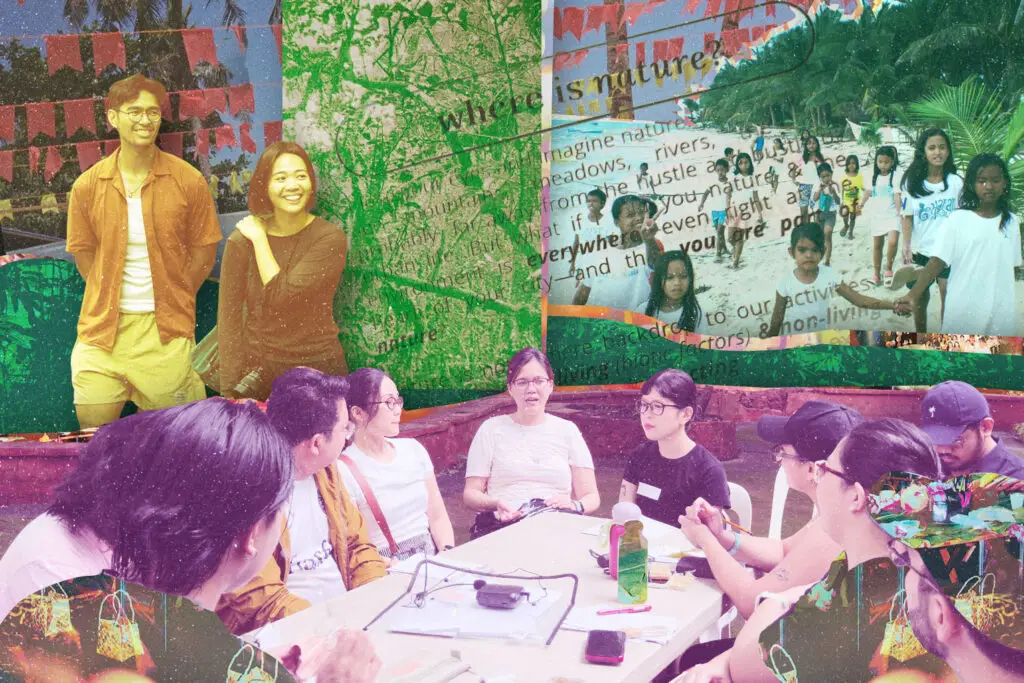



May 15, 2026 · In the Philippines’ race for a transition to renewable energy, Rebecca Cangayda-Tandug is asking a hard question—not whether renewable energy is necessary, but whether the communities in its path have any real say.
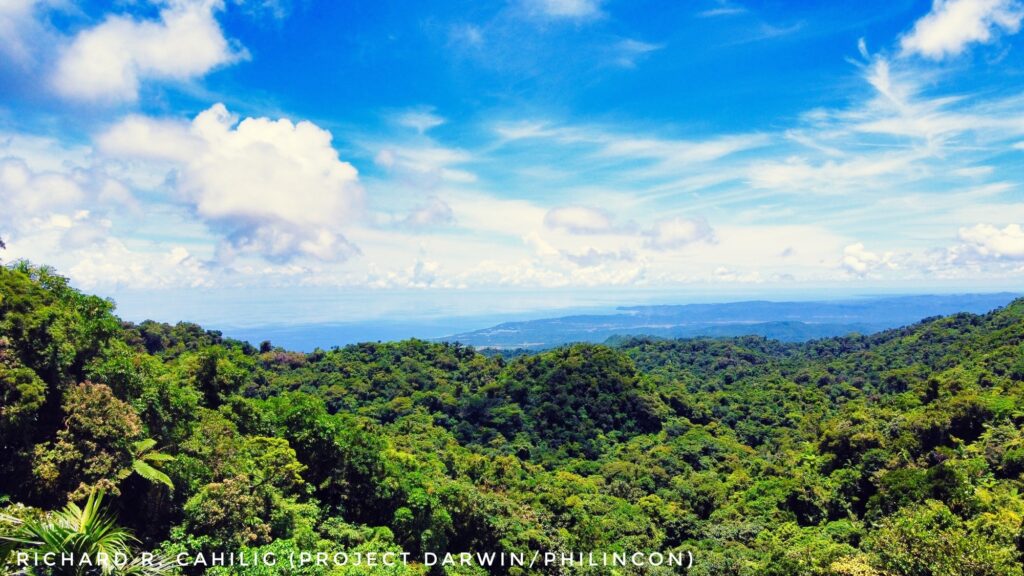
Currently board member of Philippine Initiative for Conservation of the Environment and Empowerment of the People (PhilinCon), Tandug argues that renewable energy projects are threatening conservation efforts on the ground such as the Northwest Panay Peninsula Natural Park (NPPNP), a 12,000-hectare protected area covering the provinces of Aklan and Antique.
In 2018, the Aklan Pumped-Storage Hydropower Project started moving in the area, led by Strategic Power Development Corporation (SPDC) and owned by San Miguel Corporation.
The project’s reservoirs would be constructed in two of the major rivers flowing into nearby villages, which could affect the available water supply.
The facility aimed to support a portion of Visayas’ renewable energy requirement while “generating employment and livelihood opportunities” for the local community, based on the official project document. PhilinCon has joined local communities in criticizing the project.
The Philippines continues to pursue an aggressive increase of renewables in the power generation mix to 35% by 2030 and 50% by 2050.
Projects located in protected areas are legally required to prioritize conservation in their design, under the country’s Expanded National Integrated Protected Areas System Act of 2018.
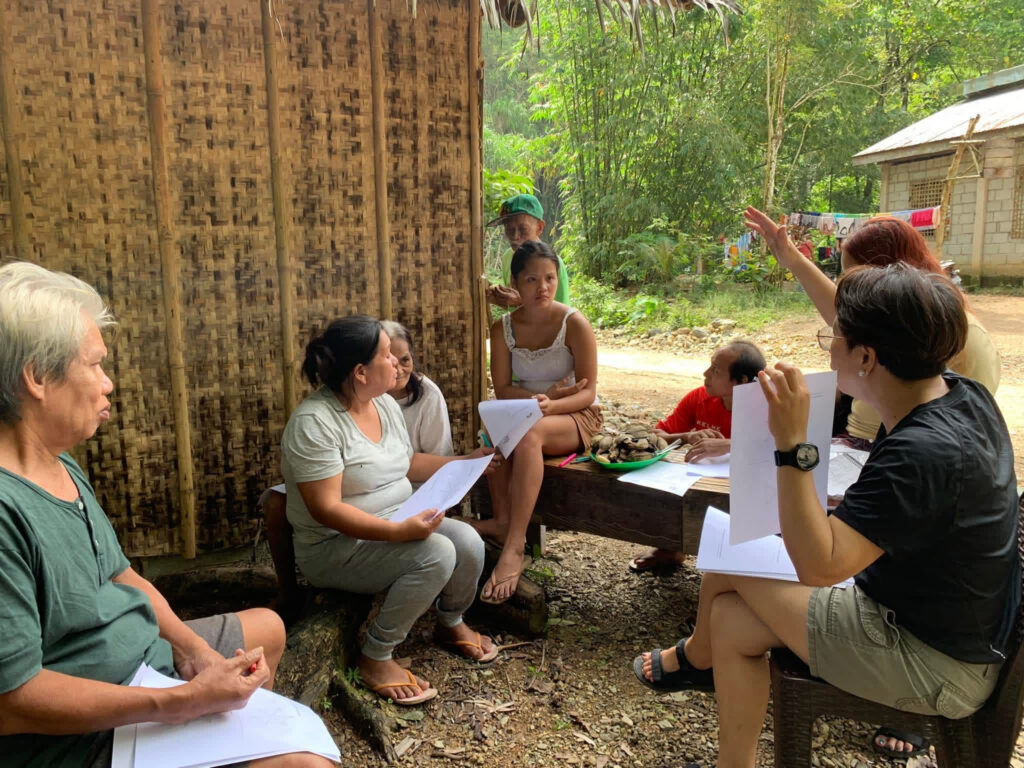
Tandug is part of the local organization who has been working in conservation for 25 years. “[Conservation] is not just taking care of the wildlife. It’s also taking care of the social corridors. There are real threats on the ground, and they are not isolated from what we’re doing,” she said.
Tangud is currently working on a policy paper that highlights the need for the country’s renewable projects to account for their effects on socio-ecological corridors in areas where these are to be constructed.
Sustina: What drew you to the question of where to build and who gets to decide on that?
Tandug: One very good point to raise on that matter is we all understand that [renewable energy] is of national significance. We also understand that this is of global significance and that there’s an urgency [to act]. We don’t need to debate about it, but we should understand that it is also significant for local communities.
If [the] global community believes there is an urgency to save us all, then there is also an urgency for local communities to look at their survival. And they are not simply collateral. Some people would say it’s okay, some things have to be sacrificed, we cannot have everything exactly, but it should not be at the expense of some people whose resilience and vulnerability are tied [to] these reserves.
In an economic decision, we always look at the margins of sustainability. I would always say that fast tracking—not using foresight, creativity, and a lot of careful study—would lead us to shortcuts. And shortcuts are not always sustainable.
When did you first notice the gap between the conversations in renewable energy and protected areas? Why aren’t we taking both into consideration for projects?
In our community, it was the 2016 San Miguel Hydropower projects. It had the potential to cause siltation in a Class A river, which supplies Boracay Island. Imagine the impact if ever.
I have participated the consultation workshops for energy transition, and the the country’s Biodiversity Strategy Action Plan (BSAP), the E-NIPAS review, and we can see that all the agendas are somewhat in silo and policy fragmentations. While the PBSAP highlights the critical areas and species for conservation in the country, baselining these without complementing enforcement on encroachments of these ares can weaken our conservation efforts.
In energy transition, the bias is always on renewables, our urgency for carbon neutrality. It can’t be that easy because it has an impact—like okay, we are all on renewables but we don’t have mountains or rivers anymore. We don’t have water, we don’t have clean air.
It’s good that they always mention a whole-of-society approach, whole-of-nation, whole-of-economy. But the question there is, what “whole” are you talking about when we’re operating in silos and in fragmentation?
Let’s talk about the policy paper you’re writing. What is the core legal conflict you keep running into? You briefly talked about this, but is there a law that says, “protect this” and another that says, “build here”? The laws or memos we have, are they also disconnected?
One thing we’re seeing is the Environmental Impact Statement (EIS), which should clearly state the impact the proponent expects in the community—whether it be economic, biospatial, or biophysical like on rivers and farms. When you apply for an ECC, you have to get the endorsement of the host community where your development would be.
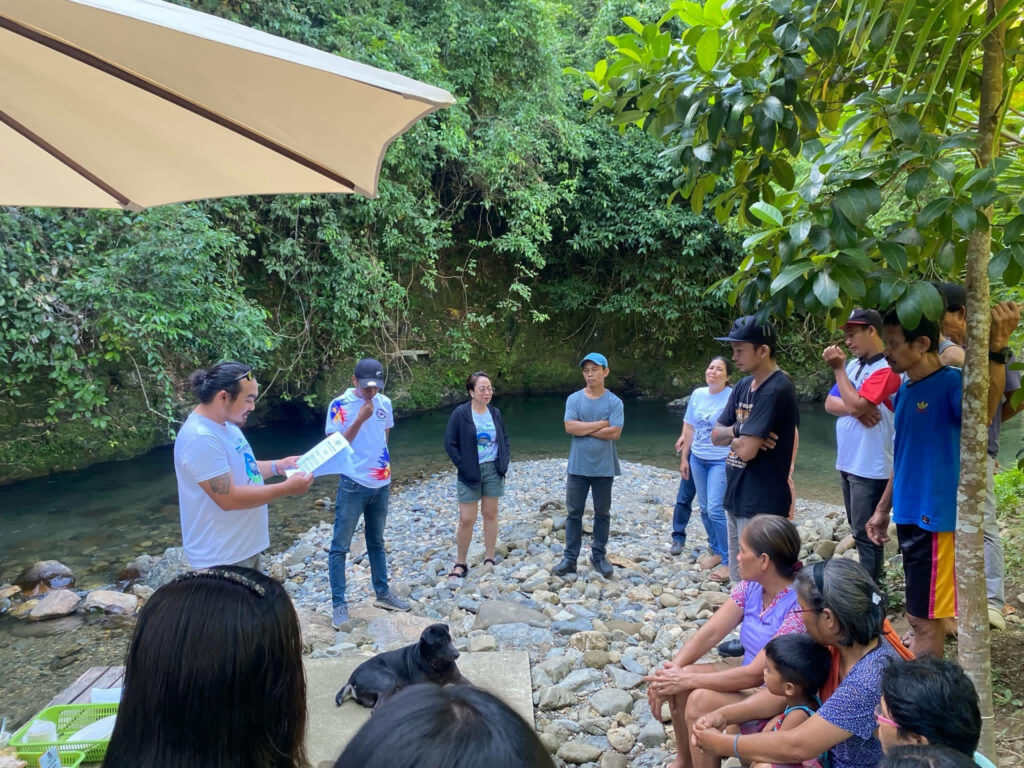
What we saw in Nabaoy, for example: It wasn’t the host community—it was far from the hydropower project. But the impact of that project extended beyond the host community, because there’s a river that flows through the community that would be affected.
For us, the Environmental Compliance Certificate (ECC) should review our EIS system’s procedural gaps. The approval and the endorsement should cover the affected areas, wherever they are located, considering the interconnectivity of ecosystems like riverine and waterways.
Second, it has to do with the process of awarding sites. The Department of Energy awards the sites—mining, renewable energy sites. Before the awarding, we think there should be a reconciliation of our list of key biodiversity areas (KBAs) with the renewable energy agenda. The Philippine Renewable Energy Plan should complement that, since the DOE should have an inventory of the KBAs too.
The local government should also be able to use their local powers to enforce and protect. At the end of the day, what affects you is not the national policies, it’s the local ones. These leaders should know how much impact a project can have on their communities.
They shouldn’t be at the mercy of whoever is awarding the project.
How many projects in the current pipeline might endanger critically protected areas? Is there a specific type of technology that creates more harm than others?
Actually, to get the answer to that would mean a very ambitious project. Because that entails inventory.
There is data on where these projects are, but there are no assessments like these. While I was working on this paper, I really had trouble because we lacked the baseline. There’s information on which areas are considered critical, which are the trigger species, but when it comes to overlapping impacts—we don’t have that.
If only we could have better foresight in managing and designing these development projects, a sound inventory of these proposed sites encroaching on protected areas as well as critical biodiversity—even those that are not classified as protected areas but of higher biodiversity value. So that we can see, on a national level, what could strategically work well and what couldn’t. And of course explore more creative opportunities where to place them, using sound trade-off principles. Not all protected areas have the same biospatial and sociological aspects, so the idea of one-size-fits-all processes is a weak tool for decision-making.
We’re in a crisis right now. Is there a way for us to do the renewable energy transition while taking into account ecological and social sensitivities? If you were the one to design the process, how would that look like?
I think I should start with mentioning who drives the energy demand. It’s systemic, right? For example, why does San Miguel need to expand its energy source? Because its business empire is also expanding. It would require a higher energy demand and so are the rest of the capital resources to sustain its industries.
If that is driven by the national development framework that is only based on the interests of oligarchs and is not tied to or focused on vulnerable communities, then it is not just.
Let’s take the crisis now—we have a fuel crisis. You know how communities… if there’s no electricity or if they can no longer afford gas, they will go back to the forest. They will go back to the rivers.
Imagine if they say that we need a “sustainable” energy source. But that’s not always the idea in the local communities—sustainability for them means to be really one with their environment.
If our environment is destroyed, it’s as if our agenda only has a one-way ticket to development.
If we were to design something, we should first look at who is responsible for that energy requirement, and whoever that is should be even more responsible for what they are developing.
It should really be a justice-based approach model. You respect the local context because it’s their lifeline. We cannot disregard that. Our model should be careful, where all projects are well-studied. Communities should also be more aware of their rights, so that they know how to protect what is theirs.
For those who will be reading your policy paper, what do you want to be their biggest takeaway? What kind of action are you expecting from readers who are stakeholders of the equation?
First, we have to recognize that encroachments and overlaps are happening in many development projects across the country causing massive environmental degradation and irreversible impacts to socioecological systems.
Contrary to what others would insist—that they follow the process, protocols have been respected. Despite all those claims, this reality on the ground, these lived experiences accounted for by evidence shows us that there are overlapping impacts both on the ecological and the sociological corridors.
They will see how these impacts have resulted from poor study and design development, processes involving consultation and acquisition of social acceptability down to DENR and responsible agencies monitoring, evaluation, and regulation of the projects.
It will also help them understand how premium the consultations processes are, the stories and sentiments of local communities towards the developments encroaching in their forests, mountains and waters. And recognizing these, we have to center the conversations to these communities who are most affected.
Despite the current crisis and its resulting push on the renewable energy transition, are you seeing a particular opportunity here?
We see that the emerging future really is smallholder resilience.
The Philippine “just transition” in the climate crisis agenda is still very colonial. Imagine, for the Philippines we insignificantly contribute to less than 1% worth of emissions. But that is what we use as a rationale to fast-track the transition because we have commitments? That’s like us looking for clean energy at the expense of critical biodiversity.
If you want to decolonize the narrative, the conversations [around the climate crisis], we have to go down. We have to ask communities what the energy transition means for them. What does the climate crisis mean for them?
The Philippines has to review its agenda itself. We have to decolonize our conversations.
This interview was edited for clarity.