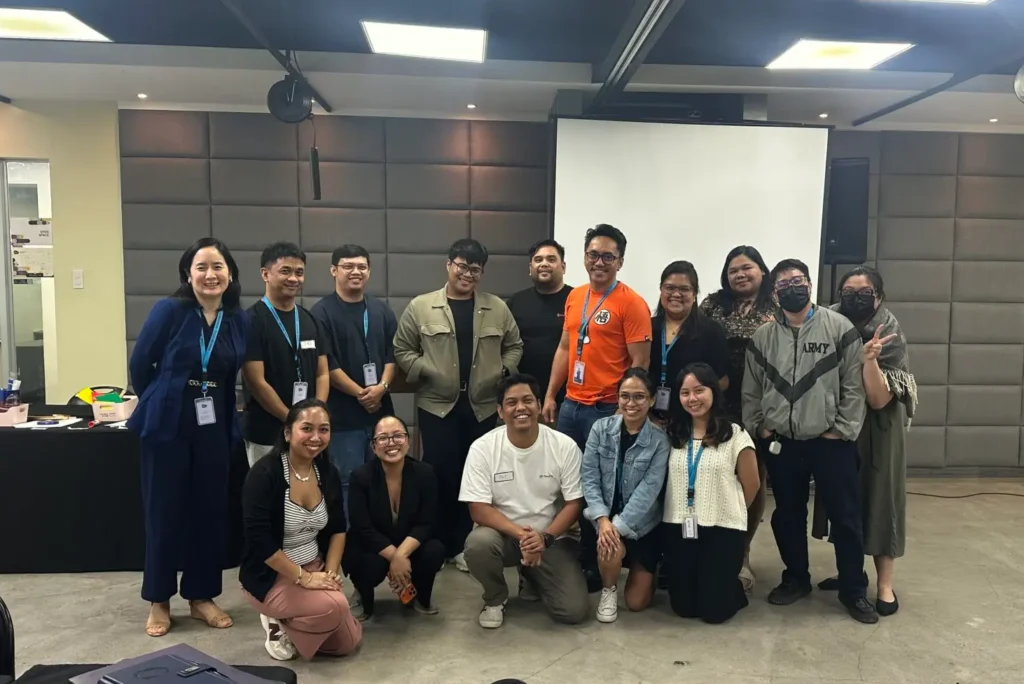



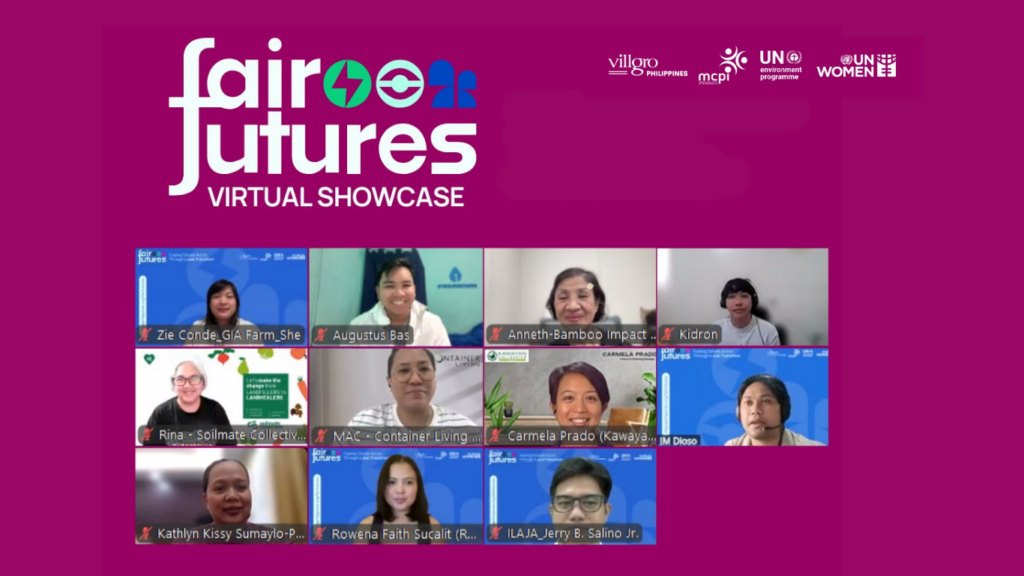
July 3, 2026 · At the Fair Futures Impact Showcase on June 30, 2026, a cohort of climate enterprises pitched to investors, partners, and funders over Zoom, closing out an accelerator run by the impact incubator Villgro Philippines.
With the theme “Fueling Climate Action Through a Just TransitionGlobal EssentialsJust transitionA framework ensuring the shift to a low-carbon economy does not disproportionately burden workers and communities dependent on legacy fossil-fuel industries.Read more in the Glossary →,” the afternoon doubled as a status report on whether small, community-rooted businesses can carry a meaningful share of the country’s climate response.
That question carries weight in the Philippines, the most disaster-prone country in the world. As typhoons arrive stronger and more often, floods reach further inland, and communities with the least tend to lose the most. Against that backdrop, Villgro’s wager is that part of the response can be built from the ground up, business by business, rather than left to governments and utilities alone.
The accelerator program ran in two phases. An initial coaching phase, “Climate Spark,” built foundational capacity across 35 chosen enterprises through a self-paced curriculum, live masterclasses, mentoring, peer learning, and a demo day. A second phase, “Climate Ascent,” narrowed the group to 12 enterprises and layered on expert-led diagnostic panels, one-on-one mentorship, investment-readiness masterclasses, gender scorecard assessments, and follow-on financing support. 11 of those enterprises presented at the showcase.
The enterprises hailed spanned sectors such as agriculture, waste management, construction, clean energy, fashion, and food. The program also carries a gender-smart mandate, with Villgro reporting that 74 percent of the wider cohort were women-led enterprises.
Proof on the record
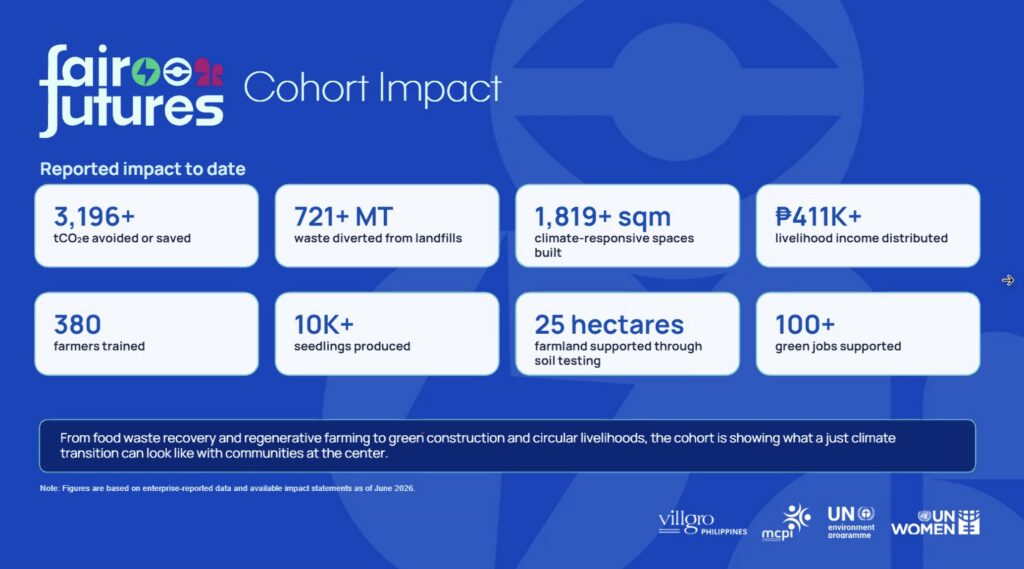
Villgro Co-founder and CEO Priya Thachadi set the tone in the program’s opening, walking through what the cohort had reported to date. The figures included more than 3,196 tonnes of CO₂-equivalent emissions avoided or saved, 721+ metric tonnes of waste diverted from landfills, roughly 1,819 square meters of climate-responsive spaces built, 380 farmers trained, 25 hectares of farmland supported through soil testing, and more than 100 green jobs created.
Being an entrepreneur, she told the founders, is tiring and exhausting work: “You do like 10 steps and then you feel like you’re taking five steps behind, right? There are things that we cannot control, whether it’s the weather or whether it’s a war that’s going on in a different part of the world, but it really affects us… It just seems like everything is on fire. But ultimately, we have to focus on what we can do.”
She called the decision to build a business that benefits communities an extremely brave one, and closed with a reminder that no one was doing it alone. “There is a community here to support you,” she said.
Eleven local problems, rebuilt as climate solutions
The enterprises tackled climate through markedly different entry points, but a common logic ran through them. Each took a local problem the market had failed to solve and rebuilt it as a lower-carbon system:
1. O1nnovations, a youth-led venture from Agusan del Sur, installs gravity-fed rainwater harvesting systems on the rooftops of off-grid schools that lack reliable water.
2. The Soilmate Collective runs a “composting-as-a-service” model that diverts commercial food waste from landfills and routes it to partner farms.
3. Bamboo Impact Lab produces high-quality bamboo propagules using solar-powered, plastic-free greenhouses, aiming to secure a renewable raw material at scale.
4. Gloria Isabel Aquaponics Farm pairs solar-powered aquaponics with plastic-waste recovery on Cagbalete Island, turning waste into food and livelihood.
5. Magnus Renewable Tech Corp is a solar provider built around removing the upfront cost that keeps clean energy out of reach for homes and small businesses.
6. Project Payatas recovers discarded textiles and turns them into upcycledCircular Design & EconomyUpcyclingThe process of transforming waste materials or unwanted products into new materials of higher quality or environmental value.Read more in the Glossary → products, creating livelihoods for women makers in the process.
7. RMP HomeSense makes the Magic Bag, a non-electric slow cooker that sharply cuts the energy needed to cook a meal.
8. ILAJA, based in Del Carmen, Siargao, is building a solar-powered composting and regenerative-agriculture hub for farming communities.
9. HeritageFinds works with weaving communities to preserve indigenous textiles and shift production back toward natural fibers, framing heritage itself as climate adaptationGlobal EssentialsAdaptation vs. MitigationAdaptation refers to solutions that are reactive to the effects of climate change. This includes strategies such as breeding drought-resilient crops, improving disaster preparedness, and building resilient infrastructure. Mitigation refers…Read more in the Glossary →.
10. Container Living PH converts end-of-life shipping containers into modular, solar-ready housing that can be built faster and with a lighter carbon footprint.
11. Kawayan Collective Tarlac supplies construction-grade treated bamboo as a renewable alternative to extractive building materials.
(Editor’s Note: Sustina’s Executive Director, Anna Reyes, served as one of the masterclass speakers for the cohort, working with the founders on impact measurement, and also held one-on-one consultations with select enterprises.)
The economics have flipped, a veteran argues
If the pitches supplied the ground-level view, the afternoon’s fireside chat, “What It Takes for MSMEs to Make the Clean Energy TransitionGlobal EssentialsEnergy transitionThe structural shift of the global energy system from fossil-based to zero-carbon sources. It encompasses the simultaneous scaling of renewable generation, grid modernization, energy storage, and demand-side management, representing the largest capital reallocation in modern economic history.Read more in the Glossary →,” supplied the long lens. Sohail Hasnie, managing director of Energypreneurs Advisory and a former longtime Principal Energy Specialist at Asian Development Bank, argued that the central obstacle to clean energy is no longer technology or even price. It is inertia, and the interests invested in it.
“The incumbents are the biggest challenge,” Hasnie said. “They would have told you 20 years back, solar is expensive. It doesn’t work. And today they say batteries don’t work. They’re expensive.”
The script hasn’t changed, he argued—only the target. Solar and other renewablesGlobal EssentialsRenewable energyEnergy derived from naturally replenishing sources (solar, wind, geothermal, hydro).Read more in the Glossary →, once framed as a climate sacrifice, are now simply one of the cheapest options available. A business pricing its future around diesel, he warned, was betting on the wrong horse.
Nowhere is that math starker than in the Philippines. Filipino households pay among the highest electricity rates in Southeast Asia, second only to Singapore, on a grid heavily dependent on imported coal and gas and prone to outages—costs that spiked in Metro Manila this year, moderator Maroushka Lu, Villgro Philippines’ Chief of Staff, noted.
Solutions in hand, capital still the constraint
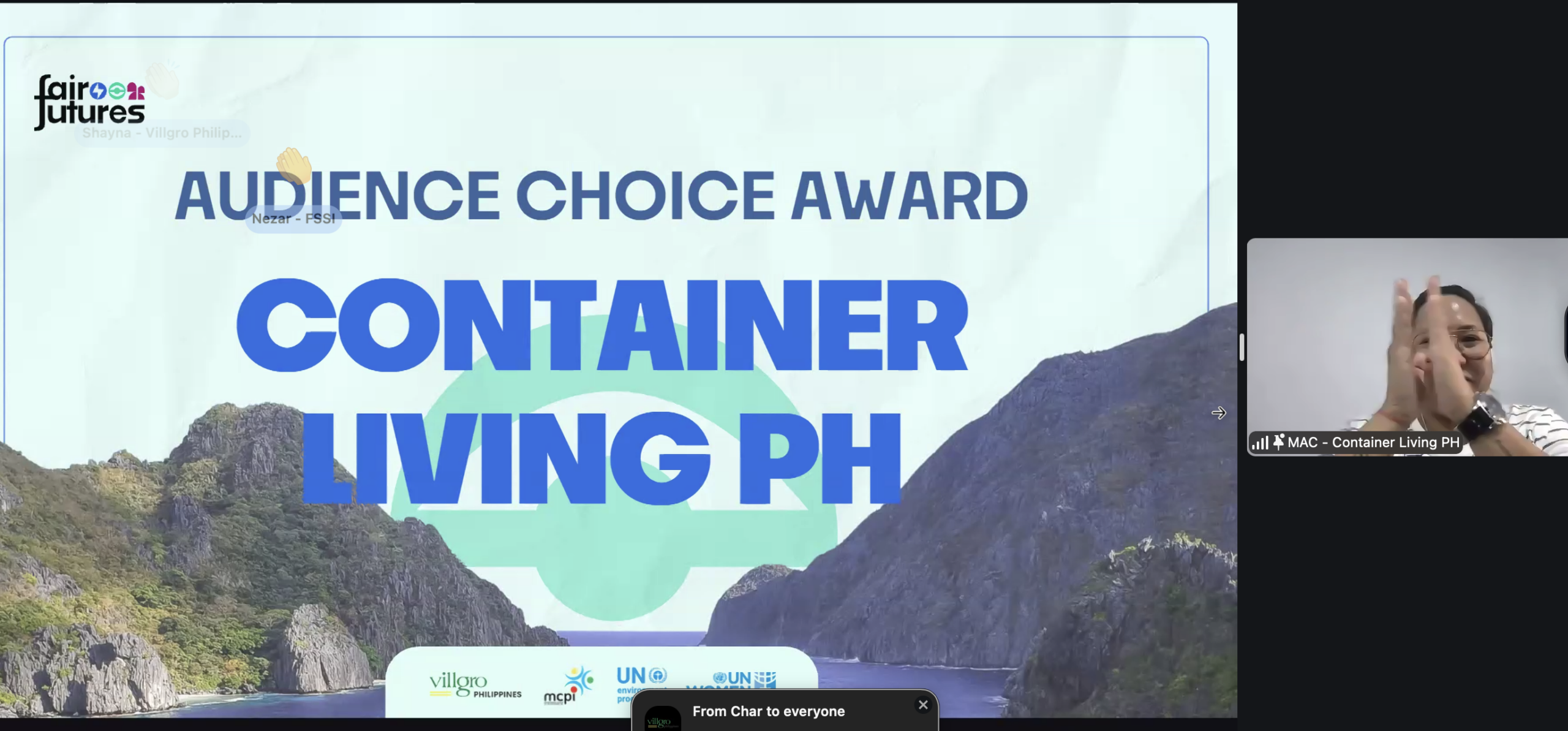
Audience members voted Container Living PH the showcase’s Audience Choice Award, recognizing the modular-housing venture led by co-founder Mac Evangelista. The prize included a special gift from the Villgro Philippines team along with mentorship sessions with Thachadi.
Across the pitches, the panels, and networking chats, the same idea kept resurfacing: these enterprises had already proven their models work to some extent, but converting that proof into the capital needed to scale remains an open challenge.
By the end of the showcase, all the enterprises had moved further along that path than when the accelerator began. Whether that capital materializes will be the marker to watch.