



July 16, 2026 · The Department of Environment and Natural ResourcesPH Laws & FrameworksDepartment of Environment and Natural Resources (DENR)The Philippine executive department managing forests, protected areas, mining permits, and pollution control. It is the primary regulatory counterparty for environmental compliance, natural capital valuation, and the issuance of permits governing resource extraction and land-use changes.Read more in the Glossary → (DENR) and French operator aDryada signed a Memorandum of Agreement (MOA) on June 23, 2026, for the restoration and protection of the Samar Island Natural Park (SINP) in Samar, Philippines.
This partnership was first launched in May 2024 with a Memorandum of Understanding between DENR and SamarBioSPV, the special-purpose group composed of aDryada and its Philippine partner.
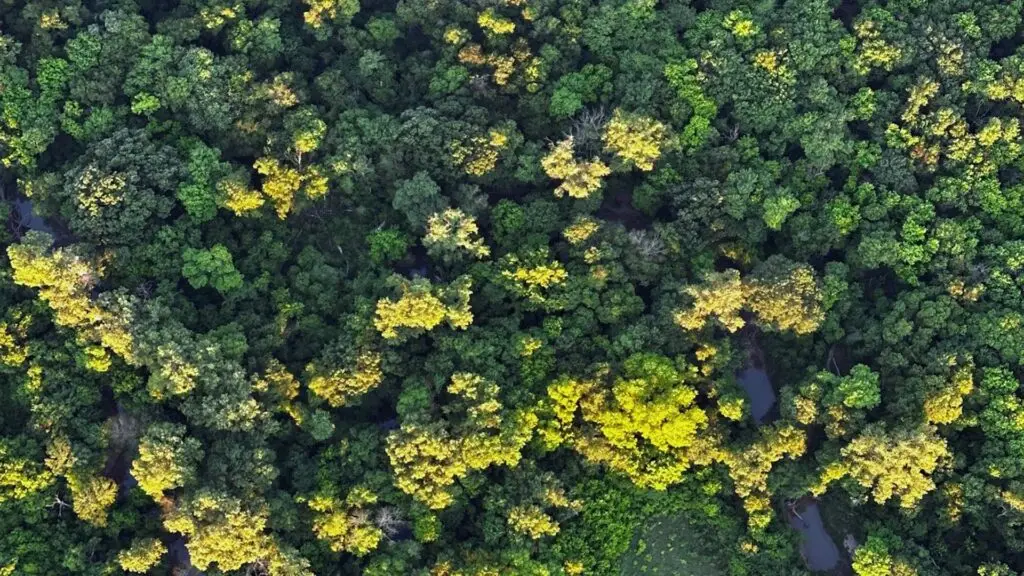
Dubbed the Green Samar Project, the 50-year project seeks to restore 120,000 hectares of degraded forest through a combination of native tree planting, assisted natural regeneration, and enrichment planting.
This will be done across portions of the 330,000-hectare Samar Island Natural Park, the largest terrestrial protected areaPH Laws & FrameworksProtected areas (NIPAS)Lands and waters legally set aside for conservation under the National Integrated Protected Areas System (NIPAS), from national parks to protected seascapes.Read more in the Glossary → in the Philippines.
The project is set to run for 25 years, with an option to extend for another 25. Thomas Kabigting, Assistant Director for the Forest Management Bureau, said at the MOA signing that the first eight to 10 years will require the largest investment and heavy lifting. He said they “envision” around ₱80 million in investments per year for reforestationLocal Climate & EcologyReforestationThe active replanting and ecological restoration of degraded forest lands. In carbon project development, its financial viability depends on long-term survival rates, native species selection, and the prevention of leakage, moving beyond superficial tree-planting metrics to verifiable ecosystem restoration.Read more in the Glossary → and hiring forest rangers, which the government cannot provide at this time.
Generating carbon credits
The Green Samar Project is expected to generate carbon creditsGlobal EssentialsCarbon markets & carbon creditsTrading systems where verified greenhouse gas emission reductions or removals are commodified, typically representing one metric tonne of CO2 equivalent.Read more in the Glossary →.
Carbon credits are the currency of carbon markets. Companies and individuals can pay for this tradable currency from certified nature-based or environmental projects like reforestation initiatives, usually to compensate or “offset” greenhouse gasGlobal EssentialsGreenhouse gases (GHGs)Atmospheric gases (primarily CO2, methane, nitrous oxide) that absorb and emit radiant energy, driving the greenhouse effect.Read more in the Glossary → emissions.
In March 2026, the DENR signed a roadmap signaling the Philippines’ readiness to enter the voluntary forest carbon marketGlobal EssentialsAdditionalityAdditionality is determined by whether a carbon credit project had effects, such as emissions reductions, that would not have occurred otherwise. If the effect occurred without the project, there is…Read more in the Glossary →. (Read: What the Philippines needs to know about carbon markets)
According to aDryada’s timeline, the first carbon credits are expected to be generated by 2030.
Carbon markets are widely viewed as a cost-effective way to finance conservation. However, studies have revealed fundamental design flaws still prevent carbon markets from effectively protecting biodiversityGlobal EssentialsBiodiversityThe variety of life at genetic, species, and ecosystem levels. Biodiversity loss is a material financial risk and a prerequisite for nature-positive investment frameworks.Read more in the Glossary → and ecological systems.
‘A real breakthrough’
The French company aDryada develops and operates nature-based solutionsGlobal EssentialsNature-based solutions (NbS)Actions to protect, sustainably manage, and restore natural or modified ecosystems to address societal challenges (e.g., using wetlands for flood control).Read more in the Glossary → to generate carbon credits through land restoration and ecosystem management. It is currently partnered with Filipino company Samar Bamboo Corporation (SBC), which focuses on bamboo restoration and cultivation. In 2023, SBC was a part of a joint initiative with the DENR to establish 40,000 hectares of bamboo forest in Samar.
At the MOA signing, Matthieu Delouvrier, International Development Head of aDryada, described the project as a “real breakthrough” that could position the Philippines as a leader in large-scale restoration projects. He said, “It’s a large-scale project, carbon finance, so it’s a very, very important news, which happened today, by world standards.”
The Samar Island Natural Park is a significant site of Philippine conservation, as it is home to the Philippine eagle and other endemic speciesLocal Climate & EcologyEndemic speciesFlora and fauna restricted to a specific geographic region. For environmental impact assessments and biodiversity offsets, the presence of endemic species elevates the ecological sensitivity of a site, often triggering strict regulatory prohibitions on land conversion and requiring highly localized conservation interventions.Read more in the Glossary →. It was designated a national park on August 13, 2003, through Presidential Proclamation No. 442, to prevent the exploitation of its natural resources and to acknowledge its importance to the survival of Samarenos. The proclamation stated this could be achieved through an “equitable use of and access to Samar Island’s natural resources.”
Samar Island Natural Park is currently under consideration to become a UNESCO World Heritage Site.