

The Eternal Business of Ukay-Ukay
Old clothes in the Philippines remain useful long after their original owner bought them—thrift stores resell them, upcyclers transform them. But is it enough to curb the endless supply?
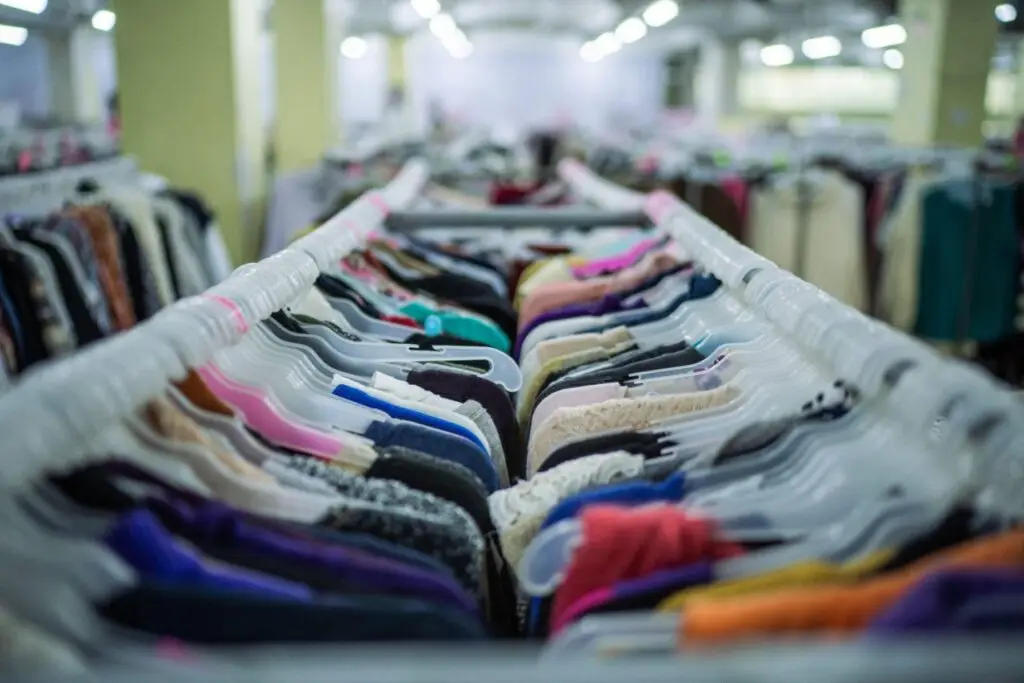
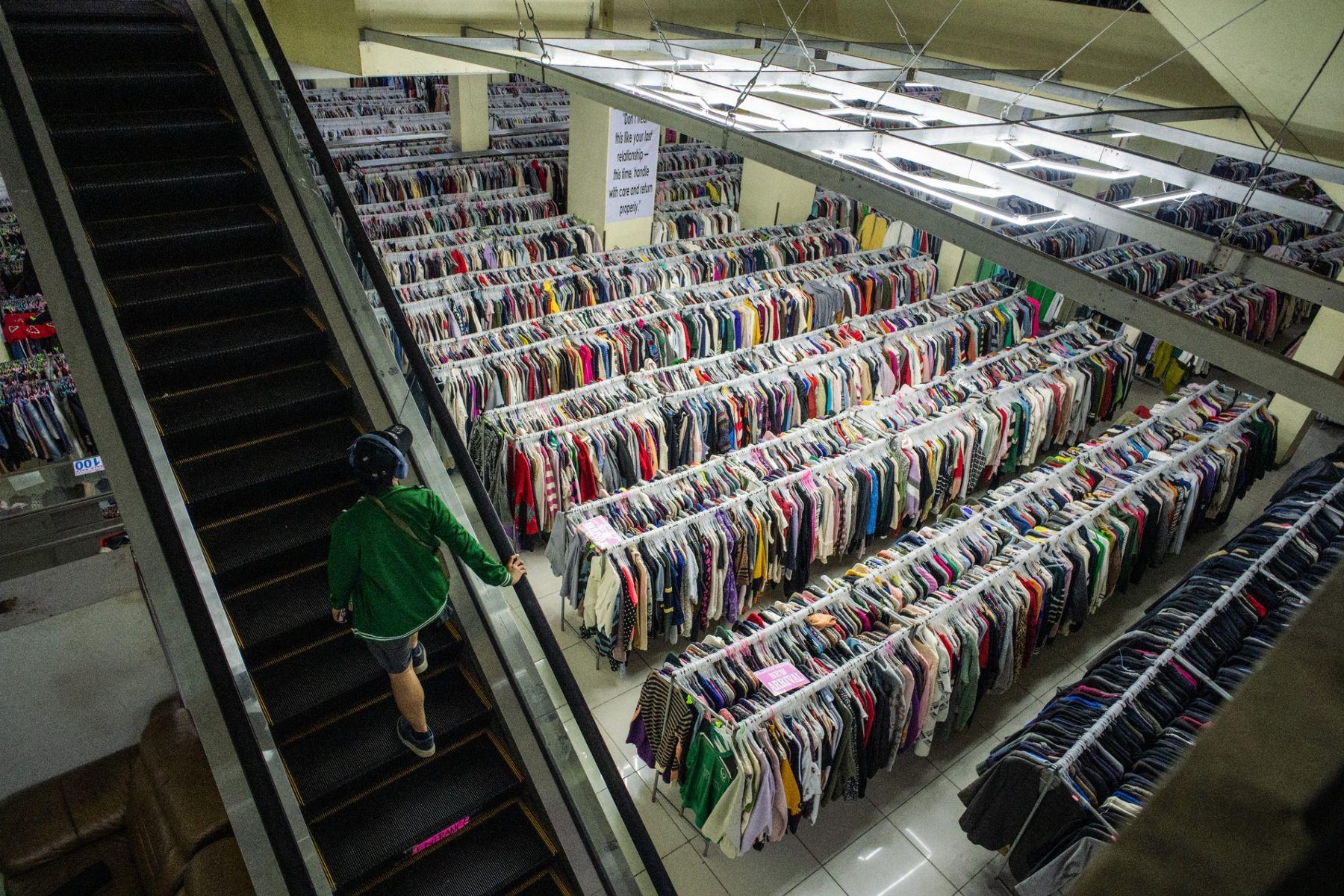
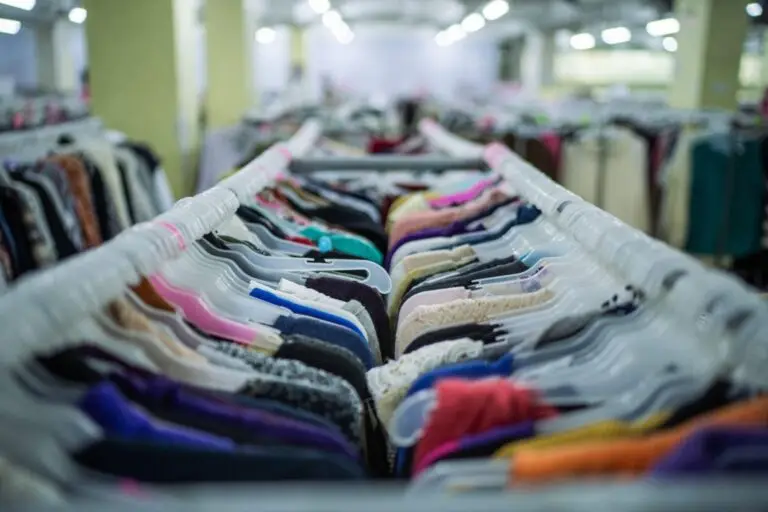
On a rainy July afternoon, inside a sprawling ukay-ukayFilipino DictionaryUkay-UkayA practice in the Philippines where secondhand items are resold at more affordable prices. The term “ukay-ukay” is short for “halukay” which means to rummage in search of something.Read more in the Glossary → now occupying the space of a former supermarket in Cubao, Quezon City, the clothes seemed endless.
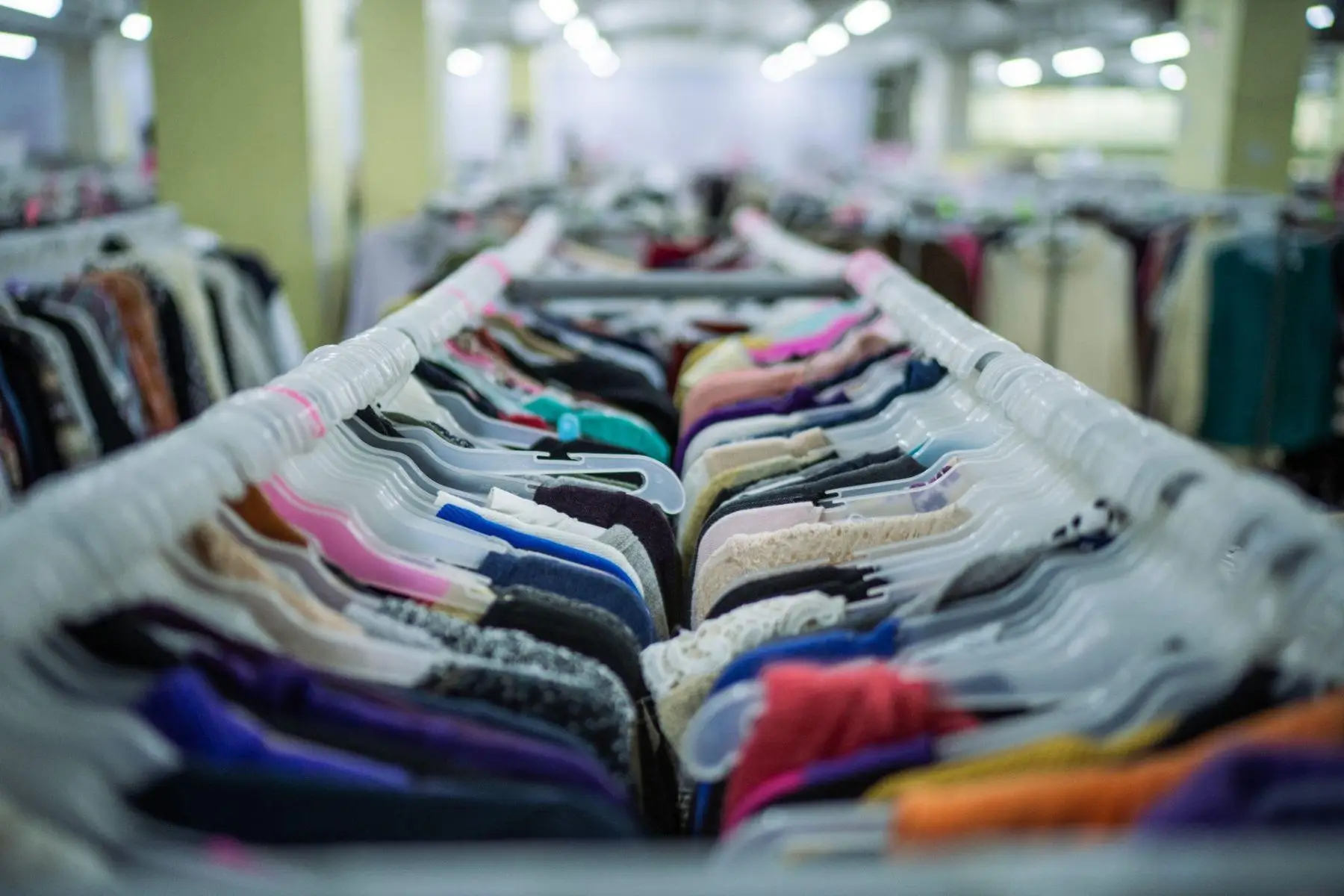
Row after row of metal racks were crammed with dresses, denim, faded T-shirts, and everything in between, all strung on plastic hangers packed so tightly that pulling out a piece required surprising arm strength. Overhead, fluorescent lights illuminated the bargain signs of the day: “SALE: 4 PCS ₱100 ONLY!” Shoppers moved slowly along the racks, digging through a sea of once-discarded clothes for something worth giving another life to.
The word “ukay” comes from the Filipino verb “halukay”—to dig or rummage.
Today, ukay-ukay stretches across the country’s retail landscape, from bargain-filled street stalls and public markets to curated Instagram accounts and weekend pop-ups where vintage pieces can easily fetch thousands of pesos.
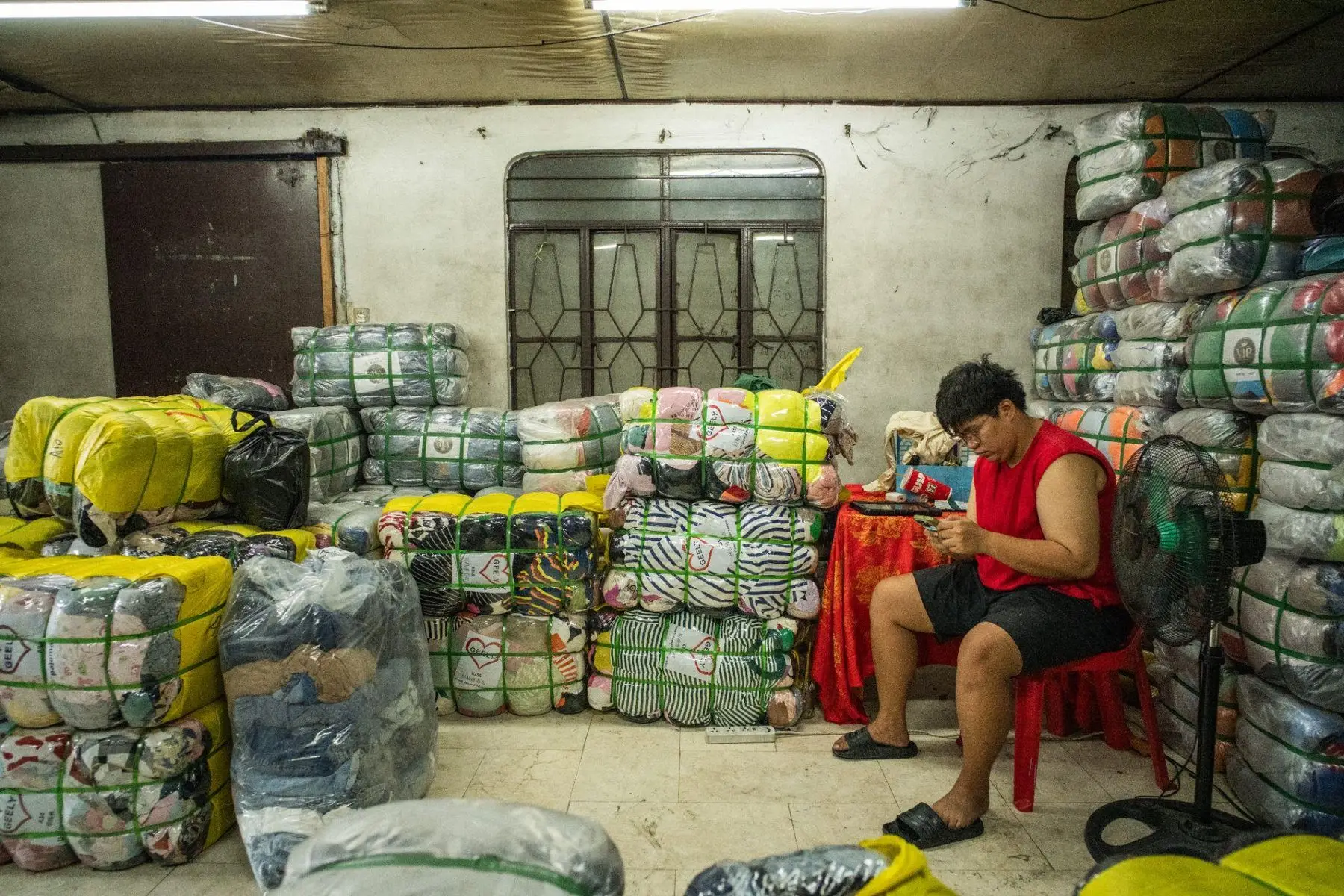
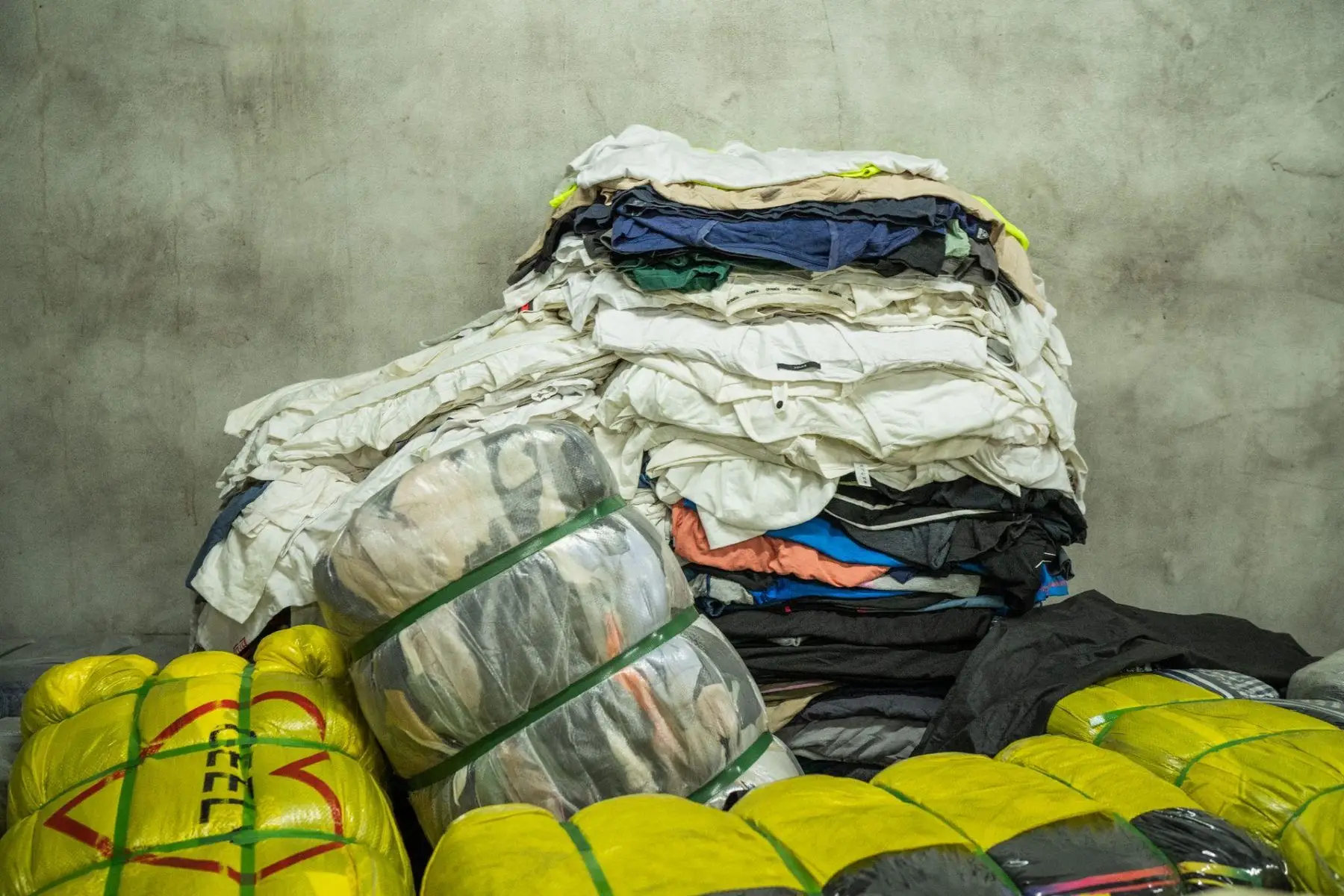
Yet behind those familiar racks are garments that have passed through a long global chain of donation, sorting, and resale before resurfacing in the Philippines.
The roots of the Philippine secondhand trade are often traced to clothing sent from wealthier countries as postwar humanitarian aid. Over time, what entered partly as charity became a commodity, feeding a vast trade in used clothing even as the commercial importation of secondhand garments remains prohibited under Philippine law.
But for Ezra Undag, a Filipino waste researcher now based in New York City, the complexities of the secondhand trade meant little when he first encountered ukay as a fourth-grader growing up in Mindanao in the 1990s.
Amid the jumble of secondhand clothes, one piece caught his eye: a simple white T-shirt bearing a small “Disney World Orlando Florida” logo. To him, it felt like a piece of an impossibly glamorous America had landed in his hands. He wore and cared for it for years.
When he could no longer wear it, the shirt became a rag for wiping the table, then the floor, before eventually disintegrating.
In many ways, that journey—from someone else’s unwanted shirt to prized possession to basahanCircular Design & EconomyBasahanA cleaning rag made from recycled cloth pieces, usually from old clothes and other scrap fabrics.Read more in the Glossary →—is a typical Filipino story: one of finding another use, another life, before finally letting something go.
“We always try to extend the life of garments,” says Liz Fumar, a sustainable fashion researcher and faculty member at De La Salle University. Passing clothes down, repairing, and repurposing them, according to Fumar, have long been embedded in Filipino culture.
The motivations are not necessarily environmental. Clothes, like other possessions, are kept because they still have value, as a hedge against hard times, or simply because throwing away something useful feels wrong.
What might now be described in the language of sustainabilityGlobal EssentialsSustainabilitySustainability is the ability to manage and use resources to meet present needs without compromising future generations. It can be examined through environmental, economic, or societal lenses. These are the…Read more in the Glossary →—reuse, repair, life extension—has often been simple practicality.
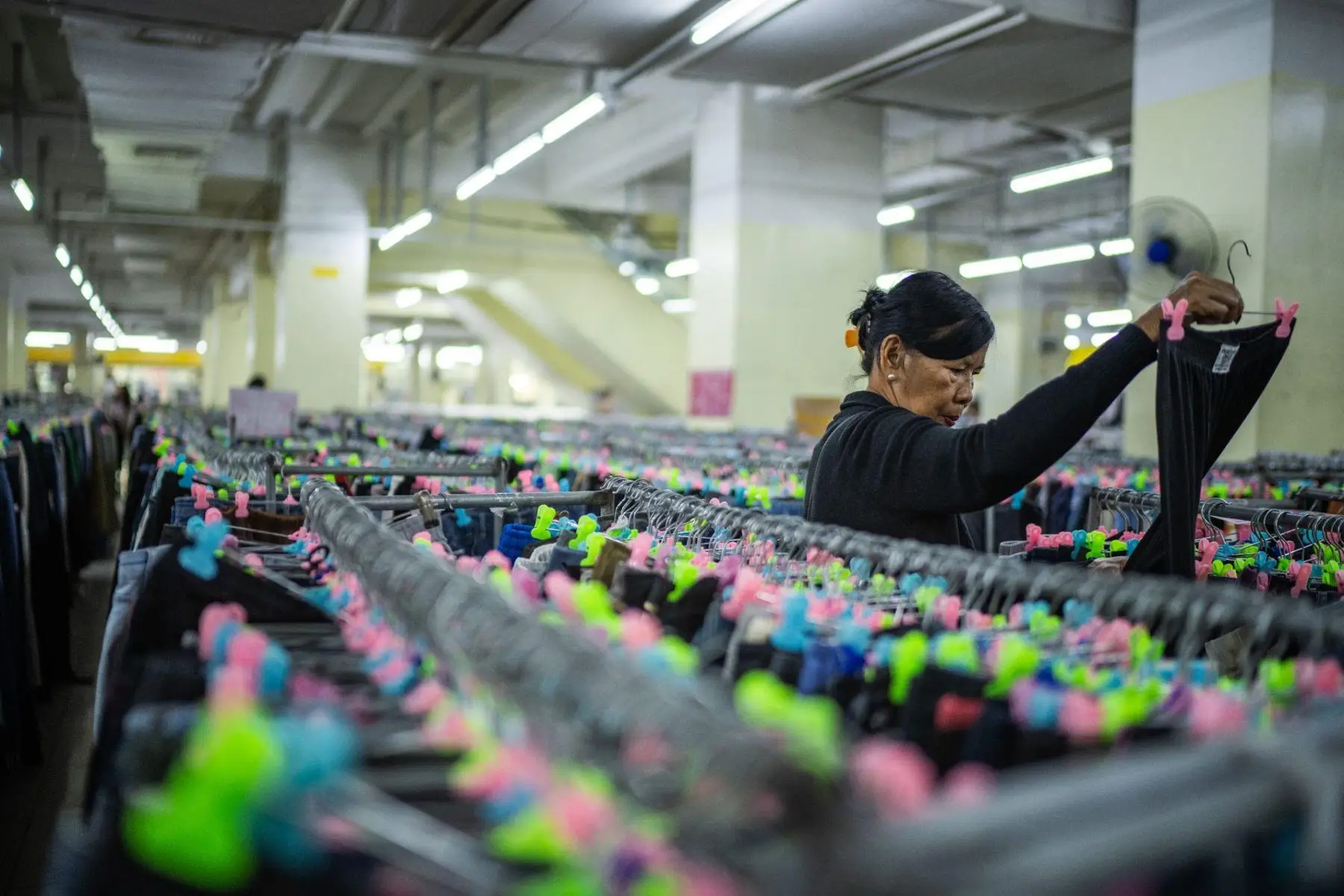
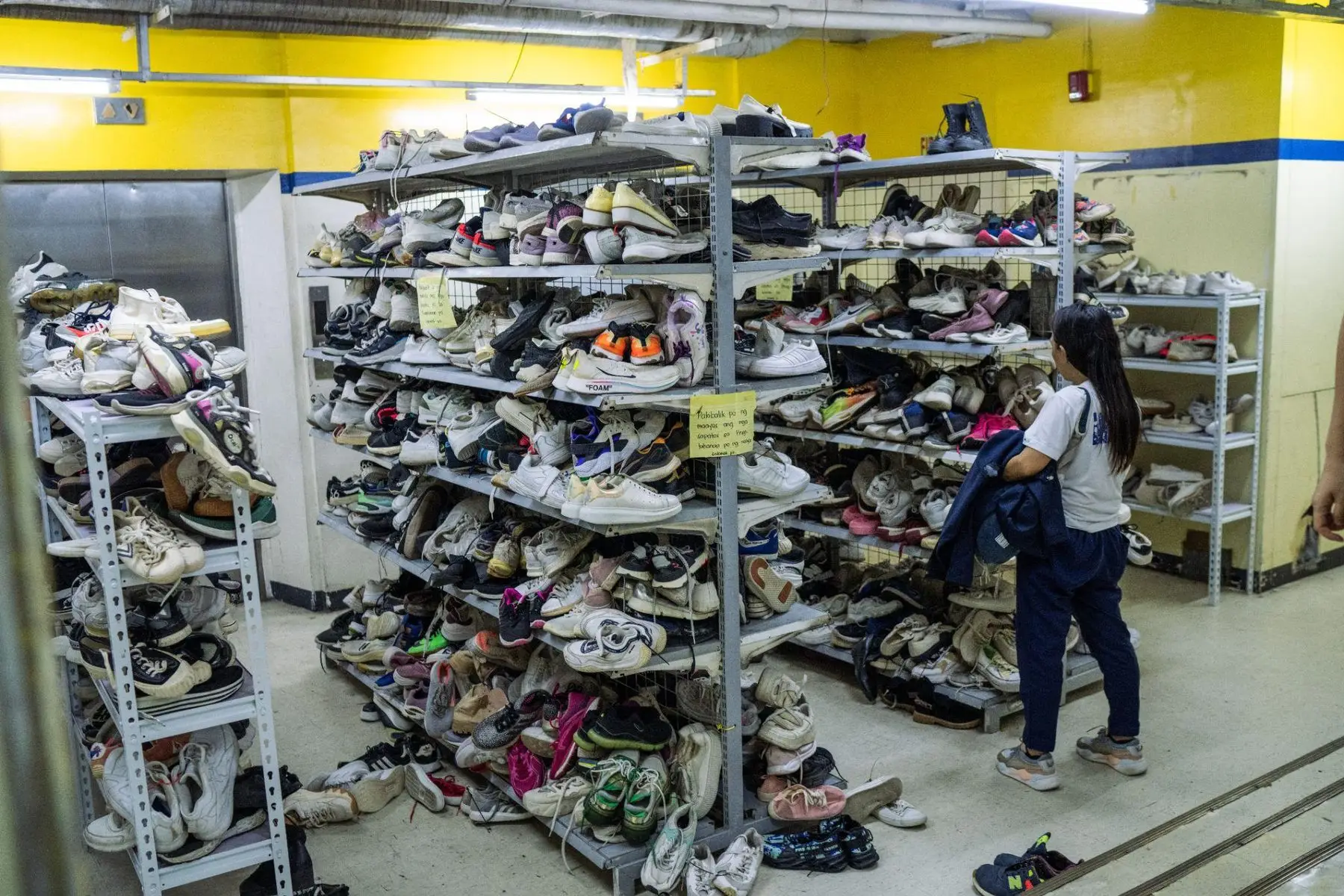
What’s changing fast though, Fumar observes, is the social meaning attached to some of those practices. “In the early 2000s, people wouldn’t normally make it public that something they bought came from ukay,” she says. Today, much of that stigma has faded.
Audrey Navia has watched that shift unfold through her own business. Since opening her Instagram thrift store in 2020, she has seen how customers came to embrace secondhand shopping as a form of self-expression.
“Now it’s become a source of pride, a symbol of creativity if they are able to formulate an outfit out of secondhand clothing,” observes Navia. A great find, she says, can feel like “a gem”—something special and unique to the person wearing it.
Yet six years of sourcing clothes have also allowed her to watch the contents of the racks change. Genuine vintage pieces have become harder to find, Navia says, while labels such as Shein, H&M, and Zara turn up with increasing frequency. The secondhand market increasingly carries the traces of the fast-fashion economy feeding into it.
The hands that transform
For Jamie Naval, founder of TenTwenty Kids, a social enterpriseCircular Design & EconomySocial enterpriseA revenue-generating business whose primary objective is to solve social or environmental challenges, reinvesting profits into its mission.Read more in the Glossary → that turns textile waste into handmade toys, the Filipino relationship with old things goes beyond reuse.
“We [Filipinos] tend to look at objects and imagine their possibilities,” she observes. The habit stretches beyond thrifting into traditions of sewing, weaving, and craft: creativity born from learning to work with what is available.
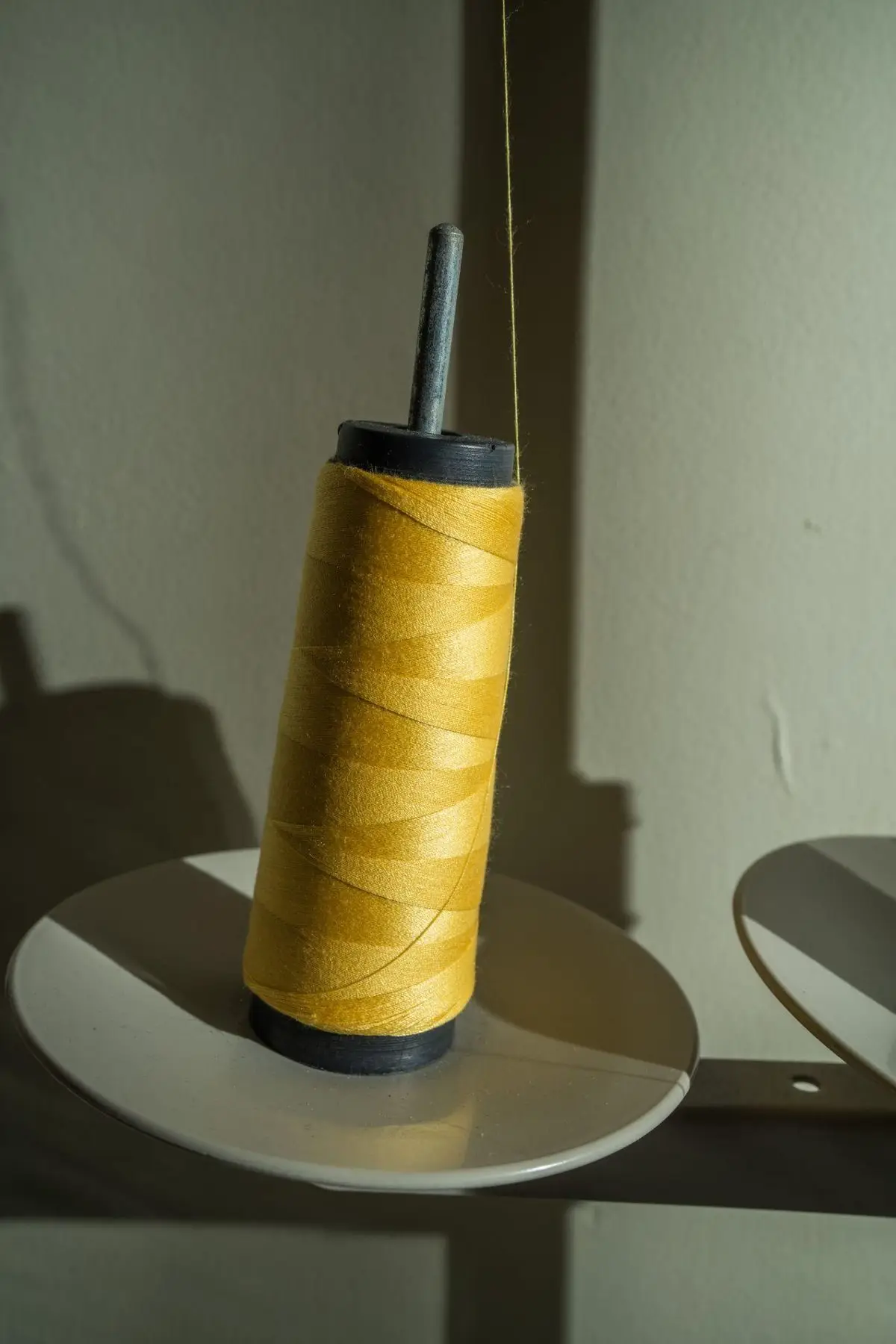
At TenTwenty Kids’ studio in Taytay, Rizal, I witnessed that creativity firsthand as bright yellow scraps from the discarded uniforms of a local airline were being cut, sewn, and refashioned into the plump bodies of bumblebee bag charms.
The finished bee may look simple, but arriving at that exact size, shape, and proportion took a week and a half of product development and six failed prototypes along the way. Even then, production is delicate, hands-on work: each artisan can produce only seven to eight palm-sized bees a day.
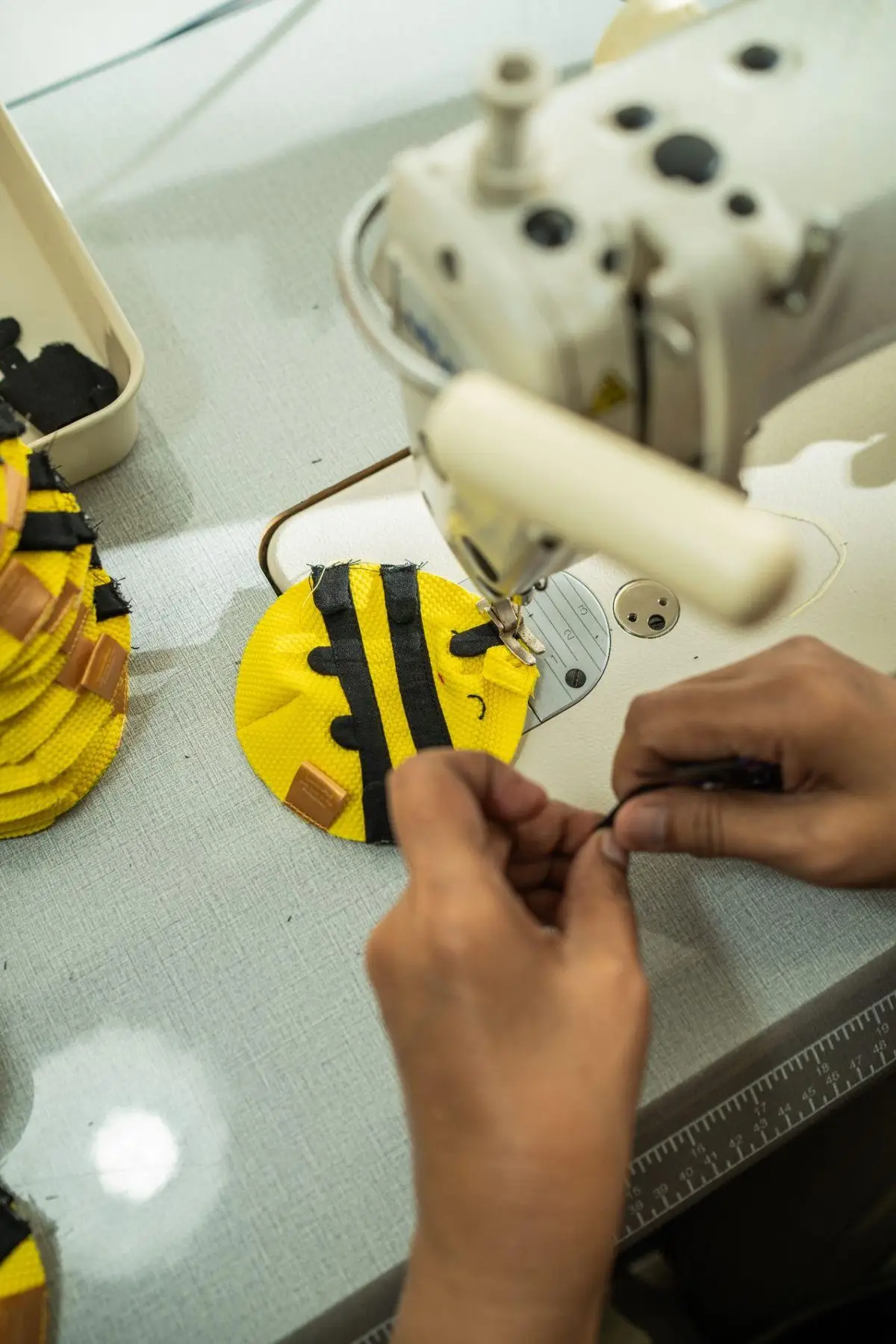
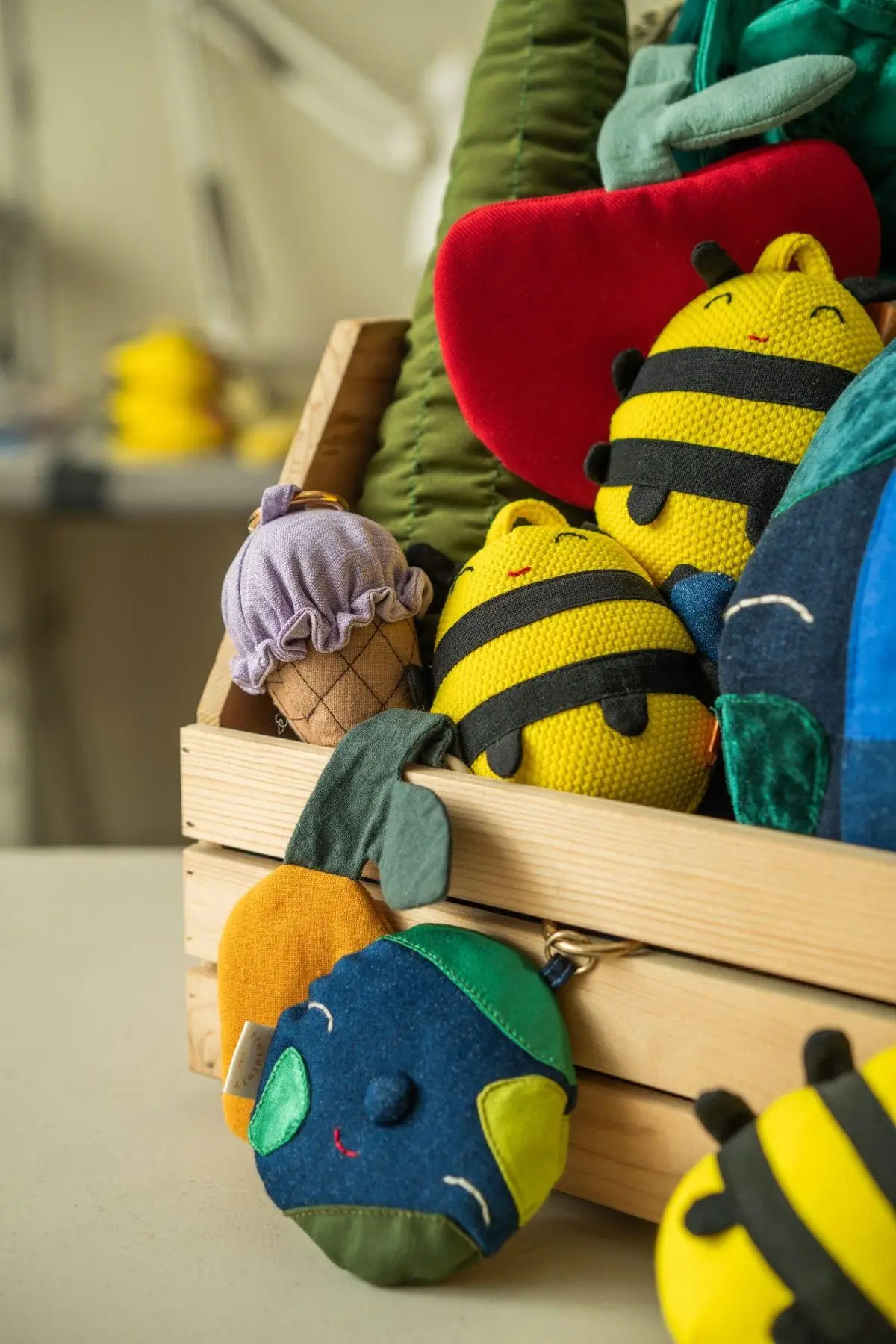
The time and skill behind each toy underscore how difficult this kind of circularity can be to scale. Developing a product from waste takes time. Materials must be collected, transported, inspected, sorted, cleaned, and stored before anyone even begins designing with them.
Naval learned that lesson the hard way: TenTwenty Kids eventually stopped accepting textile waste unless there was already a production plan or a client committed to buying back the finished products. Otherwise, according to Naval, the business risked becoming little more than someone else’s dumpsiteLocal Climate & EcologySanitary landfill vs open dumpsiteEngineered waste disposal facilities designed with liners and leachate management (sanitary) versus unregulated, uncontained waste piles (open dumps).Read more in the Glossary →.
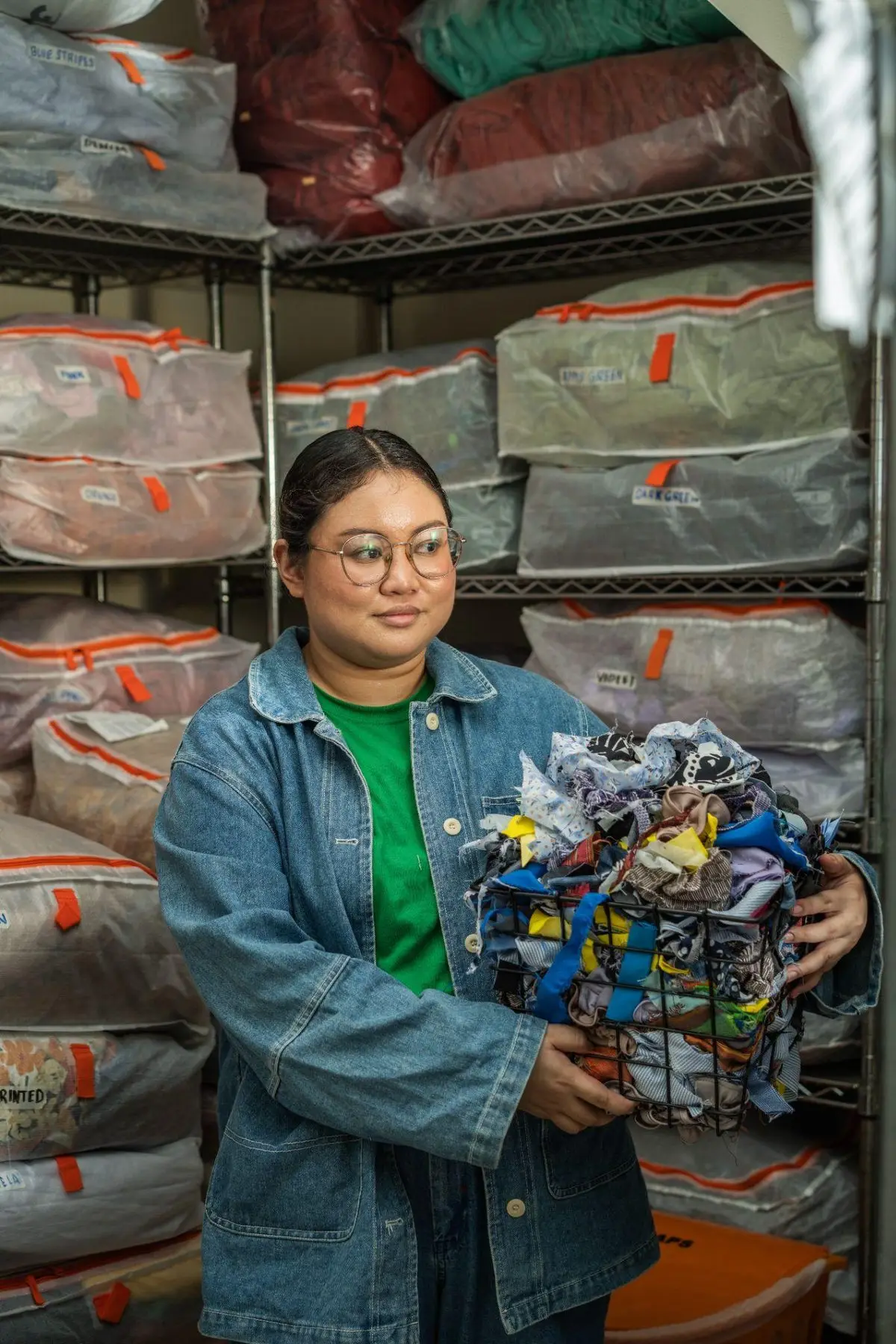
One delivery in particular became the turning point: nearly 1,000 kilograms of fabric scraps stuffed into 163 large plastic bags that quickly swallowed up the studio.
“Fabric scraps do not disappear simply because they have been donated,” says Naval. Every bag still had to be opened, sorted, and stored, and every scrap eventually needed somewhere to go.
What would happen if a system were built around the skills of people like Naval’s artisans?
When circularity takes up space
At the QC-ANTHILL Textile Circularity Hub in Barangay Payatas, Quezon City, the answer begins—as it often does—with piles of retasoCircular Design & EconomyRetasoA Tagalog term for “scrap fabric,” specifically discarded cloth pieces from sewing or garment production. Read more in the Glossary →.
On a recent visit, stacks of Coca-Cola-red fabric filled part of the workspace—the remnants, it turned out, of old corporate uniforms from Coca-Cola Philippines. Nearby, six seamstresses worked the material into patchwork blankets with pink deadstock fleece, each one slightly different from the next. Once finished, the blankets would return to the company that supplied the waste, bought back for its disaster-relief efforts.
Smaller enterprises like TenTwenty Kids already work on much the same principle. What the Hub adds is the possibility of greater scale: the city government helps recruit workers from nearby barangays, many of them homemakers with experience in rug-making; ANTHILL Fabric Gallery, a social enterprise aiming to preserve weaving traditions nationwide, trains the workers in weaving and sewing; and corporate partners bring both discarded textiles and a plan for what they will become.
The Hub, co-owned by the Quezon City government and ANTHILL, grew out of a circularity program ANTHILL began in 2016. Before the facility opened, the organization says it had already diverted some 20,000 kilograms of textiles—among them factory offcuts, old corporate uniforms, and hotel bed linen—from landfill. The new space gives it the capacity to sort and store more material, and to work with hotels, hospitals, and corporations generating textiles in much larger volumes.
But the more interesting numbers may be the ones attached to people.
Eight weavers now work at the Hub full-time, alongside six seamstresses. Some of the workers previously had little or no regular work; others had made rugs. The weavers now earn an average of 70% more than what they did before, according to Hub manager Eka Mesiona.
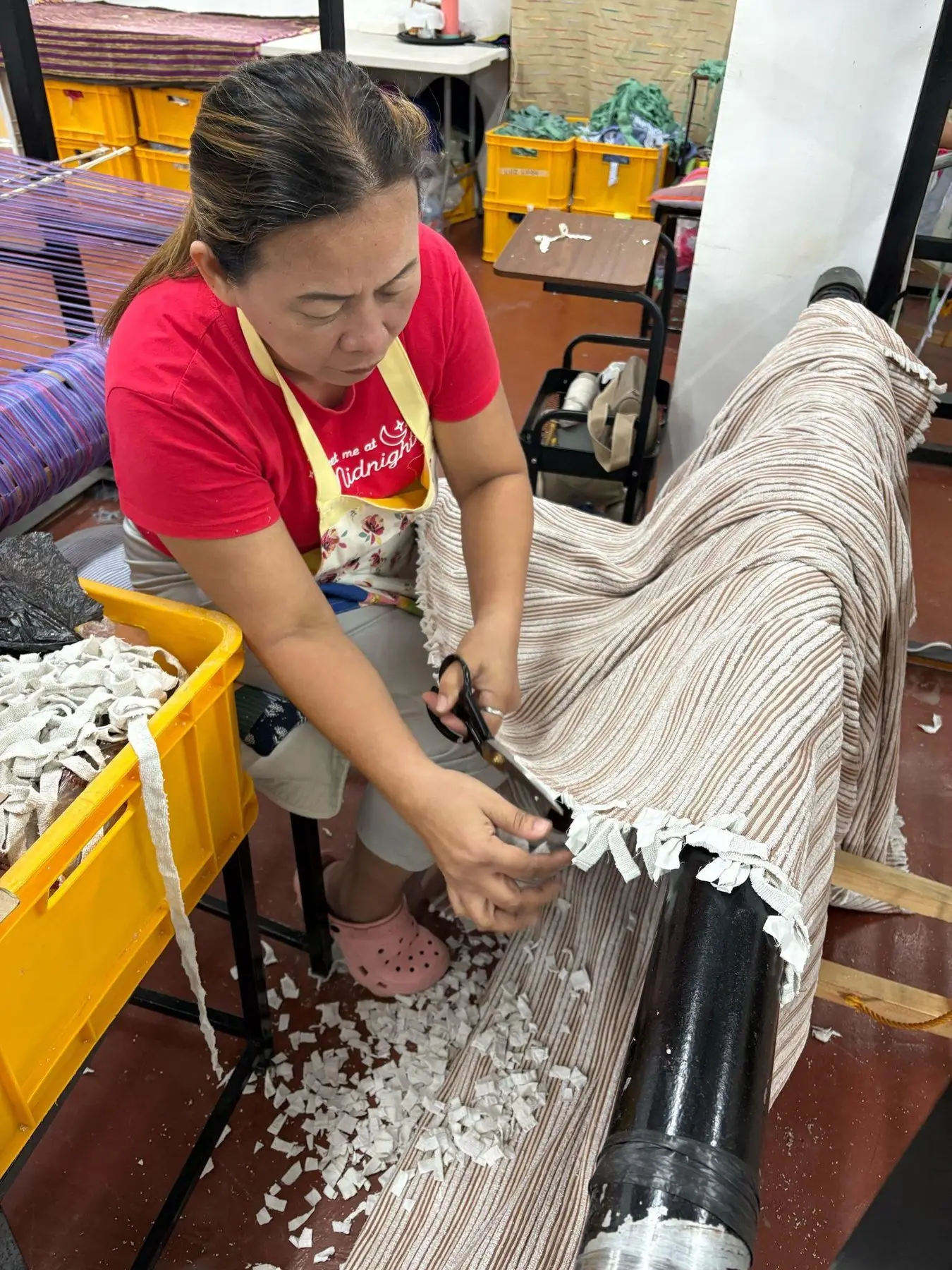
The skills at the heart of the Hub are hardly new. Filipinos have been sewing, weaving, and repurposing materials for generations. What has changed is the support surrounding those skills: the government provides space, funders invest in training, and companies bring materials and demand. Together, they create the conditions for workers to earn a livelihood from keeping those materials in use.
Launched in April 2026, the Hub is still a small experiment against a vastly larger waste stream. It’s also too early to know whether such a model can work on a national scale. But it offers a glimpse of what happens when Filipino resourcefulness is treated as something worth organizing, paying for, and investing in.
There is, however, a danger in romanticizing that ingenuity.
For one thing, we cannot upcycle our way out of endless production. Naval describes upcyclingCircular Design & EconomyUpcyclingThe process of transforming waste materials or unwanted products into new materials of higher quality or environmental value.Read more in the Glossary → as a “safety net”—something that catches textiles when they can no longer serve their original purpose but still have value. It belongs alongside repair, reuse, and recycling, as well as better design and, more fundamentally, less unnecessary production.
“We can’t keep producing too much and expect upcyclers to solve the waste problem.”
Jamie Naval · Founder, TenTwenty Kids
Ukay-ukay contains much the same paradox: it keeps clothes in use, but it also depends on an endless supply.
Mending the system
Cheska Federizon came to circular fashion from another perspective. Her mother runs a garment factory producing clothes for international brands, and Federizon herself studied fashion design at De La Salle-College of Saint Benilde. But as her interest in sustainability deepened, she had little desire to take over the family business or to start another label producing new clothes. Instead, she turned her attention to the clothes already hanging in people’s closets.
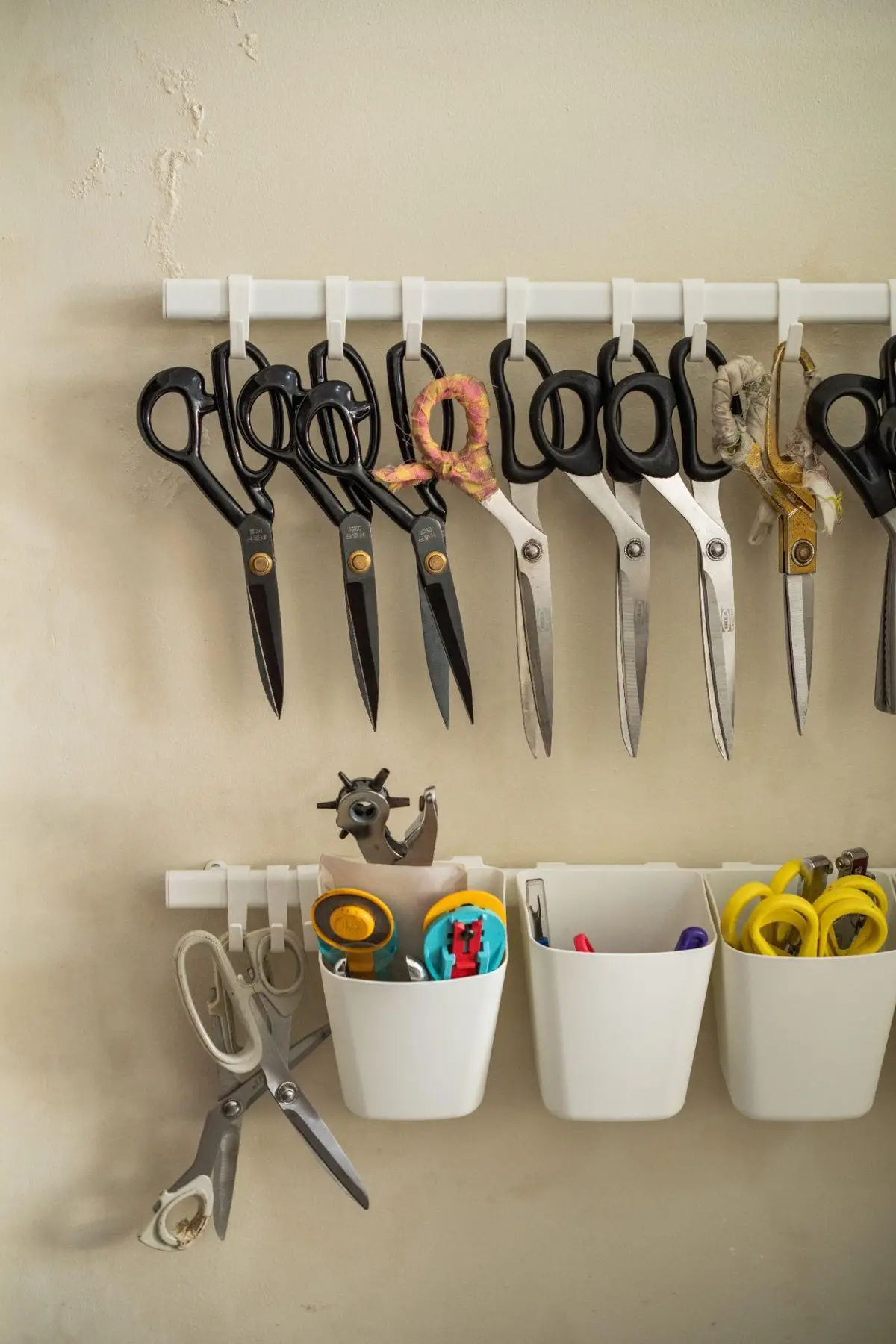
REDO, the alteration and repair business she launched in 2025, began with resources close at hand, including a master seamstress recruited from her mother’s factory. Customers bring in old favorites to be resized and thrifted finds to be reworked.
Some are what Federizon calls “visionary thrifters”: buying secondhand pieces with a clear idea of what they could become, then relying on REDO to materialize that vision. One client who lost significant weight brought in much of her wardrobe to be altered. REDO now keeps her measurements on file for every return visit.
This work can seem mundane, and the effort that goes into it is often overlooked. Yet each garment requires a seamstress to understand its construction, take it apart, and carefully put it back together.
REDO increasingly handles ukay-ukay finds and fast fashion pieces, and according to Federizon, customers often associate the value of alteration and repair services with the price of the clothing—expecting that tailoring secondhand clothes would somehow be cheaper. It is part of what makes the economics so challenging: with two full-time seamstresses already nearing full capacity, alteration and repair alone have yet to turn a profit.
To break even, Federizon estimates the studio needs to bring in roughly ₱70,000 a month to cover fixed overhead and seamstresses’ salaries. The gap, she believes, lies less in volume than in pricing: alteration fees often fail to capture the full time involved, from fitting and pinning a garment to the hours a seamstress spends reworking it.
For Federizon, this overlooked “use” phase of a garment’s life—and the behind-the-scenes skilled labor that sustains it—is an essential part of circularity.
Ingenuity and resourcefulness have carried businesses like TenTwenty Kids and REDO remarkably far. Taking their impact further requires a stronger ecosystem, one that values the skilled labor behind them and gives circular businesses the support, infrastructure, and markets they need to grow.
“[The Philippines] has a strong culture of resourcefulness. We repaired clothes even before sustainability became trendy. Our creativity often comes from knowing how to work with what is available, and that is very powerful. But we have to stop treating those skills only as informal work or survival strategies,” says Naval.
The global flow of secondhand clothing likewise needs to be scrutinized, says Undag, who has grown wary about celebrating the system too easily.
The injustice, he argues, begins when excessive, poor-quality, or unusable clothing moves from wealthier countries to poorer ones without corresponding responsibility for its eventual disposal. The garment gets another life; the country receiving it—and its people—are left to deal with what happens when that life runs out.
“It shouldn’t be the responsibility of online ukay owners to solve the problem. It should be the producer and manufacturers who are responsible for finding solutions to textile waste.”
The materials, after all, do not transform themselves.
Behind every repaired dress or upcycled toy is someone who knows how to take it apart and put it back together; behind every piece of fabric rescued from the waste stream, someone who collected it, recognized its value, and figured out where it might go next. Yet many of the people with these skills occupy the least visible—and least valued—parts of the economy.
Waste pickers are perhaps the starkest example. They recover useful materials from what others throw away, often without the salaries, benefits, or health and safety protections of formal employment. Naval calls them “heroes in the sustainability space,” yet says society continues to look down on the very people shouldering much of the burden of waste management. The same undervaluing extends, in different ways, to seamstresses, weavers, and craftspeople. Skills that could be central to a circular economyCircular Design & EconomyCircular economyAn economic model designed to keep materials in continuous use through maintenance, reuse, remanufacturing, and recycling, decoupling economic activity from the consumption of finite resources.Read more in the Glossary → are still too easily dismissed as informal work or ways of simply getting by.
The white Disney World T-shirt that delighted Undag as a boy traveled an extraordinary distance and then enjoyed an extraordinarily long life. The secondhand trade still does this every day: it puts affordable clothing within reach of Filipino families, supports livelihoods, and keeps garments in use long after their first owners have given them up.
Eventually, however, every garment reaches the end of its useful life. At the scale of a household, the next step might be obvious: reuse it, repair it, turn it into basahan. At the scale of a city—or even a country—the path becomes far more complicated.
The rack
Every story in this issue.
 Nº 1 · CoconutsOpen →
 Nº 1 · Ukay-ukayReading now
 Nº 1 · CacaoOpen →
 Nº 1 · E-wasteOpen →
 Nº 1 · SachetsOpen →
 Nº 1 · JeepneysOpen →