
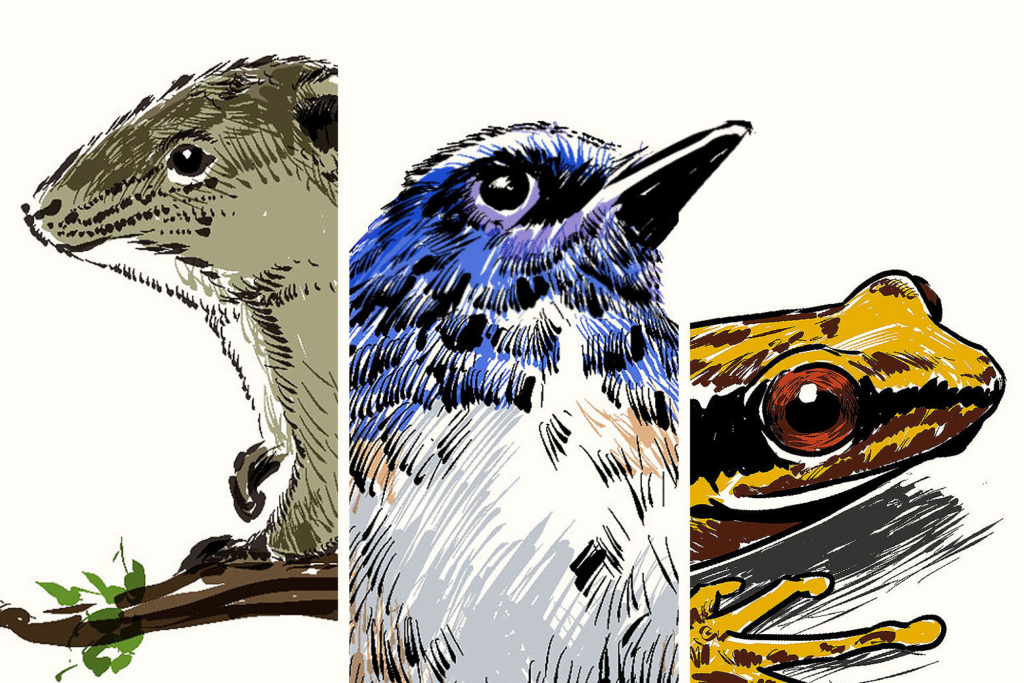

July 22, 2026 · In April 2026, a community initiative that wanted to bring Filipinos based in Metro Manila out of the city and into nature announced a community hike. They were surprised when the hike was booked out within eight minutes, with a 40-person waitlist following quickly after.
The premise was simple: a slow hike that prioritizes intentionality over speed and mileage at Mt. Makiling to catch its Rafflesia in bloom, with a botanist to guide the journey. Despite its success, this reception was unexpected—at least, to its organizers, Plant Vision.
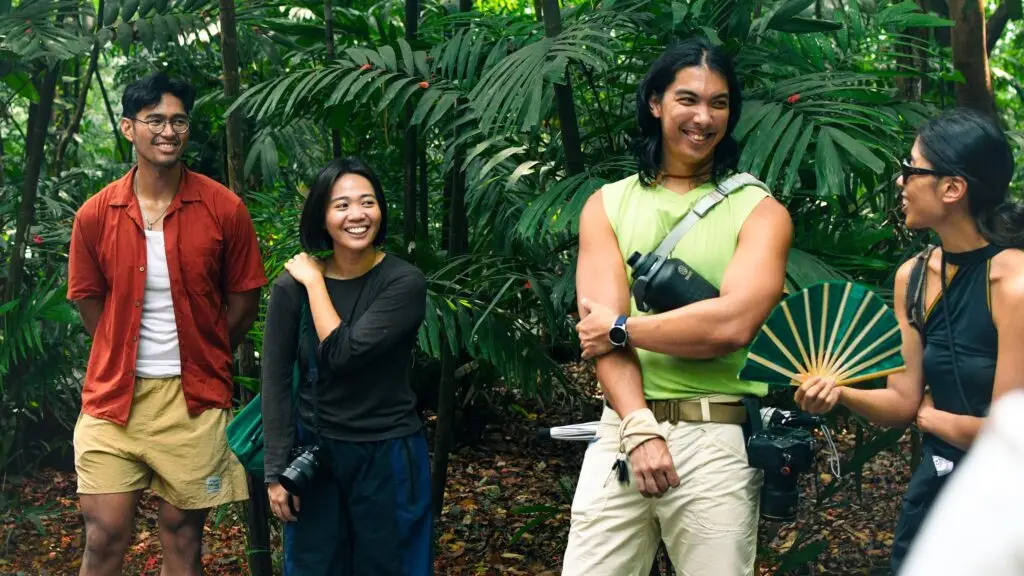
Plant Vision was founded in 2023 by three friends: designers and publishers Kristian Henson and Monica Ramos of Exploding Galaxies and Ipo-Ipo Projects, and environmental scientist John Altomonte.
Through hikes and nature-based art workshops, Plant Vision cultivated a community of like-minded individuals who, like its founders, discovered botany as an entry point to appreciating the natural world. While participants pay a registration fee, proceeds are donated to the botanists who accompany the hikes, supplemented by an open-ended tipping system. Initially gaining traction through word of mouth, Plant Vision’s initiatives now regularly attract waitlists that exceed capacity.
“Our hikes are super different from hiking or mountaineering in the Philippines in general. You see all these people who go up to these mountains, and they take a picture of this vista of, you know, grassy mountaintops. And people say, oh, it’s so beautiful. It’s like the ‘New Zealand of the Philippines.’ For me, it’s the most depressing thing in the world,” Altomonte said.
He explained: “When you see grass on a mountaintop, it means it’s been deforested. We don’t have grassy hilltops [or] mountaintops. Those don’t exist [in the Philippines]. That means those are deforested areas, and now they’ve just been taken over by grass.”
Altomonte calls this the shifting baseline syndrome, the socio-psychological phenomenon where each generation comes to regard a progressively degraded environment as the normal baseline. This is increasingly recognized as a fundamental obstacle to addressing a wide range of today’s global environmental issues.
“You see this beautiful landscape of like hundreds of mountaintops, and they’re all just grass. And that’s forest that used to be there, right? But people don’t know that, because they never had a baseline to compare,” Altomonte said.
Plant Vision’s mission is to encourage people to become “excited about plants, or just loving plants, or even just seeing plants” through interdisciplinary and creative ways. They draw their name from the idea of Plant Blindness, which was coined in 1999 by botanists James Wandersee and Elisabeth Schussle, and refers to the “cognitive and perceptual tendency to overlook, undervalue, or the inability to notice plants in one’s environment.”
“It’s [about] getting people to care, to understand, to see, to know what’s out there, because you can’t protect what you don’t know.”
Monica Ramos
Life in one of the most populated cities in the world
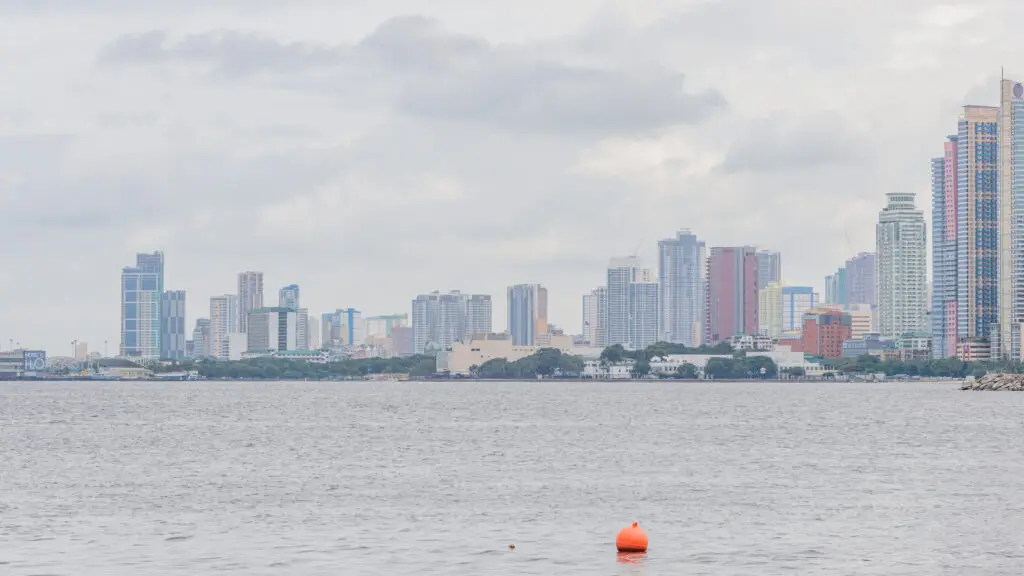
Metro Manila has consistently been ranked as one of the world’s most densely populated urban areas, and among the least climate-resilient cities globally.
According to Global Forest Watch, Metro Manila’s natural forest cover is approximated at only 3.0% of its total land area (around 1,700 hectares), with more than half located in Quezon City alone. A study by WTA Labs found that nearly half of identified parks in Metro Manila are privatized and located within residential areas, obscuring public access.
Metro Manila only has 0.62 square meters of park space per person, far below the recommended minimum of 9 square meters needed to realize the physical, psychological, social, economic, and environmental benefits of green space.
Building on these realities, Plant Vision ultimately hopes to influence public policy by advocating for more public green spaces while drawing attention to the work of botanists and conservationists, whose work is highly dangerous and politicized as the Philippines remains the deadliest country in Asia for environmental defenders.
“We want to leave an environmental impact connected to conservation or even giving livelihood to the trails that we go to and the communities that are there, so they can keep growing,” said Henson. “[We want to] create a gateway to this vast world beneath the surface, and to the people who have been doing this work for decades.”
‘Imagining a better world’
Living in a megacity with a lack of green spaces compounds the likelihood for what psychologists are calling “climate anxiety” or “eco-anxiety.” This is defined by the United Nations Children’s Fund (UNICEF) as “heightened emotional, mental or physical distress in response to dangerous changes in the climate.”
Brooke Yamakoshi, Chief of Climate, Environment, Resilience, and Water, Sanitation, and Hygiene (WASH) at UNICEF, affirmed that “climate-related distress looks different for every child, but it can weigh heavily on their sense of safety, future and well-being.”
In the face of increasing climate anxiety, more and more individuals are creating their own communities as an act of resistance and hope.
Emmanuel Lacadin is one of them. As the co-founder of Project Kalikhasan, Lacadin describes his project as the result of seeking an alternative future.
“I think that art, literature, is a potent site for imagining a better world, a more ecologically sound one, but also grounding it with what is demanded of us to actually achieve what we want. It’s a space for imagination and [for] alternatives.”
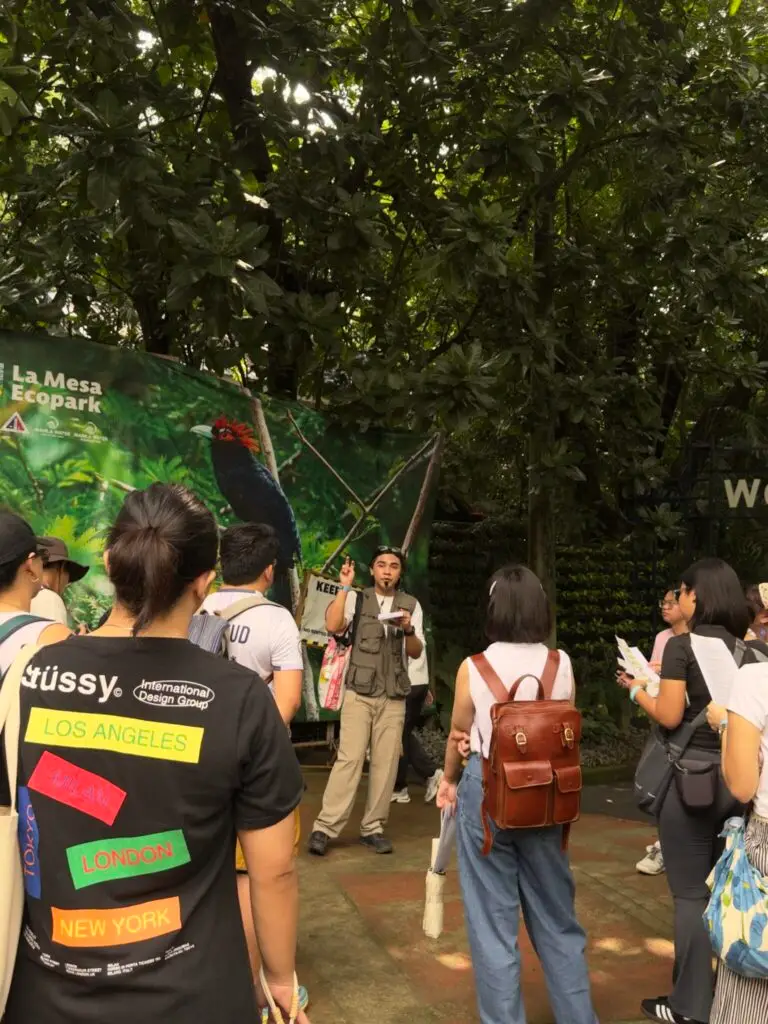
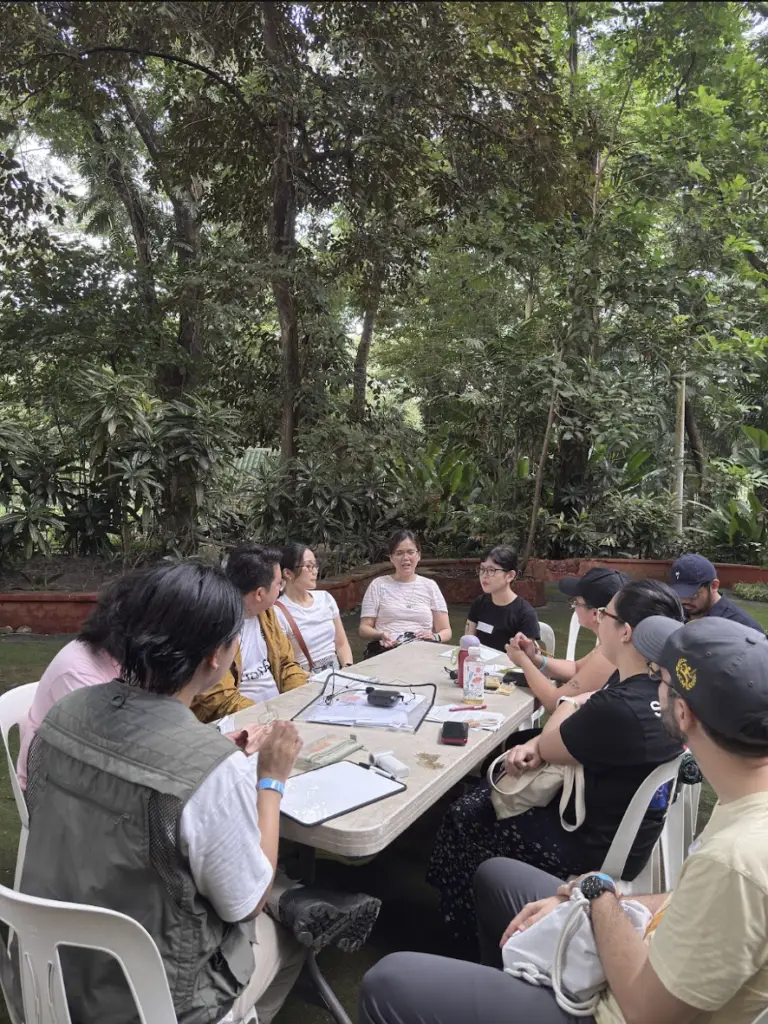
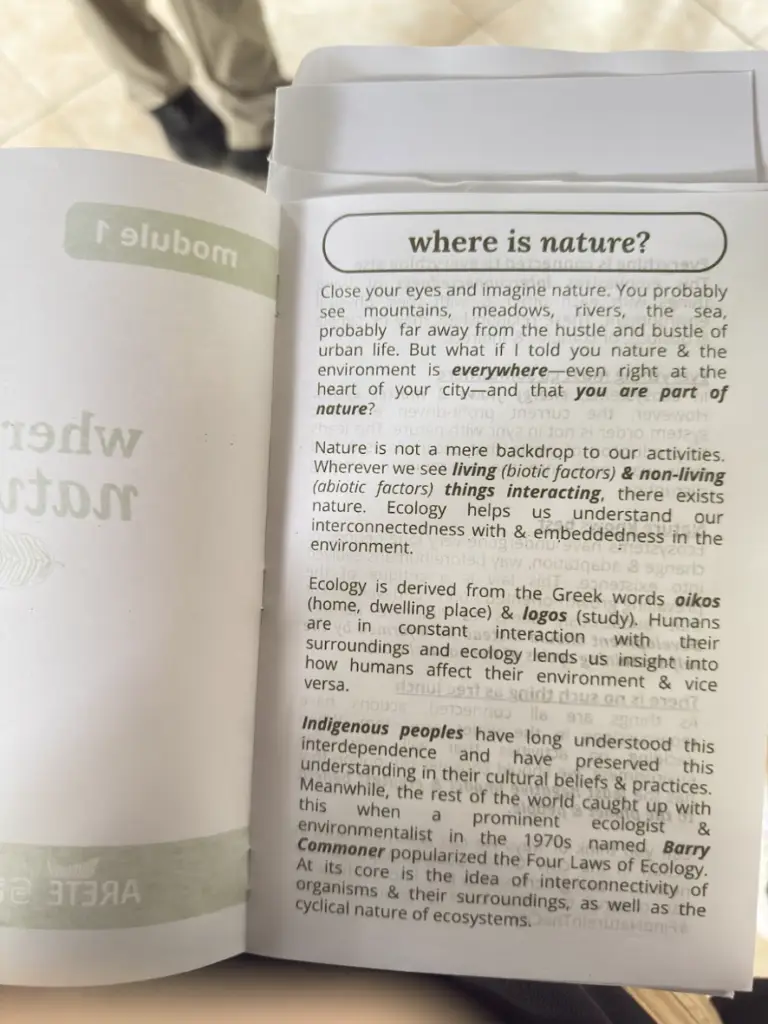
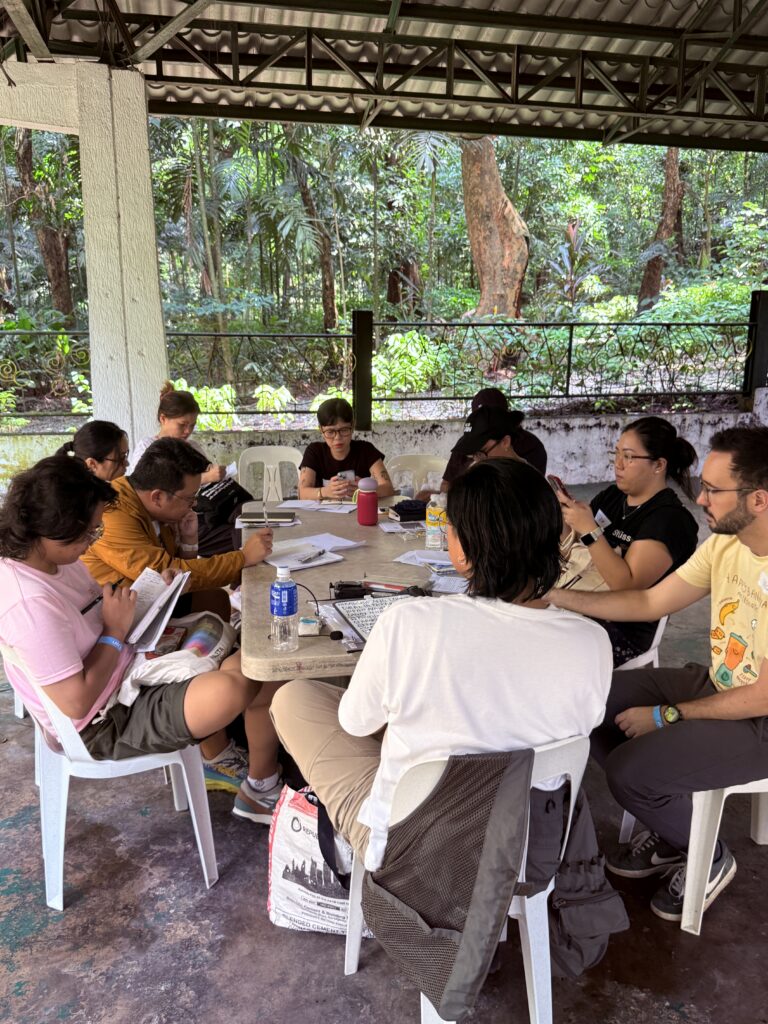
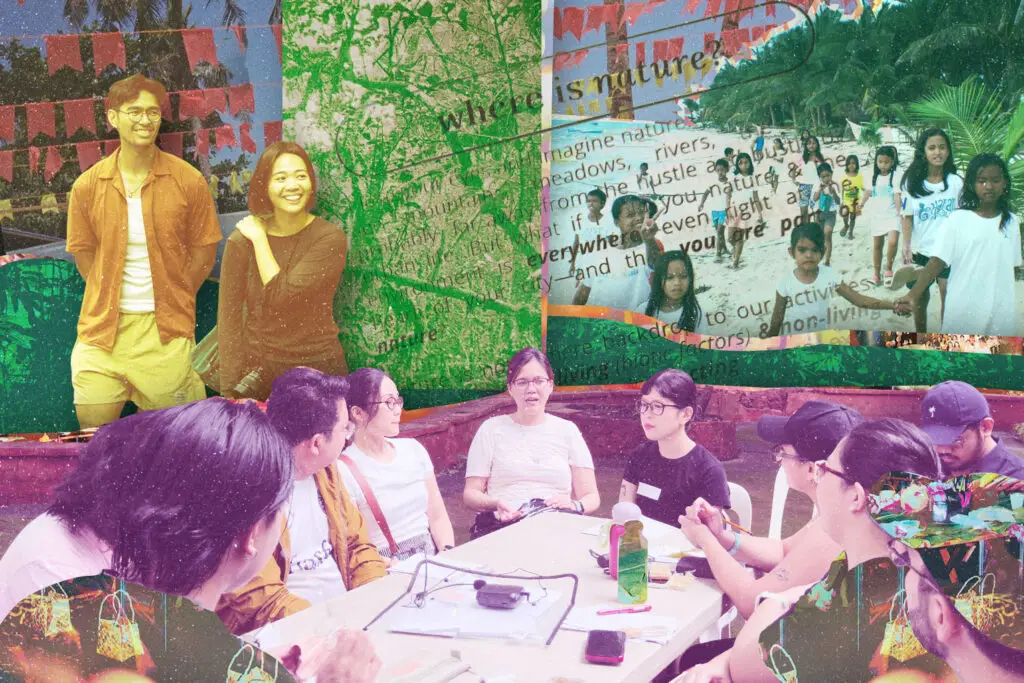
Project Kalikhasaan was built on the foundation of friends seeking community—Lacadin built the project with Kathleen Baraan, combining their backgrounds in environmental science and biology with their respective creative practices. Similarly, like Plant Vision, they were surprised to have welcomed more participants when they opened sign-ups for their workshops than they originally allotted for.
Founded in 2025 through Areté’s Sandbox Residency Grant, Project Kalikhasaan designs guided nature walks and writing workshops, held in Tarlac, La Mesa Eco Park, Arroceros Forest Park, and Ateneo de Manila.
On each nature walk, participants are given prompts to help them pay closer attention to prominent natural elements, such as leaves and tree trunks. Afterwards, they choose the discipline through which they want to process their experience: visual art with Baraan or essay and poetry workshops with Lacadin. The workshops are open to the public, with no prior writing or artistic experience required, drawing participants of varying ages, genders, and professional backgrounds.
“You can make an output and be inspired by nature, but it’s not really an output-based experience,” said Baraan. “It’s more of how you experience [nature] and then translate it into your own language.”
Baraan, who is a nature-based art educator herself, adopts and localizes modules from nature journaling in her workshops, a practice that encourages drawing or writing in response to nature that is not centered on the students’ capacity but on facilitating curiosity, play, whimsy, and excitement.
This sense of interdisciplinarity is what anchors Project Kalikhasaan’s ethos, of bridging inspiration from all fields of knowledge. “It’s important for science to guide us. What are the scenarios? What are the consequences of these policies? But imagining alternatives, imagining what a better world looks like, that’s where humanities and social sciences come in,” Lacadin explained.
“When we dismiss humanities, when we dismiss social sciences in discussions like this, we’re losing a whole realm of possibilities, of perspectives and metrics of what success looks like, what sustainability looks like.”
Creativity as a tool for systemic change
For many of these organizers, the sense of community was the end goal. Yet for some, these communities are the entry points toward broader systemic change.
For Natasha and Isabella Tanjutco, who have been running the non-profit Kids for Kids PH for over 10 years, creativity has become more than just a coping mechanism—it is also their pathway to systemic change.
Having begun her advocacy work at the age of 15, Natasha says her experiences as a youth leader have fundamentally shaped her approach to community-building and design.
She emphasized the importance of approaching young people as collaborators rather than beneficiaries: “The whole goal was not to see any other youth as a quote unquote beneficiary or people that we needed to help. We always had this idea of we’re all youth and we all deserve the same accessibility and freedom in order to create and dream. The goal was always just to see how [we can] create this under this level of understanding.”
As designers and youth leaders driven to advance climate action, the Tanjutco sisters also built TAYO, an archipelagic design agency, as a platform for translating creativity into climate action.
“We noticed how Western practice separated and created silos between design, art, and even sustainability, when they could all coexist,” Natasha explained. “Archipelagic design is this idea of viewing different design practices, or different disciplines, as individual islands that come together as an archipelago.”
Looking towards the Philippines’ coastal communities as a model for adaptation, TAYO builds upon the spirit of creativity and joy of community-building as a means to develop climate-adaptive solutions that do not disengage with culture, but rather complement it.
In 2021, following the devastation of Typhoon Odette, the second-deadliest tropical cyclone in Philippine history, the Tanjutco sisters expanded their community work to Siargao, where relief operations through TAYO and Kids for Kids evolved into “culture and climate hubs,” environmentally resilient, community-designed spaces tailored to the needs of each island community.

The link between empowerment and community
“If you look at the culture of the Philippines, there are so many existing climate solutions that you can learn from. So when we do communicate to [local] communities, it’s never imparting wisdom to them, but more an [open] exchange and seeing how we can create self-sustaining solutions for them. We just provide them with tools or resources, but [they] lead their own solutions,” said Natasha.
Given that eco-anxiety weighs heavily more on children than adults, UNICEF remains at the forefront of protecting and providing institutional support to youth and children who experience not only the physical impacts of climate change, but also the stress and disruption that come with repeated emergencies.
According to Yamakoshi, whose own work in UNICEF revolves around developing resilient communities, collective responses like these offer solidarity and practical support that assures children they do not have to face these negative feelings alone.
“Community-based initiatives also recognize children and young people as agents of change, not passive recipients of aid,” she sai.
Yamakoshi cited examples such as the Local Conference of Youth (LCOY), a space where young people gather to discuss the climate crisis, learn from one another, and put forward their priorities. Another example is the Kabataang Resilient Network, a youth-led movement supported by UNICEF and the Positive Youth Development Network (PYDN) that seeks to empower young Filipinos to lead climate action and disaster risk reduction.
“When youth engagement is done well, it helps young people move from feeling helpless to knowing they have a voice, a role, and a community behind them. Governments, schools, and development organizations can best support children by strengthening the systems that care for them,” Yamakoshi explained.
“It shows that empowerment does not happen in isolation, and often begins with talking, listening, organizing, and realizing that others carry similar worries and hopes,” she added.
Children can also more easily express what they feel through art than formal conversation. “Creative approaches can give children a safer way to say, ‘This is what I saw, this is what I felt, this is what I hope will change.’ These approaches can open the door to healing, conversation, and connection. They help communities move from silence to shared action.”