


October 15, 2026 · On September 30, 2026, the National Plastic Action Partnership (NPAP) launched the Philippine National Plastic Action Roadmap (PNAP) 2026-2040, detailing the country’s strategies and plans to reduce plastic wasteLocal Climate & EcologyPlastic pollutionThe accumulation of synthetic plastic products in the environment, adversely impacting wildlife, habitats, and human populations.Read more in the Glossary → by 85% from 2026 to 2040. The Department of Environment and Natural ResourcesPH Laws & FrameworksDepartment of Environment and Natural Resources (DENR)The Philippine executive department managing forests, protected areas, mining permits, and pollution control. It is the primary regulatory counterparty for environmental compliance, natural capital valuation, and the issuance of permits governing resource extraction and land-use changes.Read more in the Glossary → (DENR) runs the program with support from the UK government, the Canadian government, the United Nations Development Programme (UNDP), The Coca-Cola Foundation, and the Global Plastic Action Partnership.
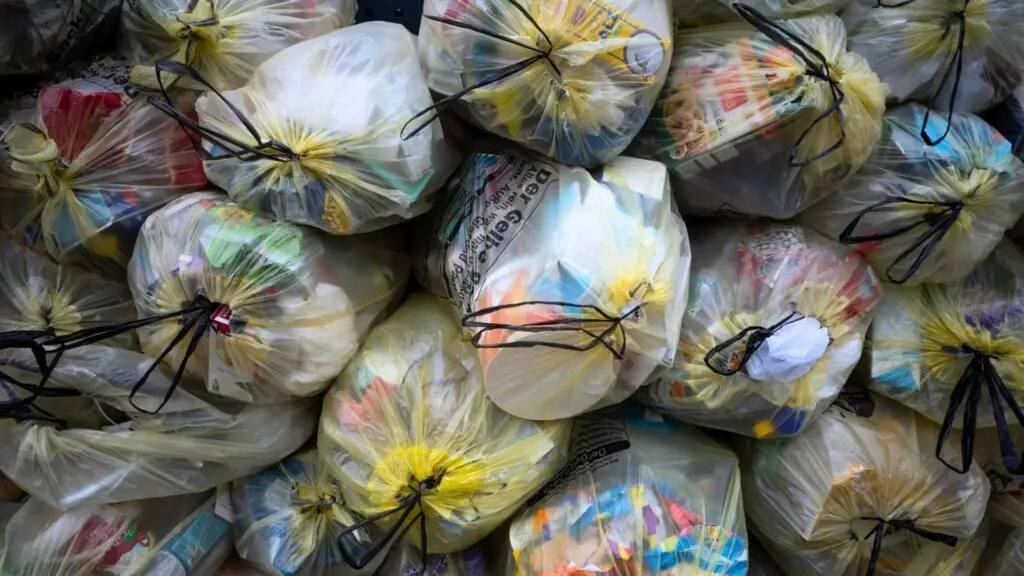
According to Earth Action’s 2025 Plastic Overshoot Day report, the Philippines generates 1.51 million tons of plastic waste annually. In 2026, DENR projected 61,000 tons of solid waste generated daily, amounting to 22.28 million tons every year.
The Ecological Solid Waste Management Act of 2000 (Republic Act No. 9003), which serves as the precedent for the roadmap, was created to govern solid waste in the Philippines. However, 26 years after it was enacted, and the country is producing more solid waste than the original policy was intended to address.
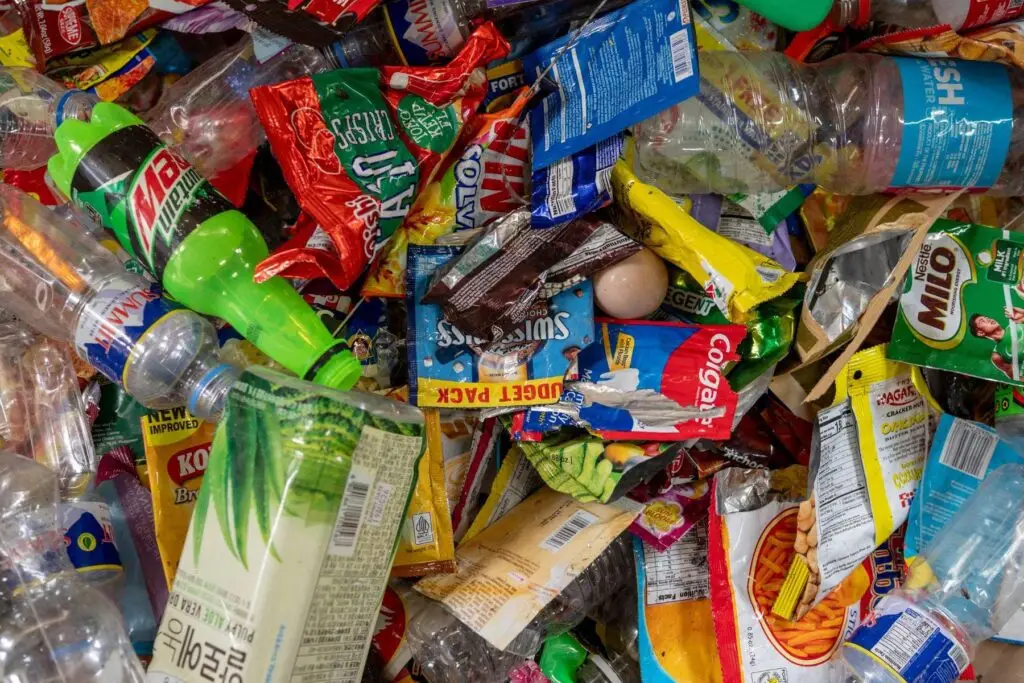
One of the biggest barriers to circularity in the Philippines is material composition. Many plastics are difficult to recycle, especially the plastic sachetsLocal Climate & EcologySachet economyA sachet is a small, sealed packet or pouch—usually made of plastic—that holds a single-use portion of a product like shampoo, coffee, seasoning, or detergent.Read more in the Glossary → prevalent across the country. Their multi-layered nature makes recycling them significantly more challenging, thus resulting to millions ending up in landfills or littering the streets. (Read: The Barangay That Lives with Plastic)
The roadmap identified the sachetCircular Design & EconomySachetSmall sealed plastic bags containing things like shampoo, seasoning, and snacks. They are part of the Philippines’ “tingi-tingi” culture, which is the purchase of things in small amounts rather than…Read more in the Glossary → economy—particularly the design of sachets—as a crucial part of reducing “avoidable” plastic use. It states: “How these materials are designed, used and managed ultimately determines whether they retain value within the economy or become pollution and economic loss.”
The challenge underscored is to prevent pollution while “retaining material value.” It aims to address this through coordinated action across product design, consumption, services, markets, financing, and governance—as illustrated by the 10 national outcomes produced, with 67 specific strategies identified to achieve each one.
The DENR and the National Solid Waste Management Commission will be in charge of policy leadership and coordination, implementation monitoring, EPR oversight, national guidance, and support to local government units.
The multi-stakeholder coordination platform for this project is the NPAP Philippines. Its role is to convene stakeholders around priorities, facilitate partnerships, support knowledge exchange, and help connect priority actions with technical assistance, financing, and other resources.
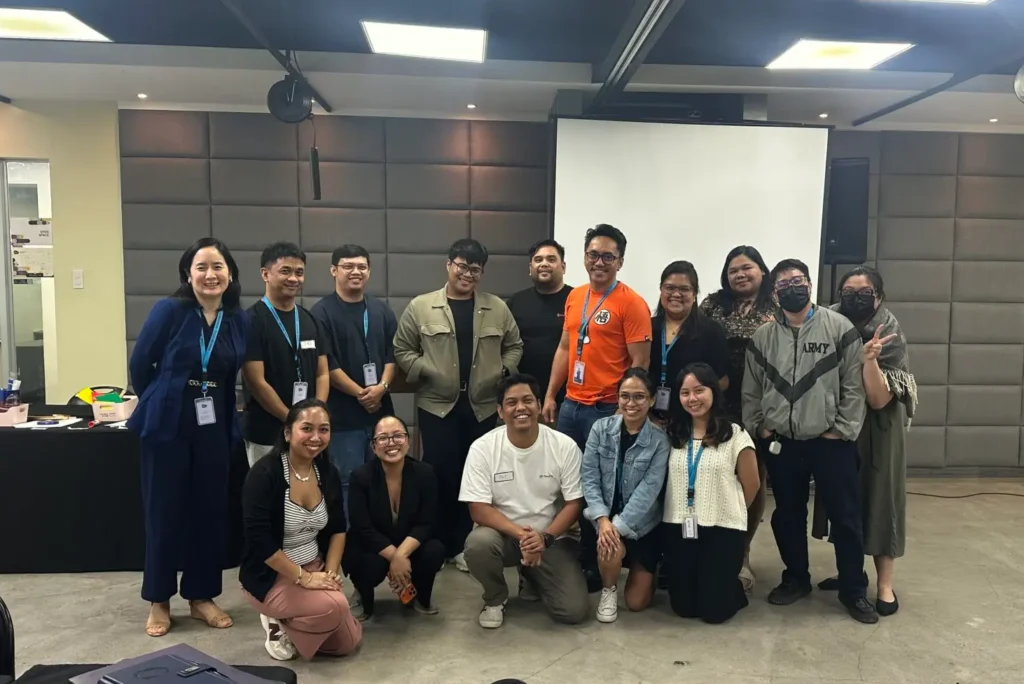
At the launch on September 25 held in Makati City, Al Orolfo, DENR Director for Foreign-Assisted and Special Projects Services, highlighted the informal sector’s role in recovering recyclable materials and calls from greater participation.
What does this look like in practice?
The roadmap prioritizes the advancement of upstream prevention alongside effective downstream systems. This means reducing the production of materials that end up as waste, while bolstering the system that manages what is already produced—minimizing its need and treating what is already there.
It also highlights circular markets and responsible business practices, as well as just transitionGlobal EssentialsJust transitionA framework ensuring the shift to a low-carbon economy does not disproportionately burden workers and communities dependent on legacy fossil-fuel industries.Read more in the Glossary →, behavior change, governance, and institutional capacity.
The core outcomes presented in the roadmap are:
- Plastic pollution is prevented at the source: Some key strategies to achieve this include identifying and addressing “avoidable, unnecessary, problematic, non-recyclable, and hard-to-recover” plastics, and strengthening producer responsibility and incentives to support upstream interventions, and the development of sector- and context-specific pathways for reducing plastic use.
- Segregation, collection, recovery, recycling and safe residuals management systems are strengthened: Some identified strategies are strengthening segregation at sourceCircular Design & EconomyWaste segregationThe physical separation of waste streams (biodegradable, recyclable, residual) at the point of generation. It is the absolute prerequisite for any functional circular economy.Read more in the Glossary → and maintaining material separation through collection chain, acceleration of functional Material Recovery Facilities, and acceleration of open dumpsites closure, open burning prevention, and the re-evaluation and rehabilitation of sanitary landfills.
- Plastic leakage is prevented, reduced and remediated in communities and ecosystems: The Roadmap states that plastic leakage is a result of failures across the plastic system, from product design, consumption, and the waste management system that surrounds it. It highlights that interventions should be “prevention-first.”
- Responsible and transparent plastic waste trade supports domestic circularity: Implementation strategies include the progressive reduction of national reliance on imported plastic waste and recyclables while strengthening domestic feedstock supply, establishing risk-proportionate end-to-end traceability, inspection, accreditation, and verification, and strengthening public transparency for plastic waste trade.
- Circular markets, finance, investment and enterprises make plastic circularity viable: Key strategies include developing functioning domestic markets and predictable demand for recovered plastics and circular products and services, developing and maintaining bankable pipelines of circular investment projects, and ultimately strengthening inclusive circular enterprises and local value chains.
- Producers and businesses adopt circular and responsible value chains: This means strengthening EPR compliance, reporting, auditing, verification, enforcement and transparency, aligning EPR compliance with prevention and circular designCircular Design & EconomyCircular designThe engineering and design of products to eliminate waste by planning for repair, reuse, disassembly, and material recovery before production begins.Read more in the Glossary →, and promoting environmentally sound value-chain practices.
What can we expect next?
At the launch event, Orolfo said that although the roadmap established the country’s strategic direction, DENR will continue working on detailed implementation guidelines and action steps. The next phase would determine the resources needed, and the parties responsible for each outcome and carrying out the measures.
As of writing, no set timelines or specific action steps have been laid out. Currently, the roadmap provides a big-picture direction for the Philippines’ plastic production and consumption, but the concrete steps to achieve this remain to be seen.
Inquirer.net reports that following the launch of this framework, the DENR would begin “outlining detailed resource requirements, agency lead assignments and sectoral benchmarks to carry out the 2040 vision.”
Access the Philippine National Plastic Action Roadmap 2026–2040 here.