






June 8, 2026 · In July 2025, the International Court of JusticeGlobal EssentialsICJ Climate Advisory OpinionThe International Court of Justice's 2025 advisory opinion confirming that states already carry binding legal obligations, under existing international law, to prevent climate harm.Read more in the Glossary →—the world’s highest court—released an advisory opinion that outlined the obligation of states in addressing climate changeGlobal EssentialsClimate change/Climate crisisClimate change refers to long-term changes in global temperatures, weather patterns, and the environment resulting from anthropogenic activity such as burning fossil fuels and deforestation. These changes continue to happen…Read more in the Glossary →.
The advisory opinion affirms two legal obligations: first, that governments must prevent and remedy climate harm, which includes deep cuts to greenhouse gasGlobal EssentialsGreenhouse gases (GHGs)Atmospheric gases (primarily CO2, methane, nitrous oxide) that absorb and emit radiant energy, driving the greenhouse effect.Read more in the Glossary → emissions; and second, they must support more vulnerable countries as they adapt to climate change.
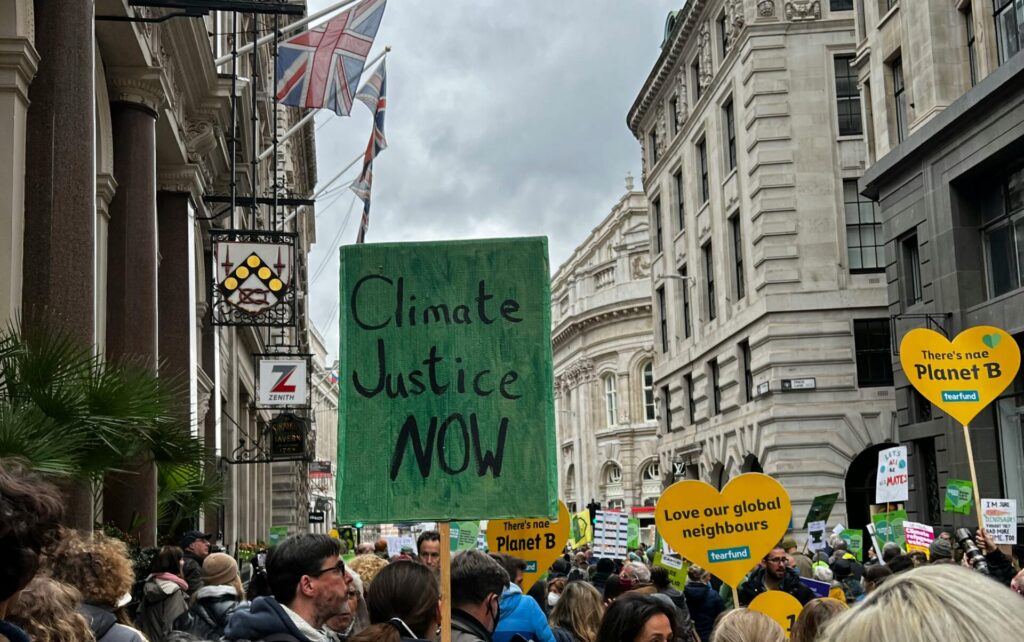
“Almost one year after the ruling, one thing is undoubtedly clear: the ICJ advisory opinion is already reshaping the legal and political landscape,” said Atty. Nicole Ponce, co-founder and advocacy lead of World’s Youth for Climate JusticeGlobal EssentialsClimate justiceA framework approaching climate change as a systemic equity issue, asserting that populations contributing least to historical emissions bear the disproportionate burden of climate impactsRead more in the Glossary → (WYCJ).
Most significantly, the court recognizes that “the human right to a clean, healthy, and sustainable environment” is inseparable from other human rights—and is therefore protected under international law.
“In the Philippine context, this may strengthen arguments anchored on the constitutional right to a balanced and healthful ecology, intergenerational responsibility, and the State’s duty to protect communities from climate-related harm,” said Atty. John Menguito, Executive Director of the Philippine Earth Justice Center.
However, the Department of Environment and Natural ResourcesPH Laws & FrameworksDepartment of Environment and Natural Resources (DENR)The Philippine executive department managing forests, protected areas, mining permits, and pollution control. It is the primary regulatory counterparty for environmental compliance, natural capital valuation, and the issuance of permits governing resource extraction and land-use changes.Read more in the Glossary → has yet to update its Nationally Determined Contributions (NDCGlobal EssentialsNationally determined contribution (NDC)A country's official climate pledge under the Paris Agreement. The Philippines committed to a 75% emissions reduction by 2030 (72.29% of it conditional on international support) and its second NDC is now overdue.Read more in the Glossary →), which would determine how the Philippines plans to reduce emissions and contribute to its legal obligations.
When asked about the status of the NDCs, the DENR told Sustina in an email, “Most of the relevant agencies have already submitted their Certificates of Concurrence (COCs), and the consolidated NDC package is now awaiting scheduling for presentation at the Cabinet meeting.”
Filipinos fighting for climate rights
For Filipino communities most vulnerable to the crisis, the international court’s advisory opinion is a validation of what they have been fighting against for years.
In December 2025, survivors of Typhoon Odette filed a case against Shell Plc in the UK for violating the Filipino people’s right to a clean and healthy environment. It is the first climate justice case against one of the world’s largest contributors to fossil fuelPH Laws & FrameworksCoal moratorium & fossil fuel phase-outRegulatory bans on new fossil fuel infrastructure (e.g., greenfield coal plants) and the systematic retirement of existing assets. In energy transition finance, this dictates capital allocation shifts, triggering early retirement mechanisms, just transition financing, and the repricing of fossil-fuel-dependent utility portfolios.Read more in the Glossary → emissions. (Read more: The state of climate litigation in the PH)
Every year, the Philippines experiences an average of 20 typhoons and loses roughly Php 50 billion (or US$ 897 million) to hydrometeorological hazards. In 2021, when Typhoon Rai (locally known as Typhoon Odette) struck the Philippines, it left more than US$ 700 million in damages and displaced thousands of Filipinos in Central Visayas.
Jefferson Chua, lead campaigner of The Odette Case at Greenpeace Philippines, calls the opinion “a symbolic nod” to the responsibility of big businesses to address the harms they have caused by their emissions.
“This should be a wake-up call for states; communities at the frontlines are already doing it, and they are lagging behind,” he said.
What can Filipinos expect from the NDCs?
With the resolution affirming that countries’ obligations to climate change are binding under international law, climate action now becomes “a matter of legal duty and accountability instead of political discretion,” said Menguito.
This turns up the pressure for governments to pursue all available means to address the climate crisis—and to do so swiftly.
Under the Paris AgreementGlobal EssentialsConference of Parties (COP) & the Paris AgreementThe UN Conference of the Parties and its foundational 2015 treaty, which mandates limiting global temperature rise to well below 2°C, pursuing 1.5°C, and requiring ratcheting national climate pledges.Read more in the Glossary →, countries are obligated to submit Nationally Determined Contributions (NDC) that outline a state’s action plans for reducing greenhouseGlobal EssentialsGreenhouse effectThe sun emits shortwave radiation that enters the atmosphere. The Earth’s surface re-emits this as longwave radiation that cannot pass through the atmosphere. This effect is likened to a “greenhouse”…Read more in the Glossary → gas emissions. These are updated every five years, with the expectation that countries commit to deeper emission cuts than in their previous plans.
“Constitutional rights such as the right to life, human dignity, or a healthy environment can still provide a domestic legal basis for challenging an inadequate NDC for example without relying on international law directly,” Ponce said.
In 2021, the Philippines submitted its first NDC, committing to a 75% reduction in emissions by 2030. The DENR told Sustina that this initial NDC was found to have an “insufficient set of policies and measures to meet the target, limited assessments of mitigationGlobal EssentialsAdaptation vs. MitigationAdaptation refers to solutions that are reactive to the effects of climate change. This includes strategies such as breeding drought-resilient crops, improving disaster preparedness, and building resilient infrastructure. Mitigation refers…Read more in the Glossary → potential, and weak monitoring and tracking mechanisms.”
It aims to ensure that the updated NDC will be “technically robust, implementable, and aligned with national development goals,” and includes “updated sectoral baselines, stronger parameters on conditionality, and more rigorous assessments of mitigation potential.”
“The forestry sector has now been fully integrated, reflecting its central role in both mitigation and resilience. Carbon marketGlobal EssentialsAdditionalityAdditionality is determined by whether a carbon credit project had effects, such as emissions reductions, that would not have occurred otherwise. If the effect occurred without the project, there is…Read more in the Glossary → opportunities and just transitionGlobal EssentialsJust transitionA framework ensuring the shift to a low-carbon economy does not disproportionately burden workers and communities dependent on legacy fossil-fuel industries.Read more in the Glossary → considerations are being mainstreamed into the technical analyses, ensuring a more comprehensive and future‑ready NDC,” the email said. (Read more: Notes from the Philippine Decarbonization Forum)
When asked about the progress towards achieving 75% emission reduction by 2030, DENR answered that “major policy shifts are underway” and cited renewable energyGlobal EssentialsRenewable energyEnergy derived from naturally replenishing sources (solar, wind, geothermal, hydro).Read more in the Glossary → deployment under the Renewable EnergyPH Laws & FrameworksRenewable Energy Act of 2008 (RA 9513)Enacted in 2008 to accelerate the exploration and development of renewable energy in the Philippines to reduce reliance on fossil fuels. These renewable energy sources include, but are not limited…Read more in the Glossary → Act.
“This scale-up will expand the Philippines’ renewable energy portfolio, strengthen long-term power supply reliability, and support national targets of 35% percent renewable energy share by 2030 and 50 percent by 2040.”
The just transition contributes to the global commitment, enshrined in the Paris Agreement, by shifting away from fossil fuels in a way that is fair and inclusive; one that protects workers, communities, and vulnerable populations from economic disruptions caused by decarbonizationGlobal EssentialsDecarbonizationThe systematic reduction and ultimate elimination of anthropogenic greenhouse gas emissions from an economy or corporate value chain.Read more in the Glossary →.
Yet, in Ilocos Norte and elsewhere in the Philippines, renewable energy projects have already threatened to displace local communities, disrupt livelihoods, and encroach on protected areas.
“For countries like the Philippines that are still refining or updating their NDCs, the resolution should encourage governments to treat climate commitments not merely as aspirational political statements, but as part of their broader legal obligations to protect human rights and prevent foreseeable harm,” Menguito said.
The Philippines is among the countries most vulnerable to climate impacts, despite contributing less than 1% of global emissions. This gives the country both moral and legal standing to demand stronger international accountability—one which the advisory opinion formally reinforces.
But what plays out on the local space matters as much, if not more, than what happens on the global stage. “[The Philippines] should also ensure that domestic climate policies are science-based, rights-based, and aligned with climate justice principles,” Menguito said.