







June 17, 2026 · The Philippines will be the site for the first “AI-native industrial acceleration hub” under the US-backed Pax Silica program, announced April 17, 2026. The hub will be built on a 4,000-acre parcel in New Clark City, Capas, Tarlac—land administered by the Bases Conversion and Development Authority (BCDA). The country’s role is to provide “key capabilities and human talent” in technology manufacturing, including semiconductors and electronics.
What is Pax Silica?
In December 2025, the U.S. government formed the Pax Silica international coalition to build a “secure, prosperous, and innovation-driven” silicon supply chain. The coalition claims the goal is to reduce dependence on China’s “rare earth elements“—materials crucial to technological developments—after it announced export restrictions in April 2025 in response to U.S. President Donald Trump’s tariffs.
According to the U.S. government, Pax Silica is a response to growing demand from partners to deepen economic and technological cooperation and accepting AI as a “transformative force” for long-term prosperity.
Pax Silica launched with seven founding members joining the U.S.: Japan, South Korea, Singapore, United Kingdom, Israel, United Arab Emirates, and Australia.
The Philippines joined in April 2026, as the coalition’s 13th signatory, with the declaration signed by Department of Trade and Industry (DTI) Undersecretary Ceferino Rodolfo.
What is the Philippines’ role?
The Philippines holds significant reserves of nickel, copper, chromite, and cobalt—minerals that are vital in the tech supply chain.
The announcement came with plans to construct the acceleration hub in a 4,000-acre Economic Security Zone (ESZ) parcel in New Clark City, Capas, Tarlac, a first-of-its-kind offering by the Philippines in the Luzon Economic Corridor (LEC).
“By joining Pax Silica, the Philippines is ensuring that our mineral resources and strategic location are not simply supporting global industries from the margins, but are actively harnessed to build the industries of the future,” Finance Secretary Frederick Go said in a statement.
A fact sheet from the U.S. embassy describes the ESZ as a site of “joint governance,” but no official documents regarding what this framework looks like in practice have been publicly shared.
Similar economic zones that have been set up in the Philippines, like the Clark Freeport Zone have received tax privileges, the ability to employ foreign nationals under special working visas, import and export duty exemptions, and more. Subic Bay Freeport Zone benefits from 14-day visa-free entry rights for foreign nationals visiting for business, special long-term investor visas, streamlined importation and export procedures, and more.
Both the Clark and Subic Bay Freeport Zones are a part of the Luzon Economic Corridor, like the new ESZ.
The Luzon Economic Corridor is an initiative by the U.S., Philippines, and Japan along the corridor connecting Subic Bay, Clark, Manila, and Batangas that aims to strengthen regional supply chain security in critical sectors like semiconductors, AI, and advanced manufacturing.
Inquirer.net reported that more than 50 companies are already “keen” on investing in the new site.
Why are local communities concerned?
Groups are scrutinizing the planned AI hub in New Clark City, Tarlac, with the International League of Peoples’ Struggle (ILPS) calling it a “sinister agenda” in its petition to shut the program down.
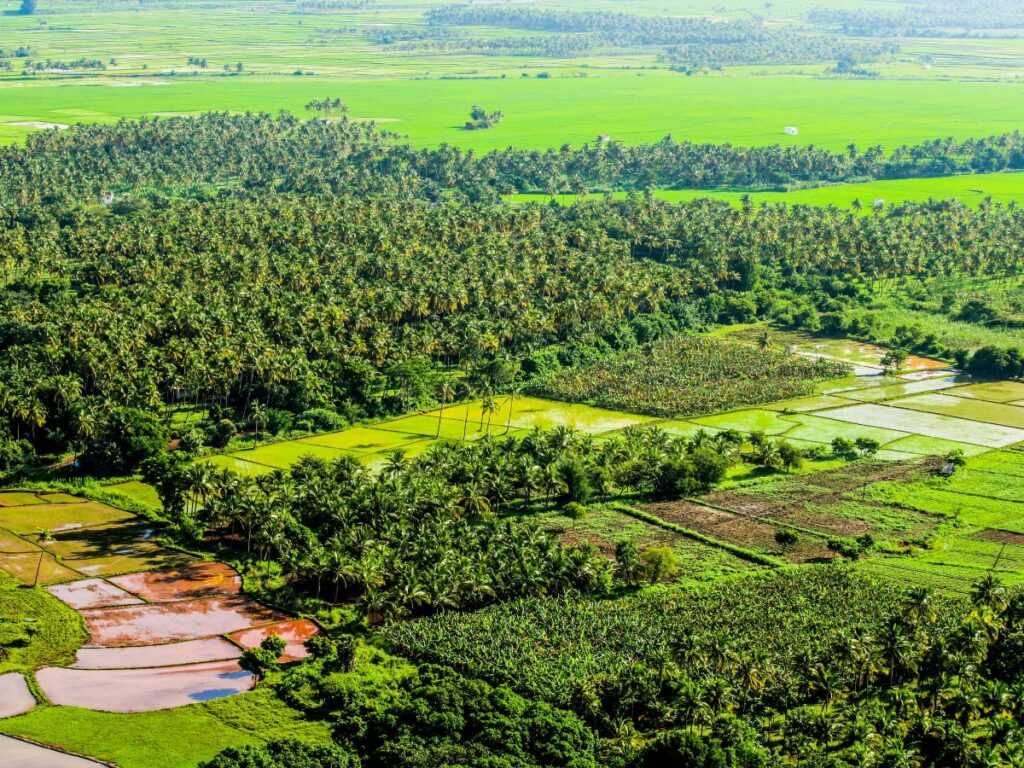
“The Luzon Economic Corridor and the ESZ threaten to intensify conversion of productive agricultural land for military cum commercial use, displacement of indigenous and farming communities, labor exploitation and oppression, environmental degradation and destruction, and militarization of the countryside,” the petition stated.
“We are concerned that the Philippines’ rich mineral resources are being positioned as inputs for a global artificial intelligence (AI) and semiconductor supply chain controlled by foreign corporations and imperialist powers. The Philippine experience with critical minerals extraction and processing is replete with ecological devastation, destruction of livelihoods, and human rights atrocities against local communities, including Indigenous PeoplesLocal Climate & EcologyIndigenous peoples & ancestral domainCommunities with continuous historical occupation of territories, recognized under the Indigenous Peoples' Rights Act (IPRA).Read more in the Glossary →.”
Separately, Israel, one of the original members of Pax Silica, has framed the Philippines’ mineral wealth as complementary to its own technological strengths. In particular, they have said that the Philippines’ supply of nickel and other critical minerals will “fill a gap” that it cannot address on its own.
“You have plenty of nickel and other different important minerals. What Israel has to offer is the tech side. We are advanced when it comes to AI and cybersecurity and other technological solutions,” Israeli Ambassador to the Philippines Dana Kursh said in a Bagong Pilipinas interview over PTV.
Kursh also stated that the two countries are working on a memorandum of understanding (MOU) on critical minerals cooperation following the visit of DTI Secretary Cristina Roque and Undersecretary Rodolfo to Israel in May 2026.
These developments are causing alarm across different groups, with the farmer group Kilusang Magbubukid ng Pilipinas (KMP) calling it a “massive sell-out” of land, minerals and sovereignty. In a statement, the group stressed that the planned hub will “intensify mining expansion, land grabbing, and ecological damage” despite its positioning as a strategic economic venture.
KMP also pointed to the historical record around former U.S. bases in Clark, Pampanga and Subic, Zambales, where communities have reported soil and groundwater contamination from fuel, solvents, and heavy metals, and long-term health impacts—warning that the same might happen at the proposed ESZ.
“Malinaw na ang karanasan natin sa malakihang pagmimina: mga kalbong bundok, nilason na mga ilog at komunidad na pinagtapunan ng mine tailings,” KMP said, pointing to a documented history of large-scale mining leaving denuded mountains and poisoned rivers in affected communities.
“This complex will concentrate heavy industry and logistics, generating even more toxic waste and emissions that will be dumped on nearby communities.”
Where are we now?
One of the most contested point in the negotiations has been jurisdiction: media reports indicated U.S. personnel at the site might receive diplomatic immunity, with the zone operating under U.S. common law rather than Philippine law. Philippine officials have rejected this.
On May 25, U.S. Undersecretary of State for Economic Affairs Jacob Helberg stated through a post on X (formerly Twitter) that the characterization of Pax Silica as a vehicle for U.S. diplomatic immunity was “taken out of context” and “turned on its head by the press.”
Helberg leads Pax Silica and signed the declaration alongside Undersecretary Rodolfo.
He wrote, “We never said our goal was to maintain diplomatic immunity. Our position has always been that markets and investors need certainty and predictability in order to deploy large pools of capital over a 5-10 year time horizon. Any half decent investor will happily validate this.”
Herlberg added that Pax Silica is largely a private sector-led program and that to think that the Philippines being part of the U.S. supply chain is “subservience” is a “loser mentality.”
He added, “The U.S. is home to the world’s largest technology companies—a fact I’m sure deeply irritates you. The idea that being part of their supply chain is ‘subservience’ is an ignorant loser mentality. Is TSMC a subservient company?? Anyone who knows anything about tech understands they are one of the world’s most important (and valuable) companies—and also an integral part of America’s (and the world’s) supply chains.”
This statement followed after Joshua Bingcang, President and Chief Executive of the BCDA, told reporters that the Philippines denied the U.S.’ request for diplomatic immunity.
He made this statement during an interview with several reporters at the US official’s May 18 visit: “That’s their request, but we did not agree to that. No special arrangement to be accorded to the US government.”
Herlberg told Reuters on May 21 that the countries had a two-year window to finalize the long-term industrial policies and permanent lease terms of the hub.
In a roundtable interview with Inquirer on June 16, Bingcang also said that the BCDA and the U.S. Department of State are working on finalizing the framework agreement on the legal, commercial, and other issues related to “developing the industrial enclave.” The framework agreement will inform the definitive agreement, which Bingcang told Inquirer he hopes to be finalized “in the next two months.”
This definitive agreement is distinct from the two-year window on the hub’s long-term agreements.
What does this mean?
The Philippines has secured a commitment for what is framed as a high-value investment and a strategic position in an AI-aligned supply chain it did not previously have access to.
What it has not secured is a public governance framework, protections on how its mineral resources are extracted, or any commitment to building Philippine industrial capacity in return.
Three things will determine which version of this project materializes:
- whether the framework agreement Bingcang has targeted for the next two months actually resolves the jurisdiction question that produced the diplomatic immunity dispute;
- whether the two-year window for permanent lease and industrial-policy terms produces terms more favorable to the Philippines than the rent-free grace period currently on the table;
- and whether any environmental or minerals-extraction safeguards are written into the definitive agreement before, rather than after, ground is broken.
None of these have been settled as of this writing. The 4,000 acres of land has been.
As of writing, the Philippine government has not issued a statement directly addressing the concerns raised by local groups; no official documents that detail how the acceleration hub or the ESZ will be governed have been released.
Editor’s Note: During the State of the Nation Address 2026 on July 27, Marcos publicly addressed Pax Silica for the first time in a major address, calling it a “center in the global AI and technology value chain.” Meanwhile, DENRPH Laws & FrameworksDepartment of Environment and Natural Resources (DENR)The Philippine executive department managing forests, protected areas, mining permits, and pollution control. It is the primary regulatory counterparty for environmental compliance, natural capital valuation, and the issuance of permits governing resource extraction and land-use changes.Read more in the Glossary → Secretary Juan Miguel Cuna said that the agency would “ensure environmental compliance will be strictly observed,” adding that DENR “will definitely not sacrifice the environment for the Pax Silica” even as it looks forward to the jobs the project could bring.”
Dig deeper:
Philippine News Agency Press Release: PH joins US-led Pax Silica; plan for industrial hub in Luzon unveiled
Fact Sheet: Pax Silica initiative
Reuters – China hits back at US tariffs with export controls on key rare earths
U.S. Department of State Press Release – The United States and The Philippines Launch Plans for 4,000-Acre Economic Security Zone to Shore Up Supply Chains: First AI-Native Industrial Acceleration Hub Under Pax Silica
Philippine News Agency Press Release – New Clark City to host AI hub under US-led Pax Silica
Petition: International League of Peoples’ Struggle (ILPS)
Fact Sheet: U.S. and Philippines Plan the Launch of Historic 4,000 Acre Economic Security Zone to Shore Up Supply Chains
Philippine News Agency Press Release: Israel eyes PH as Pax Silica partner for AI, semiconductor push
Kilusang Magbubukid ng Pilipinas Facebook post
Climate Diplomacy – U.S. Military Base and Toxic Waste Dumping in the Philippines
Inquirer.net – Senate confirms Subic toxic waste dumping
Rappler – What is Pax Silica? What are its goals, and what concerns does it raise?
Rules and Regulations on the Admission, Movement and Withdrawal of Goods in Free Zones
Under Secretary of State Jacob S. Helberg post on X
PTV video – First-ever AI industrial hub in New Clark City under the U.S. Pax Silica Initiative to operate…
Reuters – US, Philippines to reach deal on economic security zone ‘sooner rather than later’, US official says