

May 5, 2026 · Twenty-six Filipino scientists have been included in the World Top 2% list, an achievement that confirms what we have long known: Filipino scientific talent is world-class.
The World Top 2% list features some of the most prominent researchers globally, spanning across 22 fields and 174 sub-fields of research. It was created in 2019 by Stanford University Physician Dr. John Ioannidi using data from Elsevier Foundation’s Scopus database.
Each researcher’s impact is determined by their c-score, an indicator calculated mainly based on number of citations. To make it into the list, a scientist must either make it into the top 100,000 ranked by c-score or have a 2% percentile rank in their respective sub-fields.
Dr. John Ionnadis stated that if a name doesn’t appear on the list it is “simply because [their composite score] was not high enough,” which does not mean that their work is not impactful. He added that “citation metrics have limitations,” acknowledging the list’s flaws.
While the list isn’t perfect, it is widely recognized as a useful measure of who’s making an impact in global science. We’ve rounded up the 26 Filipino scientists featured in the list and highlighted some of their most important work.

Agriculture & food science
- The late Alonzo Gabriel was a food scientist who worked to improve food safety and quality in the Philippines. He is most notable for his research on foodborne diseases, such as Salmonella, and how to deactivate them to improve food safety.
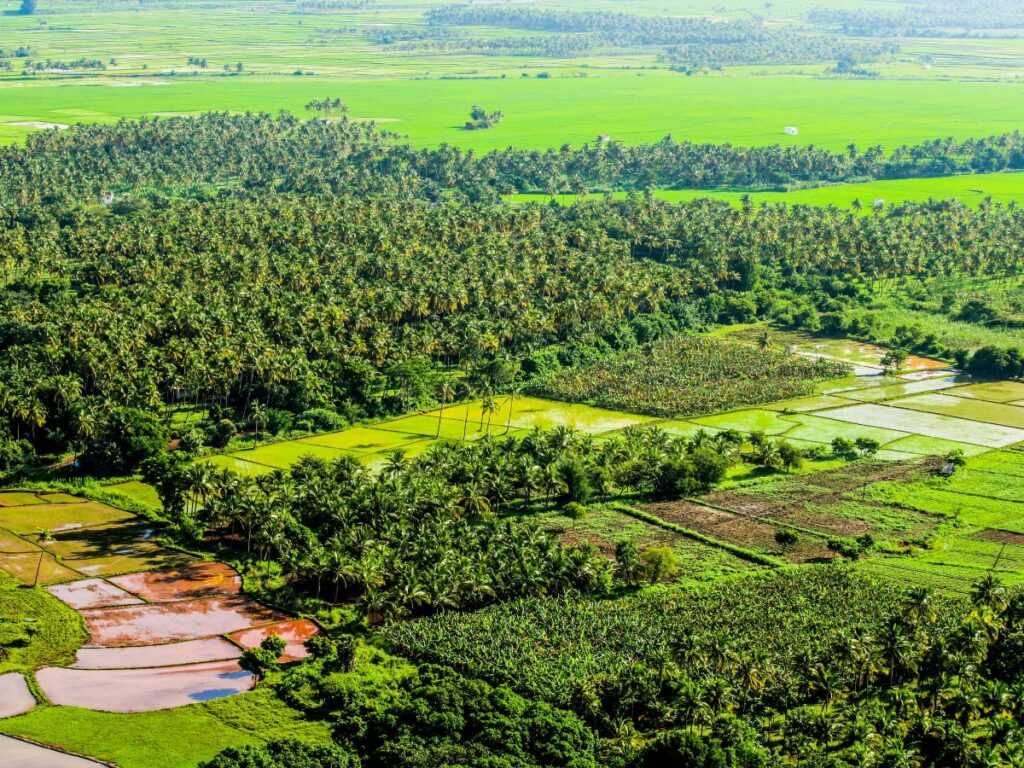
- As sea levels continue to rise, what happens to our farmlands? Enter Dr. Glenn Gregorio—a geneticist and crop breeder developing rice varieties that can thrive in salty, climate-stressed soils, keeping food securityLocal Climate & EcologyFood securityThe consistent physical and economic access to sufficient, safe, and nutritious food.Read more in the Glossary → alive for coastal communities.
- We Filipinos love our rice—and it’s thanks to organic chemists like the late Dr. Bienvenido Juliano that it tastes and nourishes us so much better than it did before. Over 32 years at IRRI, his research shaped how rice grain quality is understood and improved worldwide. For these contributions, he was conferred the National Scientist Award in 2000.
- Dr. Carlito Lebrilla, a bioanalytical chemist at UC Davis, pioneered the use of glycomics— the study of sugars in the body—for early cancer detection. His lab helped develop methods to identify the complex sugars in human breast milk that can explain why breastfeeding is crucial to infant health.
- Dr. Michael Purugganan studies the genetic diversity of crops like rice and millet to map their history and evolution—work that could help scientists develop plant species resilient to climate change and drought.

Climate, environment, and sustainabilityGlobal EssentialsSustainabilitySustainability is the ability to manage and use resources to meet present needs without compromising future generations. It can be examined through environmental, economic, or societal lenses. These are the…Read more in the Glossary →
- Plastic pollutionLocal Climate & EcologyPlastic pollutionThe accumulation of synthetic plastic products in the environment, adversely impacting wildlife, habitats, and human populations.Read more in the Glossary →. Carbon emissions. Resource waste. These are problems that need smart solutions—and Dr. Kathleen Aviso builds them. A chemical engineer and professor at De La Salle University, she develops mathematical models for environmental decision-making, from optimizing renewable energyGlobal EssentialsRenewable energyEnergy derived from naturally replenishing sources (solar, wind, geothermal, hydro).Read more in the Glossary → systems to plastic waste reduction.
- How do we know the Arctic is warming faster than the rest of the planet? In large part, because of Dr. Josefino Comiso, who is one of the first scientists to use satellite data to study sea ice change. He is also a contributing author to an earlier version of the landmark International Panel on Climate ChangeGlobal EssentialsClimate change/Climate crisisClimate change refers to long-term changes in global temperatures, weather patterns, and the environment resulting from anthropogenic activity such as burning fossil fuels and deforestation. These changes continue to happen…Read more in the Glossary → (IPCC) study in 2014.
- Known as the “Mother of MangrovesLocal Climate & EcologyMangrovesCoastal wetland ecosystems capable of sequestering massive amounts of blue carbon while buffering coastlines against storm surges.Read more in the Glossary →,” Dr. Jurgenne Primavera has spent decades showing that mangrove destruction linked to aquaculture carries serious environmental and socioeconomic consequences. She has been fighting to restore mangrove ecosystems ever since.
- Cutting carbon emissions sounds simple. Figuring out exactly how to do it, industry by industry, is anything but. Dr. Raymond Tan, a chemical engineer at De La Salle University, builds models that make it possible—helping industries and policymakers map realistic paths to cleaner energy.
- Dr. Aristotle Ubando, a mechanical engineer at De La Salle University, focuses on optimizing the production of biofuels from renewable sources like algae—work that’s pushing the Philippines closer to a future less dependent on fossil fuels.

Electronics and engineering
- Rigoberto Advincula is one of the leading international experts in polymer chemistry, nanotechnology, and materials. He invented polymers that can be used as thin films, which act as the protective coatings found in electronic devices.
- From stabilizing power grids to shaping economic models, the application of engineer Jose Cruz’s control theory research knows no bounds. His work with large-scale system control serves as the foundation for engineering work in many fields.
- A lot of science goes into ecotourism planning—more than you’d think. Lanndon Ocampo is an engineer who uses decision science to create more efficient systems, which can be applied to fields such as sustainable tourism.

Health sciences
- In health care systems, efficiency is key. Antonio Miguel Dans’ research is focused on improving this through methods such as the implementation of electronic health records.
- Ramon Gustilo holds the title for the Philippines’ “father of orthopedics”. He is one of the co-creators of the universally recognized Gustilo-Anderson Classification for bone fractures.
- Known as a leading clinical epidemiologist in the Philippines, Mary Ann Lansang specializes in infectious diseases like malaria and tuberculosis. One of her most important works was the 2016 national tuberculosis prevalence survey, which concluded that it is significantly underdiagnosed or unreported.
- The World Health Organization (WHO)’s Surgical Safety Checklist has reduced surgical complications and mortality by over 30%. Marie Lapitan, a urologist and a prominent researcher for surgical safety and surgical site infection, played a key role in its creation.
- Baldomero Olivera aided in the discovery of E. coli DNA ligase, which is necessary to the process of DNA replication. His study of cone snail toxins (conotoxins) led to new learnings about ion channels and receptors.
- A major step to a more objective method of monitoring prenatal exposure to drugs in infants, Enrique Ostrea’s extensive research allowed him to develop the meconium drug test, which uses a newborn’s stool to determine exposure to illicit drugs.
- The Newborn Screening Act of 2004 (Republic Act No. 9288) allows for the prevention of long-term disabilities. Pediatrician Carmencita Padilla’s research supported this legislation, and she continues to study global newborn screening systems to this day.
- Eduardo Padlan is a biophysicist who contributed to elucidating the 3D structures of hemoglobin and antibodies, yielding new insights into their evolution and function.
- Ourlad Tantengco researches cervical diseases and how they impact preterm births. He has several important contributions to the medical field, such as his work in improving diagnostics for ovarian cancer and sexually transmitted infections.

Social sciences
- With the ongoing climate crisis, climate anxietyGlobal EssentialsClimate or eco-anxietyA type of anxiety, more common in the youth, specific to the climate crisis and the environment. Constant exposure to news, often negative headlines, about the climate crisis evokes emotional,…Read more in the Glossary → is becoming more prevalent in younger generations. John Jamir Aruta is a psychologist who applies principles of psychology to environmental sustainability—working to understand the impact of climate change on the mental health of marginalized communities.
- Allan Bernardo is a psychologist who examines socio-economic and psychological impacts on academic performance. His research broadened the understanding of how Filipino students’ emotions affect their performance, providing a basis for educational reform.
- In the past two decades, Filipino youth have become more outspoken and digitally connected. Jayeel Cornelio studies how this shift impacts the way the youth interact with societal issues– such as how this youth culture influences their reinterpretation of religion.
- Paul Gideon Lasco is a medical anthropologist whose research focuses on the relationship between politics, drugs, and health care in the Philippines. His critique of drug testing in Philippine schools reflects his passion for improving the country’s overall healthcare system.