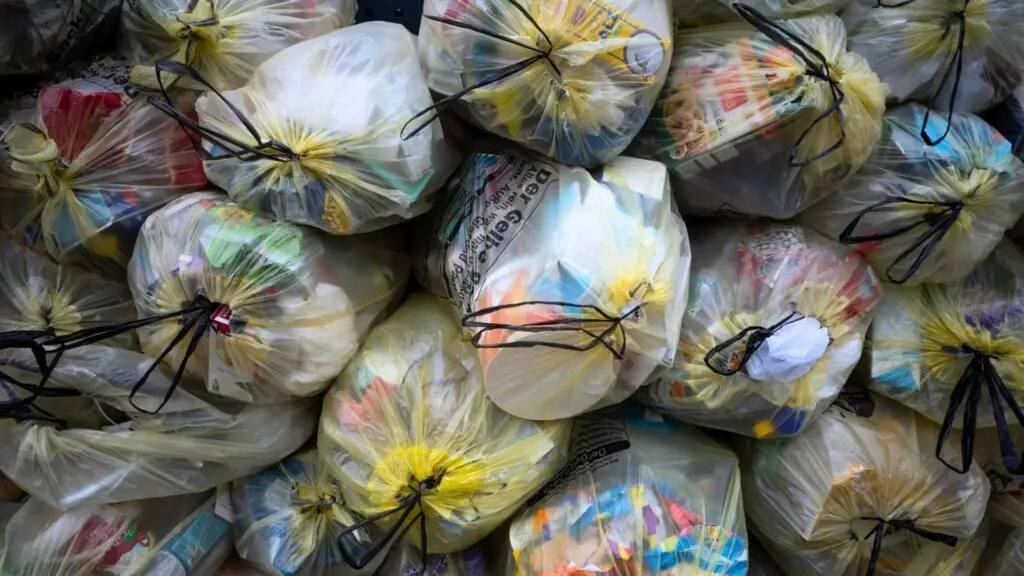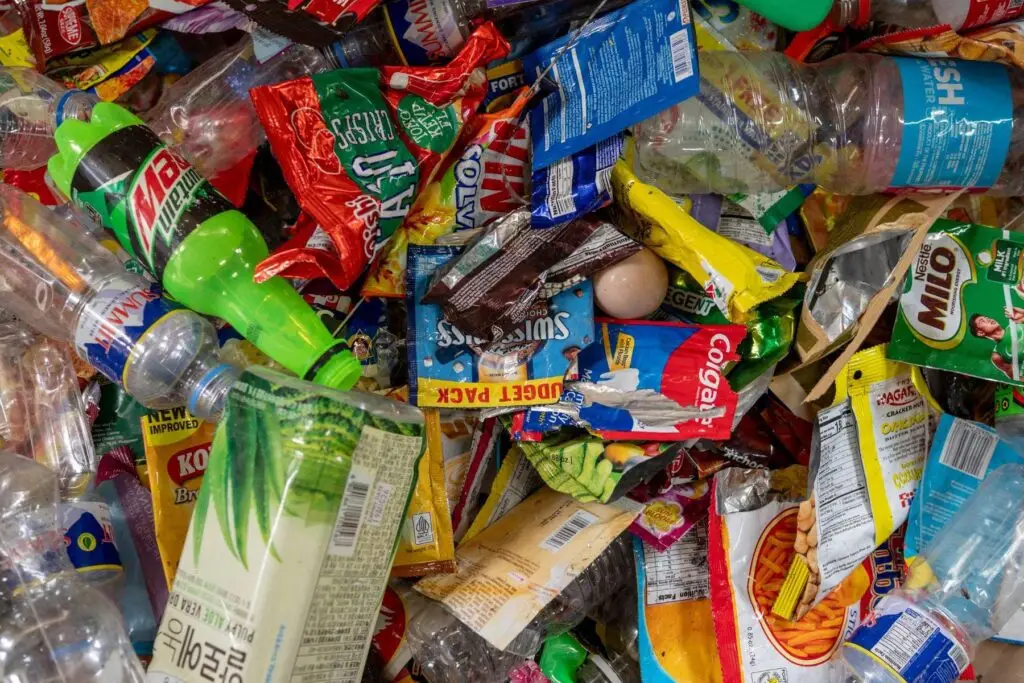




June 1, 2026 · Driven by a “sachet economyLocal Climate & EcologySachet economyA sachet is a small, sealed packet or pouch—usually made of plastic—that holds a single-use portion of a product like shampoo, coffee, seasoning, or detergent.Read more in the Glossary →,” plastics have been a long-time concern in the Philippines. The country discards 163 million sachets every day, with only 28% recycled. The unrecycled plastics end up in landfills or the ocean, where they break down into microscopic (≤5 mm) particles called microplastics.
Due to their small size, microplastics can be found almost anywhere. A 2023 study sampling aquaculture farms in Butuan Bay showed that microplastics were detected in 97% of milkfish, one of the most consumed species in the Philippines.
Experimental and epidemiological studies in recent years suggest that microplastics may increase the risk of “both acute and chronic diseases, including infertility, inflammatory bowel disease, Parkinson’s disease, and Alzheimer’s disease”. These are just some of the many health risks possibly linked to microplastic accumulation in the human body.
One solution that seeks to address this is a staple in most Filipino households: malunggay.
Malunggay, also known as Moringa oleifera, is a leafy vegetable commonly found in South and Southeast Asia. It is known as the “tree of life” or “miracle tree” because of its medicinal, industrial, and agricultural uses. This is a reputation held for thousands of years—its earliest usage tracing back to ancient Greek, Roman, and Egyptian civilizations.
On January 19, 2026, researchers from São Paolo State University (UNESP) and the University of Edinburgh published a study where they identified the ability of Moringa oleifera seeds to remove 98% of microplastics from drinking water.
Moringa oleifera seeds are currently the best natural coagulant, surpassing more common chemical coagulants such as aluminium sulfate.
These seeds have positively charged proteins that attract negatively charged particles found in dirt, bacteria, and microplastics. These clump together through coagulation and can be easily separated from water.
Accessing clean water
Filipino researchers have known about malunggay’s gelling powers for some time. In recent years, they discovered that Moringa oleifera is effective in water purification.
Data from the United Nations (UN) and the United Nations Children’s Fund (UNICEF) reveal that 52% of Philippine households lack access to clean water.
In 2009, the Department of Science and Technology (DOST)’s Industrial Technology Development Institute (ITDI) developed a water purification system using malunggay seeds, ceramic filters, and granulated activated carbon.
This system was tested in Brgy. Tabon-Tabon, Daraga, Albay, where the resulting water was “crystal clear with no rusty odor” which, in national standards, is considered drinking water.
In 2014, researchers from the Philippines and Canada began to design an affordable water filtration system that “uses extracts from seeds of the Moringa plant”.
The project was led by Filipino University of Waterloo professor Sheree Pagsuyoin and supported by colleagues from George Washington University and De LaSalle University.
Malunggay seeds might continue to change the game for Filipinos and those without easy access to clean water.
However, there is still more to be done.
While the research is promising, malunggay seeds can only be used on a small scale and not in urban treatment plans with higher flows. In the study, researchers acknowledge the limitations of moringa as a natural coagulant, the primary one being an “increase in dissolved organic carbon, which may complicate downstream treatment processes”.