


The Barangay That Lives with Plastic
Barangay Potrero in Malabon and its Waste Warriors have managed their plastic crisis—except for the single-use sachets that are designed to be hard to get rid of.
It had been raining for two weeks—almost without pause—when I visited Barangay Potrero in Malabon in August.
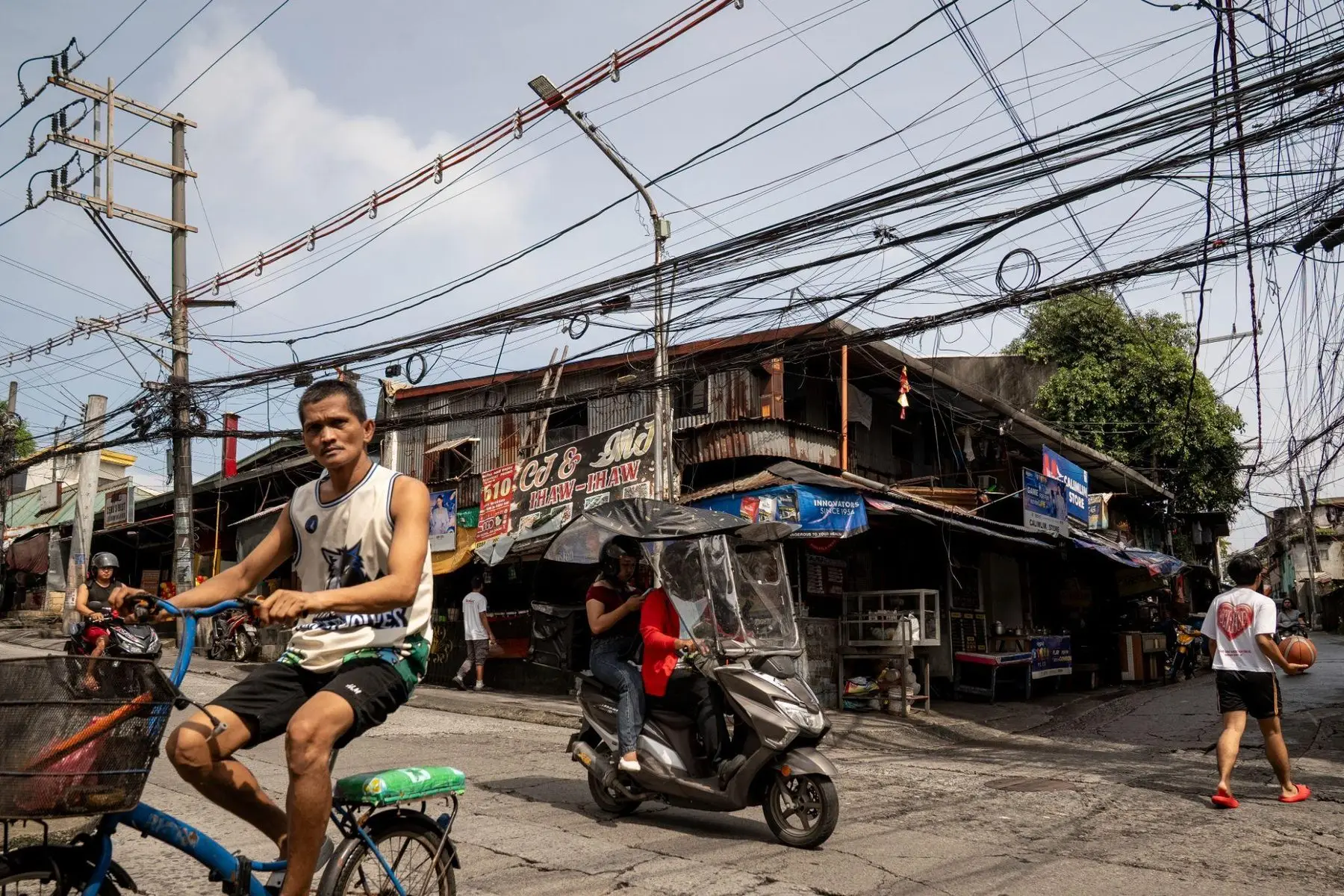
Historically, for the residents, the rains signaled it was time for general cleaning. When the rainwater begins to flood, carrying with it waves of trash, those who lived in Potrero would leave bags of garbage outside their houses to let the flood take them too.
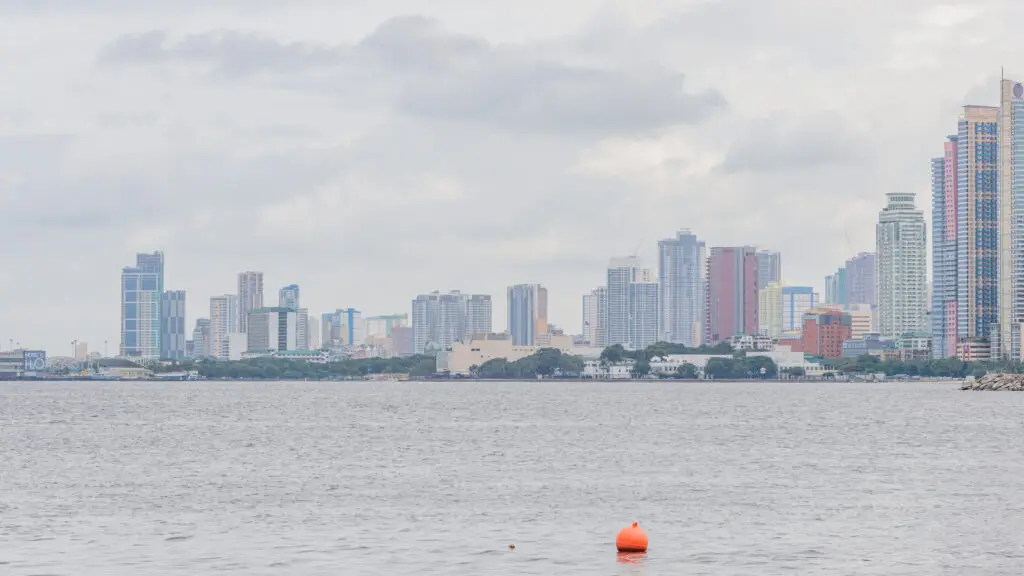
The bags were washed away from their front doors and into the lower creeks surrounding the Tullahan River, a 27.1-kilometer waterway that flows from the La Mesa Reservoir in Quezon City into Manila Bay.
One of the residents tells me they face so many floods that it has become a habit.
Barangay Potrero is the largest barangay in Malabon City. Those who live here know trash intimately—for decades, Potrero has been the dumping ground for neighboring barangays’ garbage, and the catch basin for rain and floodwater. It is partially a case of unfortunate geography: the Tullahan River on one side, and higher ground on the others.
When it rains, Potrero is the first to catch the Tullahan River’s overflow, while the water from higher areas like Caloocan and Valenzuela naturally flows downward to its streets. Plastic wasteLocal Climate & EcologyPlastic pollutionThe accumulation of synthetic plastic products in the environment, adversely impacting wildlife, habitats, and human populations.Read more in the Glossary → clogs the drains, worsening the floods, while the Tullahan River spills onto crowded residential streets.
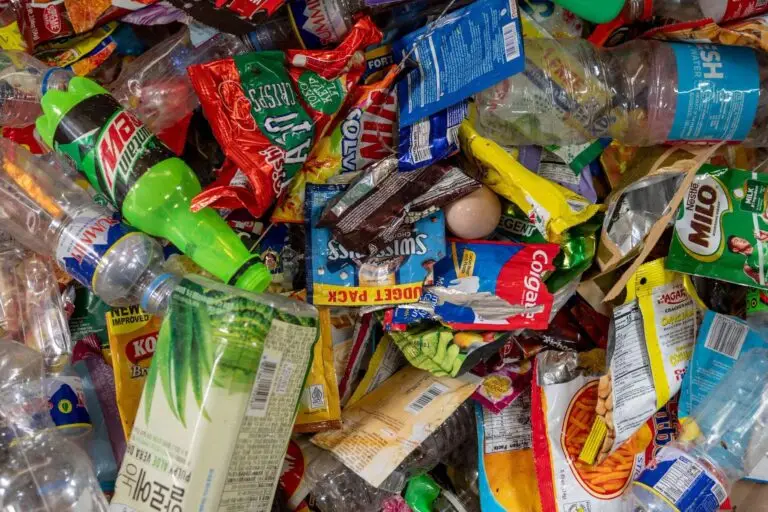
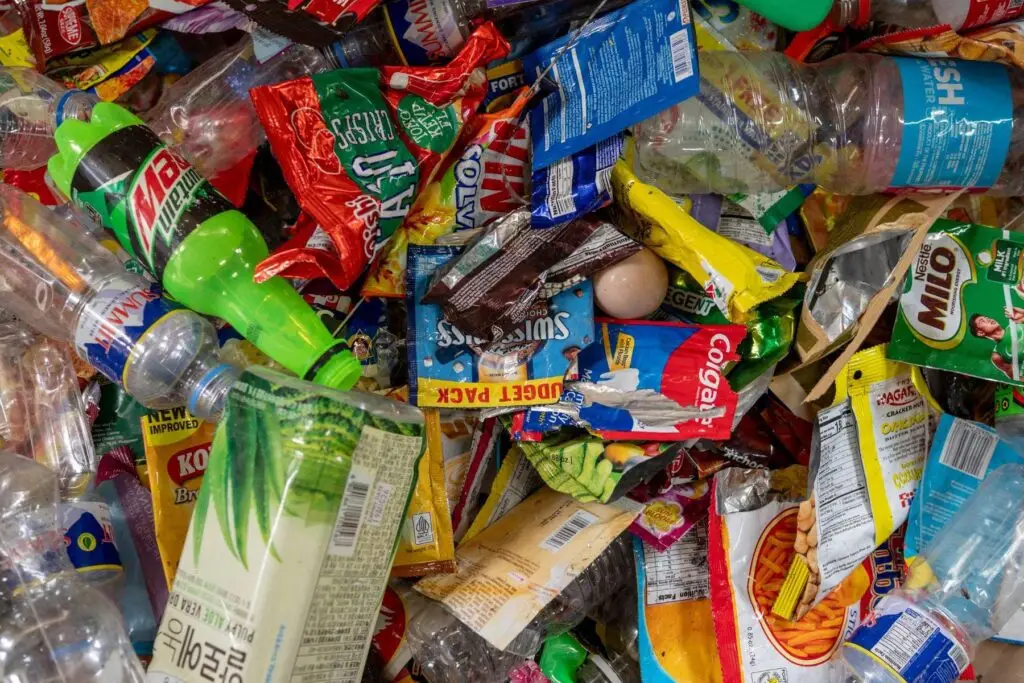
The World Bank estimated a total of 2.7 million tons of plastic waste from the Philippines each year, with 20% ending up in the oceans. More than half of this is made up of plastic sachets, according to the Global Alliance for Incinerator Alternatives.
While it is undeniable that this volume of waste has serious implications for our oceans and landfills, Filipinos see it particularly intimately come typhoon season.
No waste wasted
“Hanggang doon sa itim na linya ‘yung baha dati,” Alminda Barbin told me as we walked through her neighborhood right beside the Tullahan River, pointing to grease markings on the second floor from a past flood. “Hanggang diyan [po] sa linya bago ‘yung bintana sa taas,” she said, pointing to the next house over.
[The flood used to reach that black line. Up to that line, just below the upstairs window.]
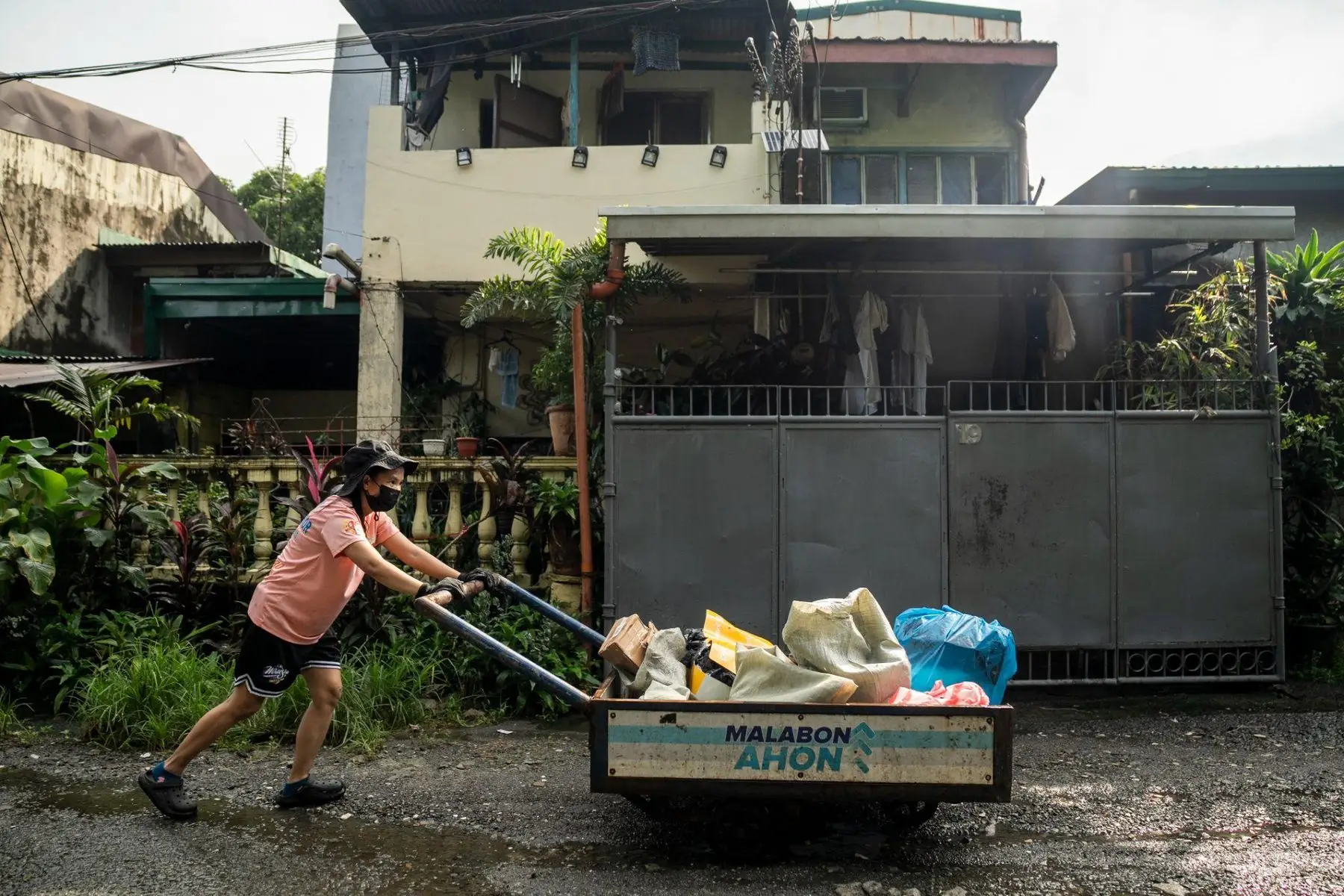
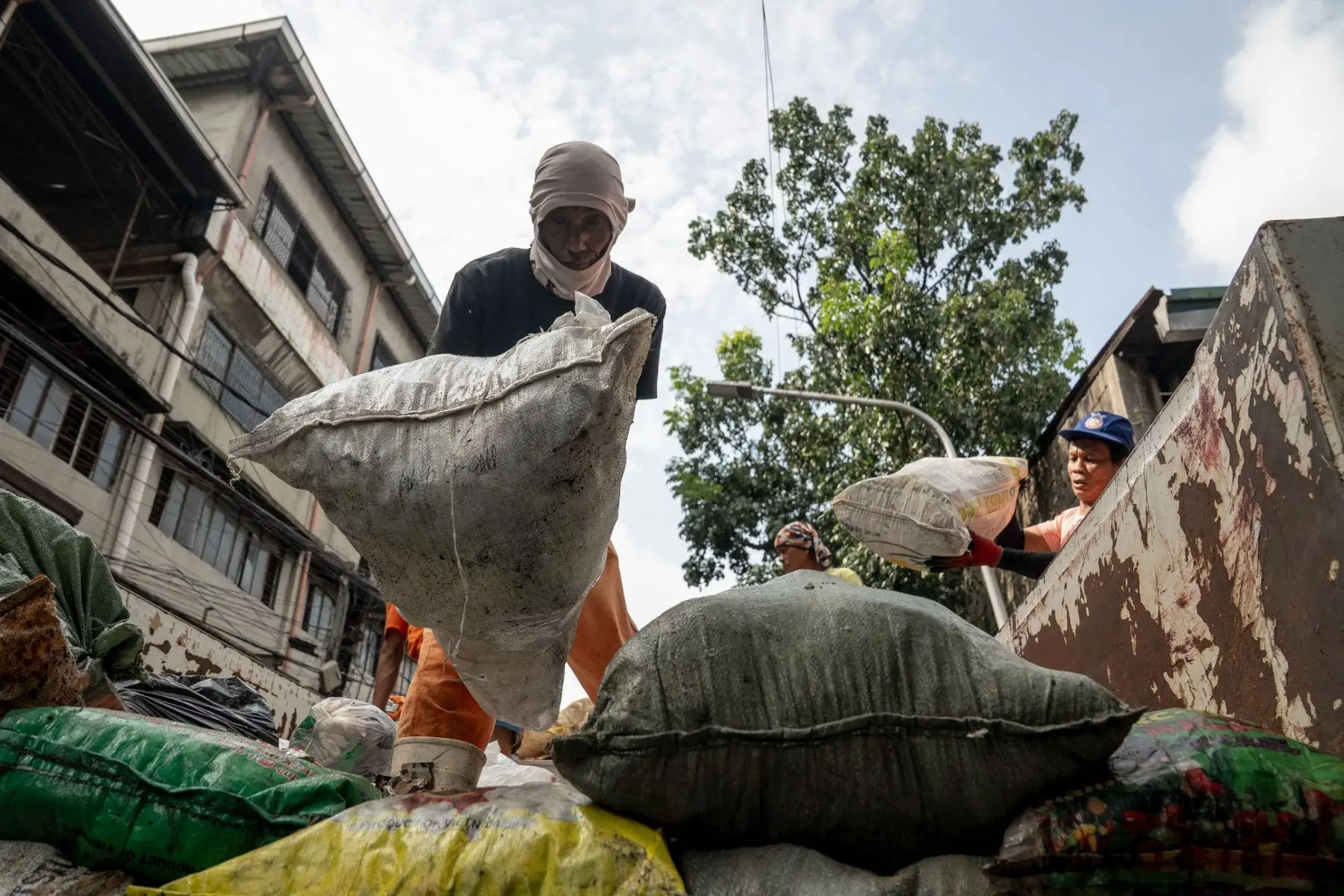
Barbin is a member of Barangay Potrero’s Ladies Brigade Monitoring team, which started back in 2014—she’s in charge of monitoring the waste collection in her neighborhood. Every morning from Monday to Saturday, at 4:00 or 5:00 a.m., she and the “waste warriors” start collecting the segregated garbage from their assigned houses, while 17 other monitors and 39 collectors do the same in their own streets. The waste warriors are free to sell the recyclable trash they collect.
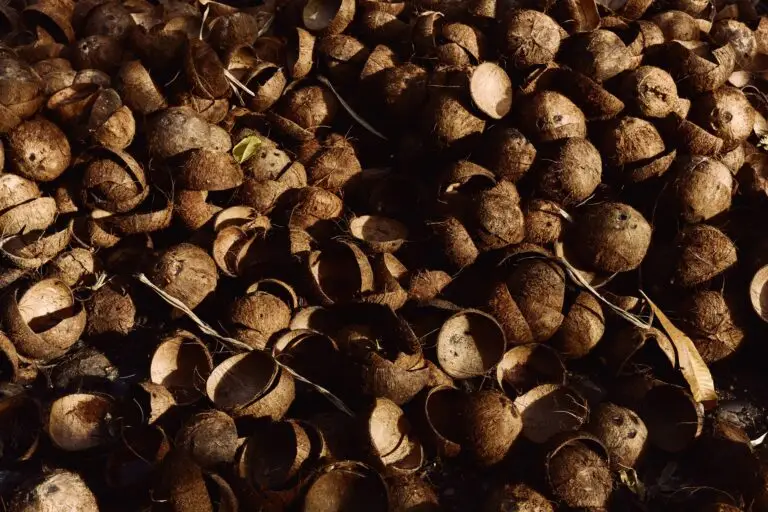
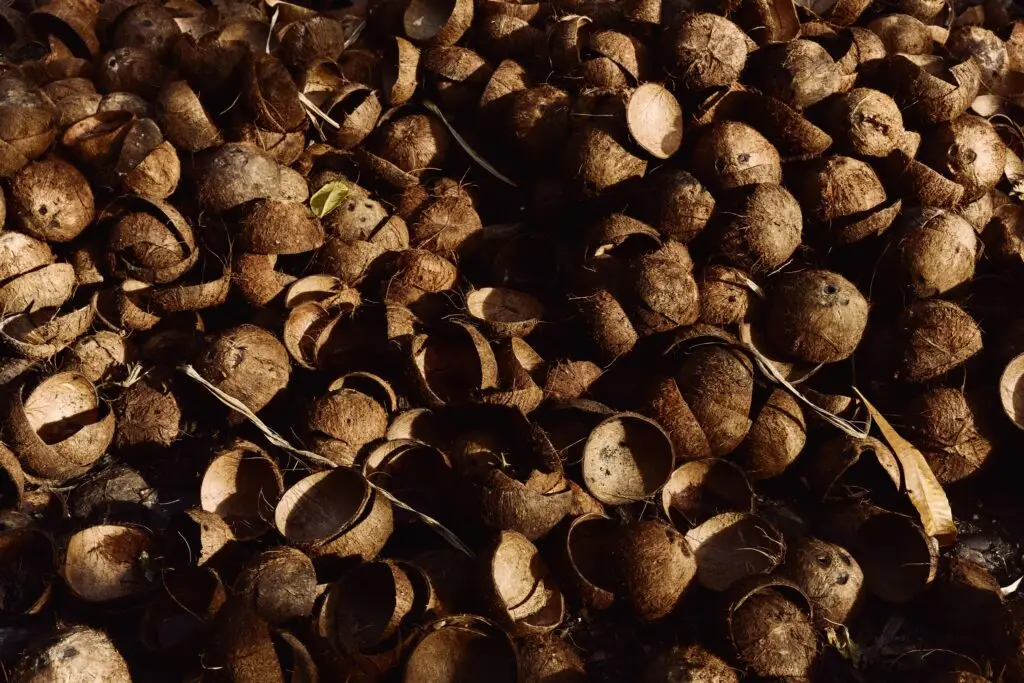
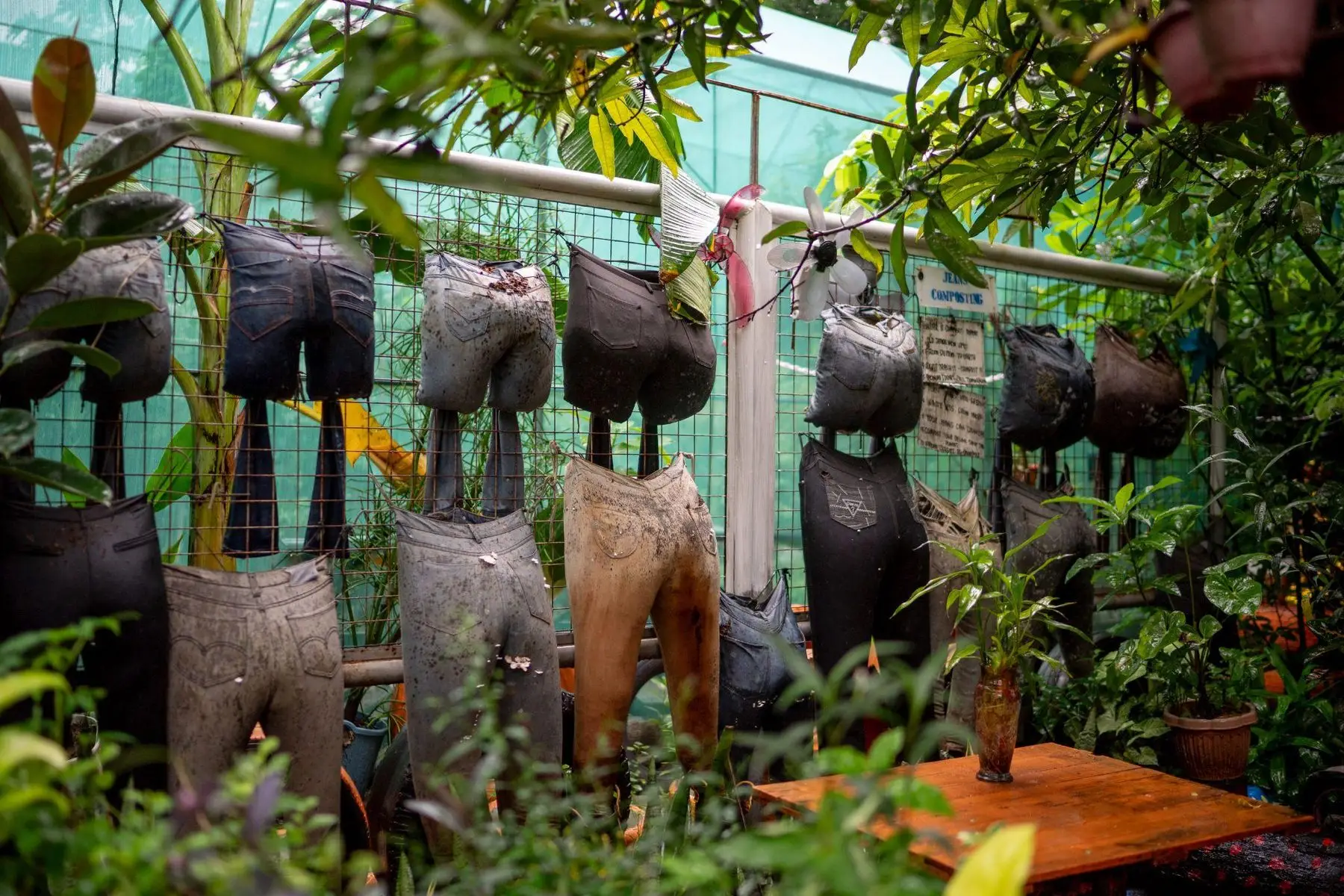
Wet household waste is processed in Potrero’s biogenerator facility, which Barbin says was “donated” by the Department of Science and Technology (DOST). The unsalvageable items left are brought to the Material Recovery Facility (MRFCircular Design & EconomyMaterials recovery facility (MRF)A centralized sorting center designed to separate municipal solid waste into recyclable, compostable, and residual fractions.Read more in the Glossary →), where they find new life. Old jeans are filled with compost and hung to dry; discarded boots and sneakers blossom with different plants; rubber tires act as fences and stepping stones to organize the MRF garden; and coconut shells are used as plates and bowls for barangay events.
“Alam namin na imposible maging zero-waste talaga, pero para sa amin, ang zero wasteCircular Design & EconomyZero wasteA systemic design goal aiming to eliminate the concept of waste by ensuring all materials are reused, recycled, or composted, preventing trash from entering landfills or the natural environmentRead more in the Glossary → ay ‘walang sayang na basuraCircular Design & EconomyBasuraThe Tagalog word for “garbage”, referring to discarded items and waste. Read more in the Glossary →.’”
Alminda Barbin · Waste Warrior, Barangay Potrero
[We know it’s impossible to be zero-waste entirely, but for us, to be zero-waste means no trash is wasted.]
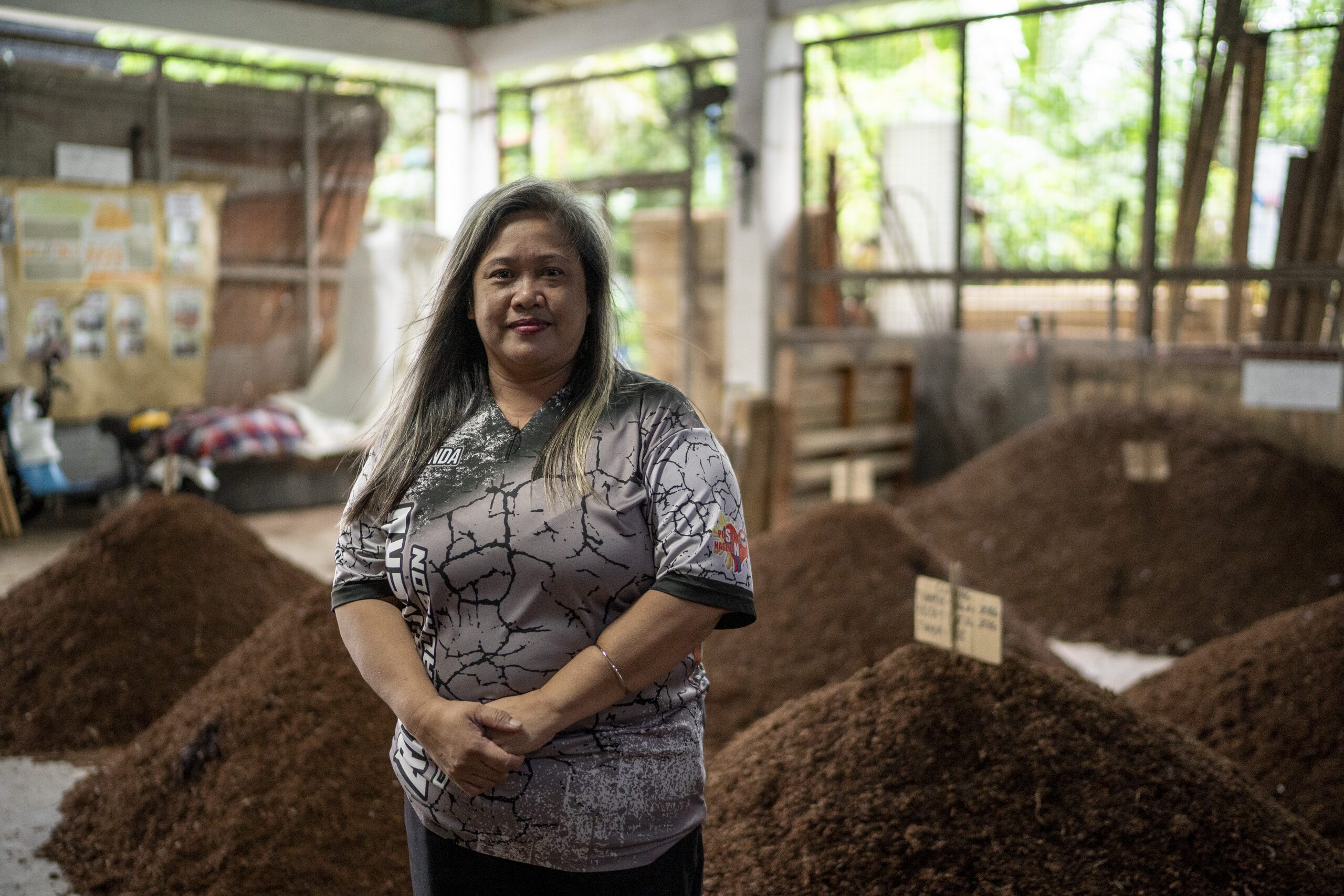
Barangay Potrero’s journey to zero waste started in 2014, when Mother Earth Foundation (MEF) taught them how to set up a waste management system, now used in every household.
After conducting studies, Barangay Potrero learned that 60% of the barangay’s waste was biodegradable, 15% recyclable, and the remaining 25% was what is widely known as “residual waste”—trash that cannot be recycled. The goal was to divert everything that could be from the landfills.
They established a Solid Waste Ordinance to formalize the barangay’s new waste management system and, in the following year, were awarded Best in Solid Waste Management by the Metropolitan Manila Development Authority (MMDA).
It was not won without effort: The barangay ran education campaigns to teach each neighborhood how to properly segregate their waste. Every household has a copy of the official waste segregationCircular Design & EconomyWaste segregationThe physical separation of waste streams (biodegradable, recyclable, residual) at the point of generation. It is the absolute prerequisite for any functional circular economy.Read more in the Glossary → poster that details the different categories of trash and how to prepare them for collection. It also states the penalty for households that don’t comply: no collection and a fee that goes up to ₱1,500.
These penalties are issued by the Ladies Brigade Monitoring, which also serves as the Eco-Police.
Informal settlers, who make up half of the barangay’s population, were employed to do house-to-house waste collection. From the income they earn from kalakalFilipino DictionaryKalakalThe Filipino term for goods and merchandise traded or sold as a commodity. Read more in the Glossary → (selling recyclables) and the set wage they receive every month from the local government unit (LGU), many of them are now able to afford rent and bills. Official reports from the barangay state that collectors earned a total of ₱482,231 from selling recyclables in 2025, with one Waste Warrior earning ₱11,000 in September 2025 from kalakal alone as a result of the clean and sorted waste they are able to collect.
Waste Warriors have launched their own initiatives to properly segregate waste in their neighborhoods as well. “Yung mga monitors talaga na sobrang masisipag, sila yung nag-eeffort nang sarili nila. ‘Yun yung naisip nila na paraan, nagbigay sila ng gallons na may butas tapos doon nilalagay yung mga sachetsLocal Climate & EcologySachet economyA sachet is a small, sealed packet or pouch—usually made of plastic—that holds a single-use portion of a product like shampoo, coffee, seasoning, or detergent.Read more in the Glossary → ng mga residents. Dinadala namin sa facility within Potrero na ginagawa nilang plywood,” Barangay Councilor Khate Nolasco shared.
[Those who monitor are really hard-working, they put in their own effort. That’s the method they came up with: they gave out gallon containers with holes cut into them, and that’s where residents put their sachets. We bring these to a facility within Potrero that turns them into plastic boards.]
She also noted that the barangay’s updated Solid Waste Ordinance now requires companies operating within Potrero to segregate their waste.
From collectors to monitors, and from common residents to barangay workers, the collective purpose is strong: to reduce the garbage that eventually makes it to their streets and clogs their drains when it floods.
Twelve years later, its streets show the effect.
“Napakaswerte namin at hindi nagbabaha ngayon,” Barbin shared as we navigated the barangay in the middle of HabagatLocal Climate & EcologyHabagatThe local Filipino term for the ‘Southwest Monsoon’, which is a seasonal wind pattern that brings warm, humid air and heavy rains to the Western part of the Philippines.Read more in the Glossary → downpour. It’s been nine days of heavy rain all over Luzon.
[We’re so lucky that it isn’t flooding right now.]
In her book, “hindi nagbabaha” or “no flooding” means that water has only reached up to her ankles or knees. After decades of impassable floods that exceeded the average height of a Filipino, it is a welcome reprieve.
She likes to believe that their work in diligently collecting and monitoring the barangay’s trash contributes. Rain or shine, it is no longer common practice to throw trash on the streets.
The segregated waste revealed one core problem, however. “Nung naayos na namin yung recyclables, biodegradables, and yung collection, pina-measure ko sa kanila lahat ng residual waste and sobrang dami pa rin talaga,” said Kagawad Nolasco.
[Once we had sorted out the recyclables, biodegradables, and the collection process, I had them measure all the residual waste, and there was still really a lot.]
Residuals—or materials that cannot be recycled, composted, or reused—remain rampant. Despite all of Barangay Potrero’s efforts, the effects of a decades-old culture of single-use plastics remain. And so do the plastic sachets.
Clean, dry, and sorted
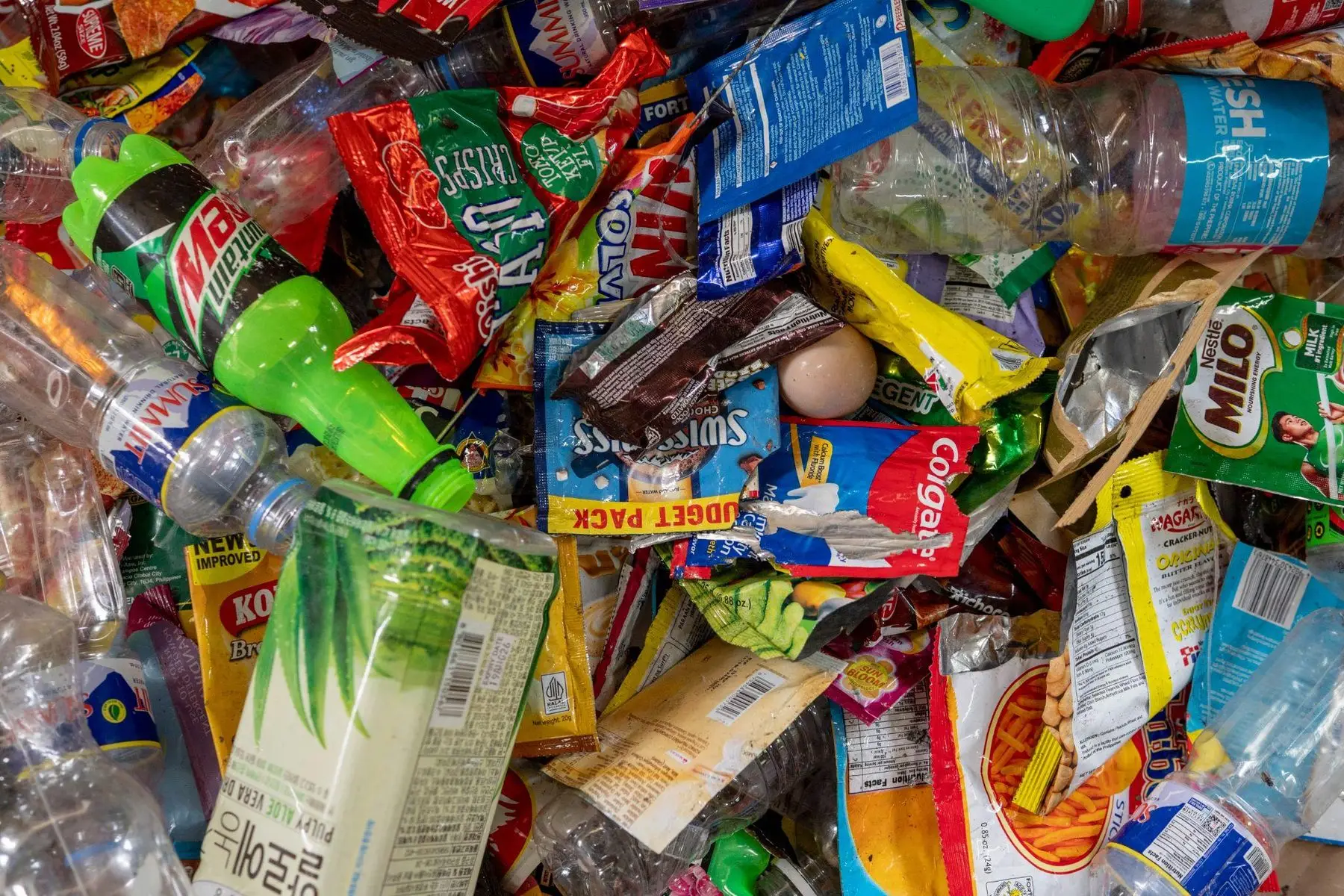
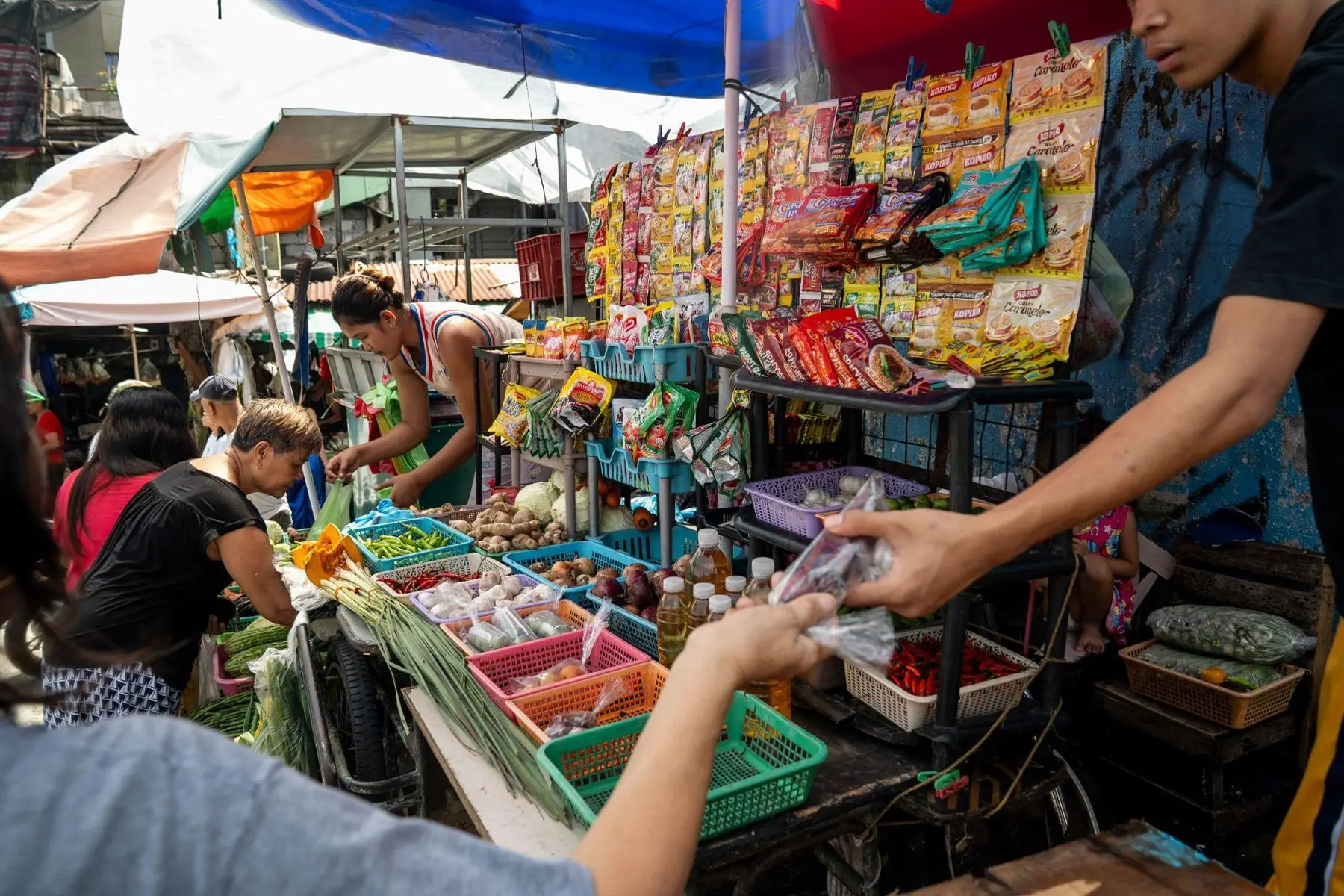
Every Filipino knows tingi culture well—the practice of buying products in small, fractional, single-use quantities. So much so that the practice has resulted in Filipinos discarding over 164 million sachets daily, according to Greenpeace Philippines.
The sachetCircular Design & EconomySachetSmall sealed plastic bags containing things like shampoo, seasoning, and snacks. They are part of the Philippines’ “tingi-tingi” culture, which is the purchase of things in small amounts rather than…Read more in the Glossary → economy sees daily consumer goods such as shampoo, coffee, and condiments, packaged in single-use plastic pouches. They are sold in neighborhood sari-sariLocal Climate & EcologySari-sari store economyThe extensive network of micro-retail neighborhood stores in the Philippines. A sari-sari store is the small neighborhood variety store found throughout the Philippines, selling everyday goods, often in small, affordable portions (called tingi) rather than full-sized packages.Read more in the Glossary → stores, convenience stores, and grocery stores, and are favored by households that can afford only small packets, not full bottles.
While the production of plastic sachets continues by the millions, the challenge is in discarding them.
Sentinel Upcycling Technologies Founder Jonathan Co says that plastic sachets are difficult to recycle because their purpose needs them to be.
“Sachets are designed to solve multiple engineering challenges at the same time, the primary of which is the fundamental challenge of balancing the following: affordability and user safety.”
“A food product, shampoo, coffee, detergent, or seasoning needs protection from moisture, oxygen, light, contamination, and physical damage while also remaining affordable for consumers. A single plastic material often cannot provide all of these properties. Instead, manufacturers combine different layers, each performing a specific function,” Co explained. “But it’s the same engineering features that make sachets such effective packaging that also make them one of the most challenging materials to recycle.”
Co enumerated several difficulties. Their small size means recyclers need thousands of sachets just to accumulate a few kilograms of salvageable material. The material composition of multilayer laminates means that separating them after use is “technically difficult” and “often economically impractical.” Contamination is also a key challenge, especially since most products in sachets are liquids that stick to the plastic.
Lastly, he emphasized sorting. “Many flexible packages look identical but are actually made from completely different material combinations. Unless manufacturers provide detailed composition data or the materials are sorted very carefully, processors often cannot distinguish between compatible and incompatible packaging.”
These challenges underline the importance of waste segregation at the household level, as recyclers are unable to process plastics—especially plastic sachets—when they’re not clean, dry, and sorted. It is because of this that not all recyclers are able to accept single-use plastics into their treatment facilities, leaving many as residuals that go into landfills.
“If sachets are heavily contaminated with food, oils, chemicals, or other substances, the cost and environmental impact of cleaning may exceed the value of the recovered material. In those cases, they may not be suitable for processing,” Co stressed. “Many people assume that recycling facilities can simply clean everything that arrives. In reality, the cleaner the material is when it leaves the household or business, the greater the likelihood that it can actually be recovered.”
Sentinel Upcycling Technologies is a plastic manufacturer that turns “low value” plastic waste into “higher value” durable products such as crates, pallets, trays, and furniture. They accept plastic bags, bottles, strapping bands, cups, and the notorious plastic sachets. Their manufacturing facility is in Malabon, just 15 minutes away by car from Barangay Potrero.
Co shared that since their establishment in 2014, Sentinel Upcycling Technologies has diverted 227,154 kilograms of plastic waste from landfills and recirculated it into the economy through their upcycledCircular Design & EconomyUpcyclingThe process of transforming waste materials or unwanted products into new materials of higher quality or environmental value.Read more in the Glossary → plastic products. He believes that it’s important to make that distinction—that it only serves the circular economyCircular Design & EconomyCircular economyAn economic model designed to keep materials in continuous use through maintenance, reuse, remanufacturing, and recycling, decoupling economic activity from the consumption of finite resources.Read more in the Glossary → if what has actually been recirculated is measured, not just what the company has collected.
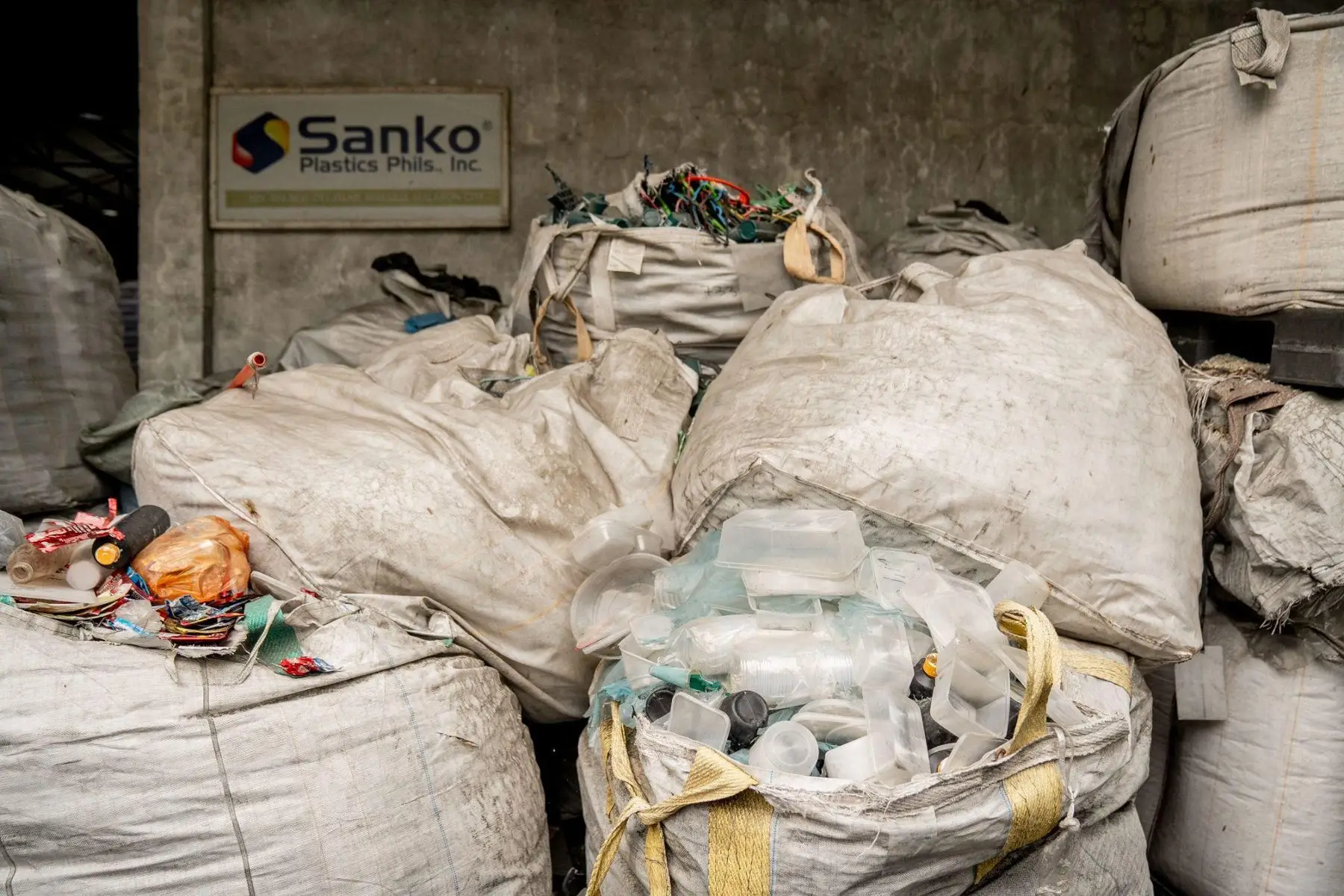
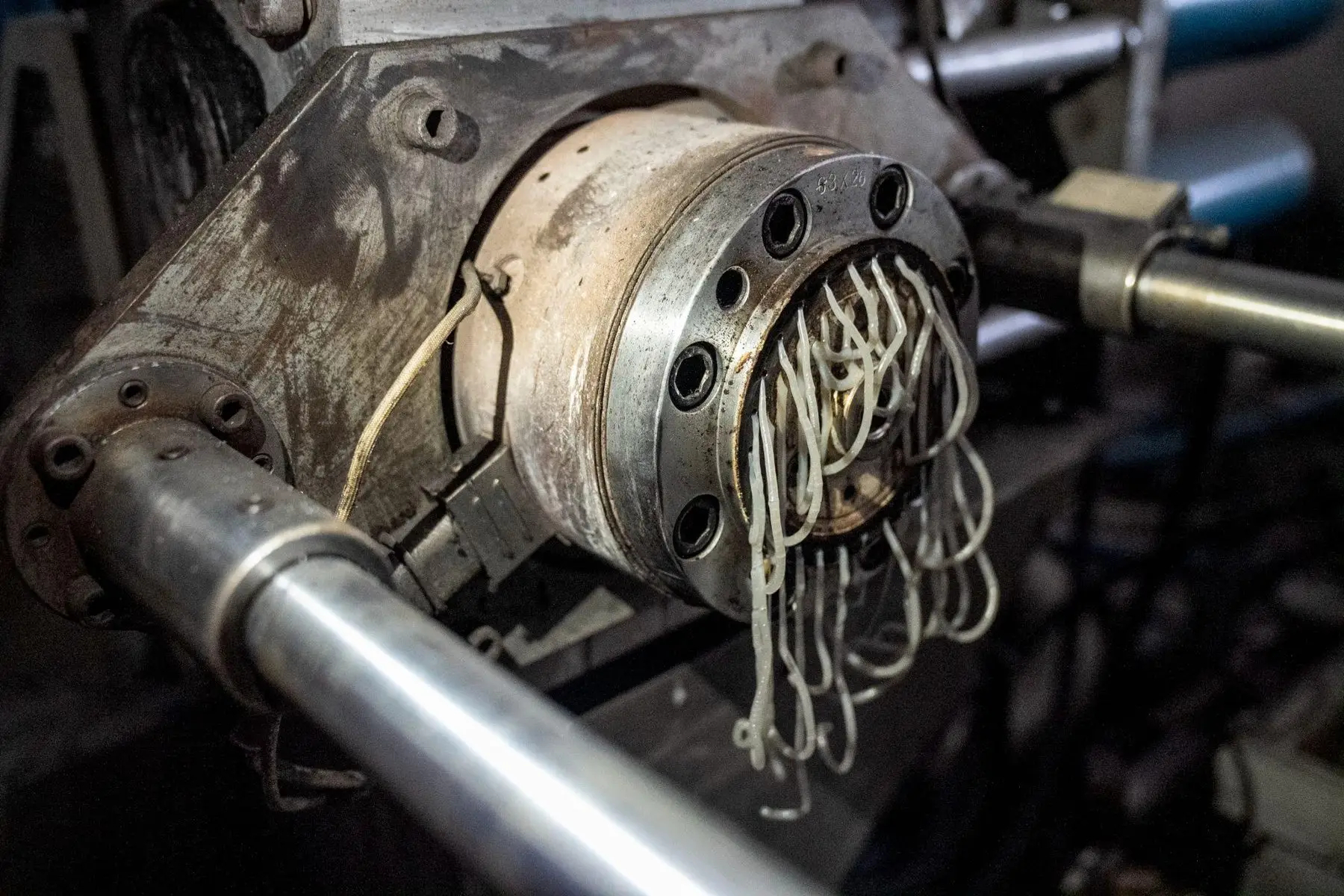
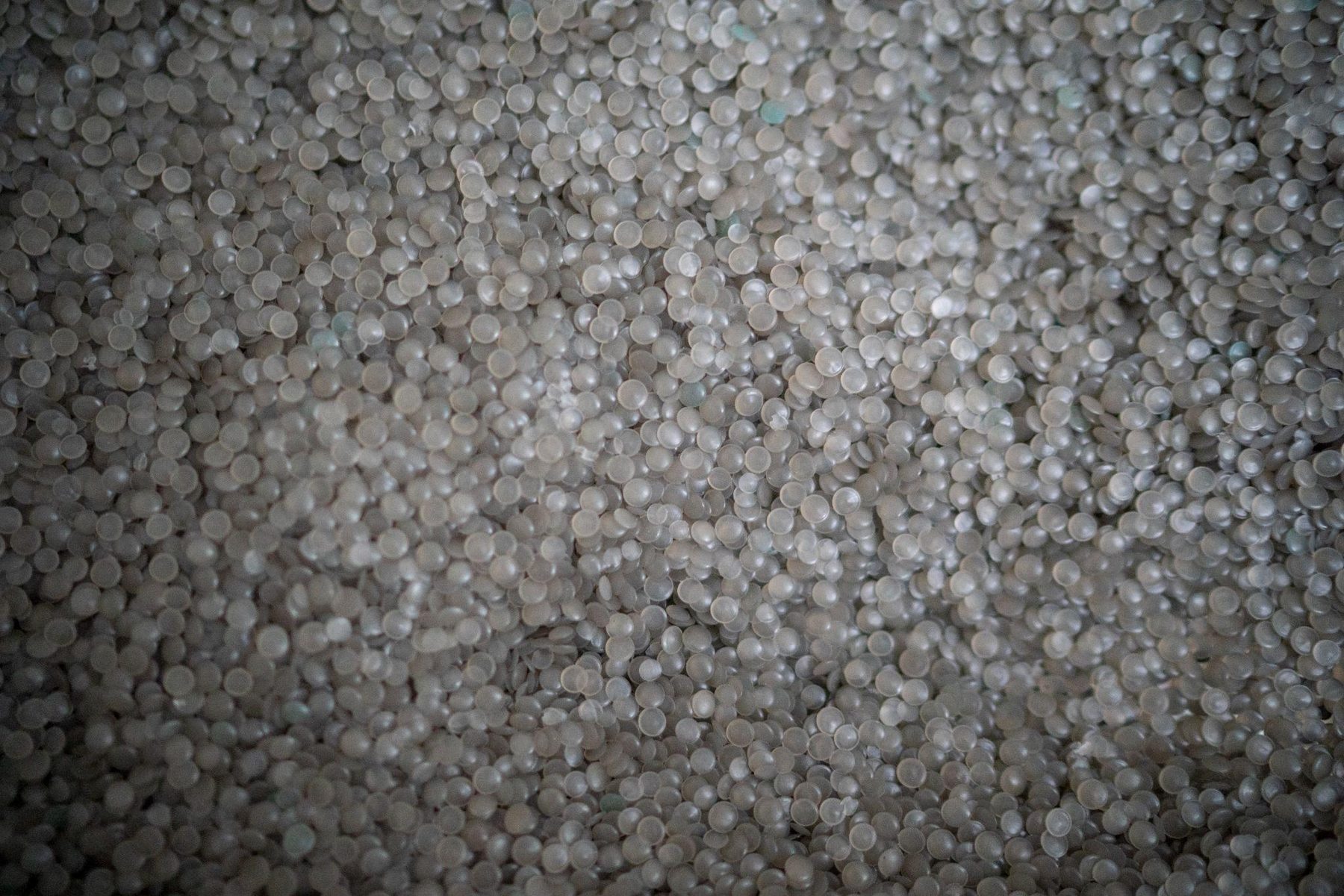
The plastic waste used in Sentinel’s products is donated by or bought from partner organizations and LGUs, or from the factory’s own industrial waste. They also have a Buy Back program where they repurchase broken or old products from clients and process them again to use as material for new ones.
While they don’t collect the waste themselves, part of their advocacy is educating consumers on proper plastic disposal to prepare them for recycling.
Co shared that their goal is not simply to recycle more plastic. “It is to help communities build systems where plastic retains its value instead of becoming waste,” he explained.
He says the lack of awareness has created a culture of production and consumption that, for years, paid no mind to what would happen after the packaging (“seemingly so small and inconsequential”) has done its job.
But when the rain starts to pour and the floods start to rise, Filipinos are confronted with a million variants of this “small thing” that, essentially, has nowhere else to go.
“We need to evaluate the entire life cycle, not just the material itself,” Co urged.
A human product
“If we consider things as designed, [they] wouldn’t be so disposable to us,” said Ginoe Ojoy as he showed off his treasured collection of packaging.
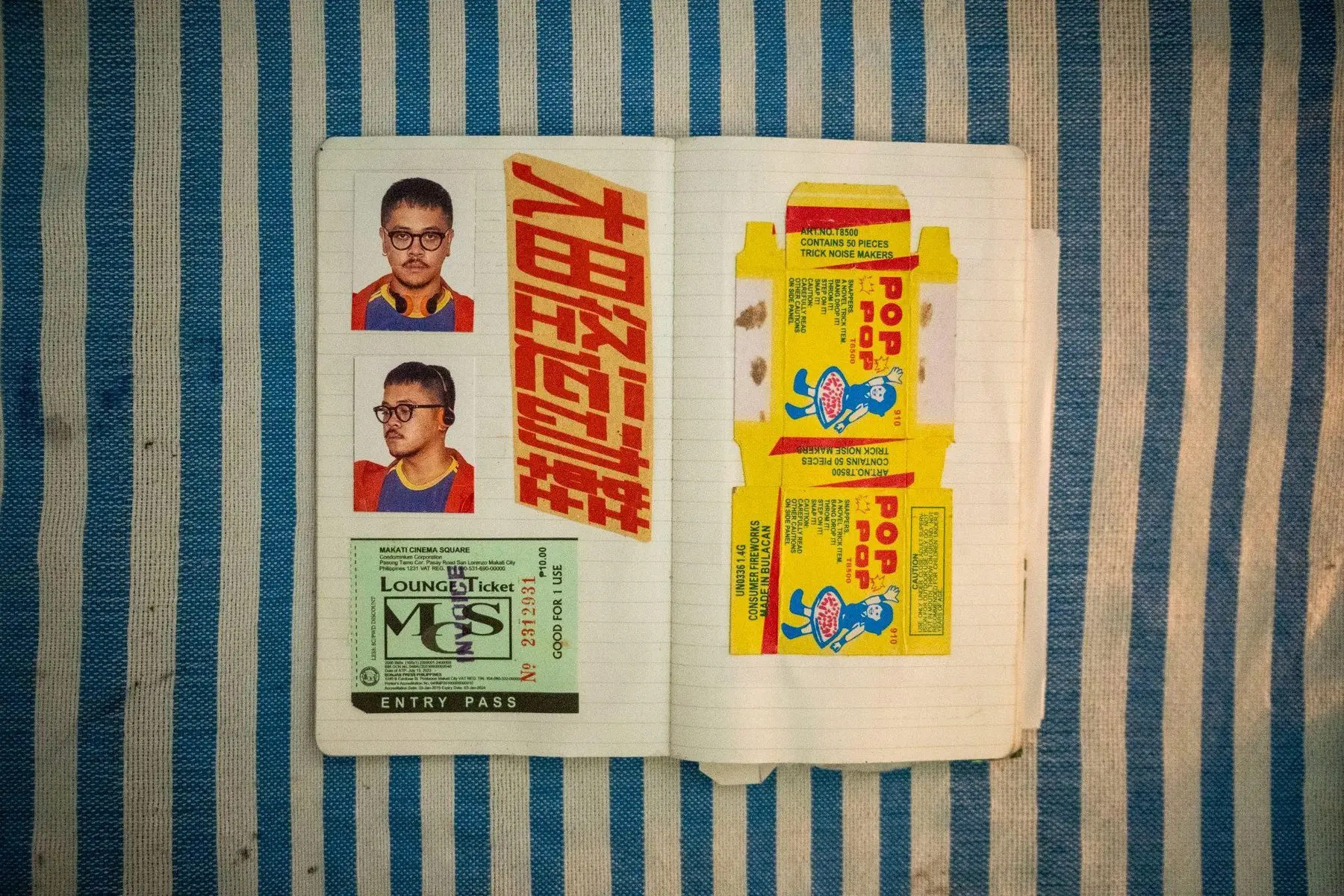
Ojoy is the Founder of Sachet Archives, an online archive of ephemera that he collects and scans. Since its launch in 2020, it has grown into a 3,000-strong community that shares Ojoy’s fascination with graphic design found in all sorts of packaging—from plastic sachets to matchboxes, bottles and cans, and more.
What draws Ojoy to the packaging of small local products—particularly regional products that are manufactured and sold exclusively within places like Bacolod, where he grew up—is how they’re designed from a “place of scarcity.” The real estate for text and graphics is small, and they’re usually printed with only one or two colors to lower printing costs.
It’s this same “place of scarcity” that drives consumer behavior to buy sachet products. But to Ojoy, to understand tingi culture is to understand how it manifests in Filipino lives. He sees it as more than just an economic issue; he sees it as Filipinos operationalizing their lives in the small spaces they have.
“For example, a carinderia kusinera will buy tingi-tingi betsin, tingi-tingi Magic Sarap, tingi-tingi Knorr cubes… She’s technically buying those products to ‘design’ her kitchen. Para hindi siya ma-overload. Every bit of space in the counter and in the kitchen is utilized to benefit the operation of the carinderia. So technically, she’s designing her workflow by buying those small things.”
[For example, a small neighborhood eatery’s cook will buy MSG, Magic Sarap, Knorr cubes in small quantities… She’s technically buying those products to ‘design’ her kitchen. So she isn’t overloaded.]
“Those choices are strategic. People are designing their lives every day.”
Ginoe Ojoy · Founder, Sachet Archives
Ojoy’s space, his apartment, doubles as his studio, and each piece of furniture and decoration has a story. The couch we sat on was on its third life, repeatedly cleaned and repaired after several floods. The lamp on his center table was a purchase from Facebook Marketplace (where Ojoy proudly shared he is a professional shopper). Various prototypes of his art pieces are scattered around—each one reflecting the design principles of local packaging.
He says that he rarely buys brand new items from stores—he prefers thrift and surplus stores, and online marketplaces for preloved goods. He also keeps clearbooks and journals of old bus tickets, sachets, and other little pieces of Filipino culture that other people would simply throw away.
“Yung mga friends ko na artist, palaging sinasabi, ‘Uy may basura, gusto ni Ginoe yan,’” he joked.
[My artist friends always say, ‘Hey, there’s trash—Ginoe would want that.’]
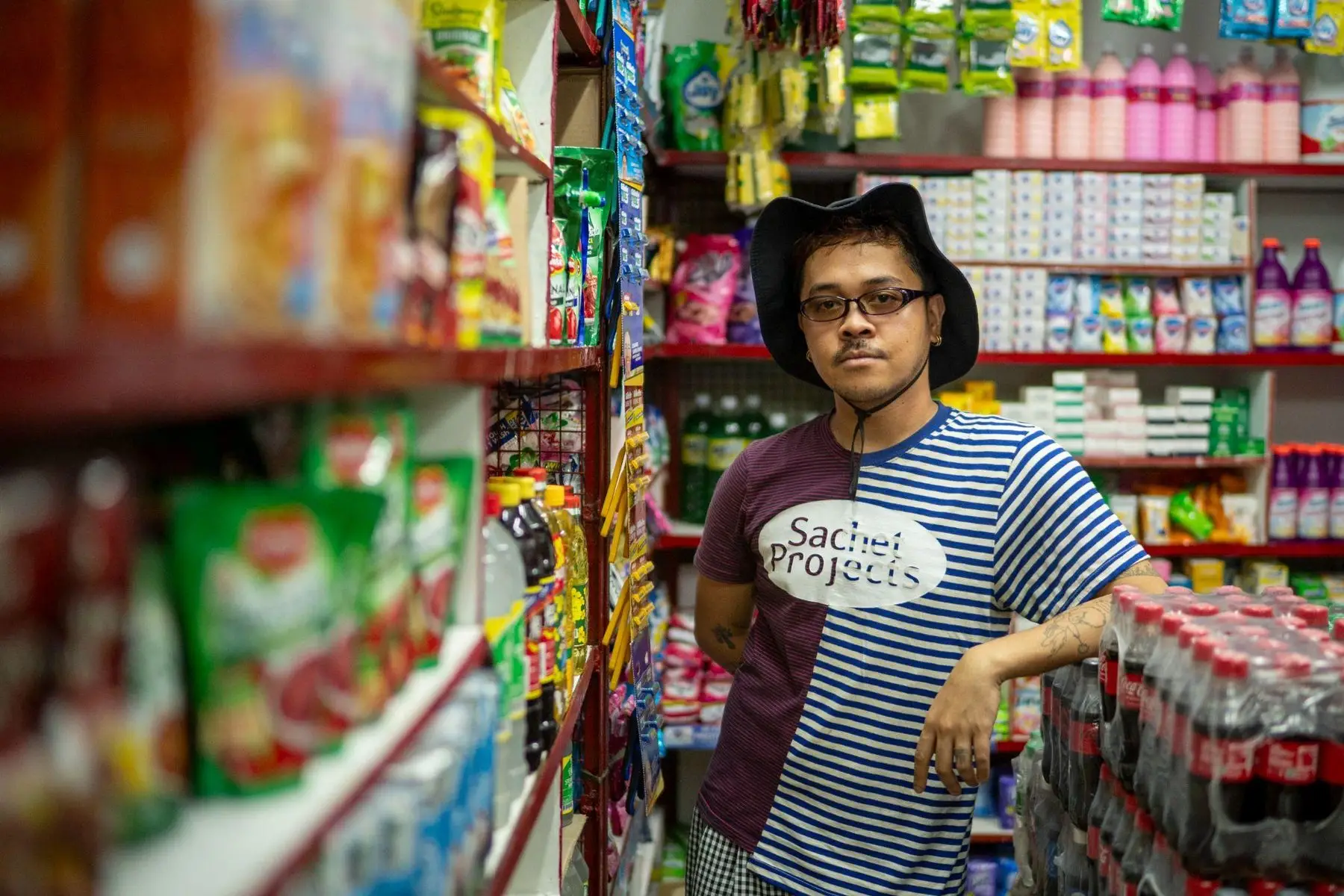
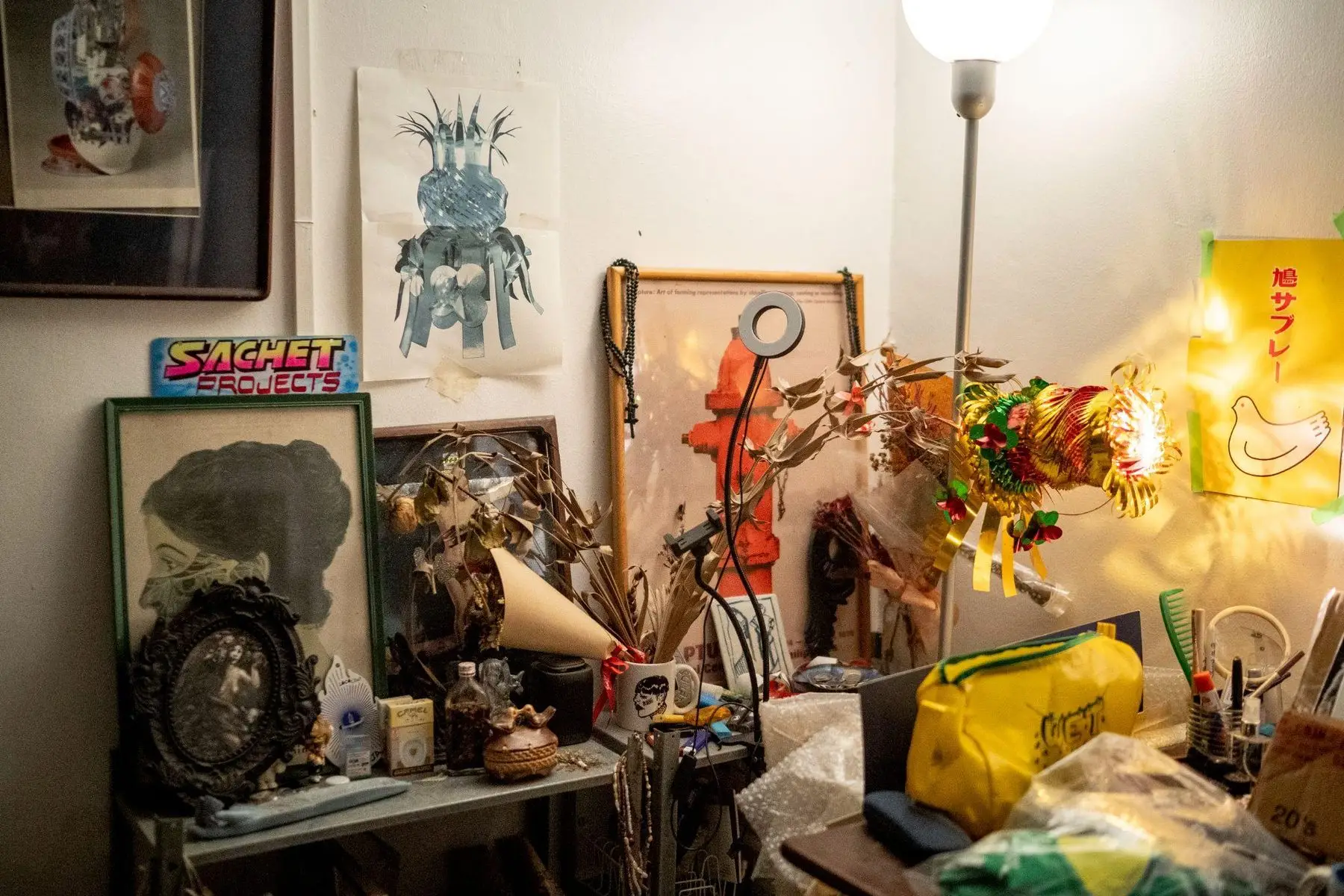
As an artist, Ojoy says it’s not as easy for him to dispose of things that other people designed, including plastic sachets. He wants people to see their value regardless of their size. “Imagine if you throw away a painting—someone put time into that. If you pivot it a little bit, actually, a plastic sachet… someone also thought of that. Someone designed that—the color, the harmony, and typography,” he mused.
“I think it’s a usual notion that ‘big is good’ because they put in more resources, more time, more thought. It’s a scale problem na ina-assume natin na porket maliit yung bagay, walang thought around it. I feel like that’s one of the things that make us wasteful. People forget that everything is design. Kasi out of sight, out of mind,” he added. “But the more we consider how design is a human product and craft, it’ll change how we interact with single-use plastics.”
No waste added
There was a time when Filipinos weren’t so dependent on single-use plastics. When kids returned empty glass soda bottles to the sari-sari store for a few coins instead of throwing away plastic bottles. When fathers and mothers would bring woven baskets to the market instead of collecting plastic bags from vendors. When cooking oils, seasoning, liquid detergents, and more were bought and sold in different quantities based on the buyer’s container and needs instead of plastic pouches.
This is the culture that Barangay Potrero is working to bring back.
Potrero launched Tingi Tindahan in July 2025 at the Barangay Hall to reduce single-use plastics, with the support of Mother Earth Foundation. The refill store asks consumers to bring glass containers and bottles to buy the exact amount of dishwashing liquid, soap, shampoo, and condiments they need. Nuts and candies are sold by the gram. It also sells natural sponges and woven baskets made by residents.
“Kapag nandoon ako sa tindahan, nagugulat ako na may mga suki na talaga, at may dala silang maraming lalagyan. Nakakatuwa. Yung mga estudyante, kapag first time nila pumapasok, ang dami nilang tanong tungkol sa store! Bago kasi sakanila yung concept na kahit magkano pwede at walang plastic,” Kagawad Nolasco shared.
[When I’m in the store, I’m surprised to see that there are customers who come in regularly bringing a lot of containers. It’s nice. When students come in for the first time, they ask a lot of questions about the store! It’s a new concept for them that they can buy for however much they can spend and there’s no plastic.]
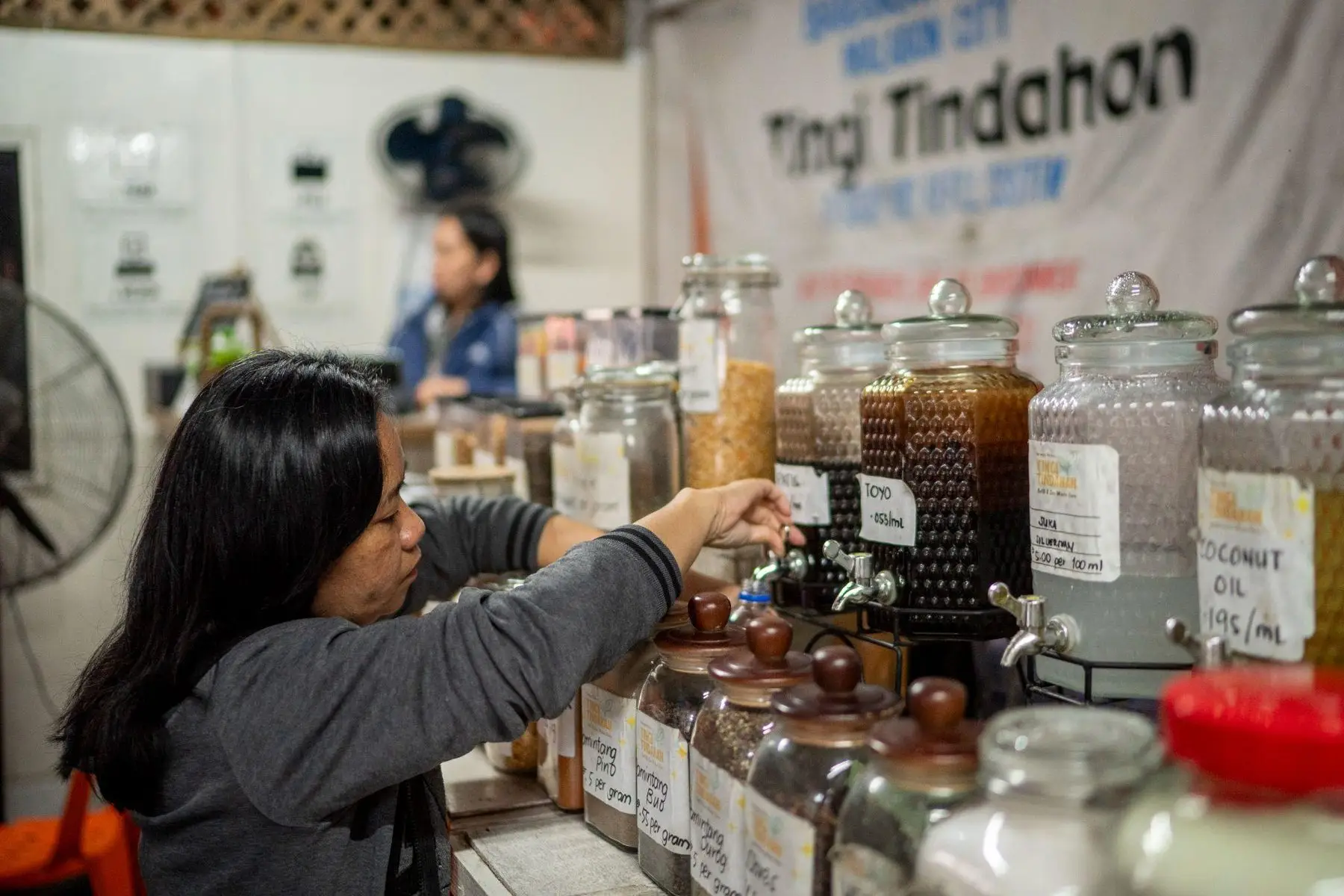
Regine Nayve, Program Officer at MEF, said it is solutions like these that are most effective in changing the culture around single-use plastics. “Binabalik lang natin ‘yung mga practices na nawala,” she explained. “Nakakatuwa kapag may mga from the older generations na nakikitang binabalik ‘yung dating kinasanayan nila—na may ganito na ulit. This is not an unfamiliar concept for most Filipinos.”
[We’re just bringing back the practices from before. It’s nice when there are older generations coming in and they see the old practices that they grew up with—that we’re bringing them back. This is not an unfamiliar concept for most Filipinos.]
She added, “The solutions don’t need to be complicated. The solution to plastic waste could be through refill and reuse—something simple. What could be innovative is the way we adopt. How we do refilling today might be different from how we did it in the 1980s. But the practice of refilling is still there. It’s something basic, uncomplicated, and can be easily replicated.”
“But it has to be bigger than this,” Nayve urged. The Philippines needs systems that would put these refill and reuse models in place so that solutions are not “siloed,” she argues.
Barangay Potrero has its Tingi Tindahan, Mother Earth Foundation has its JuanaZero Zero-Waste Stores in different parts of Malabon, Navotas, Batangas, Tacloban, Fort Bonifacio in Taguig, Nueva Vizcaya, San Fernando in Pampanga, and many other communities have initiated their own zero-waste refill efforts—but to truly solve the plastic waste crisis, institutional support is crucial.
“As much as consumers are now more inclined to support, and we are now more conscious with how we consume and spend our resources, iba pa rin ‘yung may institutional support for refill stores to flourish.” Not just city ordinances that are focused on plastic bans, but also policies that would enable refill stores to be replicated, she pressed.
Budgets with allocated resources for stores to transition; policies for suppliers to support sustainable businesses; and through research and development, updated standards to ensure product quality and safety.
“It’s like little pieces working together to build the system and make it work,” she said.
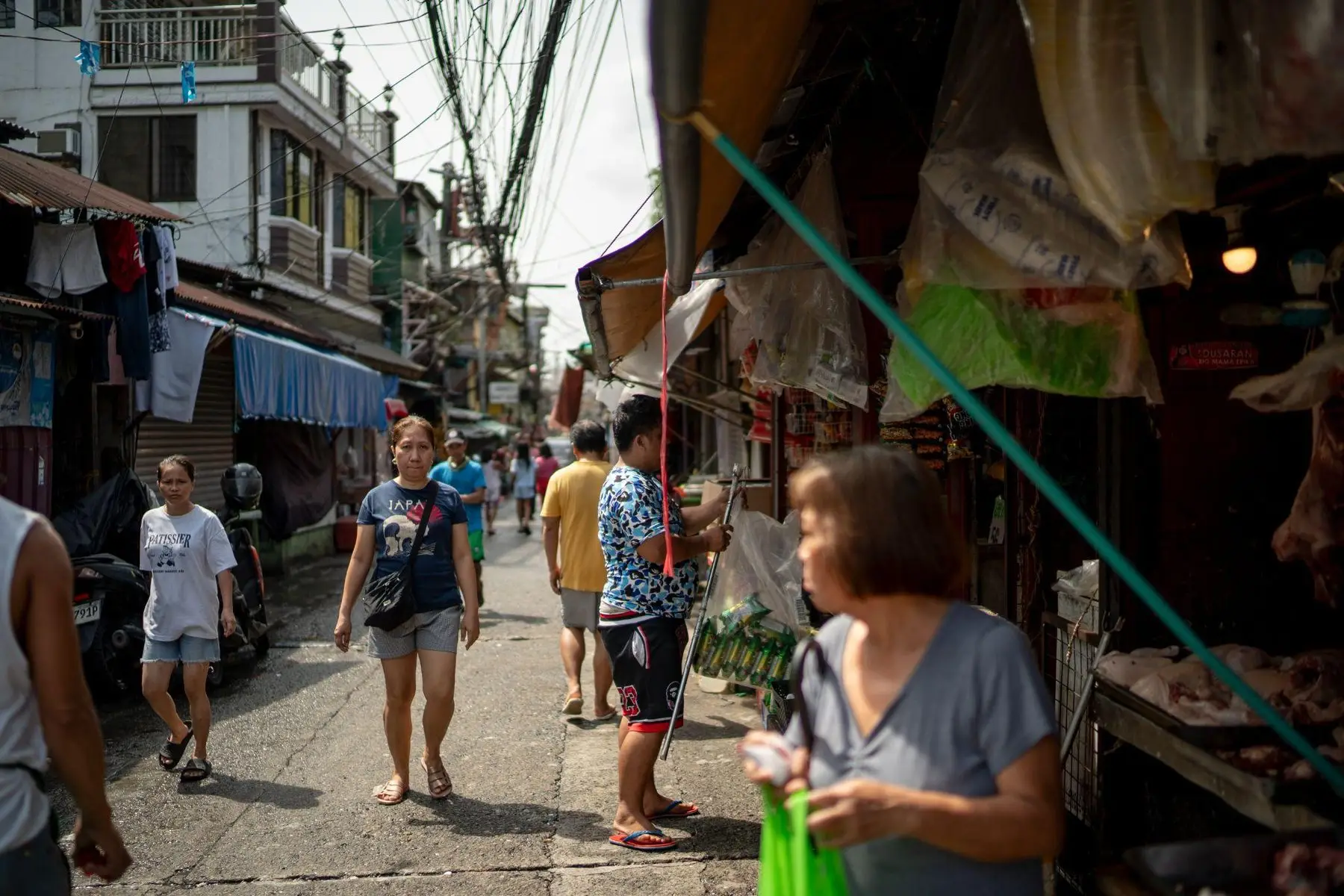
Barangay Potrero has also started to implement Malabon City’s plastic ban ordinance. Although this has been in effect since 2013, Kagawad Nolasco says it was never fully implemented. Potrero hopes to be the first barangay to do it.
During my visit, we had the chance to see the refill store in action—meanwhile, there was an event happening at the barangay hall, one that gathered barangay leaders and workers into the shade while the rain poured relentlessly outside. In typical Filipino fashion, it ended with merienda and celebration.
Plates of food and silverware were passed around, along with cold glass bottles of soda. No straws. Leftovers would later be packaged in Tupperware containers to bring home—employees are asked to bring their packed lunches in one every day.
Inside the Tingi Tindahan, students started to come in to buy snacks before heading home. I left with ₱50 worth of nuts in paper envelopes. Naturally, there were no plastic bags.
The rack
Every story in this issue.