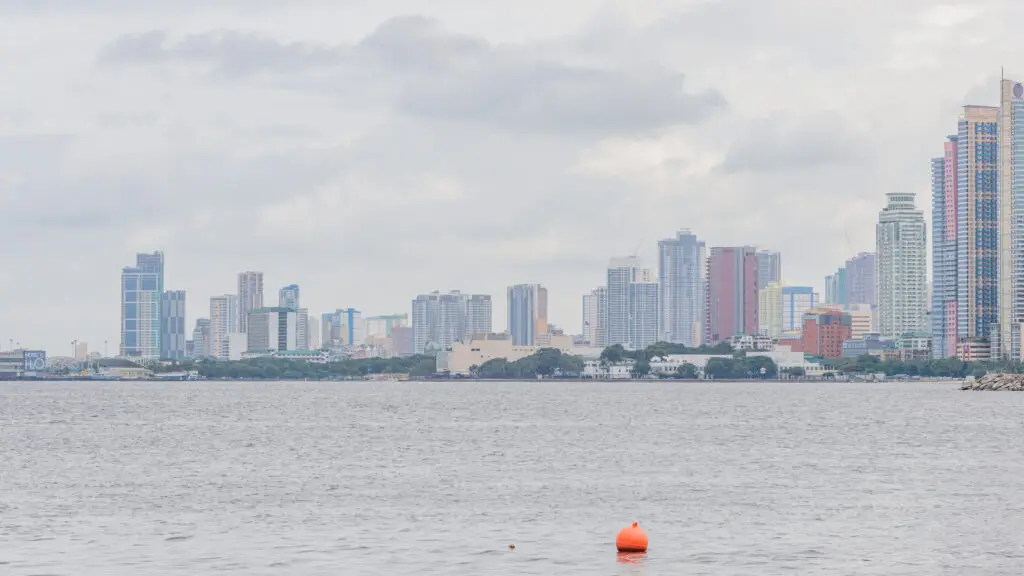









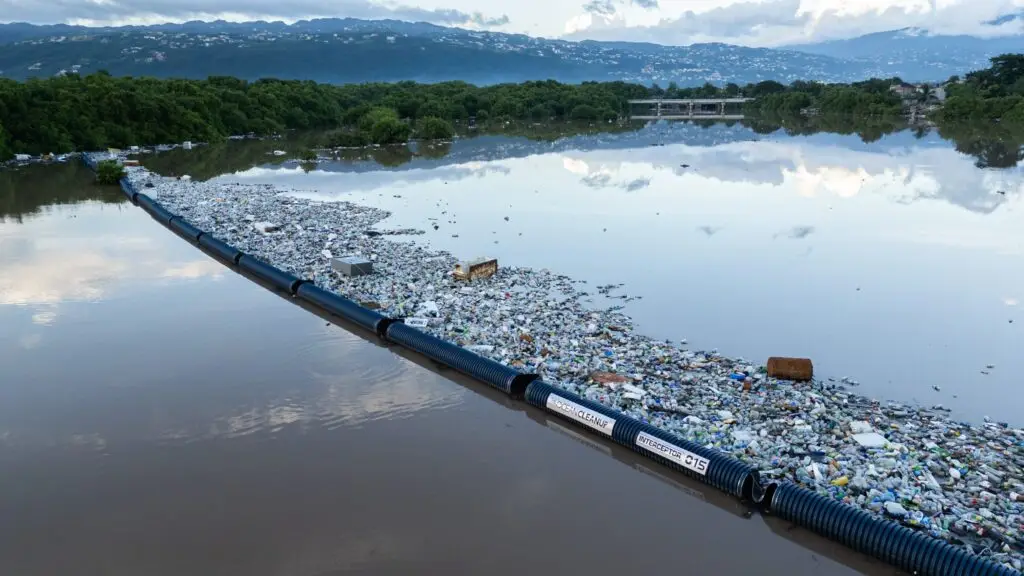
August 12, 2026 · In April, The Ocean Cleanup, a Dutch-based nonprofit, announced that it was launching its award-winning Interceptor barrier solution in the Philippines to clean up the Manila Bay region—to be deployed first in the Meycauayan River in Bulacan by early June.
The launch was poised to be The Ocean Cleanup’s first real rodeo in the Philippines, reported by many mainstream news outlets. It excited thousands of netizens concerned about the plastic pollution crisis hitting the country’s waterways.
The river cleanups fall under the organization’s 30 Cities Program—an initiative that seeks to reduce one-third of river-borne plastic pollution by 2030, by targeting 30 of the most polluting coastal cities in the world, including Manila.
However, Founder and CEO Boyan Slat told Sustina that the project is undergoing delays due to logistical concerns. He stated that the Interceptor is undergoing a “testing phase” that has pushed deployment back, with the final launch timeline still unknown.
“Once this phase is complete and validated, it is considered to be fully operational. There is no set timeline on that, every project is different, but in the case of Meycauayan, we expect it to be validated in the near future,” Slat said.
‘At no cost to the government’
Outside of the Meycauayan River, plans to install more Interceptor solutions have been in motion.
In early June, the Department of Environment and Natural Resources (DENR) National Capital Region entered into a formal partnership with The Ocean Cleanup to tackle plastic pollution along the Pasig River, a 25-km waterway that drains into Manila Bay.
The Pasig River flows through five major cities and links to 47 smaller rivers, making it a complex, multi-jurisdictional network that has long complicated clean-up efforts.
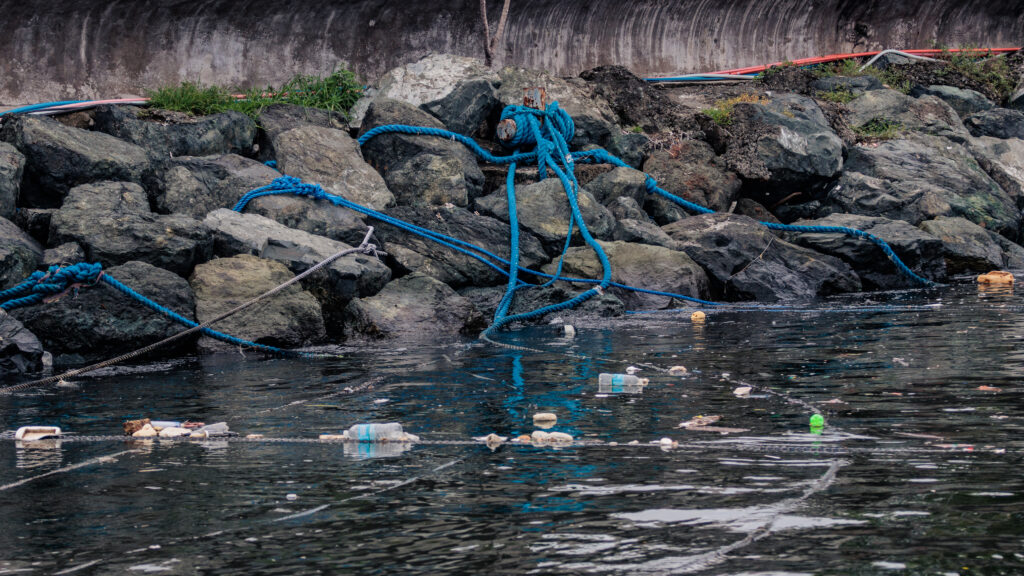
Additionally, the Pasig River was ranked the top most polluting river in a 2021 study funded by The Ocean Cleanup.
When asked if the government was investing financially in the project, the DENR stated that it will be implemented “at no cost to the government.”
“The DENR will not provide direct funding for the deployment or operations of The Ocean Cleanup’s technology. The Agency’s support will be primarily technical and administrative, leveraging existing staff, monitoring programs, and regulatory authority to facilitate project implementation,” DENR wrote in an email to Sustina.
“Any operational expenses incurred by The Ocean Cleanup for the project shall be managed by the organization itself, while the DENR shall ensure that the project adheres to existing environmental laws and maximizes benefits to the communities and ecosystems along the Pasig River System.”
Back in March 2026, The Ocean Cleanup announced that it secured $121 million in funding from The Audacious Project, a US-based philanthropic consortium, for the 30 Cities Program. The target area for the Philippines is the Manila Bay region, which has been identified as “a key point of leverage” to stopping plastic from entering the world’s oceans as early as 2021.
That funding, however, is only a fraction of what full-scale rehabilitation would require. Back in 2019, then-DENR Undersecretary Benny Antiporda said that rehabilitating Manila Bay would cost the government ₱47 billion, or over $700 million USD.
The Ocean Cleanup did not disclose how much funding will be allocated to the Philippines.
When asked whether the Audacious grant was enough to fund the deployment in Meycauayan River, and for how long, Slat answered: “At this stage, we can’t disclose specific funding allocations for individual countries. However, we believe that our Audacious funding provides a strong foundation for launching the initiative in the Philippines and supports its implementation.”
A comparable case offers a sense of scale: in Jamaica, where the Interceptor barrier solution was first deployed, an initial $1 million USD from the Benioff Ocean Initiative was enough to get the project off the ground. That city-wide intervention later became the model for the 30 Cities Program.
The Ocean Cleanup is still actively seeking additional funding from local actors to complement the project.
“We are in conversation with some major companies in the Philippines, and we welcome others to join us in making this happen. We try to encourage as much local skin in the game as possible,” said Slat.
A lack of funding for plastic pollution
Yet even as corporations increase their CSR and corporate sustainability budgets, securing enough funding for last mile plastic collection projects has been historically hard to sustain.
“You need long-term funding for these kinds of projects,” said Darren Heppner, Strategic and Partnership Development consultant for One Earth, One Ocean (OEOO) Manila, another non-profit organization dedicated to stopping plastic pollution in Manila Bay.
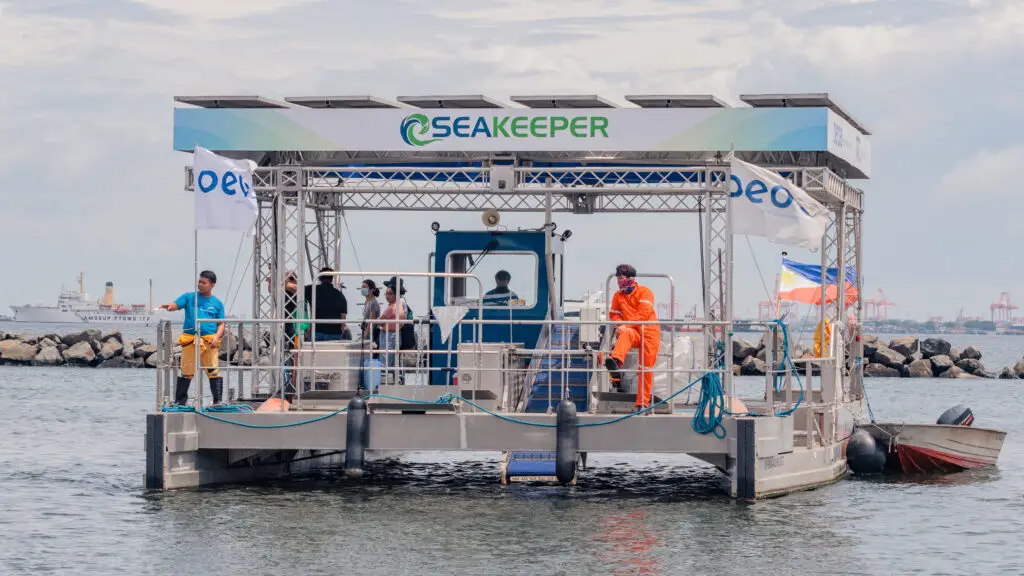
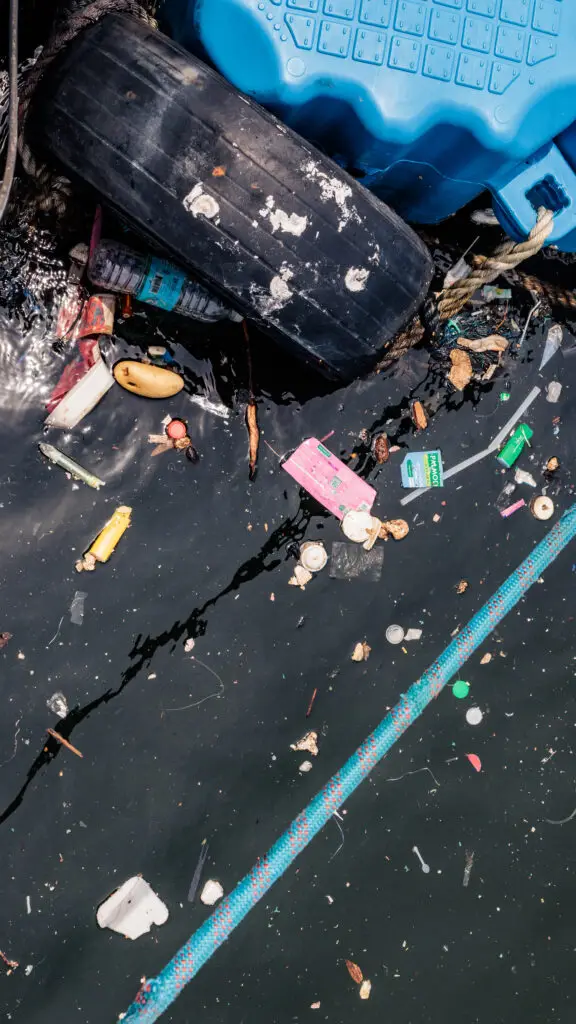
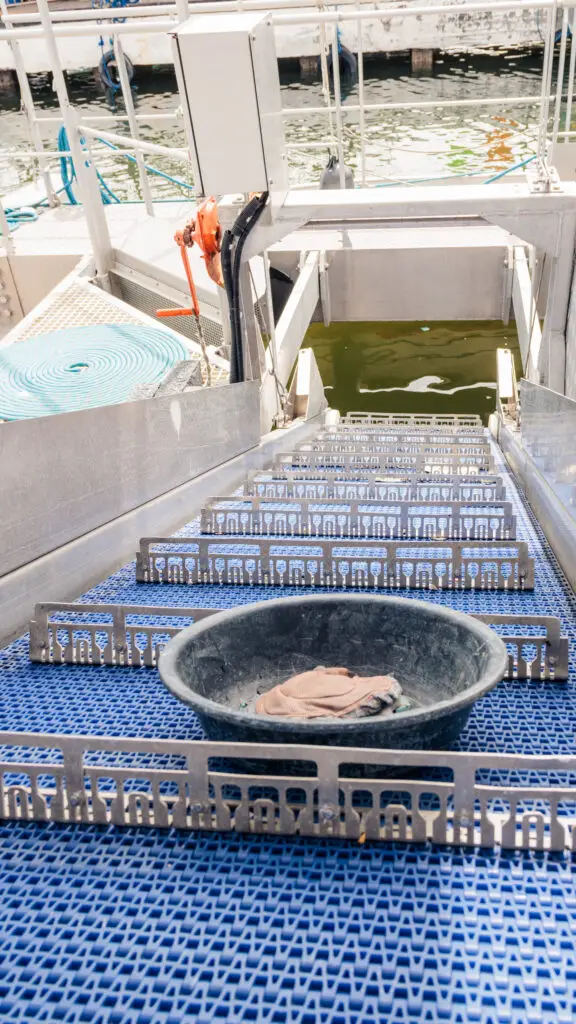
OEOO has been conducting clean up operations along Manila Bay and the Pasig River since 2022. Its main technology is a solar-powered, electric catamaran, with a built-in conveyor belt system that can load up trash from the water onto the boat.
“Most of these organizations may make a one or two, maybe even three-time donation to get their logo on the boat. But long-term commitment is a different animal. And getting [corporations] to invest long-term to give funding—guaranteed funding over a two, three, or five-year period—is extremely difficult, if not impossible,” Heppner said.
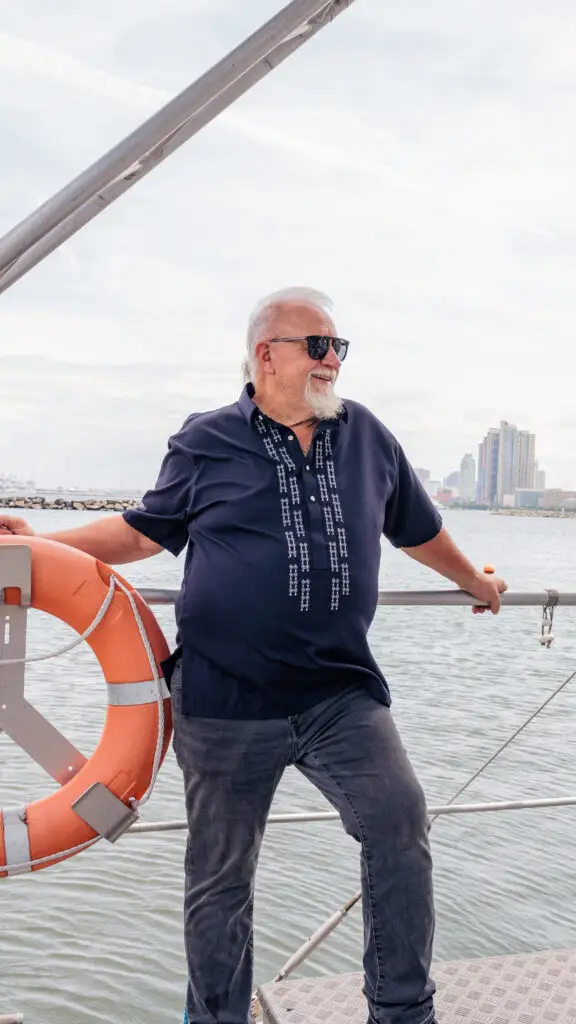
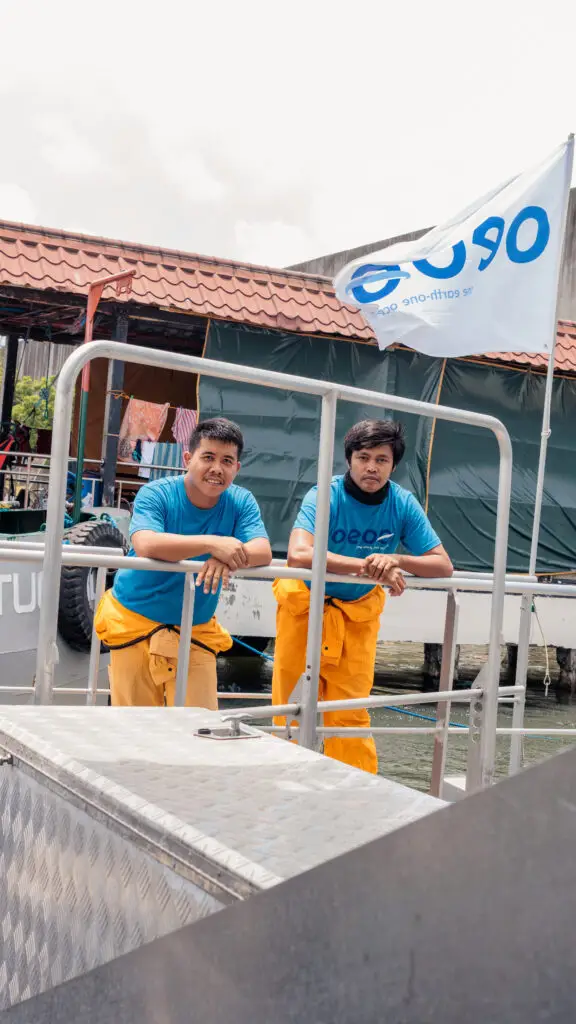
Heppner himself says he’s been “volunteering” without pay for about six years in marine conservation, with the hopes of making an impact in this sector in the Philippines. “Since retirement. I’m passionate about making a change, having a positive impact. So for me, it’s not about money. It’s about scaling up our capabilities so we can do more and do better.”
OEOO has collected thousands of tonnes of trash from Manila Bay, Pasig River, and surrounding waterways since 2024. Initially funded by a European construction supplier, the organization continues to fundraise in Germany, the US, and the Philippines to sustain its current operations.
Government support is crucial to sustaining the progress of these kinds of projects and initiatives. But the “type” of support matters just as much, says Heppner, and the kind that these organizations need rarely ever materializes.
“We have been doing this work for a long time. We have been very visible. Many mayors, many government agencies, many private corporations have been on our boat. But when it gets down to, ‘Let’s sign an agreement that has a financial commitment or contribution in it,’ the conversation stops.”
The first prototype—the SeaKeeper—roughly cost $1.5 million USD to build. But “future models could be produced for less based on the experience we have from our prototype,” said Heppner.
Additionally, operating one boat out of Manila Bay costs OEOO between $2,000 to $6,000 USD per month. These costs are directly impacted by the amount of support they receive from government agencies such as the Philippine Coast Guard (PCG), the Maritime Industry Authority (MARINA), the Metro Manila Development Authority (MMDA), the Pasig River Coordinating Management Office (PRCMO), and DENR, to name a few.
“Unfortunately, we are currently at the upper end of the operational costs, and those costs are shared with PTC,” he said. PTC, or the Philippine Transmarine Carriers, currently supplies OEOO with manpower for the boat.
Heppner is well-aware that collecting degraded plastic from waterways does not solve the root of the problem. For OEOO, this has pushed them to pivot to developing educational programs and initiatives that would open young people’s eyes to the effects of plastic pollution on health and the environment.
“I don’t think of it as a pivot,” Heppner clarified. “I think of it as having clarity on what’s important. Those things are: youth education, community empowerment, research, science-based solutions, disaster assistance, and […] the importance of healthcare. Behavioral change is critical. The SeaKeeper is now a platform, an icon, a symbol. It’s an opportunity to spark interest in people and act as a catalyst for discussions around proper waste management.”