






When Jeepneys Outlive Their Drivers
The traditional jeepney was made by survivors—it continues to survive, held together by recycled parts that endure for 30 years or longer. But in the name of sustainability, drivers are told to give them an expiration date.
Leonardo Sarao Sr. was a driver. Then a mechanic. Then, at some point, a kalesaFilipino DictionaryKalesaA horse-drawn carriage introduced to the Philippines under Spanish colonial rule. Read more in the Glossary → driver. According to his grandson, LJ Sarao, driving the kalesa was one of his favorite jobs because he loved to take care of his horse.
“He stopped [studying in] the 5th grade. He had to work in order to put food on the table for his siblings,” says LJ.
But now more than 70 years later, his family name is almost synonymous with the iconic Philippine jeepneyFilipino DictionaryJeepneyA passenger vehicle patterned after U.S. military jeeps from World War II. Jeepneys are a popular and affordable mode of transportation in the Philippines.Read more in the Glossary →.
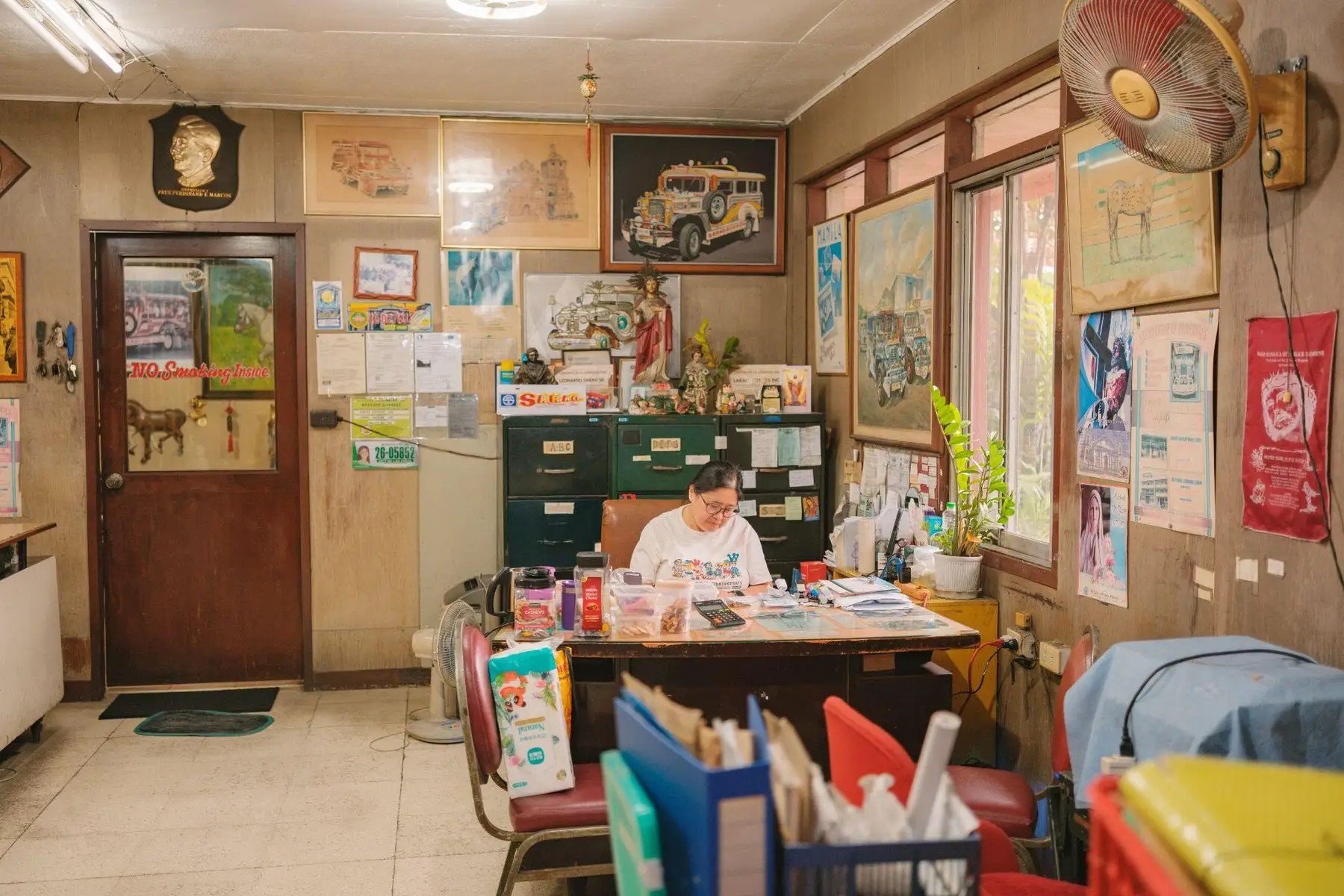
Sarao Motors was founded in the 1950s and is now a multi-generational company run by the founder’s grandchildren. But back when it all started, Leonardo Sarao Sr. was working in Sangley Point, Cavite City as a kargadorFilipino DictionaryKargadorA person who carries heavy goods; a porter, baggage handler, or freight loader. From the Spanish word cargador. Read more in the Glossary →.
“Then the war happened,” LJ says. Sangley Point was bombed by the Japanese, and his grandfather was found on the floor bleeding out, shrapnel in his spine. Everyone was convinced he was dead—but an American soldier brought him to find medical assistance in what is now known as Roxas Boulevard.
“That soldier brought him in a Willys Jeep, ironically.”
The Willys Jeep is a rugged four-wheel-drive vehicle, made for war and designed to be nimble, lightweight, and durable. This is the vehicle that Leonardo Sarao Sr. originally repurposed, with a total capital of ₱700—or just under ₱90,000 in today’s economy—that started his entire business.
It could only seat five people (“probably three Americans [given] their size”) so in order to fit more passengers, the wheelbase, or the distance between the front and rear wheels, was stretched by about a foot.
Leonardo Sarao Sr. never found out the name of the soldier, or if said soldier even survived the war. All we know is, we owe that unnamed soldier a massive thank you. For without him, we might never know the jeepney.
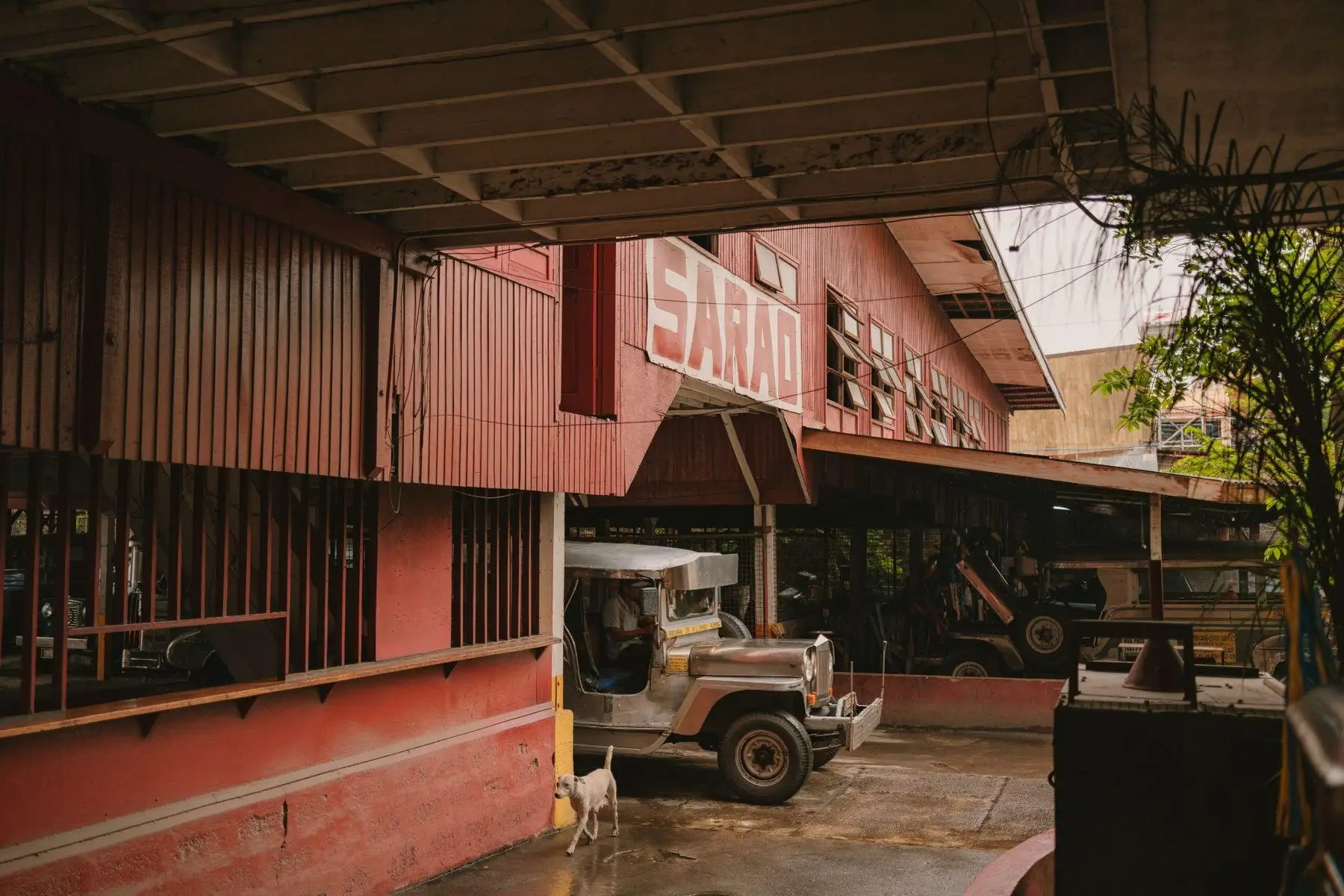
Around 9 million people ride jeepneys every day in the Philippines. With a minimum fare of ₱14 for 4 kilometers, it remains the cheapest way to commute.
Every day, Filipinos can expect them to follow the same routes—destinations hand-painted on the jeepneys’ side. Commuters hop on, pass their coins hand to hand until they reach the driver. The driver is often also the cashier, calculating for change while snaking through traffic.
“Just to clarify, my grandfather wasn’t the first, but he was probably one of the first who converted the Willys Jeep into the jeepney that we see today,” LJ says. He adds that there were jeepney manufacturers around the same time Sarao was established, so they weren’t the only game in town, nor were they the “inventors” of the jeepney per se.
Despite not being the first, any automobile enthusiast would argue that they are the one that persisted until today: Yes, there are many other jeepney manufacturers, but Sarao has become synonymous with it, much like Xerox for photocopiers, Pentel for permanent markers, and Colgate for toothpaste. Its heyday was in the ’80s, when 50 units were built per day, although demand eventually cooled because by then everyone who needed it had already bought one.
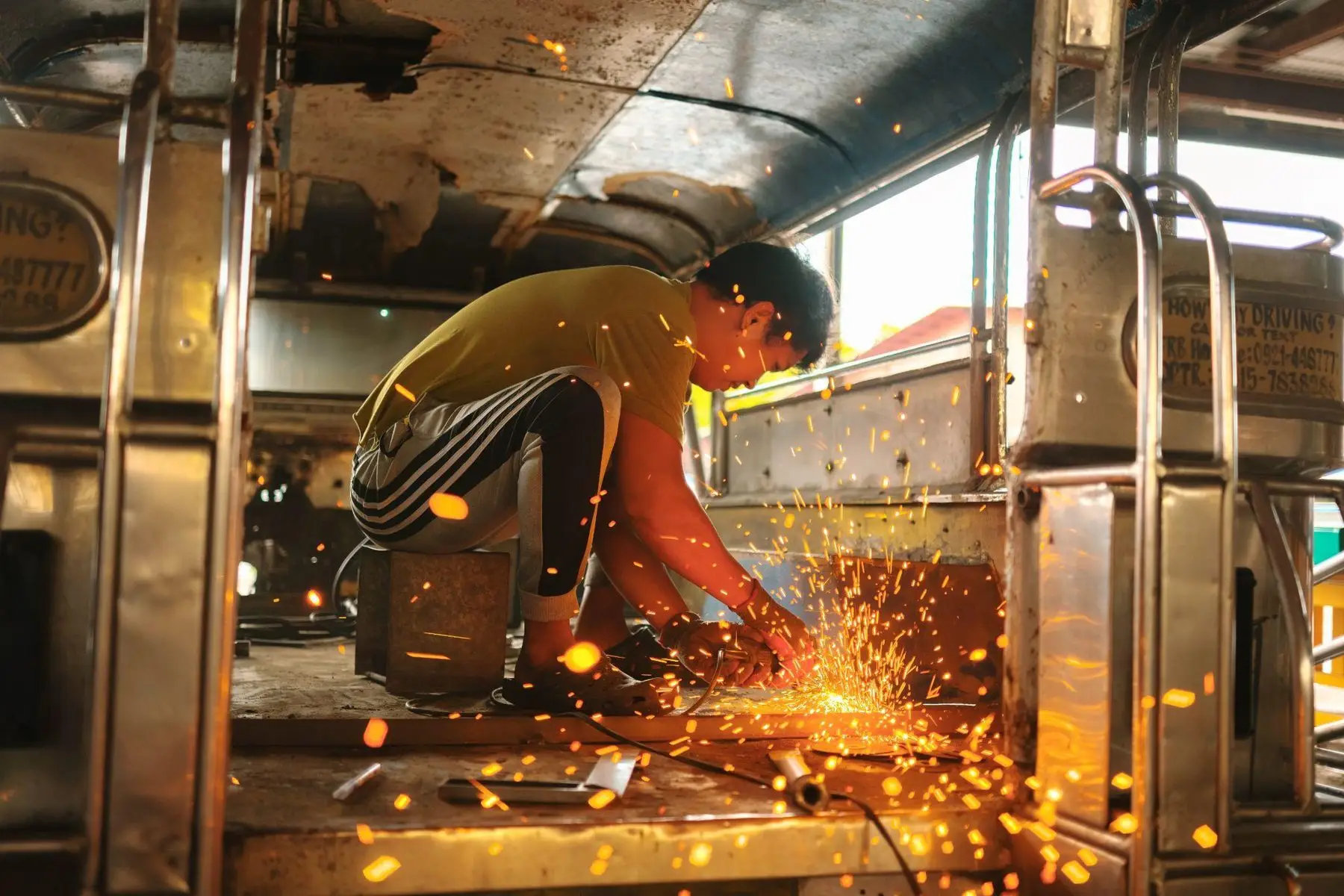
According to LJ, it was during this heyday that he got used to the sound of metal being hammered, the sound of the grinders.
“It would wake you up because it was so loud. We wouldn’t be able to talk like this during the day. We had to be shouting.” He says that one of his uncles now has hearing problems because of it.

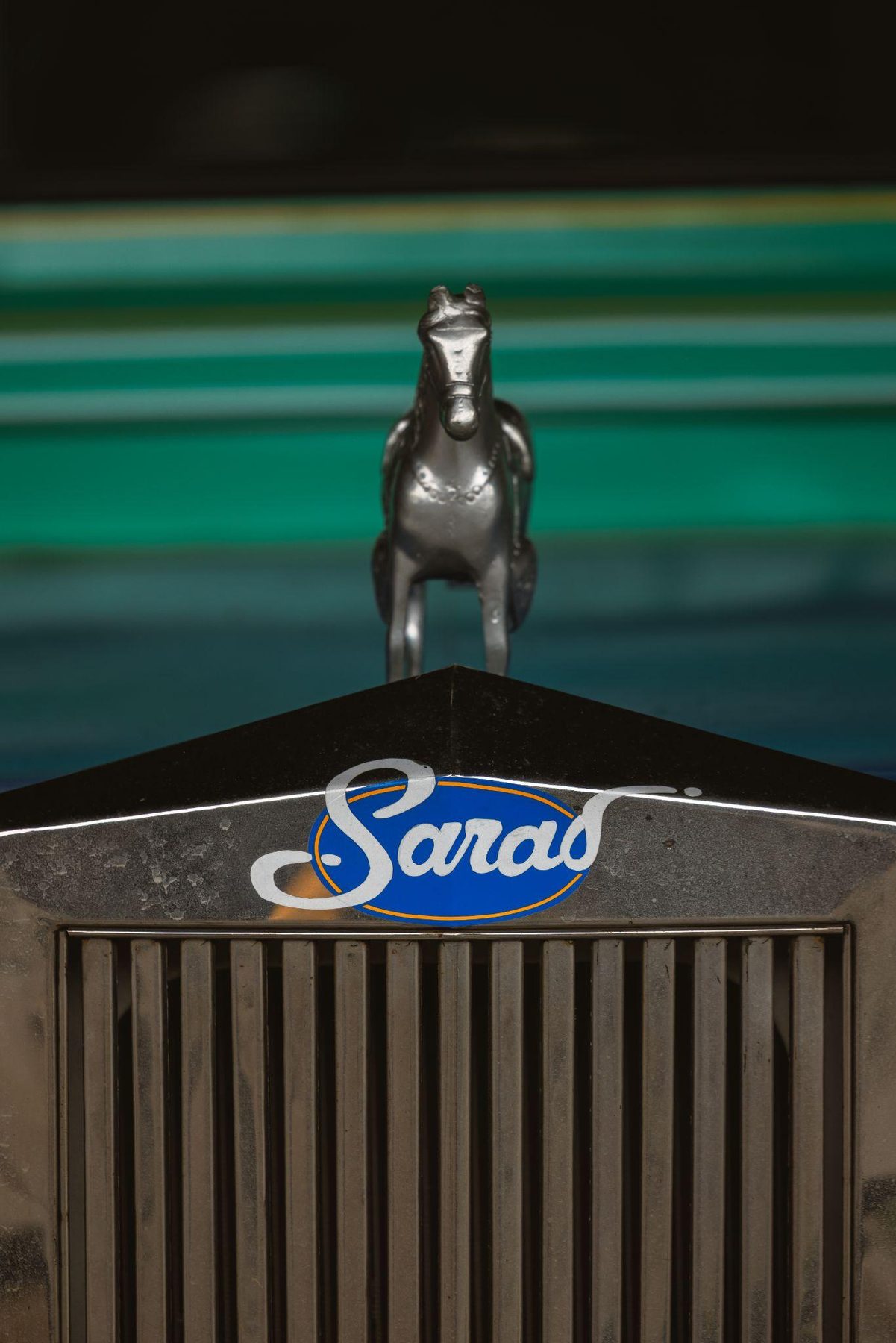
There isn’t another vehicle exactly like the traditional jeepney, but mechanically, an expensive Land Cruiser has more in common with a jeepney than a humdrum Wigo. Jeepneys have what is called body-on-frame construction, which isn’t any different from pickups and some SUVs.
The reason manufacturers like Sarao Motors stick to that is simple: that kind of body-on-frame chassis is built to withstand abuse.
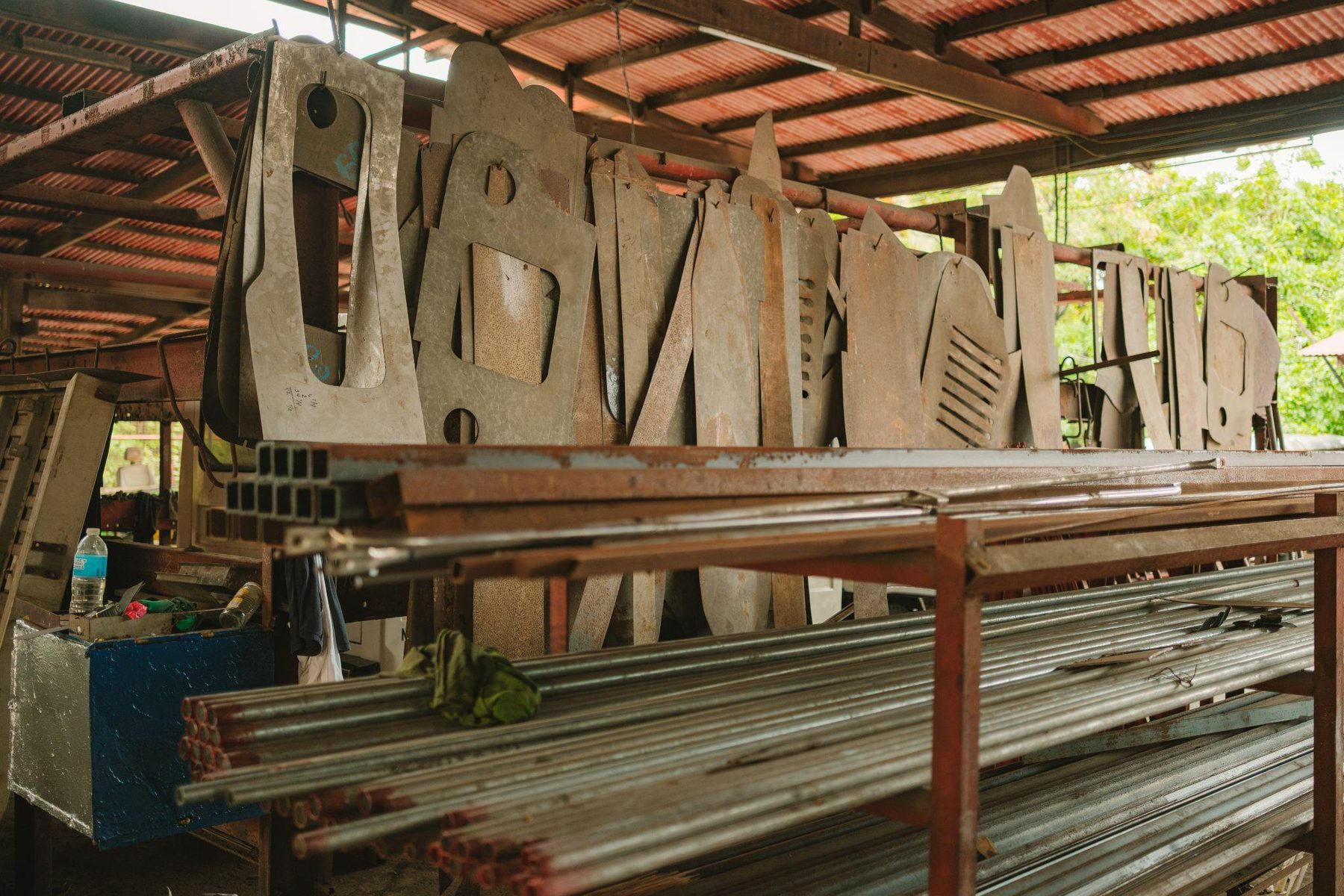
When the supply of original Willys Jeeps ran out, it forced Sarao Motors to manufacture its own chassis and outsource powertrains from other vehicles. Today, they build with galvanized iron of different gauges and thickness, stainless steel, and corrugated sheets. The engines are purchased from Isuzu, mainly because of simplicity and reliability.
“The jeepney is really made for the working class people. Affordable. Toyota has a premium on their price [for engines]. As soon as you do, the Toyota tax. Isuzu, not so much. It’s reliable, it’s economical, but it’s loud.”
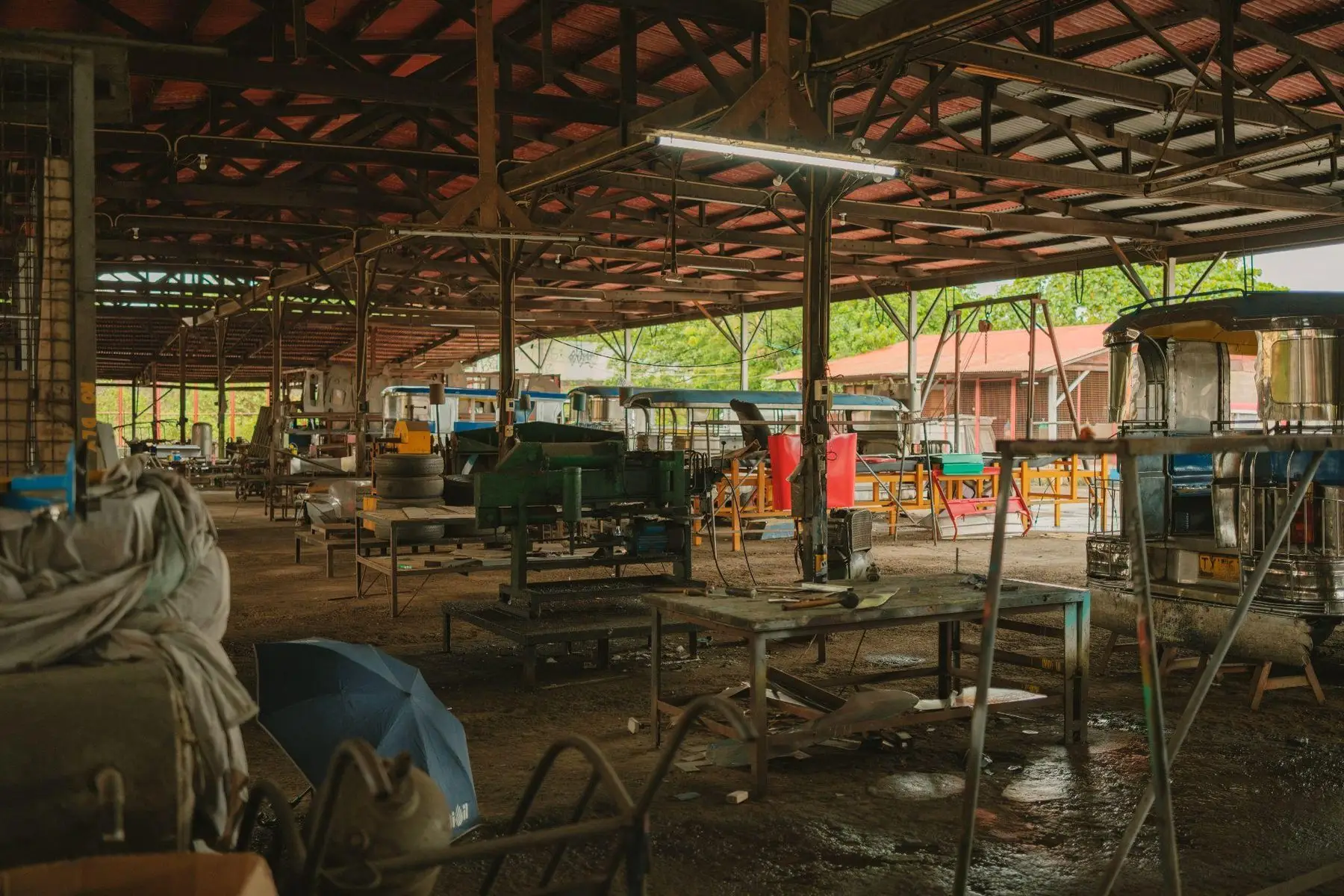
Engine aside, everything is locally sourced. Older units are refurbished rather than abandoned. LJ claims he doesn’t usually see the ones they have built in their facility ever again because of the jeepney ecosystem—everyone has their own go-to mechanics, welders, repairers.
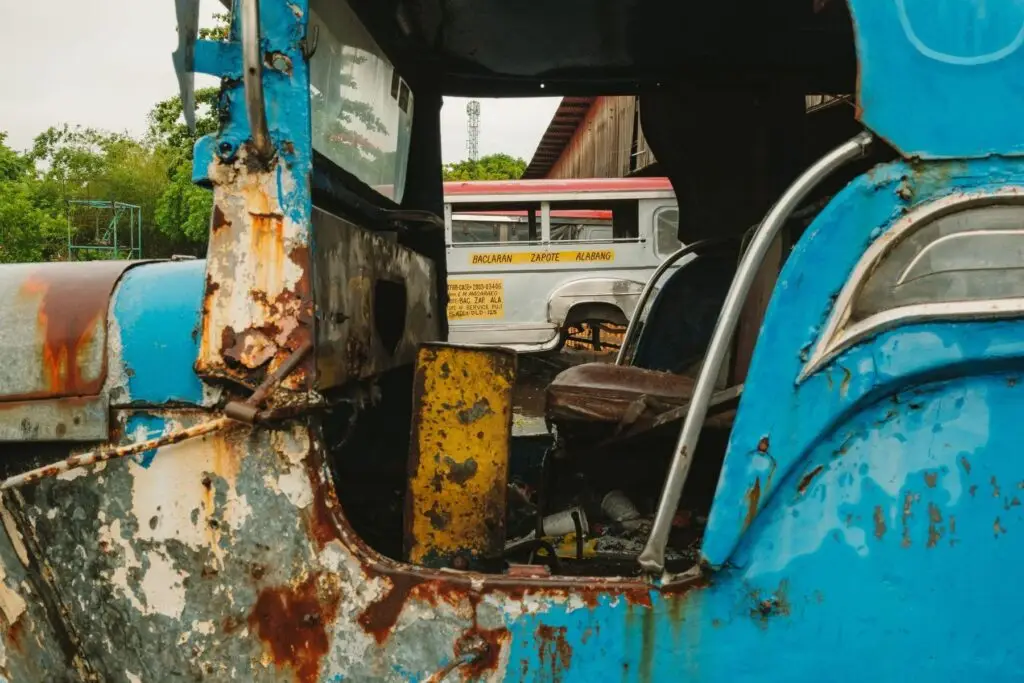
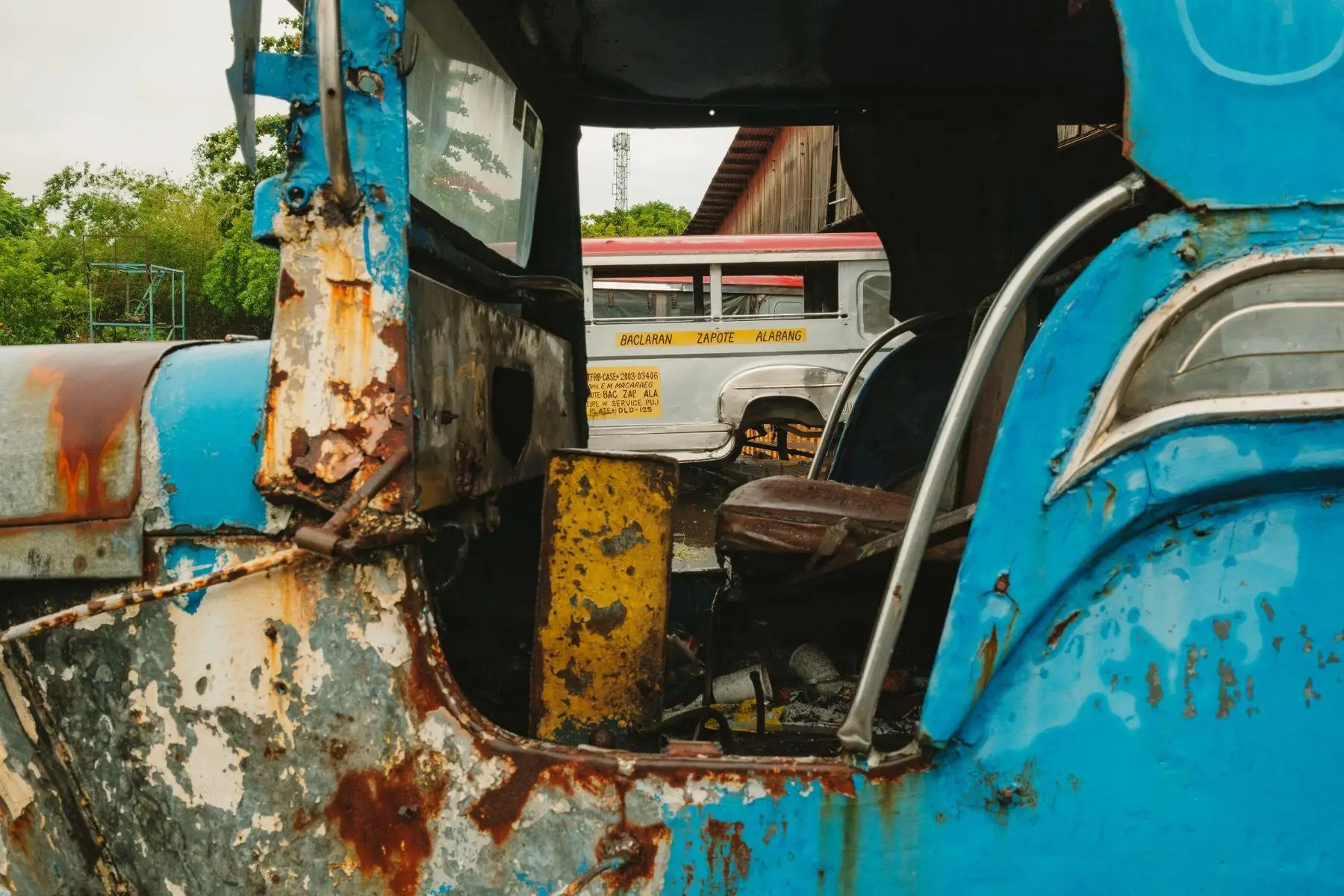
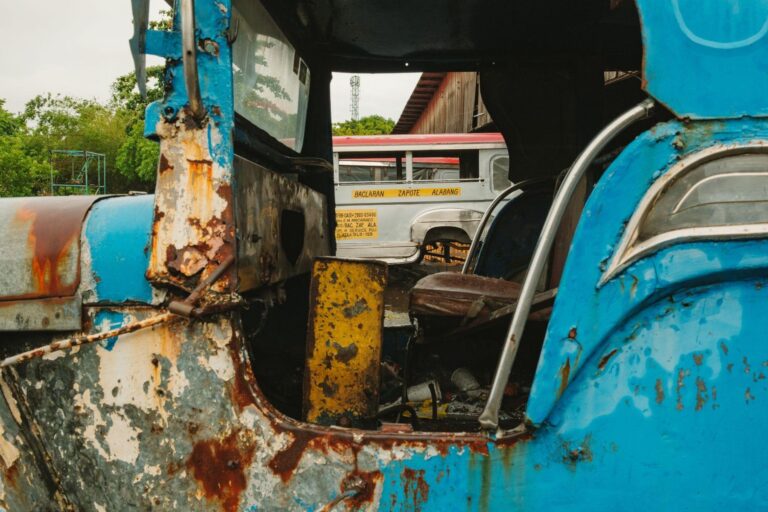
But on the rare occasion that one reaches the end of its life, the usable parts are picked and pulled to be used on other jeepneys.
The shop floor that builds these is rich with secondary-use materials, not a scrap of metal going to waste. If a chassis is busted, a new one is made.
“We can’t really determine the ‘end of life’ of a single jeepney until we squeezed every essence out of it.”
He says they have an inside joke that they made the jeepneys a little too reliable, and if it did break, there’s nothing a set of skilled hands and a wrench couldn’t fix.
“The thing is, these jeepneys, most of the time, outlast their drivers and owners. [For] some of the jeepneys, their drivers just get too old and [say], ‘oh, I can’t do this anymore. I have to retire.’ But the jeepney is perfectly fine.”
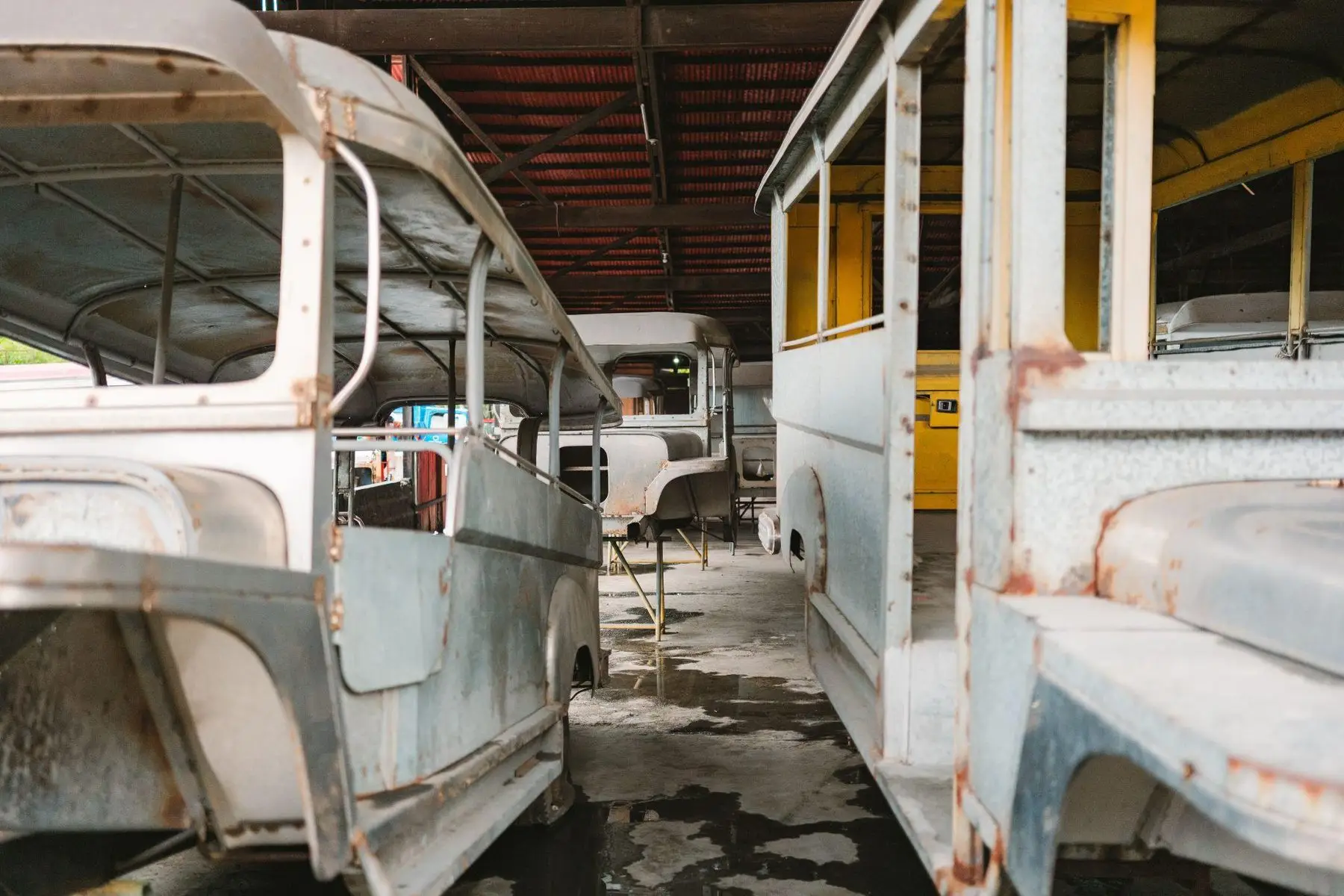
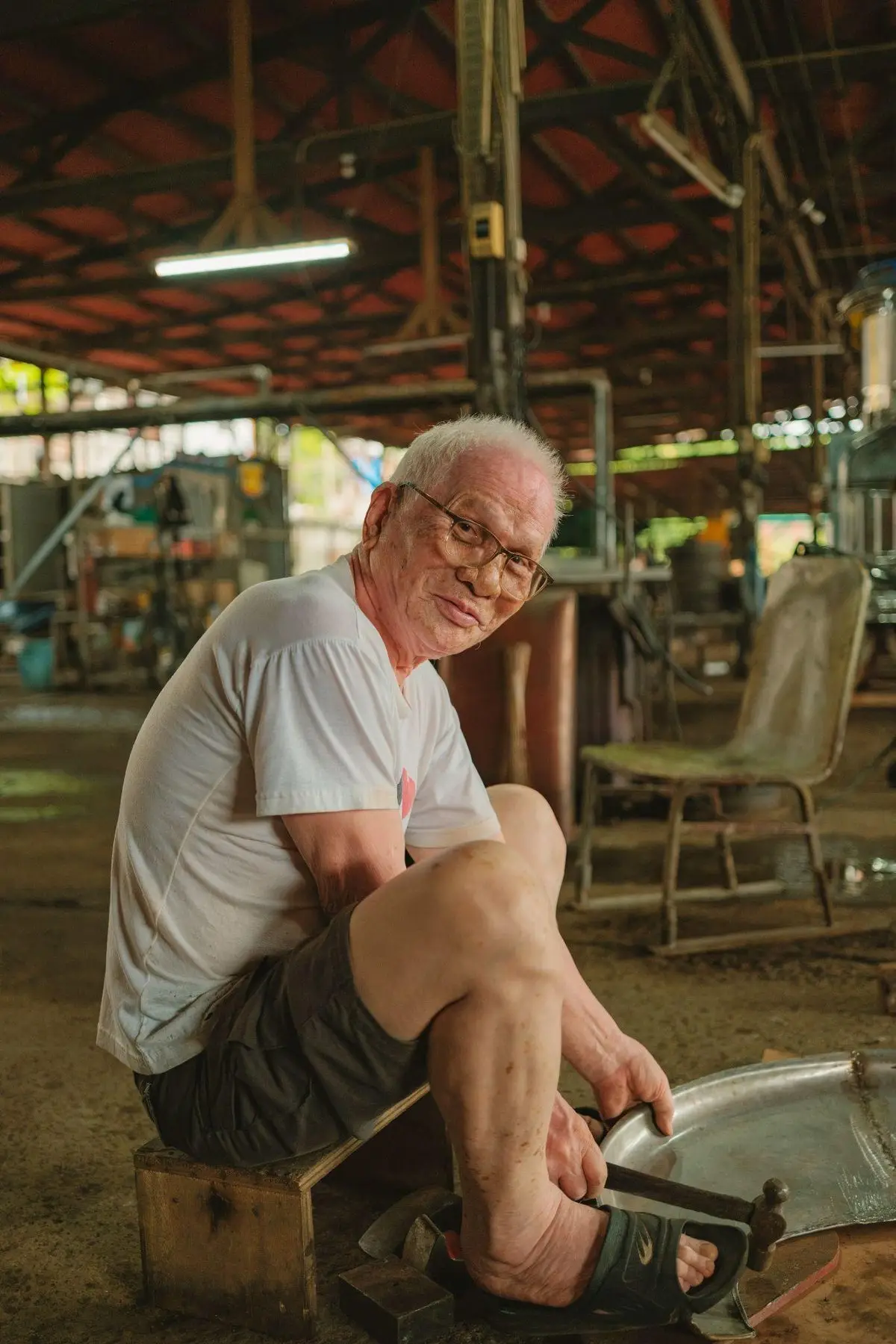
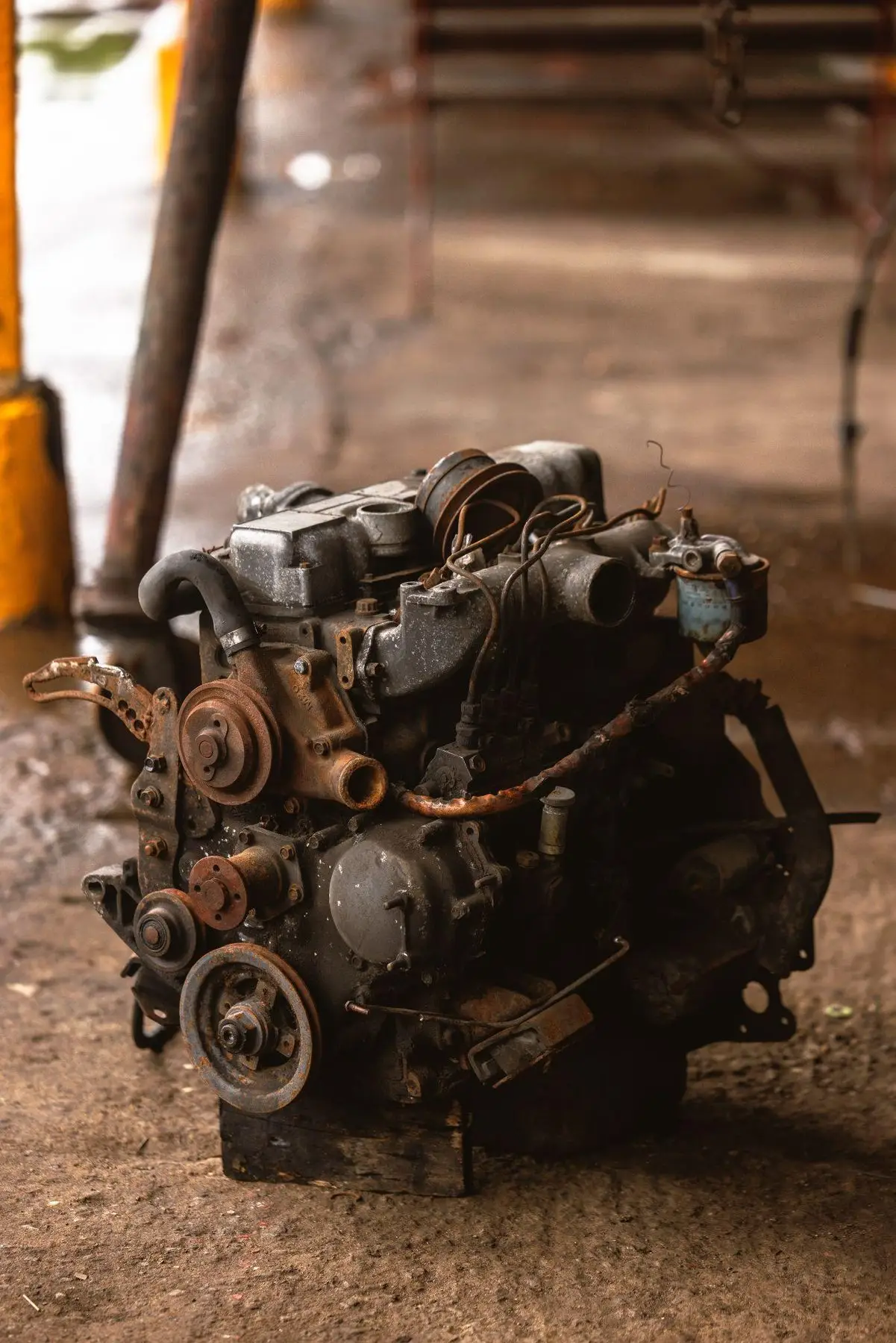
Is a jeepney older than the sum of its parts?
In 2017, the Philippine government launched the Public Utility Vehicle Modernization Program—rebranded later into the Public Transport Modernization Program—which made official the efforts to “modernize” the jeepney transportation system in order to “promote safe, reliable, efficient, and environment-friendly Public Utility Vehicles.”
Part of the program’s goal is to phase out all the public utility vehicles that are older than 15 years.
But the modernization program has been protested by drivers and various groups throughout the years, causing delays to the implementation of the program.
When stripped down, the fifteen-year-age limit placed on jeepneys mandated by the government is actually talking about when the engine was made.
In reality, calculating the age of a jeepney is not as straightforward. Jeepneys are made up of readily available parts, often recycled parts—in its lifetime, a jeepney can be repaired, repurposed, taken apart then made whole again multiple times.
Since the ’90s, there has been more and more recyclable content in cars.
In 1990, Germany established a “take-back” law so car manufacturers were required to take responsibility for their vehicles by the end of their useful lives. The reason was that Germany had been running out of space to build new landfills since the ’80s.
Among car manufacturers, it was BMW that was among the first to comply, along with Mercedes-Benz, and even Volvo—which isn’t a German company. In 2000, the European Union enacted an End-of-Life Vehicles Directive which created recycling targets for car manufacturers.
But there is no legal framework in the Philippines that requires the ‘manufacturers’ of vehicles to recycle their waste, says Mon Umali, Head of Public Relations, Corporate Communications, and SustainabilityGlobal EssentialsSustainabilitySustainability is the ability to manage and use resources to meet present needs without compromising future generations. It can be examined through environmental, economic, or societal lenses. These are the…Read more in the Glossary → at Toyota Motor Philippines.
In short, when private cars or public vehicles are no longer wanted, there are no rules for how they are disposed of. An end-of-life vehicle (ELV) has no predetermined fate—it might be recycled, or sold, or simply abandoned.
Even Toyota Motor Philippines, the largest automobile manufacturer in the country by far, relies on working with official external dismantlers as part of its Global 100 Dismantlers initiative.
These dismantlers take used cars and recycle what they can—such as metals and plastics—and sell them back to clients who can use them to create new products. But the extent to which Toyota Motor Philippines is involved is limited to technical assistance, because there are no legal mechanisms that require an end-of-life facility.
“The burden practically lies on the ‘asset’ owner, the customer,” Umali wrote in an email. “As vehicle units in operation continuously grow as well as the phased-out ELVs, it is Toyota’s long-term vision for the Philippines to adopt a framework comparable to the Extended Producer ResponsibilityPH Laws & FrameworksExtended Producer Responsibility Act of 2022 (EPR Law)Philippine legislation mandating large enterprises to physically or financially recover a progressively increasing percentage of their post-consumer plastic packaging.Read more in the Glossary → Law for plastic wasteLocal Climate & EcologyPlastic pollutionThe accumulation of synthetic plastic products in the environment, adversely impacting wildlife, habitats, and human populations.Read more in the Glossary →.”
“To push for such legislation, it would require a strong multi-stakeholder collaboration among auto manufacturers, consumer groups, recycling sector, and government units.”
As far as recovery is concerned, “materials” are primarily recycled (e.g., metals, plastics, etc.) and sold by the ELV facilities to their client portfolio.
The concept of Extended Producer Responsibility (EPR) was introduced in 1990 by Swedish researchers, who argued that manufacturers should be responsible for a product’s entire life cycle.
It proposed an idea that was groundbreaking for its time, asking: What if businesses were responsible for disposing of—or recycling—their products, instead of the customers?
In certain countries, EPR laws have been in place for decades. In the Philippines, the Extended Producer Responsibility Act of 2022 still has major limitations—it is limited to plastic collection, and only applicable to companies with total assets above ₱100 million.
Even then, in 2024, it was reported that under half of the eligible companies complied with the requirements.
‘Pinaganda po yung basura’
According to Emmanuel “Manny” Ada, Chairperson of the National Confederation of Transport Workers’ Union (NCTU), for the drivers, holding onto their jeepneys is a matter of life or death.
“Dito sa amin, ‘pag binabanggit mo ‘yung ‘phase out,’ lagi ang sagot sa’yo ng members ko, ‘eh, magkakamatayan tayo,’” he says.
[In our group, when the ‘phase out’ is mentioned, the members will always say, ‘Our people are going to fight to the death.’]
Ada himself didn’t plan on becoming a jeepney driver or operator—not the second time around. He worked in a bank in 1997, until the Asian financial crisis cost him his job. Without any other options, he did what he needed to do.
“Wala na ako option kung hindi umuwi dito [sa Batangas]. Parang tinadhana kasi matatanda ‘yung parents ko na walang kasama. Ako lang ‘yung anak na natira dito malapit sa kanila,” Ada says. “Tapos nagkaroon ng chance na merong nakilala, nag-offer ng jeep. Marunong naman ako mag-drive, sabi ko. So mag-drive ako.”
[I had no choice but to go home to Batangas. It felt like fate because my parents were old and no one was taking care of them. I’m the only one of their children who stayed nearby. An opportunity came, someone I knew offered me a jeep. I know how to drive, I said. So I will drive.]
Ada went on to lead as the chairperson of NCTU, whose members collectively operate more than 2,500 traditional public utility jeepneys. Just under a hundred of them are what the government considers “modern” units.

The main difference, officially, between a modern unit and a traditional one lies in the engine. An acceptable “modern” jeepney must have an engine that is either Euro 4-compliant or electric, which would bring down the emissions considerably. But it also creates a considerable price difference.
According to Ada, if needed, he would be able to purchase a traditional jeepney for as low as ₱150,000. A modern jeepney’s base price is ₱1,000,000.
“We believe na pwede mangyari itong gobyernong modernization, pero hindi namin kaya alone na mag-bigay lang ng initial na tulong, at tapos na doon,” Ada says, adding that the current government subsidies are not enough to offset the expenses that operators and drivers are incurring given the current fuel crisis and the high costs of modernization.
[We believe that the government’s modernization can work, but we cannot do it alone, if they just help us initially and that is all.]
In the current ecosystem, Ada adds that using “surplus engines” is common among builders.
“Surplus [ang tawag] pero kapag in-analyze natin ‘yung word na surplus, dapat ‘in excess of production.’ Pero pinaganda lang dito sa Pilipinas, actually junk sila from Japan. Sa atin, pinaganda po ‘yung basuraCircular Design & EconomyBasuraThe Tagalog word for “garbage”, referring to discarded items and waste. Read more in the Glossary →.”
[Surplus is what they call them, but if we analyze the word, it means ‘in excess of production.’ But they just made it sound better here in the Philippines, it’s actually junk from Japan. We beautified their trash.]
Taking care of your horse
The car manufacturers, the jeepney builders and operators, everyone understands that diesels won’t last forever. In 2025 alone, 20 million electric vehicles were sold worldwide—that’s one out of every four cars.
Sarao Motors has its eye on electrification. It is currently partnered with Tembo, a Dutch electric vehicle company that turns diesel-powered pickups into electric vehicles that are mainly used for mining operations.
LJ sees the partnership as an opportunity to keep traditional jeepneys running by swapping out the diesels for battery power. In their benchmarking, LJ says the savings from shifting the source of power will be considerable in the long run.
He says that they are working on a prototype, but doesn’t want to release it until it’s perfect.
But when asked if he thinks electric jeepneys are the way forward, he says not exactly, not right now, for many reasons: Infrastructure that isn’t in place. Charging stations that need to be as common as gas stations. Upfront costs that will be difficult for traditional jeepney drivers.
“You know, we’ve restored jeepneys that were in really bad crashes, but rarely does that happen because, a lot of operators, they take care of these vehicles. That’s how Filipinos are,” LJ says. “You use it.”
“You use your shoes until there’s a hole. It’s your kalabawFilipino DictionaryKalabawAlso known as a carabao or water buffalo. They are especially important to the country’s agricultural sector, helping farmers transport heavy materials across rice fields.Read more in the Glossary →, it’s your horse, you take care of it as long as you can.”
LJ Sarao · Sarao Motors
In LJ’s recollection of his grandfather, Leonardo Sarao Sr. was a man who loved his horse. He took care of it, fed it, bathed it, and grew old with it.
There was a time when the kalesa was the most affordable way to get around, until American colonial rule’s push to modernize overtook it. By the 1930s, kalesa drivers, or cocheros, were among the poorest Filipinos—they struggled to make ends meet, but made up one of the strongest political forces.
They formed unions that carried so much weight that there was a voting bloc known as the “kalesa vote.” Through their union, they resisted proposals for phaseouts, held mass protests, and swayed political opinion. Yet today, kalesas are few and far between, often only seen in tourist areas.
In American journalists’ recollections of the cocheroFilipino DictionaryCocheroA cochero is the Spanish word for a person who drives coaches or carriages. During American rule, cocheros were among the lowest paid workers but they held significant political power…Read more in the Glossary →, they are described as “reckless,” “dim-witted.” To paraphrase, barbaric.
History has a habit of repeating itself. When the jeepney was first introduced, it was called an “auto kalesa.”
Ada tells me that in his union, jeepneys can last up to 30 years or more. He currently owns two. When I ask why and how they might last that long, he answers like it is obvious: people hold onto the things that mean a lot to them.
“May sentimental value din po ‘yung mga driver sa mga jeep nila,” he says.
“Lalo na ‘yung operator na nakapag-patapos ng anak. Lagi nilang ipinafront sa mga ibang issues eh. Jeepney driver lang ako, pero meron ako anak na engineer, meron ako anak na nakapag-doktor, nakapag-abogado. ‘Yun ‘yung support nila doon sa unit nila.”
[Jeepney drivers also attach sentimental value to their jeeps. This is especially true for operators who were able to put their children through school—something they often highlight when discussing the issues. They say, ‘I’m just a jeepney driver, but I have a child who became an engineer, a doctor, or a lawyer.’ That is the significance of the jeepney unit to them.]
The rack
Every story in this issue.
 Nº 1 · CoconutsOpen →
 Nº 1 · Ukay-ukayOpen →
 Nº 1 · CacaoOpen →
 Nº 1 · E-wasteOpen →
 Nº 1 · SachetsOpen →
 Nº 1 · JeepneysReading now