

June 24, 2026 · When my boss asked me to attend a networking event on women and sports, I hesitated. Not because I wasn’t interested, but because I wasn’t sure if I was welcome.
I understand what it means to be a woman on a political level, having been raised as one my entire life. But even at a young age, despite loving all things pink and sparkly, the word “woman” never really felt right. Like something was missing.
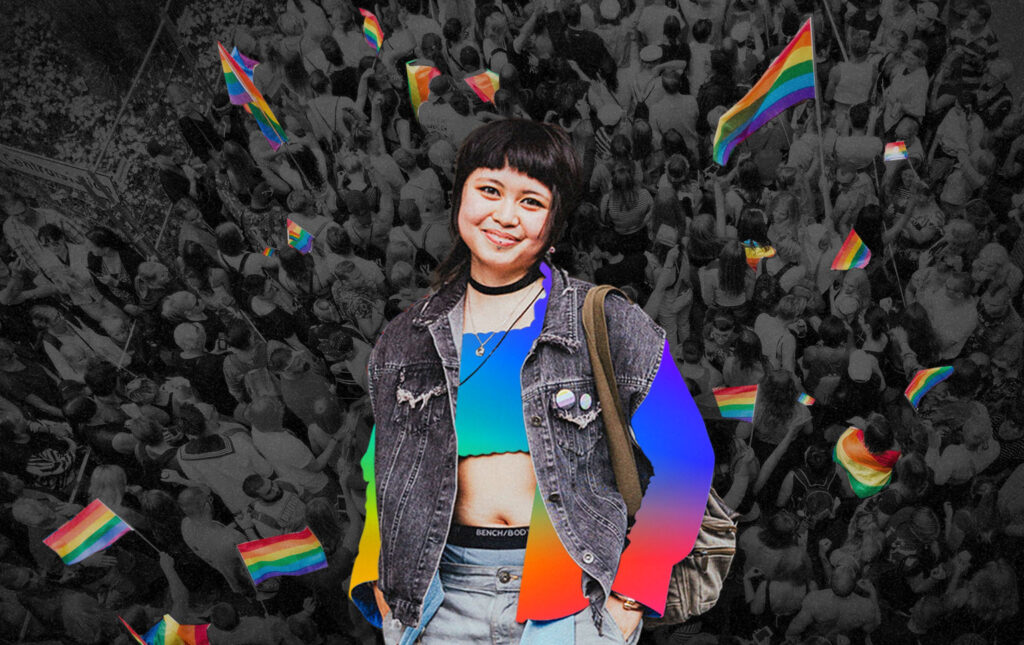
I am nonbinary, a gender identity for people who don’t resonate with the idea of being strictly a “man” or “woman.” Some nonbinaries feel like a mix of both; others feel like neither, and some find their gender shifts over time. For me, it’s the certainty that I am just me, not man, not woman and free to present however feels right—more feminine, masculine, or somewhere in between.
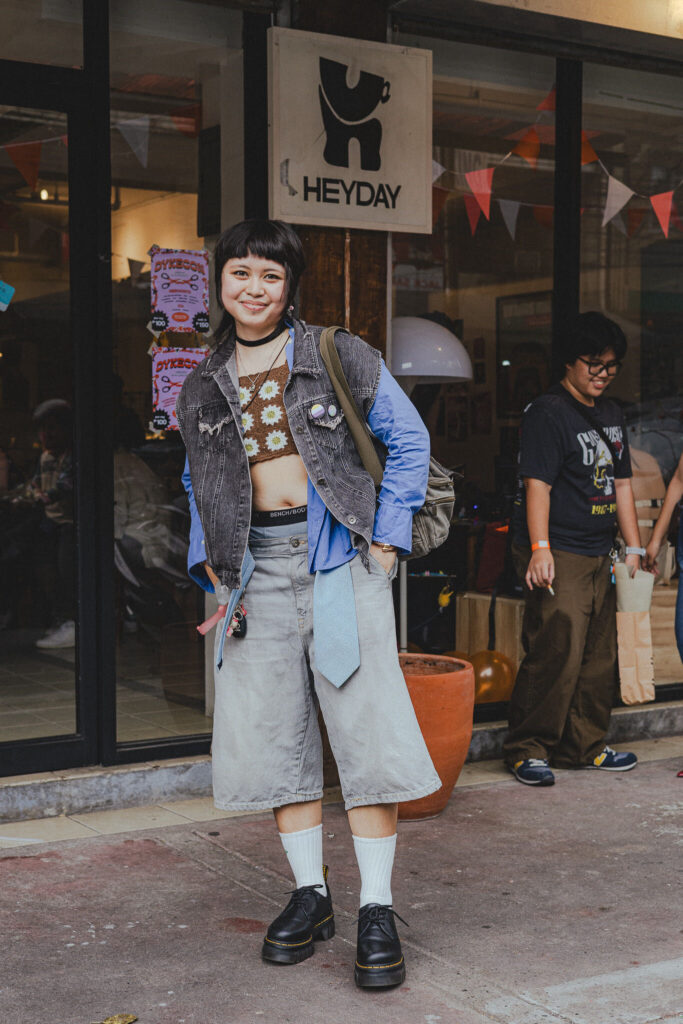
The word nonbinary entered mainstream language in the 1990s alongside related words like “genderqueer,” and became part of everyday vocabulary by the mid-2010s.
To be nonbinary—and a nonbinary lesbian—in the Philippines is to constantly ask: “Will I be welcome here?”
I went anyway. The event, held a little after Women’s Month, brought together women athletes, sports enthusiasts and industry professionals to hear from panel experts. The panel was what interested me the most.
The panelists came up front to share their stories of being women athletes, coaches and leaders in the sports industry. During the Q&A portion, with cold hands and a lump in my throat, I raised my hand and a question: What should trans women, or nonbinary athletes like myself, do when they’re faced with categories that don’t quite fit?
Only one panelist picked up the microphone. She cited international committees and talked about ongoing discussions to allow trans women, only if their hormone levels qualify them as “women.” It would be nice, she said, if we could accommodate trans and nonbinary athletes.
Even if the sentiment was well-intentioned, I felt the word “accommodate” echoing in my head long after she put the microphone down and the moderator hurried to receive the next question. I left the event soon after that.
Many still believe that there are unfair advantages those born biologically male have over those born biologically female. But the track record shows it isn’t quite as simple.
1977. Renee Richards, trans woman, competed in women’s tennis. She reached the doubles final in the US Open, but she did not win. She lost to cis-gender women (SF.gov, 2025).
2021. Laurel Hubbard, trans woman, competed in 2020 Summer Olympics Weightlifting. She did not win (SF.gov, 2025).
2022. Lia Thomas, trans woman, won the NCAA 500 yard freestyle, came in fifth for the 200 yard race, and eight in the 100 yard race. She started gender affirming hormone replacement therapy in 2019 and skipped the 2020-21 season (Independent, 2022).
2026. Team Iron Transmasc at the Athletic Brewing Ironman placed third over 200 teams—including teams that were made up of all cismen (Rodriguez, 2026).
The language we use
Pre-colonial Filipino communities had the babaylan—spiritual leaders, healers, and intermediaries between the physical and spirit worlds. They were usually women, but not always. Our historical accounts describe babaylan who moved between genders altogether.
Filipino languages still carry that fluidity: “siya,” our pronoun, asks nothing about anyone’s gender to function.
The words we use, and the way we translate these words into action is key to creating inclusive spaces. As much as we need to celebrate women in spaces where misogyny still exists, we also need to ask: How can we also make room for those that don’t fit into the label of cis-women?
Very few organizations are trying to create a room for people like us.
Sapphic Society is a lesbian-led creative space and collective paving the way for sapphic artists and talent to have their own platforms in the Philippines. The word sapphic is broader than “WLW”—women loving women—which centers cis-women loving cis-women. Sapphic includes lesbians, bisexuals, pansexuals, and other queer women, cis and trans alike.
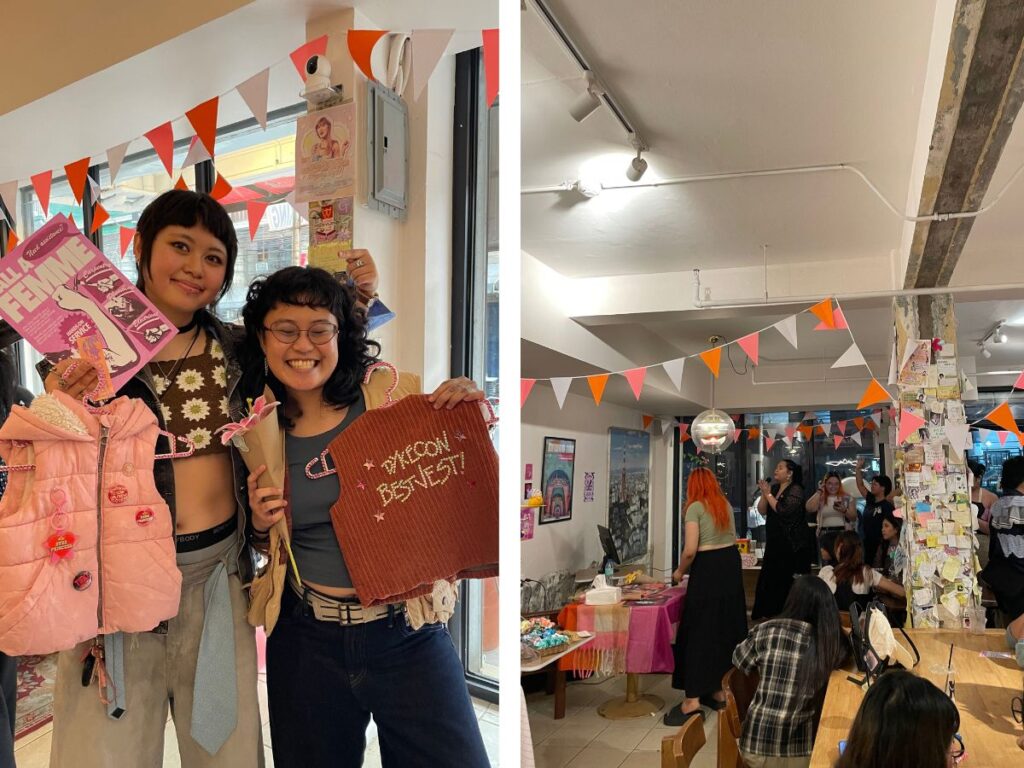
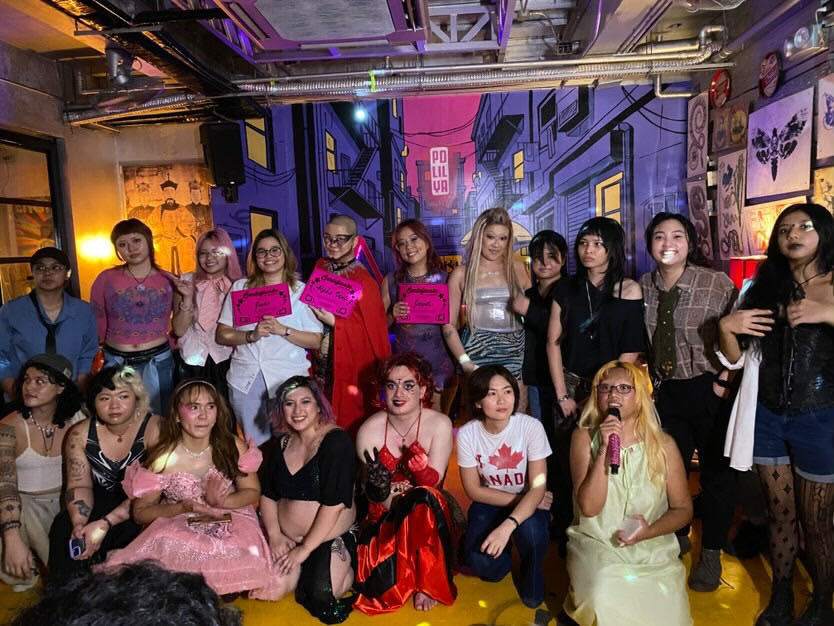
As Sapphic Society co-founder Savvy (stage name) put it, “non-men loving non-men.”
“We [Sapphic Society] lead with care and community at the center. That means being more intentional in the spaces and the actions that [we] make.”
Sunny Club PH, a Metro Manila collective and events organizer for queer women and sapphics with a following of over 44,000 on Instagram, makes its inclusion explicit in every public post.
“When I make a poster saying that trans people are welcome here, gender non-conforming people are welcome here as long as you identify as sapphic, you can go in … and that’s posted to 44,000 people online, I don’t think that’s any small influence,” said Sapphic Events Sunny Club Co-Founder Jewel Enrile.
She added, “With Sunny, I want to be able to make sure that people feel welcome, and not discriminated upon in the public sense… when there’s someone masculine-presenting, what happens to that person when they enter the space? It’s balancing that line of being welcome but also making sure that there’s no discrimination that’s happening.”
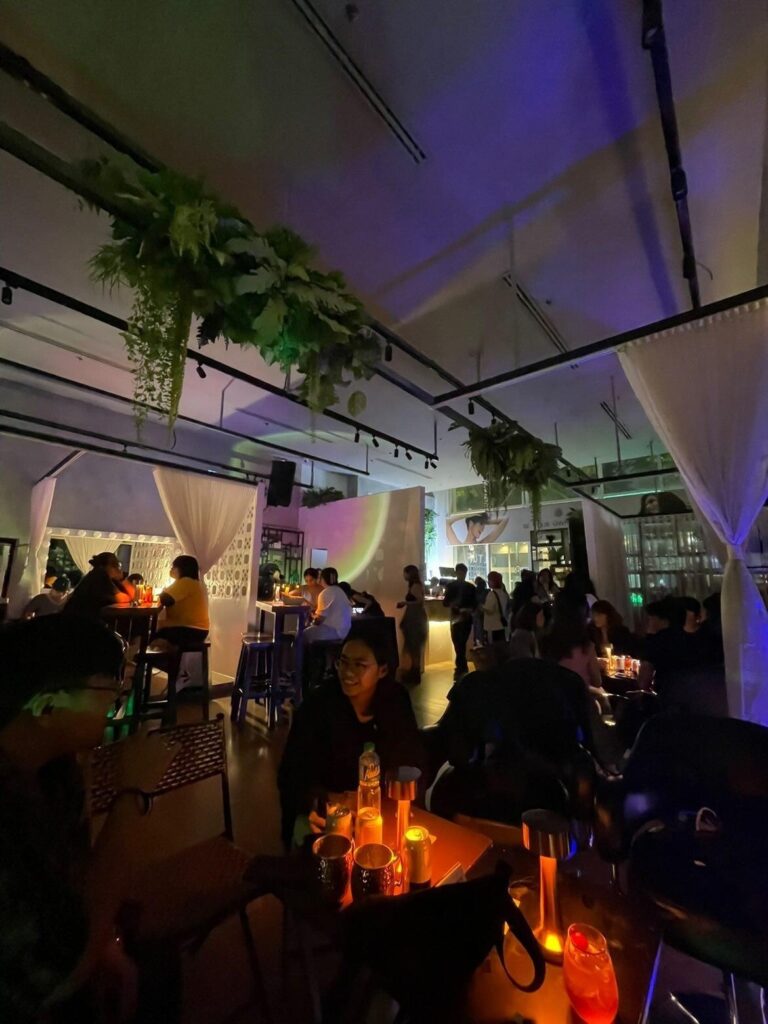
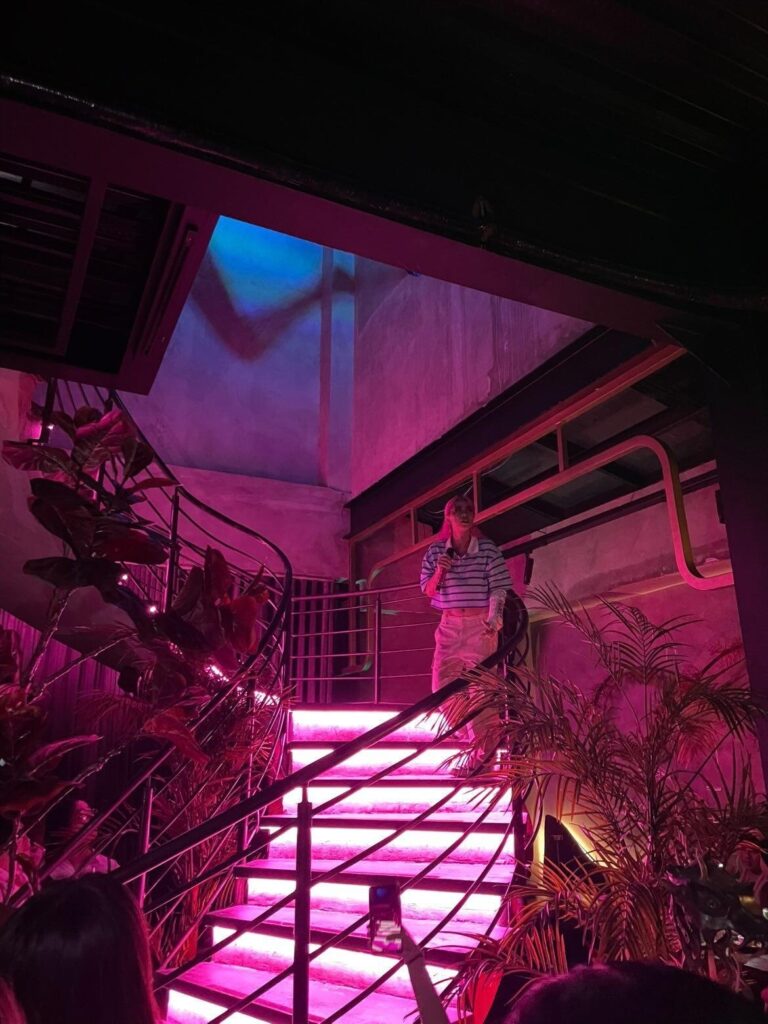
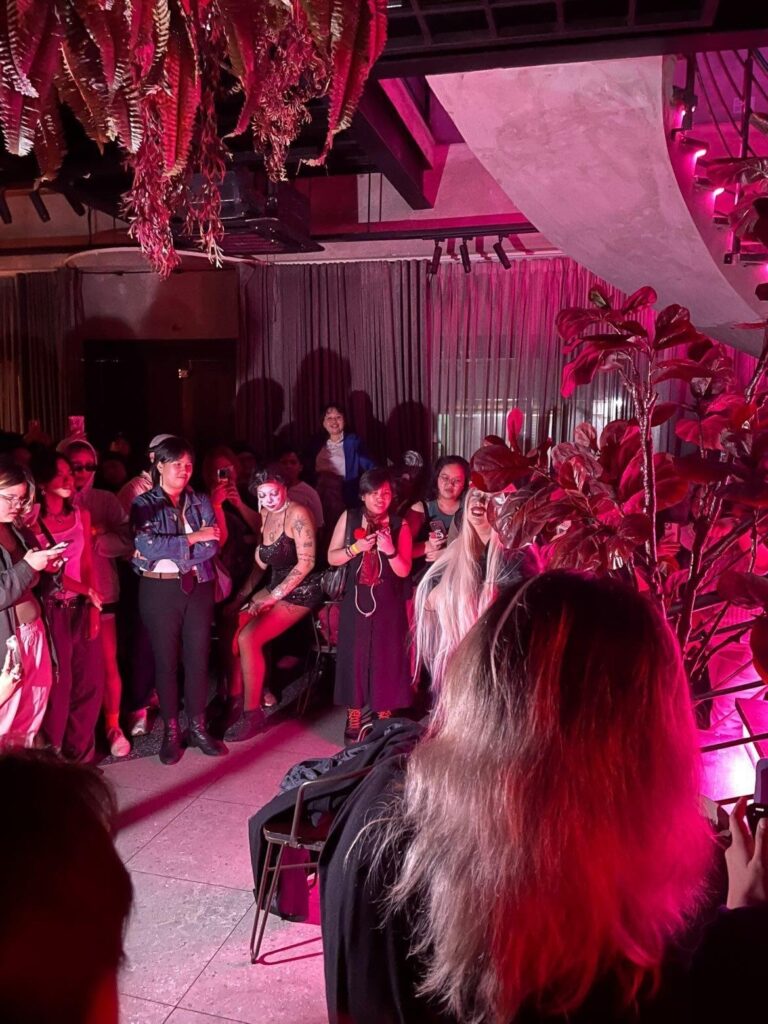
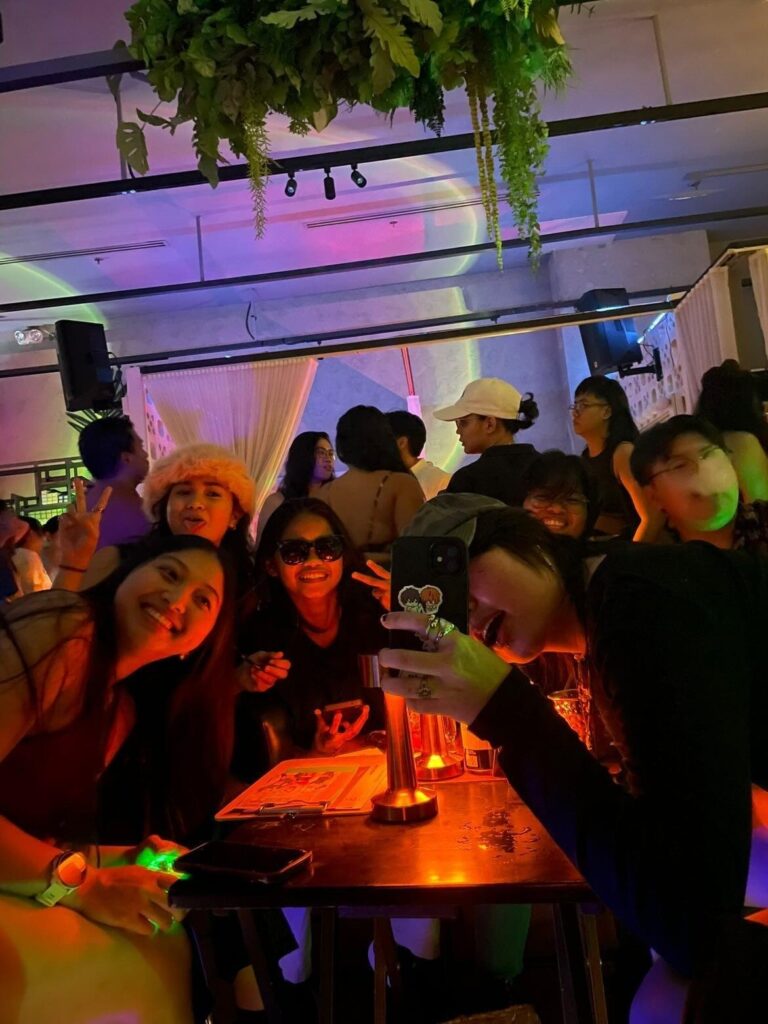
The proof is at the door, beyond the captions they post. At check-in, Jewel’s team makes it a point to call attendees by the names they registered under, not their legal names.
“That’s not formal training at all. But it’s training these young 20- and 21-year-olds to start using the names, which is important for people, and start using the proper pronouns.”
Sapphic Society co-founder Aleitheia Balingit adds, “To actually be effective and collaborative amongst the sports community and also the trans and GNC community, it’s also [about] not using the words like tolerate and accommodate. But instead—for example, with Sapphic Society, we use words like platform, highlight or inclusive.”
Fighting for visibility and the long road ahead
There are people in the Philippines who have been wrestling with these issues for much longer than I have. Agel Romero is one of them.
She has been fighting for queer visibility her entire career, as the founding director of the Philippine LGBT Chamber of Commerce, National Convener of Pride PH, and Country Chair for Publicis LGBTQIA+ Business Resource Group.
I asked her the question that has been plaguing me since the panel: Should spaces built for women stay exclusive, or make room for queer people too?
“We should always have intersectionality as a standard,” she said. “When we draw the line of just being exclusive to one gender, it forfeits the purpose of being inclusive, because you’re excluding the other. It’s a double-edged sword. You’re protecting your group, but you’re also excluding those people who do not fit the standards of your group.”
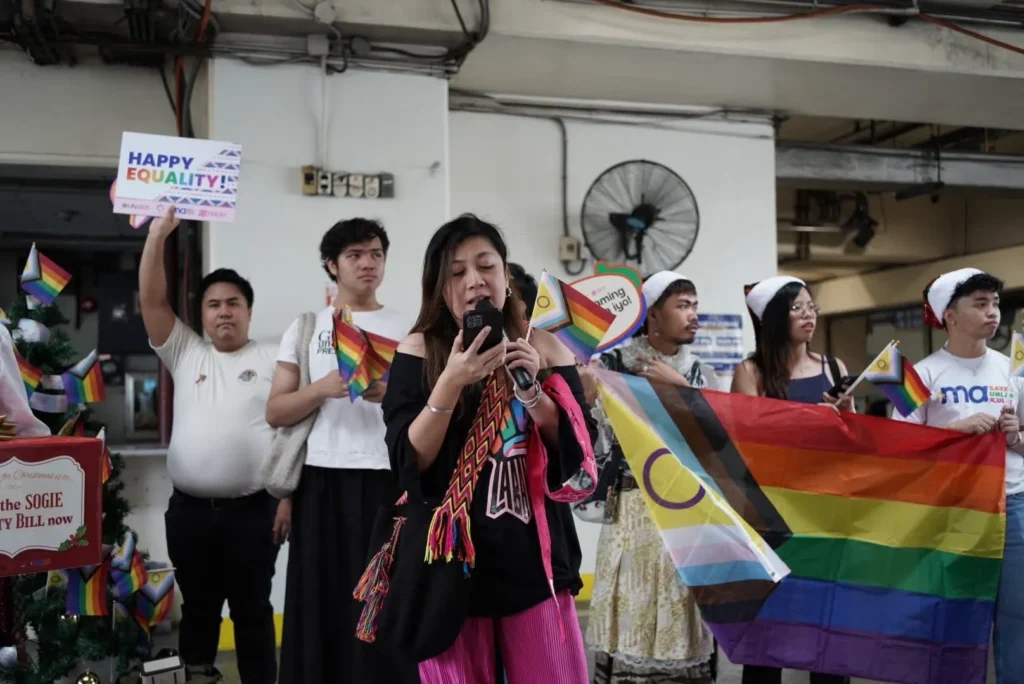
Romero describes herself as “straight passing,” moving through women’s spaces that are sometimes transphobic also. Her approach? Bring her full self into the room.
“Hindi ka lang naman ‘yung gender mo. You are also your different roles in your life. You’re also a sister, you’re also an expert, you’re a director, you’re a business owner.”
In a conservative country like the Philippines, the fight for visibility is fought largely through education—an effort to broaden what people are willing to see, understand, and accept. “Because sometimes they come from a place of concern, or hindi lang nila alam how to go about it,” as Romero put it.
“Still, that work is exhausting to sustain especially for trans advocates, in the absence of national SOGIE law. There’s really so much work to be done,” Romero said. “It’s a conscious effort for us to make sure that they understand us so they know the difference between trans and nonbinary, or lesbian and gay. [Education] is the only way to do it.”
The SOGIE Equality Bill—which would make discrimination based on sexual orientation, gender identity, or expression a punishable offense nationwide—was first filed in the Philippine Senate in 2000. It has been refiled in every Congress since and remains pending in committee in the 20th Congress as of 2026. No national anti-discrimination law on SOGIE exists. Only government ordinances do.
Every Pride Month, which happens in June, the LGTBQIA+ community and allies loudly and proudly take up space—but for the rest of the year, many find safety in the quiet.
For Romero, real inclusion will not happen until impact spaces are willing to disrupt their own defaults, and until those of us with the privilege to take up space do it on behalf of those who still can’t.
“There’s still hope, because there’s progress,” Romero told me. “We see the rise of trans revolution, of trans power. Trans women who are dominating different spaces in television, in sports. But it’s just more of really sharing their stories, highlighting them more beyond June. Because Pride Month is not just a month. Pride should happen every day, January to December.”
She added: “For those who are empowered already, be visible and assert yourself. It helps us all who are not ‘out’ to see that. Make sure that people see us beyond just Pride. We’re everywhere, contributing to the Philippine economy. Stay visible and represent your community.”
How I wish the panel discussion went
With cold hands and a lump in my throat I’ll keep raising my hands to pose questions that leave a room full of people disturbed, because someone might need to hear that conversation.
Right before I left the event, feeling defeated and small, someone stopped me.
She told me she was interested in the question I posed, curious about what the right answer was, and wanted to engage but afraid of getting it wrong. She’d seen enough online harassment against trans athletes and their advocates to understand the risk. When I asked what she thought about my question, and she told me the one thing I foolishly hoped to hear from at least one of the panelists:
“Trans women are women.”
The woman who told me this so sincerely is Spartan Philippines’ 2026 Ambassador and a two-time podium finisher. She is a woman in sports. She is a woman with valid fears about being wrong, but with the heart to engage anyway and break the silence. She leaned into her curiosity despite her hesitations—the way we have to, because the narrative won’t write itself.
Sports categories won’t become inclusive at once. Impact spaces won’t design with intersectionality and inclusion in mind until we disturb their default notions of who belongs. But speaking up makes a difference, even if it only reaches one person. That day, what she said was enough for me.
The odds are against us, but we have a right to be here.
Some names used in this article are stage names, used for the safety of the sources.