





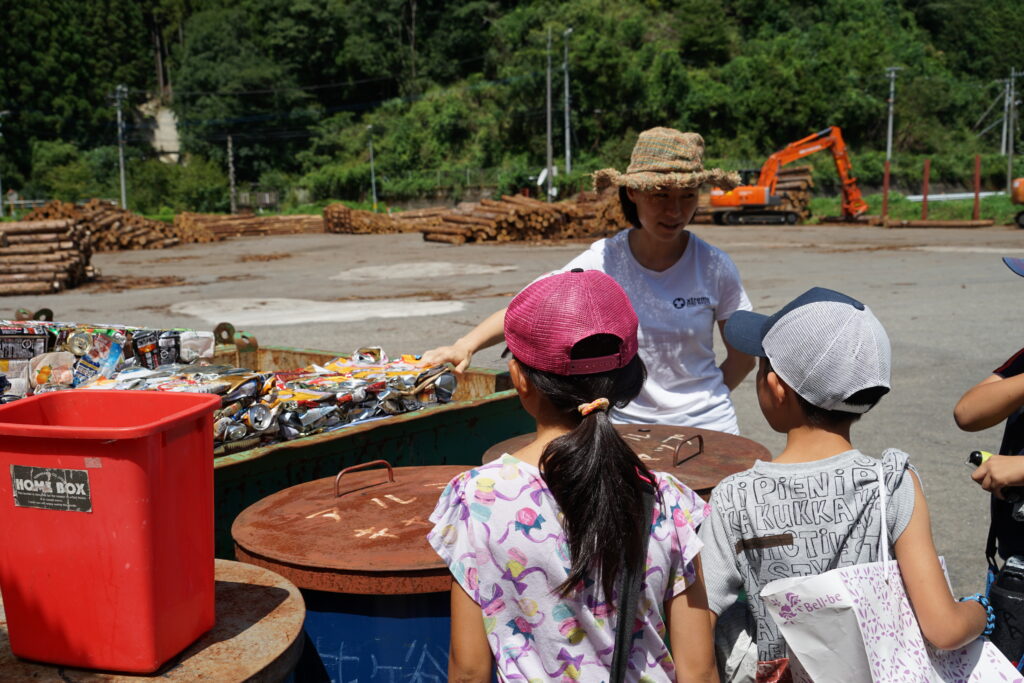
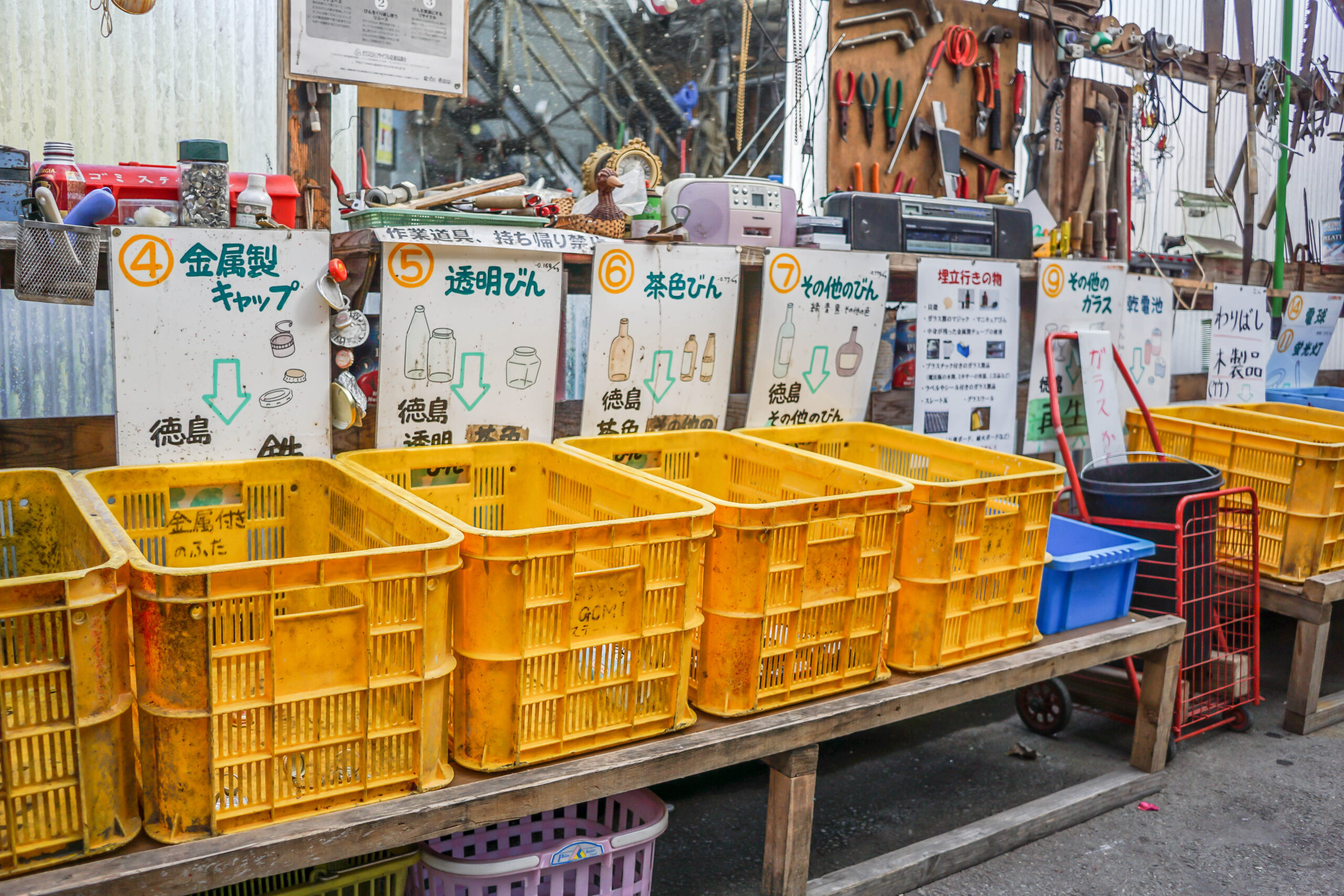
March 30, 2026 · In the mountains of Tokushima Prefecture, Japan, there is a small town called Kamikatsu—population 1,500—that throws away almost nothing. In 2020, the town recycled 81% of everything it produced, compared to Japan’s national average of 20%. The town also runs a kuru-kuru shop (“circular” in Japanese) where residents can drop off used items and take others home for free, and a kuru-kuru factory where local women make bags and clothes from discarded fabric.
Kamikatsu is held up as the exception, not the rule, in a country otherwise known for a different approach to its waste problem: incineration, or waste-to-energy. The practice of burning garbage to generate power.
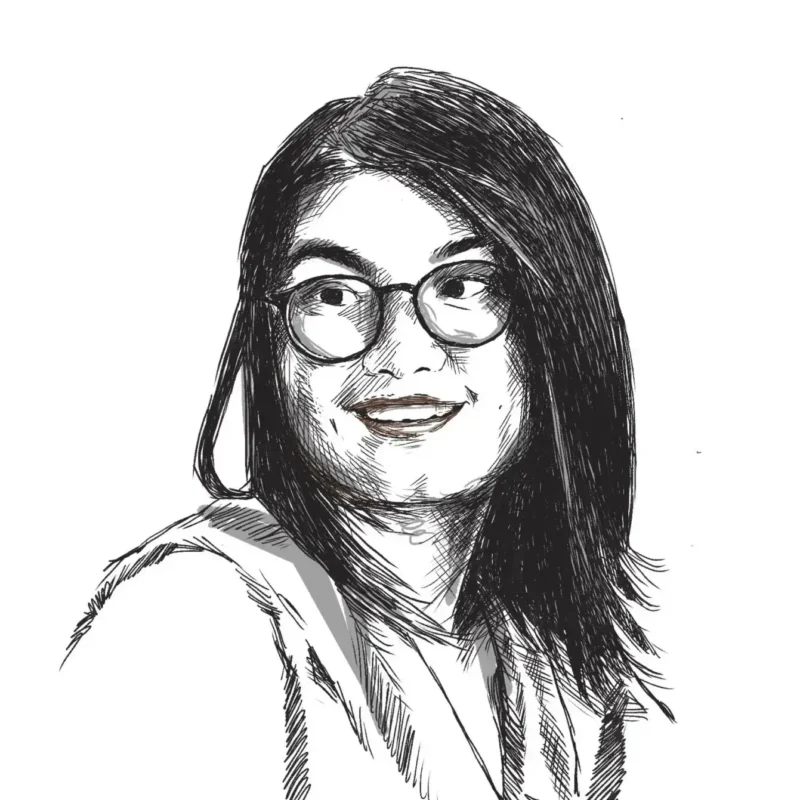
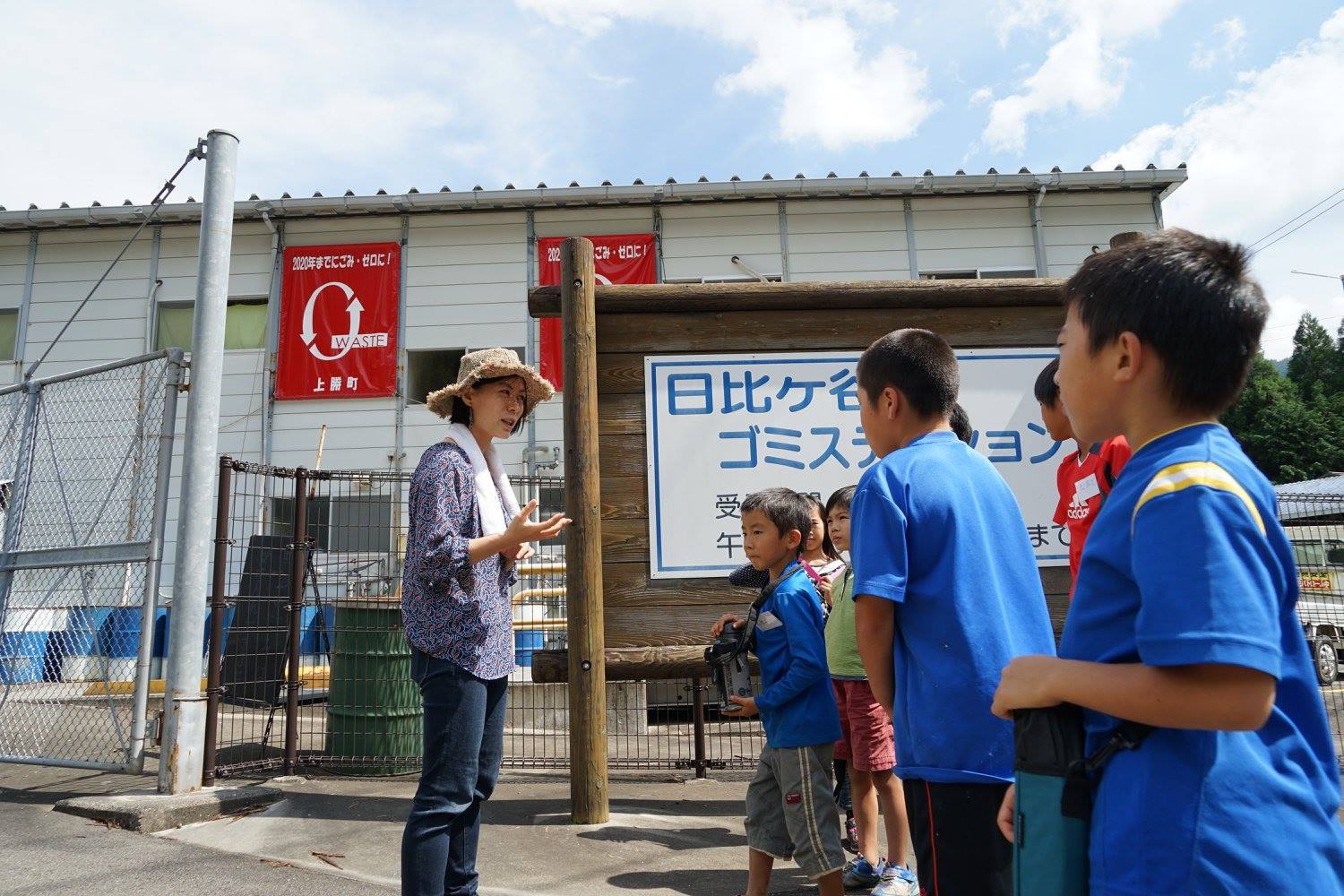
Akira Sakano, founder and director of Zero Waste Japan and former chair of the Zero Waste Academy in Kamikatsu, helped build Kamikatsu’s system. When asked why it was started, her answer is simple: they had no choice.
Open dumping was outlawed. Incineration, the only option, was inaccessible for the remote town. Going zero waste was not a matter of ambition, but survival.
Sakano herself did not set out to be an environmentalist. At age 10, she read a picture book about the kakapo—a flightless parrot native to New Zealand—and learned it was endangered. Her love of birds grew into a concern for conservation, then into a belief that solving environmental problems required changing social systems, not just protecting animals.
After studying environmental policy at university, she worked across Japan, Mongolia, then spent two years in the Philippines as Trade Lane Management Head for Sales at DHL Global Forwarding. Kamikatsu came next; a coincidence, she shared, because a university friend was from there. Today, she is a member of the WEF Global Shaper Community and has served as a co-chair at the World Economic Forum in Davos. “I just wanted to change the social system through policy design,” she said.
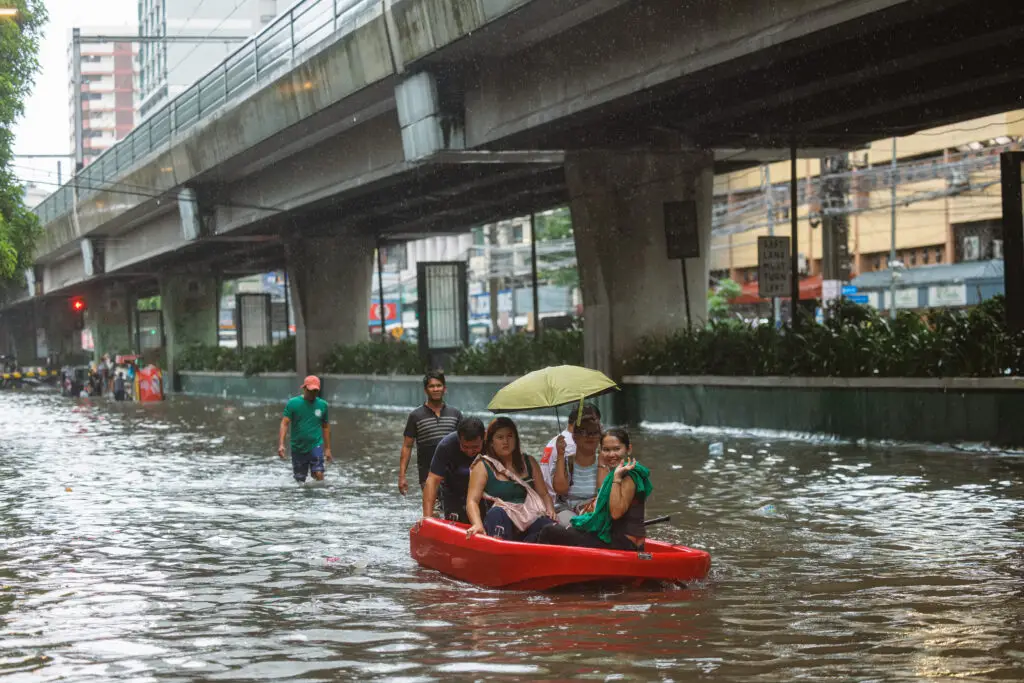
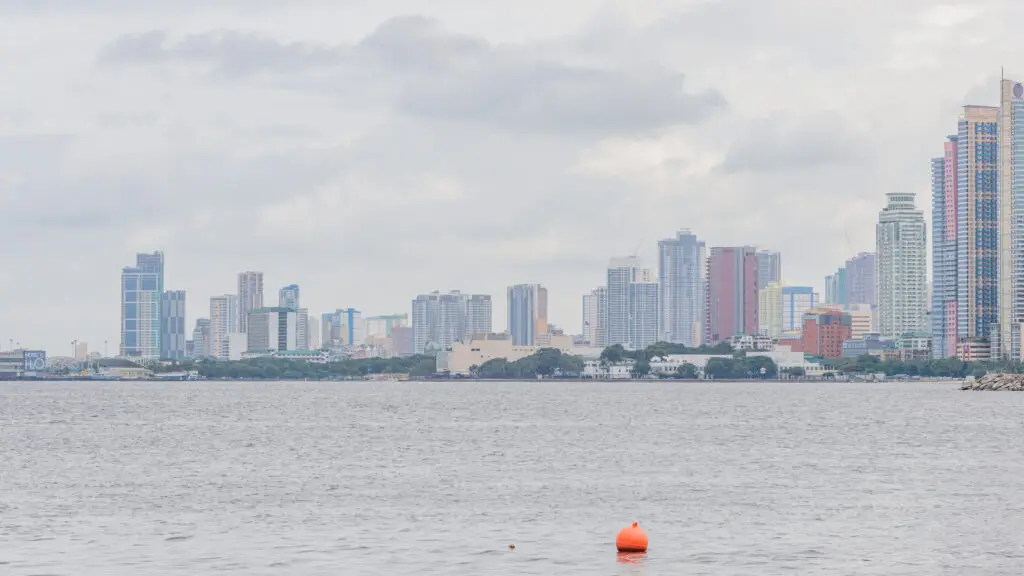
Meanwhile, in the Philippines, waste-to-energy is no longer a distant conversation and the government turns to Japan as the experts. In June 2025, President Ferdinand “Bongbong” Marcos Jr. announced that Japan’s Kanadevia Corporation would partner with Philippine Ecology Systems Corp. on a waste-to-energy project at the former Smokey Mountain landfill in Manila. The USD 560 million project aims to thermally treat 3,000 metric tons of non-recyclable municipal and industrial waste daily and produce up to 100 megawatts of clean energy. “This initiative will turn thousands of tons of waste into clean energy, reduce flooding, create jobs, and help clean up communities,” Marcos said.
Sakano—the expert in making circularity work even when the odds are stacked against her—has a more measured view.
Sustina: The perception most people have of Japan, especially in the Philippines, is that Japan is the expert on waste-to-energy, especially in terms of how to mitigate side effects and toxicity. I’m wondering, is this also your opinion? Can we hold Japan to that kind of standard?
Sakano: Good question. There are several perspectives. I should start with a bit of the background.
Why has Japan started doing so many incinerators and using incineration as waste management? Basically, similar to the Philippines. I understand why the Philippines might say that copying Japan is the way to go. Since we are an island country, we don’t have much land, so landfills are always a limited challenge for us.
Back in the 1990s, when our economic growth really hit, our waste management was in crisis. That was the timing when the Japanese government implemented recycling laws—for example, recycling regulations for plastic packaging and e-waste. That came hand-in-hand with the limitation on landfills. We tried to push for recycling, but we really had to deal with the emerging amount of waste. The government thought implementing incinerators could solve two problems:
First, minimizing landfill volume. We can minimize the amount going to the landfill so it’s just ash. Second, sanitation. Burning everything first solves the sanitation issues of organic waste attracting flies and birds.
Before shifting into incinerators, the Tokyo Metropolitan Government even declared a “waste war” because the city was receiving so many flies from the landfills. It’s similar to the problems the Philippines and other nations are having right now.
In the beginning, we installed any kind of incinerator. When I was in elementary school, even schools had very small-scale incinerators in the corner of the yard. We did cleanups and burned everything there. Those small incinerators were banned in the middle of the 90s because, without enough temperature rise, they emit dioxins and other toxins. The government then set standards to ensure incinerators reach specific temperatures and include filters.
Because these requirements made incinerators quite huge and expensive, several small municipalities often consolidated to co-invest in one facility. To respond to your question: Japanese operators have long experience in running incinerators, but whether they are “no problem at all” is questionable.
For example, in Europe, environmental assessments for incinerators are slightly stricter. Japanese standards only monitor two or three specific chemicals, which some say isn’t enough to catch other toxics. I wouldn’t say all Japanese incinerators are safe; we really need to monitor them and consult chemical specialists.
Furthermore, this technology has hindered our faster transition toward circularity. Once you invest in a big-scale incinerator, it’s a minimum 30-year fix—now often a 50-year fix with extended lifespans.
If you have already invested, you have a negative incentive to reduce or recycle waste because the incinerator needs to be running continuously to be efficient.
I see lots of similarities. In the Philippines, we have landfill issues, but you’re saying the flip side is that once you go down that path, you always need waste to put into the incinerator. In your experience, can you do both? Is there an argument that we can use it as a stopgap while thinking about recycling?
Definitely. If you can plan from the beginning, you can do better. In Japan, after everyone had incinerators, it was hard to push for additional recycling. Now, the national government provides subsidies for incinerators only if the local government has a recycling stream for plastics. This forces them to design smaller incinerators because they can estimate how much will be recycled.
However, the majority of remaining waste is often organic waste, which is 80% water. It’s nonsense to burn organic waste because you need more fuel to do it. We are pushing to mandate organic waste recycling as well to minimize what goes into the incinerator.
In the Philippines, we have policies for segregation, but enforcement is an issue. How detrimental would it be if we shifted to waste-to-energy and still didn’t segregate?
If you burn organic waste, it lowers the temperature. You then have to add something, like plastic or fossil oil, to keep the temperature high enough to prevent dioxins from being produced. Segregation ensures recyclables stay out of the incinerator, which prolongs the facility’s life and protects your ROI.
Also, Japan faces issues with explosions in incinerators caused by lithium-ion batteries in day-to-day products. These happen at least once or twice a week and can burn down a whole facility. That’s why education and segregation are critical.
Who is in charge of that education?
It’s the local government’s responsibility, but they aren’t always good at campaigning. Partnering with local community groups, NGOs, or corporations is very important. In Japan, municipalities often share an incinerator and its costs.
Usually, half the cost is divided by population, and the other half is based on the amount of waste a city brings. This creates an incentive to reduce waste because the more you bring, the more you pay. There was one case where two municipalities ran a huge campaign before a new incinerator opened. The waste production dropped so much they were able to build a smaller facility.
Has it ever happened where there was no need for the incinerator anymore?
A few municipalities, like Osaki town and Shibushi city, decided not to build an incinerator at all because they had no more landfill space. They’ve been running zero-waste campaigns and have had the top recycling rates in Japan for over 10 years.
What is the story of Kamikatsu? How did they become the exception?
They had no choice. They were a small municipality that couldn’t afford to invest in an incinerator or find partners. They had to do something to reduce waste. They decided that their strategy should revitalize the community, not just be an environmental policy. They engaged citizens and attracted new people to live there and open waste-related concept shops.
How did you get involved?
I wasn’t working on waste policy at all. Before Kamikatsu, I was in Manila for two years working for a logistics company, DHL. I always wanted to work on environmental policy, and Kamikatsu was a coincidence because a university friend was from there. I stayed there during a gap before my master’s degree and joined the Zero Waste Academy when they were looking for a new generation to run it.
Do you see Kamikatsu as a proof of concept that can be scaled?
Yes. People often visit and say, “Kamikatsu is great, but I don’t think I can do that back home.” They use the town’s small size or rural nature as an excuse. But every region has uniqueness and just needs to customize the principles.
In cities like Tokyo, you might not have space for a collection center, but you can upgrade the existing collection bins at convenience stores and supermarkets. You just need to design for your own environment.
If you were to communicate this to the Philippines, what would your argument be against a 30-year investment in incineration?
Once you invest, it’s very hard to transform that system. I don’t go 100% against incinerators because I know you have to clean up the existing landfill mess. However, you could design incinerators to clean up existing waste while designing your day-to-day waste system for recycling. It’s a challenge of how we design our own future.
This interview has been edited for length and clarity.