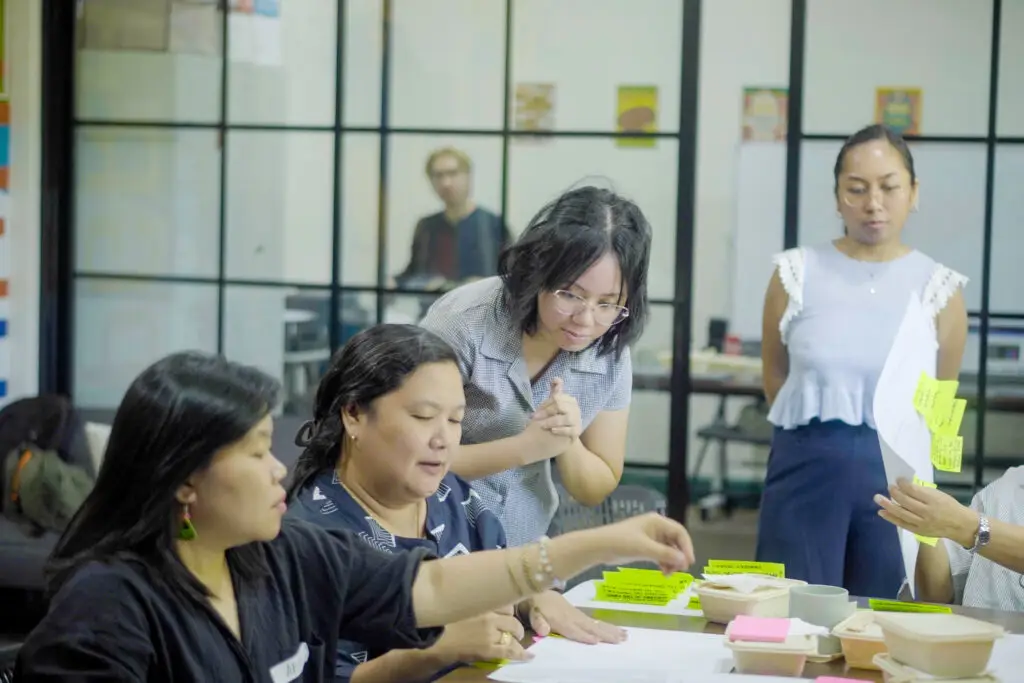





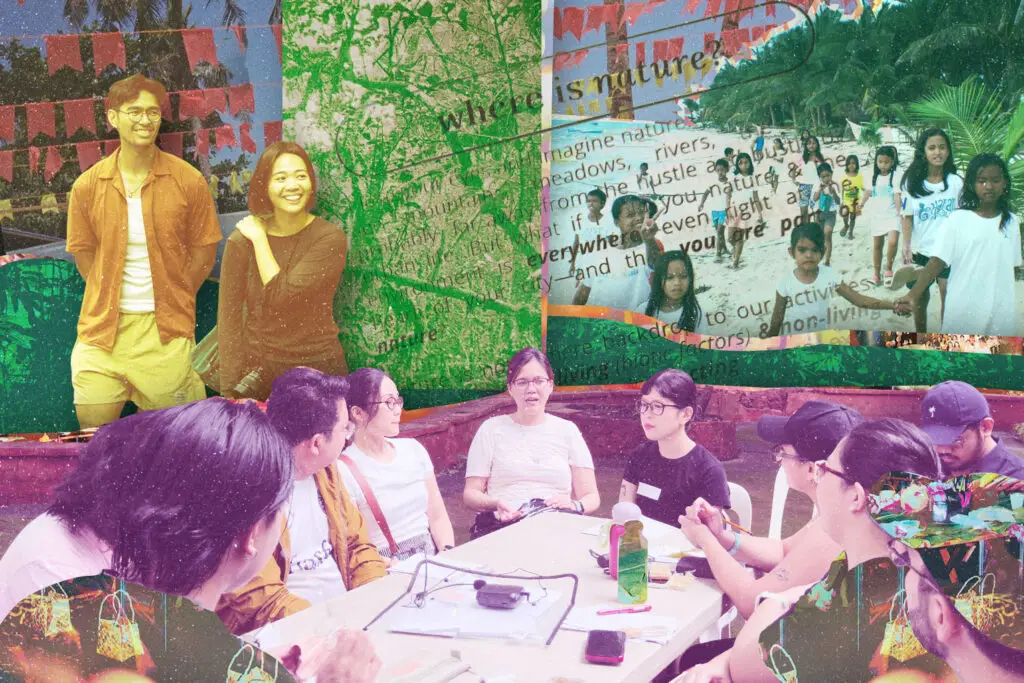



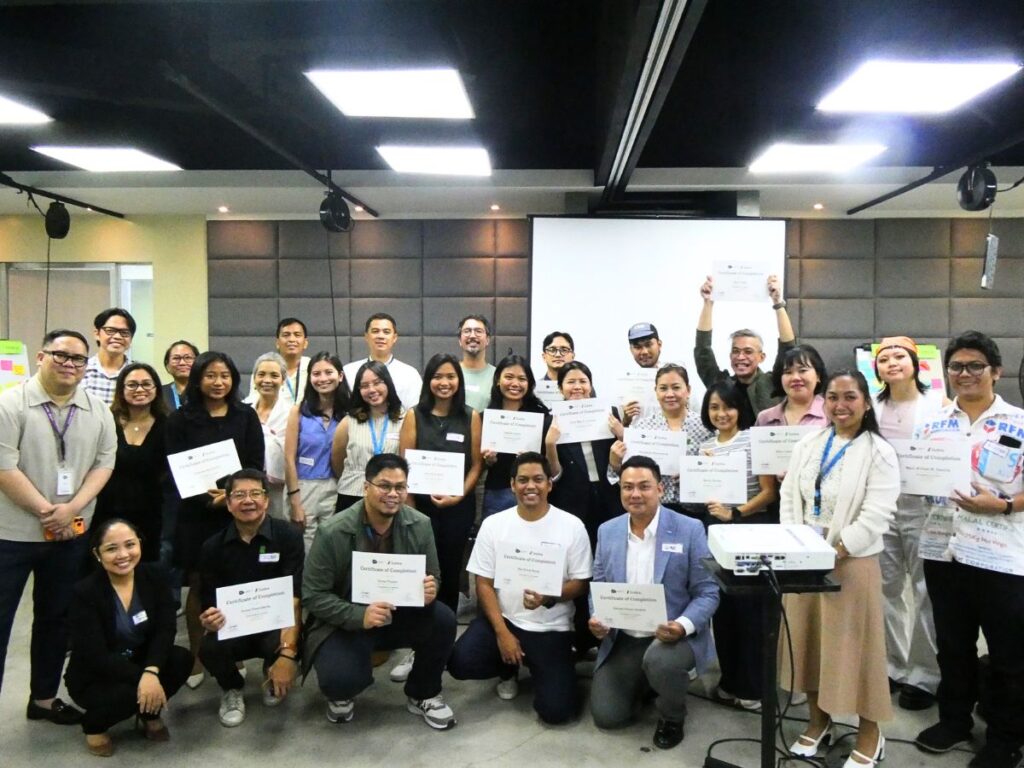
June 29, 2026 · On May 29, Sustina held its third iteration of the “SustainabilityGlobal EssentialsSustainabilitySustainability is the ability to manage and use resources to meet present needs without compromising future generations. It can be examined through environmental, economic, or societal lenses. These are the…Read more in the Glossary → for Founders” workshop at the Asian Institute of Management, convening a cohort of leaders from distinct, purpose-driven organizations across education, sustainability, advocacy, and the circular economyCircular Design & EconomyCircular economyAn economic model designed to keep materials in continuous use through maintenance, reuse, remanufacturing, and recycling, decoupling economic activity from the consumption of finite resources.Read more in the Glossary →.
Every cohort teaches us something new. This time the learning was clear: When organizations hit a growth ceiling, the default instinct for the founders is to seek external solutions—more funding, stronger partnerships, or better strategies.
The data from this workshop indicates the root causes are internal. Structural stagnation stems directly from the founders’ relationships with control, risk, and personal identity.
The cohort is navigating a single, critical transition: moving their respective ventures from founder-carried models to systems-carried ones. While the founders intellectually recognize this shift, the actual resistance is behavioral. Scaling requires founders to extract their personal competence and build it into documented systems. The highest-leverage changes available to this cohort are personal, which strengthens the direct relationship of the sustainability of the founder to the sustainability of the organization.
Insights
1. Founders inadvertently use financial scarcity to avoid the discomfort of execution and the risk of making the wrong choice.
When organizations stall, leaders instinctively blame a lack of money. This focus on funding acts as a convenient distraction. In this It protects them from examining whether their daily operations contradict their core values, or from facing the discomfort of committing to a single path. The instinct is to look outward for capital when the actual blockage is internal hesitation.
- One solo founder mapped his highest pressures as a “scarcity mindset” and a “broken risk-reward system,” noting that “nothing moves forward.” Yet, when asked about his capacity to execute, he circled back to being the only founder and remained entirely certain the root problem was simply a lack of funding.
- A founder running an eco-friendly, zero-wasteCircular Design & EconomyZero wasteA systemic design goal aiming to eliminate the concept of waste by ensuring all materials are reused, recycled, or composted, preventing trash from entering landfills or the natural environmentRead more in the Glossary → retail store admitted the business is “still a victim of crass commercialism, pop culture, and current trends.” Despite this internal conflict between his values and his business reality, he pointed entirely to funding as his main pressure point.
- “When I am the org’s main fundraiser, the cost is actually twice: once in the resources needed to pursue it and another in the deferred decisions while keeping the org running.” — Founder of an eco-tourism marketplace.
Opportunities to explore:
- How might we help founders separate their fear of financial ruin from the simple act of making a decision?
- How might we reframe a lack of funding from a fatal flaw into a specific design constraint to work within?
- How might we create low-stakes ways for founders to test a single idea without risking the entire organization’s survival?
2. Founders tie their personal identity to the work, making delegation feel like a betrayal of the mission’s quality.
Scaling requires letting go, but founders view delegation not as a structural necessity, but as a relinquishing of care. Because their personal confidence is tied to the mission’s success, they believe no one else can protect the work the way they can. This creates a ceiling: the organization can only grow as large as the founder’s personal capacity to oversee it.
- A leader in a gender violence advocacy group—work that relies entirely on community and survivor trust—admitted his internal constraint is that “others can’t be trusted to do things right all the way to the end.” This false belief keeps his programs artificially small and limits their reach.
- A founder running an unconventional circular textile business noted, “I find it hard to delegate tasks because I started as a one-man operation company,” even as he actively tries to step back from on-ground work.
- One participant explicitly articulated that she needs to feel in control to feel confident, recognizing that the source of her security (doing it herself) is the exact source of her growth ceiling.
Opportunities to explore:
- How might we show founders that stepping back is a way to scale their care, rather than a loss of it?
- How might we build visible feedback loops that give founders the confidence to let go without feeling the quality will drop?
- How might we translate the founder’s personal standards into clear rules so the team can execute with the same care?
3. In purpose-driven teams, unclear processes do not just cause friction; they strip staff of their dignity by denying them the clarity needed to be competent.
The barrier to growth is rarely a lack of team competence; it is miscommunication and shifting expectations. In social enterprisesCircular Design & EconomySocial enterpriseA revenue-generating business whose primary objective is to solve social or environmental challenges, reinvesting profits into its mission.Read more in the Glossary →, this operational chaos has a human cost. When management fails to standardize processes or communicate value, it strips staff and volunteers of their agency. Competency is the foundation of dignity. Without clear systems, the organization inadvertently perpetuates the very instability it was built to solve.
- A social enterprise leader employs trauma victims and wants to move away from “pity support” so they feel dignified. He noted that “consistency gaps in service affect employee self-esteem and dignity, but they cannot solve it themselves. Management needs upskilling.”
- Another leader prioritized building physical infrastructure (an office and warehouse) over a communications plan because he wanted employees to have “physical proof of who we are.” This left the team unable to clearly communicate their identity to the outside world.
- A civic organization leader relies on volunteers to lead projects for long-term success, but has no strategy to communicate the value of their work or incentivize them, leaving value and direction lost in miscommunication.
Opportunities to explore:
- How might we design daily processes that act as tools for employee empowerment rather than just compliance checklists?
- How might we make the invisible work of standardizing operations visible and valued within the team?
- How might we help managers translate the founder’s vision into clear, repeatable steps that build the team’s confidence?
4. Founders mistake their personal exhaustion for organizational momentum, subsidizing missing systems with their own physical and mental limits.
Founders are filling the gaps left by missing systems with their own unpaid labor and cognitive overload. They chase new ideas to feel visible in the market, creating endless backlogs and decision fatigue. The constraint is no longer just time; it is the founder’s physical and mental capacity. The organization is growing at the direct expense of the founder’s health, making the leader’s personal exhaustion the organization’s hard ceiling.
- One founder’s financial model covers day-to-day operations but actively constrains expansion, “leaving her absorbing an unsustainable amount of unpaid personal labor.”
- Another leader is one person wearing two executive roles, caught between keeping the business solvent on a day-to-day basis and having the strategic visibility to actually grow it. The founder’s body is simply not keeping pace with what the organization needs.
- “The continuous chase for new ideas to be visible in the market creates overload for my team. I tend to define what’s great with what’s new, hence my desire to keep coming up with new ideas, creating overload for my team.” — Founder of an agri-tech organization.
Opportunities to explore:
- How might we untangle the organization’s daily output from the founder’s personal energy levels?
- How might we design physical or mental tripwires that force a strategic pause before the founder reaches total exhaustion?
- How might we shift the organization’s fuel from the founder’s daily intervention to documented processes that run without them?
Core tensions
The cohort navigates four recurring tensions that determine their organizations’ ways of operating and their own founders’ sustainability:
Tension 1: Control vs. Delegation
Decentralization feels like a loss of security. The source of their confidence (doing it themselves) is the exact source of their growth ceiling. Delegation feels like an identity threat. Founders protect their identity as the central figure by retaining control.
Tension 2: Action Urgency vs. Root-Cause Inquiry
Founders move directly into problem-solving before fully understanding the problem. Urgency encourages premature certainty. The resistance to reframe a diagnosis is stronger than the curiosity to test it, leading to solutions that address symptoms rather than root causes.
Tension 3: Survival vs. Growth
Founders are caught between keeping the organization solvent daily and building the strategic visibility required to grow. The operational weight of the mission absorbs the capacity needed for systemic expansion.
Tension 4: Personal Capacity vs. Organizational Demand
Founder exhaustion is a structural limit. Many are subsidizing organizational gaps with unpaid personal labor. The constraint is no longer just time; it is the physical and mental capacity of the founder’s body. The organization is growing at the direct expense of the founder’s health.
The realization that organizations must change is not enough. The physical mechanics of how the organization runs must be redesigned to transition from a founder-carried organization to a systems-carried one.
Email editor@sustina.earth to access the full report.
The Asian Institute of Management-Dado Banatao Incubator (AIM-DBI) is a hybrid DOST-PCIEERD technology business incubator-accelerator that targets innovation-driven entrepreneurs whose businesses have the potential to impact all sectors of society in Asia. We give world-class mentorship from AIM community of faculty and alumni, incubation partners, and networks of founders and industry leaders; a hands-on education and customized training programs to all qualified startups.
Sustina is the National Incubation Partner for Sustainability and Impact of AIM-DBI.