







November 6, 2026 · Amid what experts say is already a record-breaking El Niño, the Philippines is expected to experience extreme weather through the rest of 2026 to early 2027.
Provincial and local governments across Luzon, Visayas, and Mindanao have organized their own task forces to coordinate preparation and mitigationGlobal EssentialsAdaptation vs. MitigationAdaptation refers to solutions that are reactive to the effects of climate change. This includes strategies such as breeding drought-resilient crops, improving disaster preparedness, and building resilient infrastructure. Mitigation refers…Read more in the Glossary → responses to the El NiñoLocal Climate & EcologyEl Niño & La NiñaCyclical warming and cooling of the central and eastern Pacific Ocean that drastically alters global weather patterns. In the Philippines, these phases dictate the probability of severe droughts or intense precipitation, serving as primary variables in agricultural yield forecasting, water utility stress-testing, and climate risk insurance pricing.Read more in the Glossary →. The Department of Environment and Natural ResourcesPH Laws & FrameworksDepartment of Environment and Natural Resources (DENR)The Philippine executive department managing forests, protected areas, mining permits, and pollution control. It is the primary regulatory counterparty for environmental compliance, natural capital valuation, and the issuance of permits governing resource extraction and land-use changes.Read more in the Glossary → has also ramped up efforts to build water impounding structures and rainwater harvesting systems across the different provinces.
To better understand what a ‘super’ El Niño means for the Philippines, Sustina reached out to Jerome Tolentino, a researcher at the Oscar M. Lopez Center who specializes in Numerical Weather Prediction. Tolentino previously worked with the Philippine Atmospheric, Geophysical, and Astronomical Services Administration (PAGASA) and has published multiple studies on weather research and forecasting.
What is a ‘super’ El Niño?
El Niño is a natural climate pattern that happens when the sea and atmosphere interact. It is the warm phase of the larger Pacific Ocean El Niño-Southern Oscillation (ENSO) cycle, where sea surface temperature influences weather events such as precipitation and atmospheric circulation. Trade winds that normally blow from east to west slow down, causing warm water to stay in the Pacific Ocean. When the sea surface temperature is consistently 0.5ºC above normal, an El Niño occurs.
While media headlines continue to refer to it as a ‘super’ El Niño, Tolentino shared that the term is not scientific; rather, El Niños fall under 4 distinct categories: weak (0.5ºC to 0.9ºC increase), moderate (1.0ºC to 1.4ºC increase), strong (1.5ºC to 1.9ºC increase), and very strong (2.0ºC or greater increase).
The 2026 El Niño is already expected to be worse than other major El Niño events that have resulted in some of the most significant flooding, droughts, forest fires, and coral bleachingLocal Climate & EcologyCoral reefs & bleachingMarine ecosystems that are highly sensitive to thermal stress, where elevated sea temperatures cause corals to expel symbiotic algae (bleaching).Read more in the Glossary → in the past 50 years. Recent satellite data shows that sea surface temperatures in the Central Pacific have climbed to more than 3.1ºC, surpassing the previous ‘super’ El Niño record set in late November 2015.
Would rather watch than read? Catch the explainer below.
What does this mean for the Philippines?
According to Tolentino, the Philippines can expect fewer tropical cyclones towards the end of the year. But the probability of experiencing super typhoons is higher, especially from October to December—so lower frequency but greater strength. The Philippines can also expect an increase in air temperatures similar to the last El Niño in 2024, when an all-time high of 38.8ºC was recorded in Metro Manila.
Heat index is also another helpful reference for gauging how hot it will get. Heat indexGlobal EssentialsHeat IndexThe heat index refers to how the temperature feels, not what it actually is. This distinction results from the combination of heat and humidity used to calculate the heat index.…Read more in the Glossary → refers to the ‘apparent temperature,’ or what the temperature feels like to humans. While air temperatures are expected to reach near 40°C in parts of Mindanao and Luzon, this year’s heat index is projected to hit a dangerous 50°C in urban areas—posing serious health risks to the human body.
On Monday, November 2, PAGASA recorded a 44ºC heat index in La Union, Aurora, and Occidental Mindoro. Under the state weather bureau’s classification, heat indices from 42ºC to 51ºC fall under dangerous category.
Who are most affected
People with pre-existing issues such as heart, kidney or chronic health problems are more vulnerable to heat stress and heat-induced illness. According to the World Health Organization (WHO), heat stress is a “leading cause of weather-related deaths.” Along with heatstroke—which can be fatal—it can exacerbate existing illnesses such as diabetes, asthma, cardiovascular disease, and even impact mental health.
Outdoor manual laborers and those without access to cooling and clean water also face the biggest risks.
In 2024, the Philippine Red Cross (PRC) conducted a study across six communities in Metro Manila, guided by the Climate Resilience Measurement for Communities (CRMC) framework, which enables communities to evaluate their resilience to climate hazards. They found that nearly a quarter of informal workers, including vendors, drivers, and construction laborers, felt unprotected in extreme heat conditions.
Additionally, a report released in September 2026 by the University of Chicago-based Climate Impact Lab estimates about 19,400 additional heat-related deaths from September 2026 to February 2027 across the Philippines, Vietnam, Thailand, and Cambodia as this year’s El Niño intensifies.
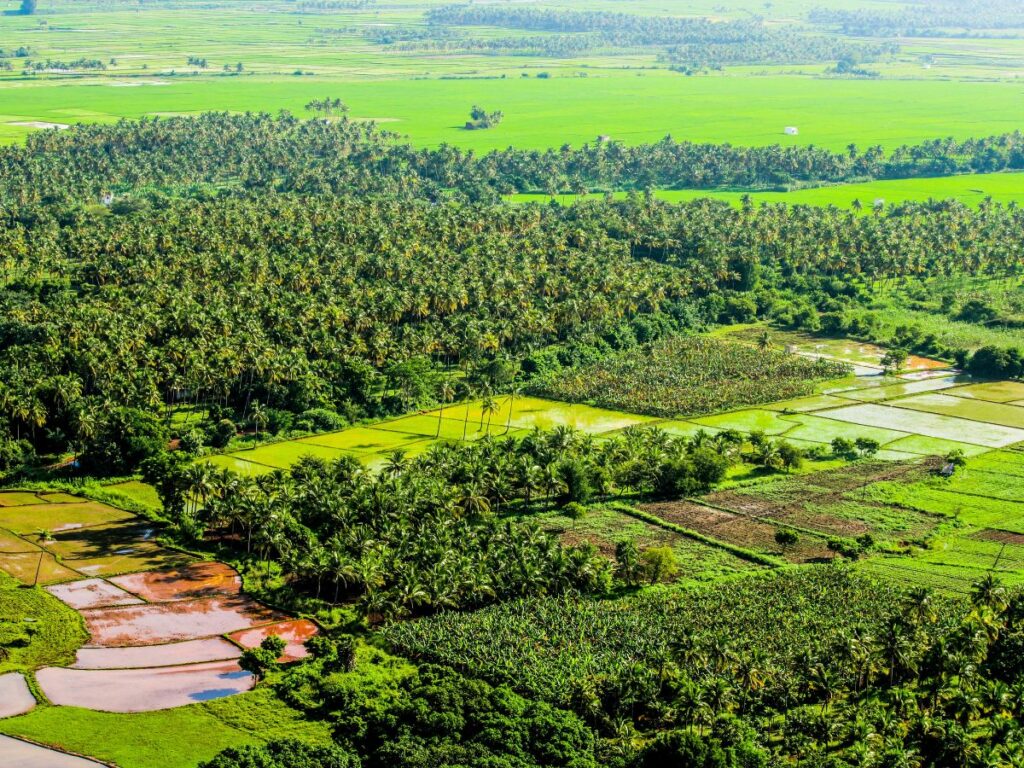
The increasing temperatures will also cause droughts and dry spells, directly impacting agricultural output and putting food securityLocal Climate & EcologyFood securityThe consistent physical and economic access to sufficient, safe, and nutritious food.Read more in the Glossary → at risk.
According to the Philippine Department of Agriculture, ₱6.87 billion-worth of agricultural output has been lost since June 2026.
Additionally, studies show that nearly ₱78 billion could be lost in total agricultural output by the time this El Niño peaks, pushing millions toward food and water insecurity.