



November 9, 2026 · Here at the 17th Conference of the Parties to the Convention on Biological Diversity (CBD COP17) in Yerevan, Armenia, governments are discussing how to halt biodiversityGlobal EssentialsBiodiversityThe variety of life at genetic, species, and ecosystem levels. Biodiversity loss is a material financial risk and a prerequisite for nature-positive investment frameworks.Read more in the Glossary → loss, protect ecosystems, mobilize financing, and deliver on global conservation targets.
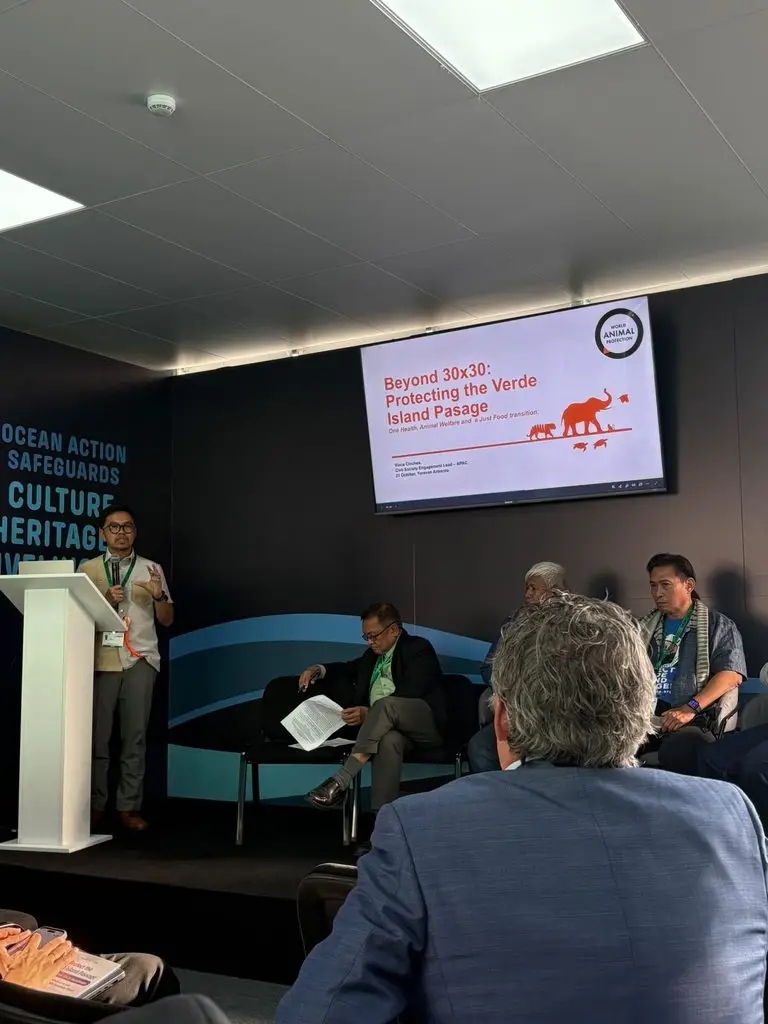
These discussions matter. I have spent more than two decades campaigning on marine conservation, fisheries, climate, energy, and environmental justice in the Philippines and across Southeast Asia. Today, as World Animal Protection’s Civil Society Engagement Lead for Asia and the Pacific, I work with civil society organizations and networks to advance animal welfare, wildlife protection, and food systems change into international policy discussions.
Throughout these years, I keep coming back to one question: How do we reconcile the commitments governments make internationally with what they allow to happen at home?
For the Philippines, one of the world’s most biodiverse countries, this contradiction is difficult to ignore.
To the uninitiated, the Conference of the Parties (COPGlobal EssentialsConference of Parties (COP) & the Paris AgreementThe UN Conference of the Parties and its foundational 2015 treaty, which mandates limiting global temperature rise to well below 2°C, pursuing 1.5°C, and requiring ratcheting national climate pledges.Read more in the Glossary →) is the main decision-making body of the United Nations Convention on Biological Diversity, bringing together nearly 200 countries every two years. At COP17 in Yerevan, Armenia, governments reviewed progress on the Kunming-Montreal Global Biodiversity Framework, adopted in 2022, which sets 23 targets for 2030, including protecting 30% of land and marine areas, making agriculture and fisheries more sustainable, and reducing harmful subsidies. Decisions made here influence national policies, conservation priorities, and biodiversity financing worldwide.
Conservation alone will not stop biodiversity loss
Protecting biodiversity requires more than expanding protected areasPH Laws & FrameworksProtected areas (NIPAS)Lands and waters legally set aside for conservation under the National Integrated Protected Areas System (NIPAS), from national parks to protected seascapes.Read more in the Glossary →, restoring ecosystems, or mobilizing conservation financing.
We also need to address the factors that drive biodiversity loss in the first place: Industrial agriculture, intensive animal farming, wildlife exploitation, extractive industries, and destructive infrastructure are all part of the problem. Yet these issues are often discussed in silos, even though their effects on biodiversity, climate, public health, and communities are interconnected.
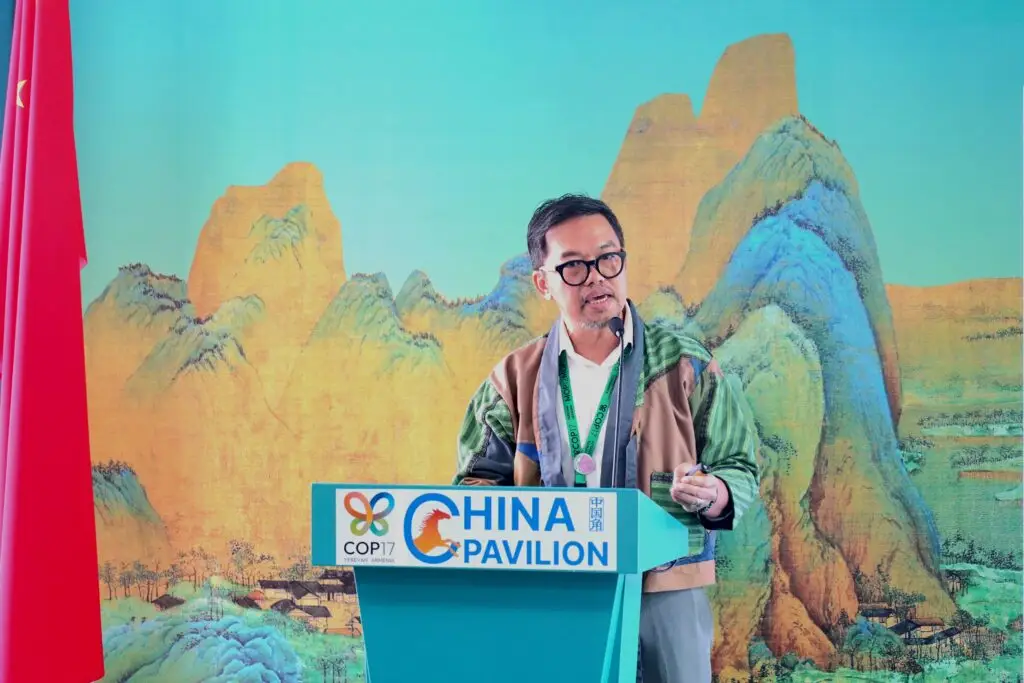
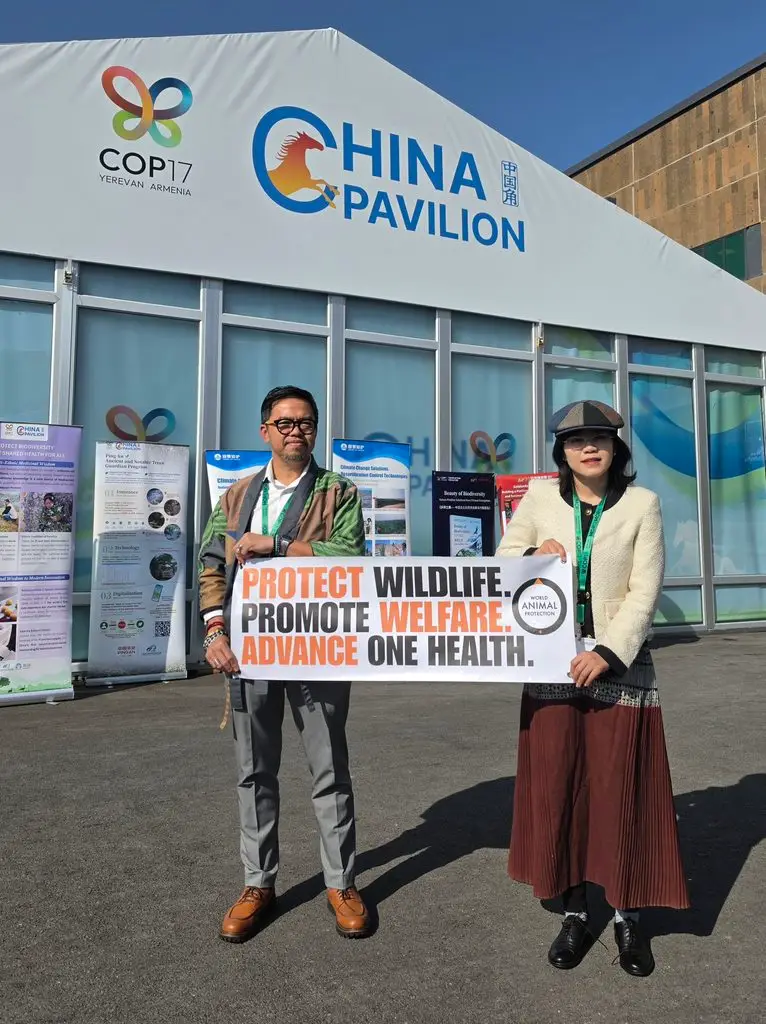
At COP17, my work with World Animal Protection and the Just Food Transition Network focused on bringing animal welfare, One Health, and food systems into biodiversity discussions. We engaged government delegations, contributed to civil society positions, and followed negotiations on sustainable wildlife management, biodiversity and health, and industrial animal agriculture.
Our aim was to strengthen recognition of animal welfare in implementing the Kunming-Montreal Global Biodiversity Framework, particularly its role in preventing biodiversity loss and addressing the root causes of its decline. We also pushed for policies that go beyond protecting individual species and ecosystems to address the destructive practices driving biodiversity loss.
Take industrial animal agriculture for example. Its impacts extend beyond animal welfare. It contributes to land-use change, pollution, pressure on water resources, and public health risks.
We cannot seriously address biodiversity loss without looking at how we currently produce food and the systems supporting it.
Governments also need to examine how public financing and harmful subsidies continue to support practices that destroy ecosystems, while more sustainable and humane alternatives struggle to find good investment.
The same applies to wildlife management. How animals are treated, how ecosystems are managed, and how communities are affected are as important as protecting species.
This is where the concept of One Health comes in. The approach grew out of decades of collaboration between human and veterinary medicine and environmental health, recognizing that the health of people, animals, and ecosystems is interconnected. It is now promoted by the World Health Organization, the World Organization for Animal Health, the Food and Agriculture Organization, and the United Nations Environment Program.
At COP17, One Health was particularly relevant to discussions on biodiversity and health, including preventing diseases linked to wildlife exploitation, habitat destruction, and intensive animal farming. It means addressing these risks at their source, rather than simply managing their consequences.
We cannot conserve our way out of biodiversity loss while allowing the systems driving it to continue largely unchanged.
Civil society’s role in changing the conversation
Government delegations spend much of the conference negotiating decisions, often working late into the evening to reach agreement on contested issues. But much of the work to influence those decisions also happens outside the negotiating rooms.
Every day, civil society organizations meet to compare positions, engage government delegations, share information, and coordinate interventions. These discussions help bring community concerns and perspectives into negotiations that might otherwise be overlooked.
Through the CBD Alliance, a global network of civil society organizations working to influence biodiversity negotiations, we have been working to bring broader perspectives into the negotiations.
Ahead of COP17’s opening plenary, the CBD Alliance prepared a joint statement outlining civil society’s priorities for the negotiations. During this process, we proposed including the word “humane” to recognize the importance of animal welfare in biodiversity protection.
We secured its inclusion in the Alliance’s opening statement, which was delivered at the plenary. It may seem like a small change, but it opened the door to discussing animal welfare within the broader biodiversity agenda, particularly in sustainable wildlife management, and connecting with organizations we do not normally work with.
This is also why building connections across movements matters.
Wildlife conservation groups, food systems advocates, climate campaigners, Indigenous PeoplesLocal Climate & EcologyIndigenous peoples & ancestral domainCommunities with continuous historical occupation of territories, recognized under the Indigenous Peoples' Rights Act (IPRA).Read more in the Glossary →, small-scale fishers, and community organizations often work in silos. Yet many are confronting the same problems: destructive development, unequal access to decision-making, and economic policies that prioritize short-term gains over people and nature.
International negotiations provide opportunities to connect these struggles and build a stronger movement capable of influencing beyond the conference halls.
What happens after Yerevan?
The real test of COP17 is not how ambitious government statements sound, but whether commitments translate into decisions that address the root causes of biodiversity loss.
For the Philippines, this means biodiversity cannot remain the responsibility of conservation agencies alone. It must shape decisions on energy, mining, agriculture, food production, fisheries, infrastructure, and wildlife management.
Renewable energyGlobal EssentialsRenewable energyEnergy derived from naturally replenishing sources (solar, wind, geothermal, hydro).Read more in the Glossary → must move forward, but in the right places, in the right way, and equitably. Mining and fossil fuelPH Laws & FrameworksCoal moratorium & fossil fuel phase-outRegulatory bans on new fossil fuel infrastructure (e.g., greenfield coal plants) and the systematic retirement of existing assets. In energy transition finance, this dictates capital allocation shifts, triggering early retirement mechanisms, just transition financing, and the repricing of fossil-fuel-dependent utility portfolios.Read more in the Glossary → projects must be scrutinized for their impacts on critical ecosystems. Municipal waters must remain protected for small-scale fishers.
But we must also confront the expansion of factory farming, reduce the environmental and public health risks of industrial animal agriculture, and address wildlife exploitation through proper regulations, enforcement, and humane approaches to conservation.
This requires policies that recognize the connection between biodiversity, animal welfare, human health, and livelihoods, rather than treating them as separate concerns. It also means challenging extractive, economic models that shift the environmental and social costs onto communities.
As COP17 draws to a close, I am reminded that some of the most important work for biodiversity is happening far from these conference halls. It is happening in forests, watersheds, farms, and coastal communities where people are defending ecosystems and their livelihoods.
Their struggle should be central to the commitments governments make. We cannot claim to protect biodiversity internationally while allowing the systems destroying it to continue at home.
Global commitments and local contradictions
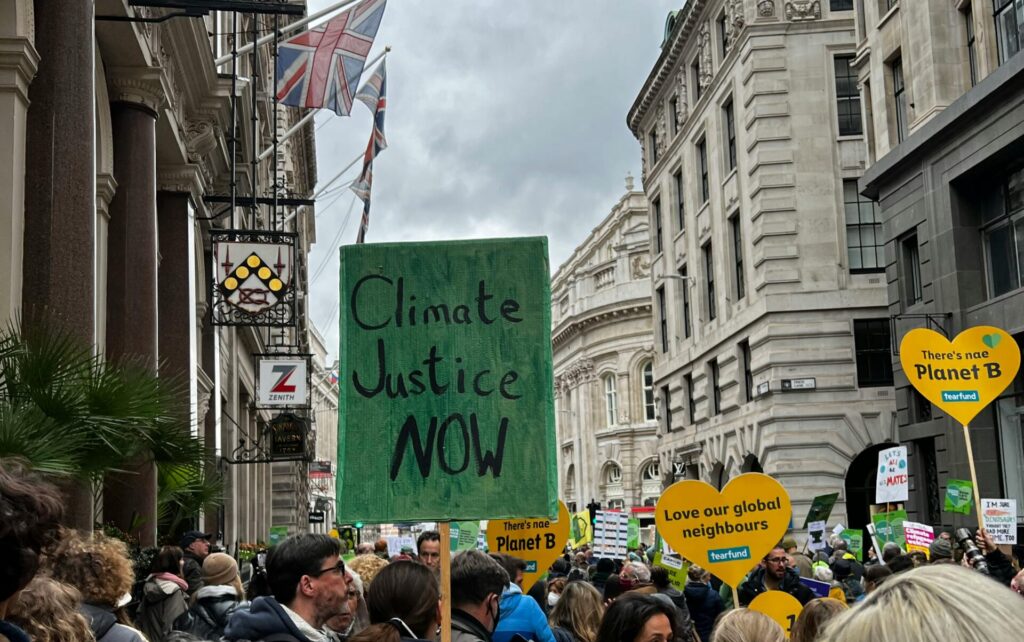
Just days before COP17 opened, communities from Talim Island, Masungi Georeserve, Mt. Sembrano, Ilocos, Samar, and Negros gathered in Metro Manila to demand accountability for the environmental and social impacts of renewable energyPH Laws & FrameworksRenewable Energy Act of 2008 (RA 9513)Enacted in 2008 to accelerate the exploration and development of renewable energy in the Philippines to reduce reliance on fossil fuels. These renewable energy sources include, but are not limited…Read more in the Glossary → projects.
Through the Renewables Done Right Initiative (RDRI), communities and civil society groups are raising concerns about how these projects are planned and implemented, including those associated with Singapore-based energy developer Vena Energy.
These communities are demanding stronger environmental safeguards, respect for Indigenous Peoples’ rights, meaningful community participation, and independent reviews of projects affecting critical ecosystems.
We need renewable energy, and we need it urgently. But the transition cannot come at the expense of forests, watersheds, biodiversity, and communities.
This is one of many contradictions in our environmental governance.
In the Sierra Madre, mining activities and proposals threaten forests and watersheds that sustain communities and help protect areas from climate-related disasters.
In the Verde Island Passage, one of the richest marine biodiversity corridors in the world, fossil gas and Liquefied Natural Gas infrastructure continue to expand despite concerns about their impacts on marine ecosystems and coastal livelihoods. The 2023 Mindoro oil spill showed how vulnerable these ecosystems and communities are to marine pollution.
In Palawan, oil and gas exploration proposals raise concerns about marine biodiversity and fisheries, including potential risks to sensitive ecosystems around Tubbataha Reefs Natural Park.
Meanwhile, court rulings challenging the protection of municipal waters are opening the door to greater commercial fishing access, threatening the preferential rights of small-scale fishers and the marine ecosystems on which they depend.
Different industries, different communities, but a common problem: development decisions that place biodiversity and livelihoods at risk, often without meaningful participation from those most affected.
While our government discusses biodiversity protection internationally, communities at home continue fighting to defend it.
That is where the real test of our commitments begins.