

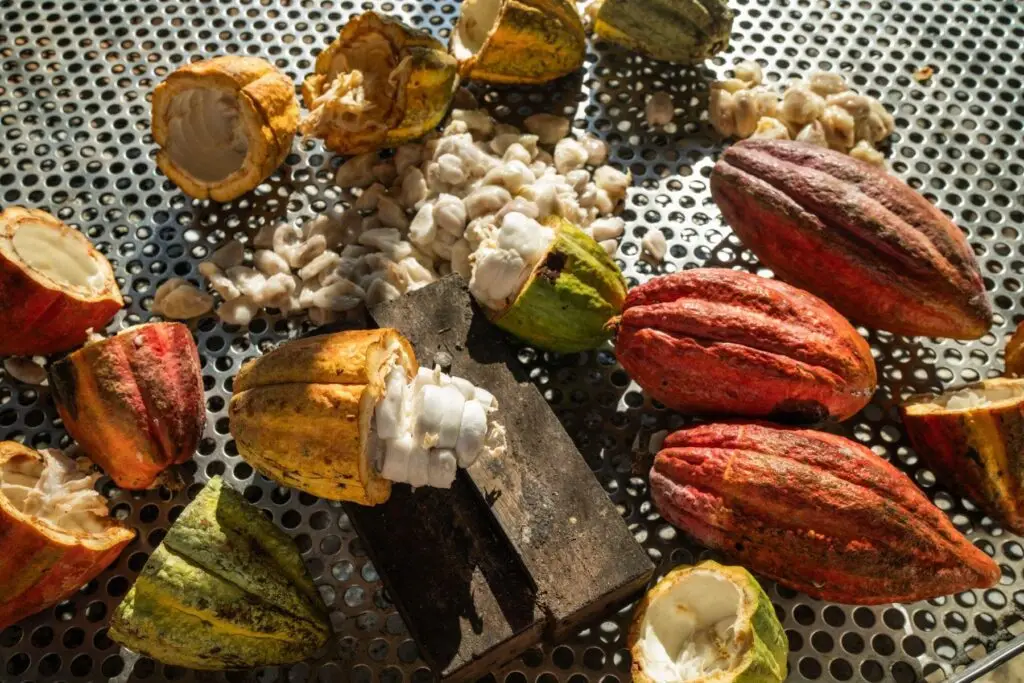


The Women Waiting in Coconut Country
It takes years for a single coconut husk to decompose—with billions of coconut husks rotting in the Philippines, meet the people turning them into shoes, wood, and jobs.
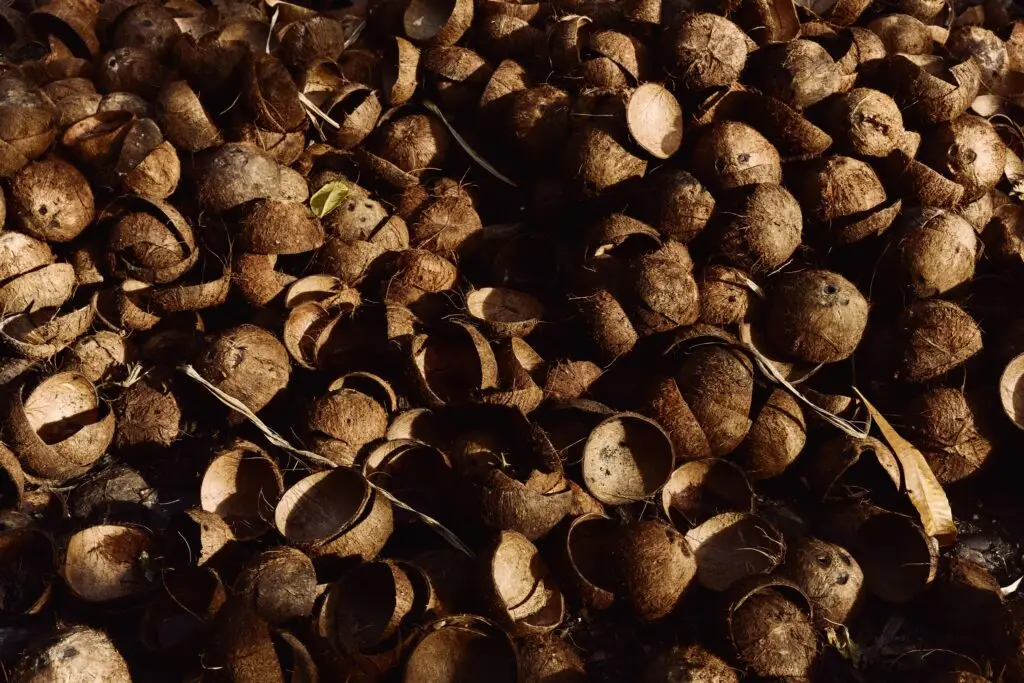
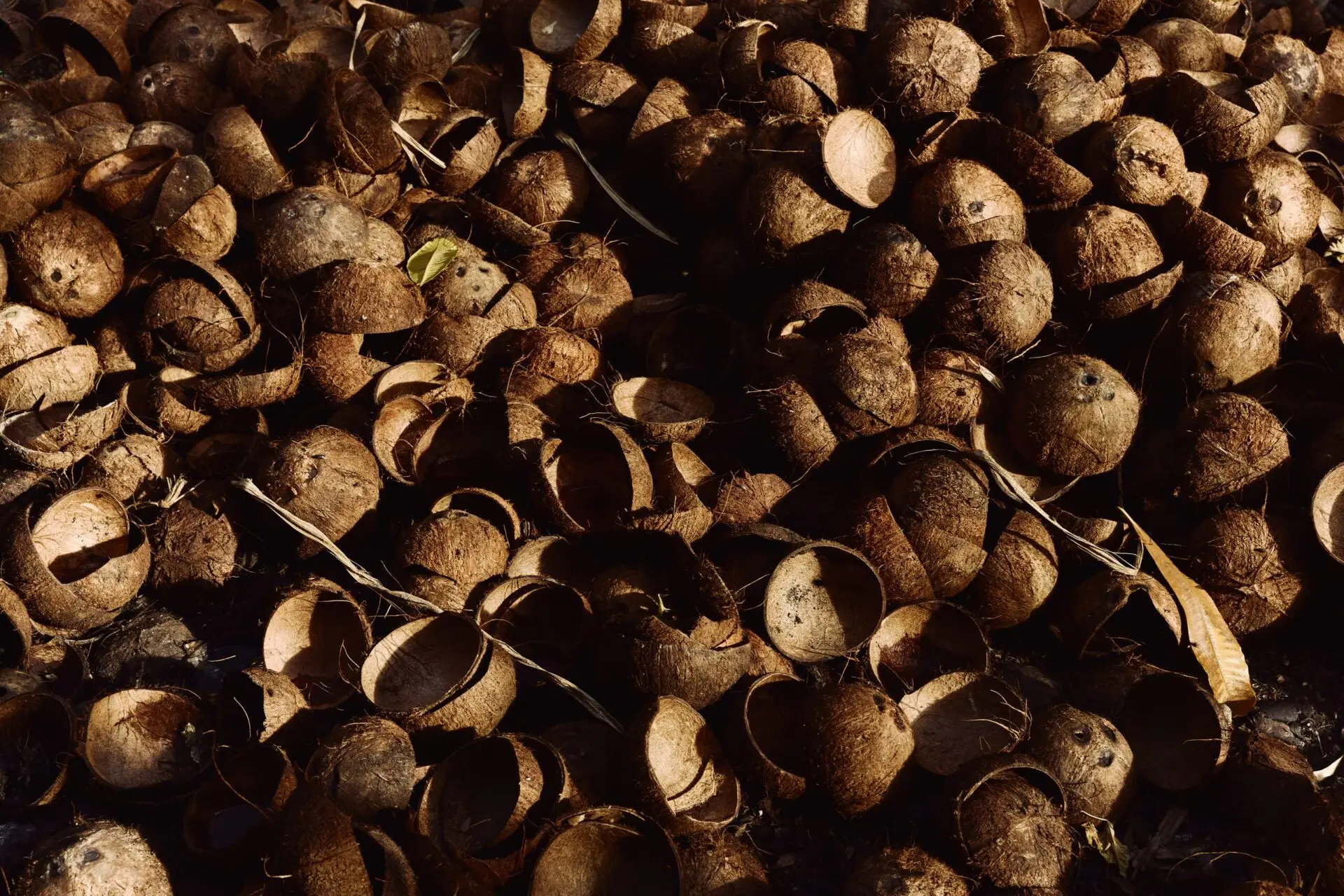
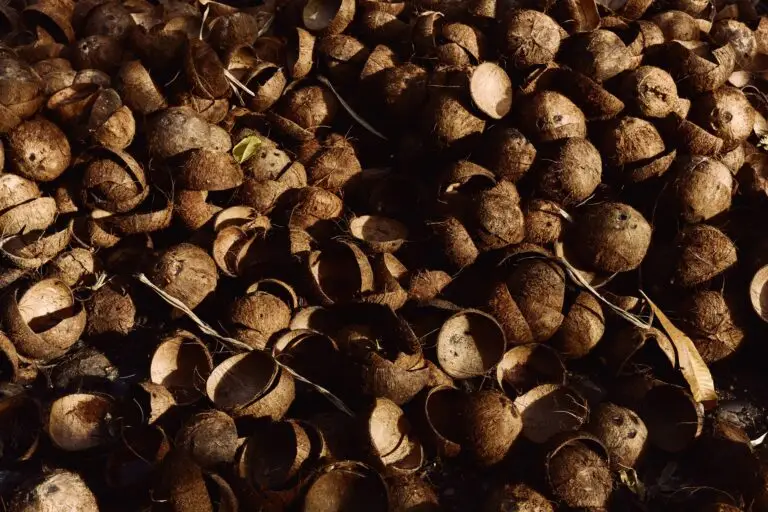
On the way to Quezon, I knew we were on the right path when small piles of coconut husks started lining the road.
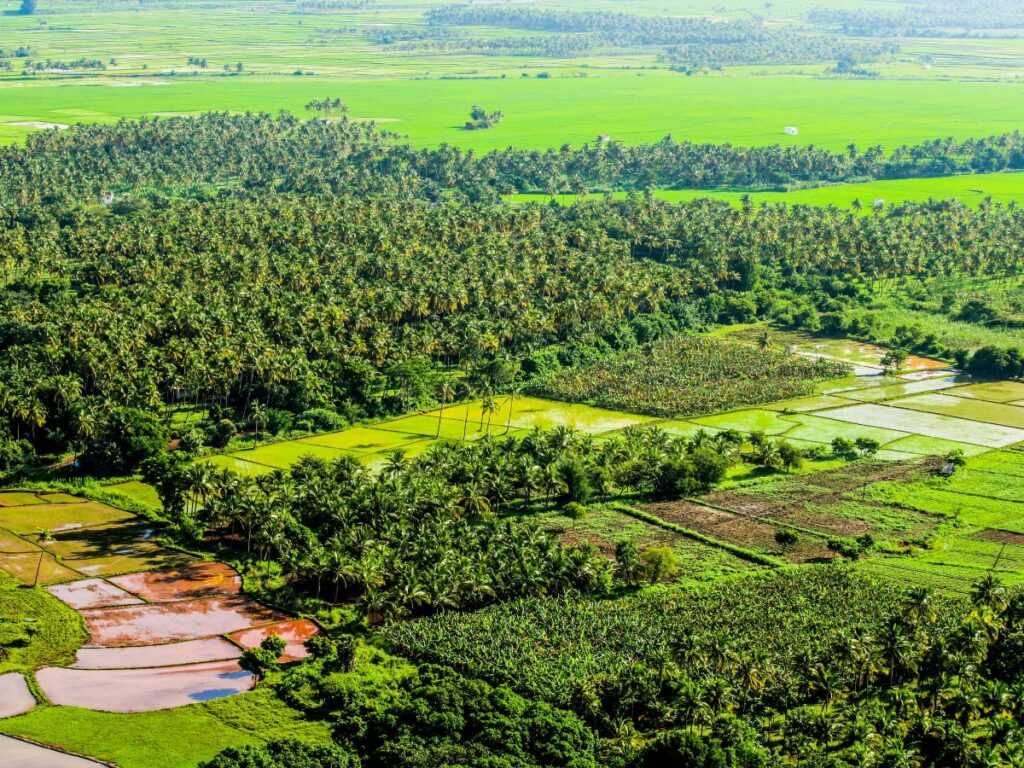
In the Philippines, coconuts are part of our lifeblood. Before the Philippines even existed, the people who lived here already depended on them for food, shelter, and clothing. Today, the coconut industry supports over two million smallholder farmers, with the country producing almost 15 billion coconuts every year for agricultural use.
Although most of the country produces said coconuts—69 out of 82 provinces—Quezon sits at the very top, with 338,723 hectares of coconut farms.
That scale hints at a potential far bigger than most people realize. If processed at scale, the coconut husk would come close to a miracle material—fiber for boards and housing panels, textiles, even fuel. In Quezon alone, mature husks pile up at 1.2 million metric tons a year, and most of them still rot where they fall.
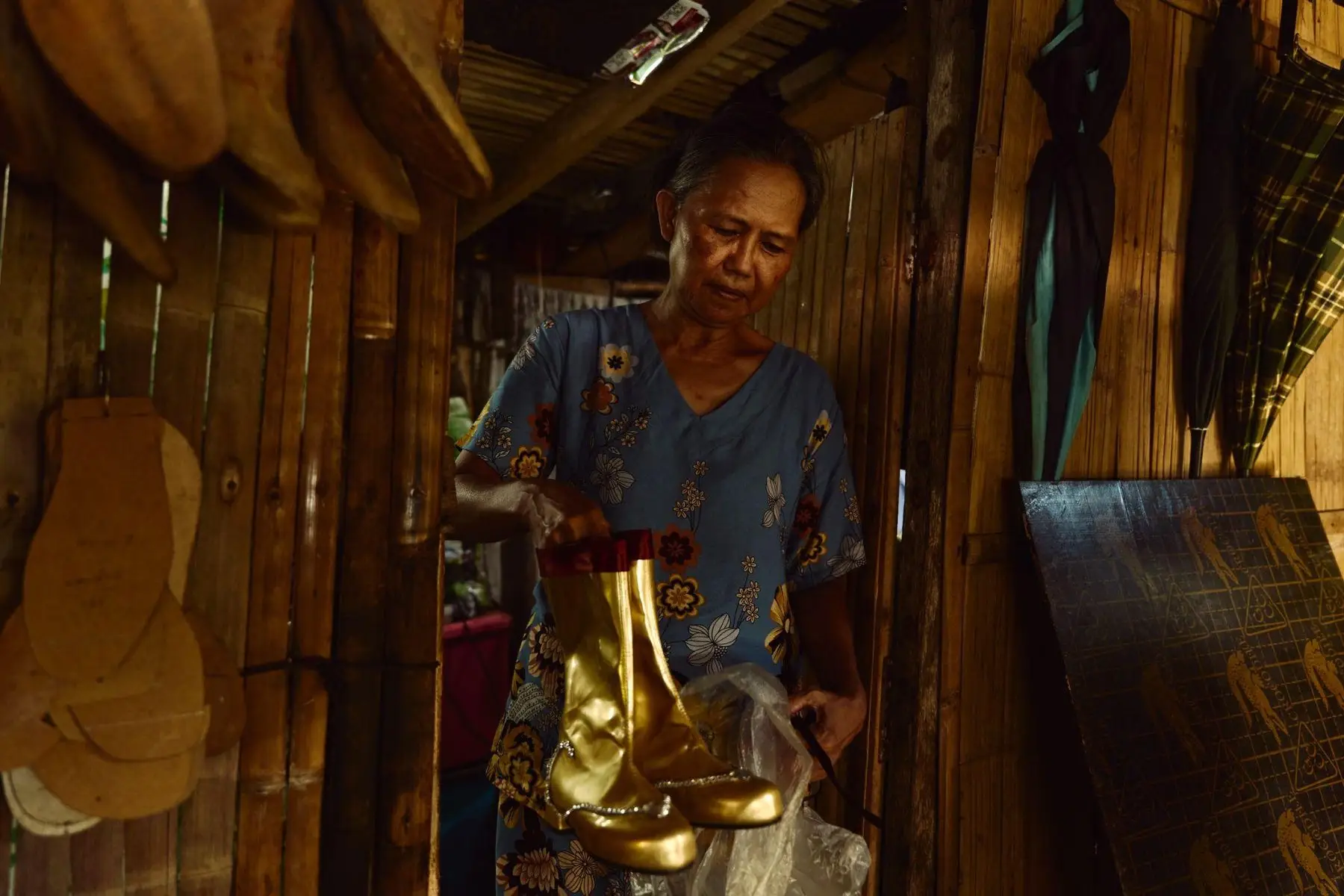
I was heading to Gumaca, a coastal town five hours away from Metro Manila, to meet Jocelyn Bibandor, an artisan who works directly with coconuts. But not as a farmer or a trader, the way many people who work with coconuts here do. Instead, she works with the refuse—the husks—and transforms them into shoes.
“Alam na nila dito pag sapatos, ako ‘yung tinatawag,” said Bibandor.
[The people around here know when it comes to shoe-making, I’m the one you call.]
Bibandor lives in a small wooden house that stands next to the main highway, on a compound she shares with relatives. Inside her house is a small workspace—barely room for two—with a desk, a sewing machine, and a few piles of fabric. Shoe molds hang on the walls, but what catches my eye are the outsoles sitting in one corner of the room. They are layered with a brown, fibrous material, looking unfinished.
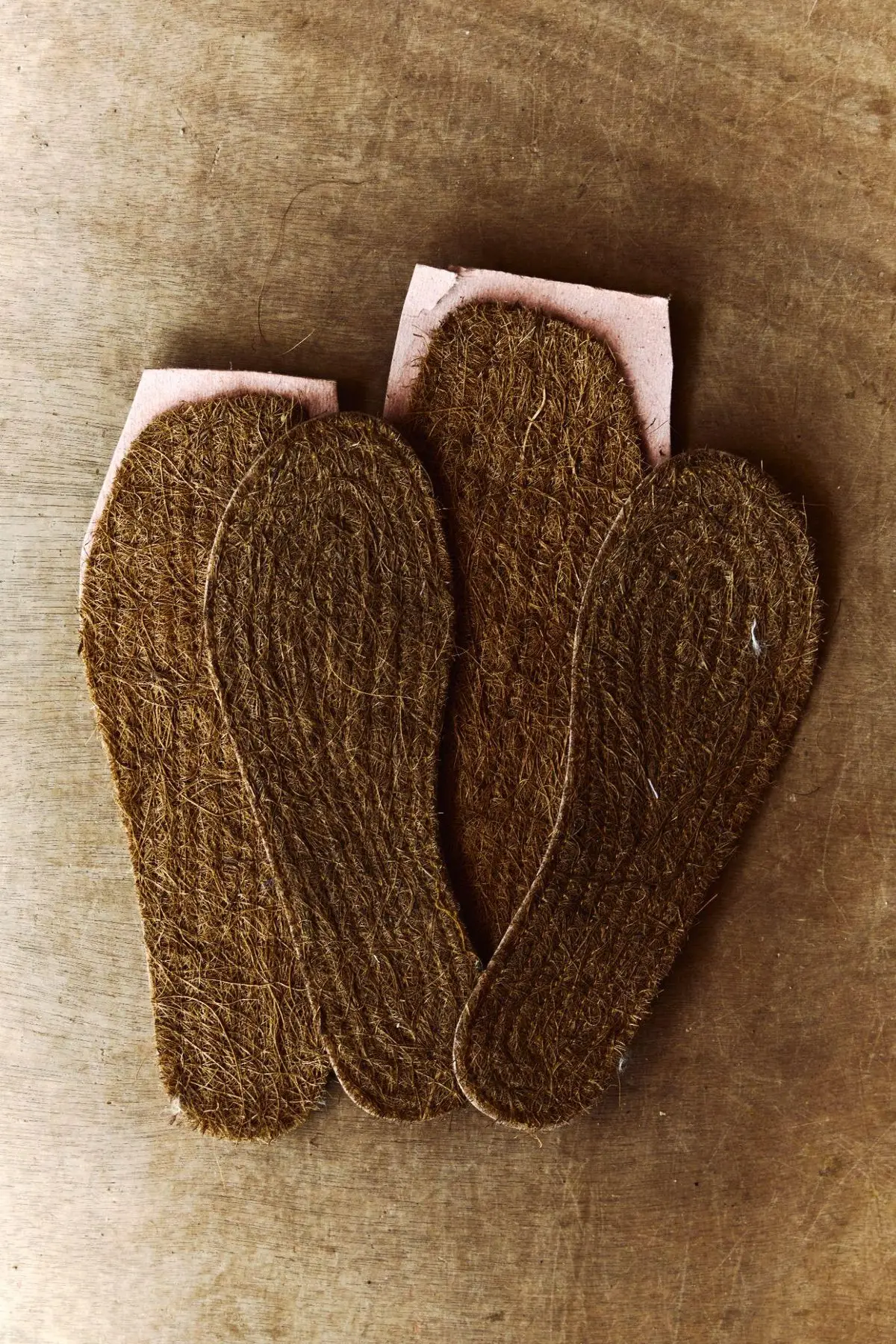
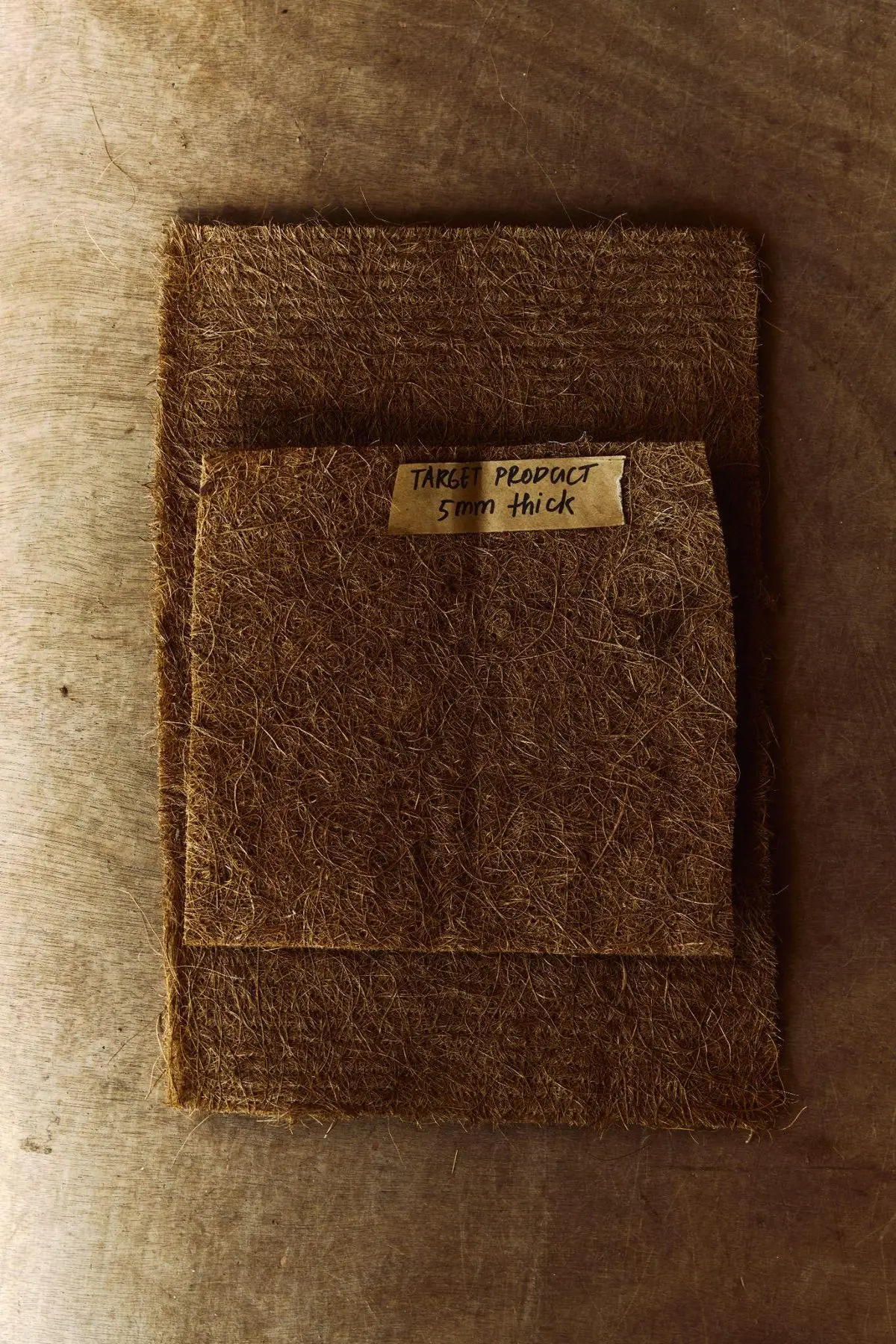
This layer is made from coconut husk fibers, also known as coco coir. With a binding agent and some heat-pressing, loose coco coir strands derived from coconut husks can be bound and shaped into a coco pad, which Bibandor then uses to shape her designs. She can make as many as eight slippers out of one 4×2″ coco pad, she says. Sometimes, when there is excess material, she fashions them into smaller items: a hot pad, a coaster, some buttons.
Bibandor says she still has ten full sacks of loose coco coir stored in a small hut outside her house. For safekeeping, until her next big purchase order comes. In the past, she has created mules, sandals, and hotel slippers out of these husks.
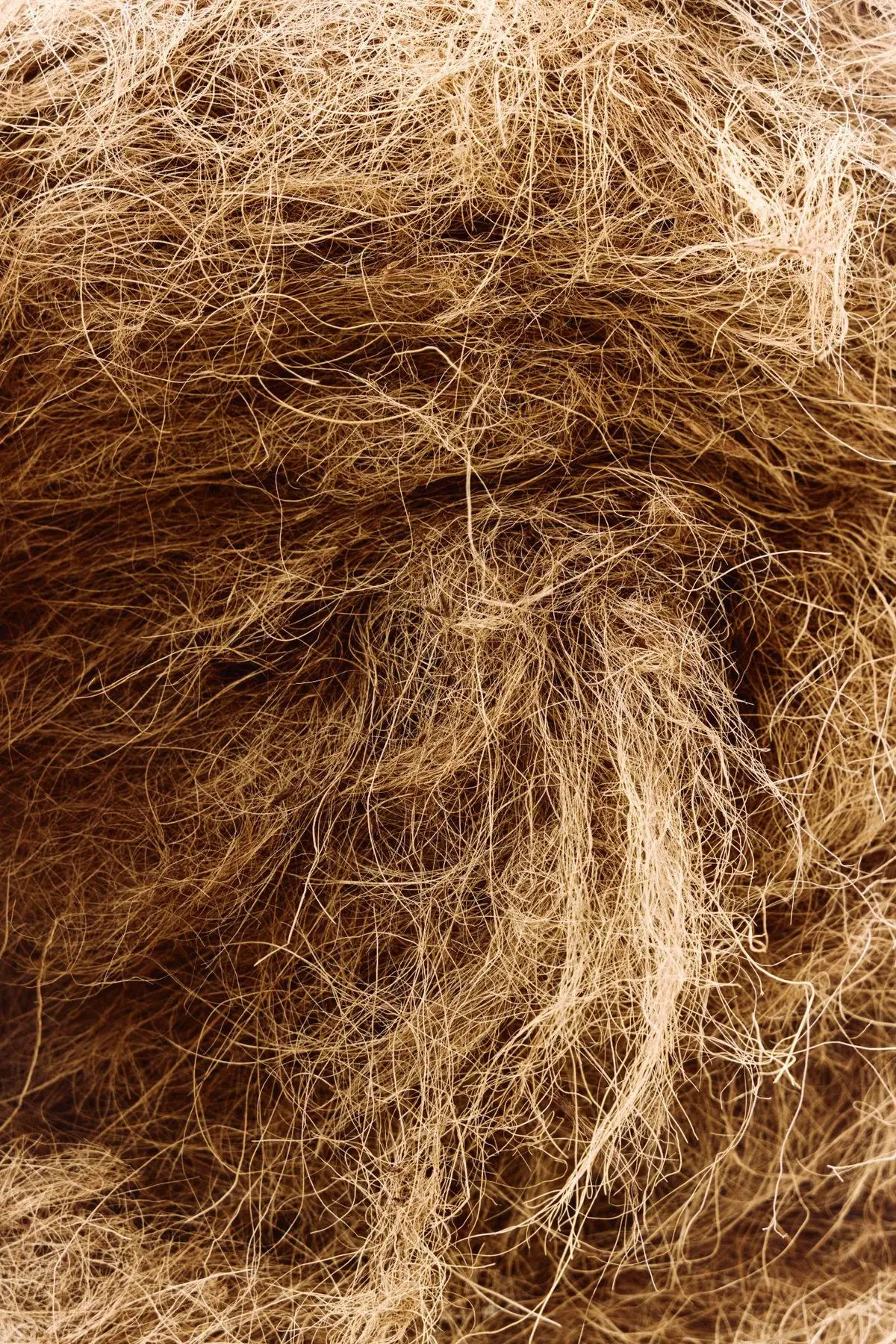
It is fascinating to think that these fibers were extracted from the same fruit we often enjoy as refreshment by the beach; when I sink my hand into a sack full of coco coir, they feel less like a coconut and more like rough strands of hay. Which makes me wonder—how does one of the world’s hardest fruits end up this way?
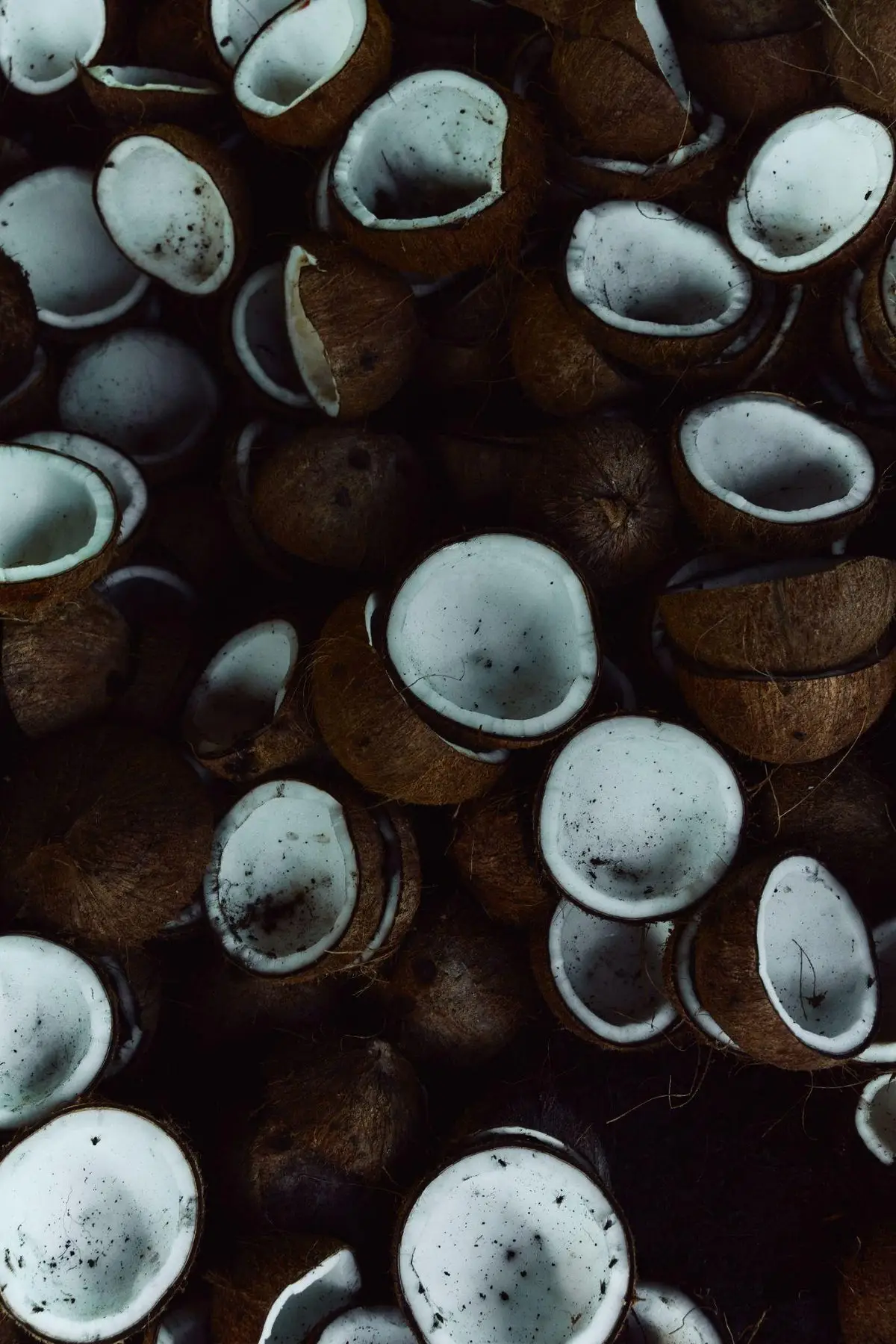
A coconut is tougher than most people realize. It takes somewhere between 200 and 400 pounds of force to crack one open. For comparison, a human skull can withstand roughly 500 pounds before it fractures.
This is by design—its strength allows the coconut to survive the fall from a tree and resist being pried open by animals.
However, that toughness is also what makes a coconut slow to disappear once it is discarded. The hardness comes from lignin, a natural polymer that also gives wood its rigidity. The coconut husk is composed of 25% lignin, which only strengthens over time.
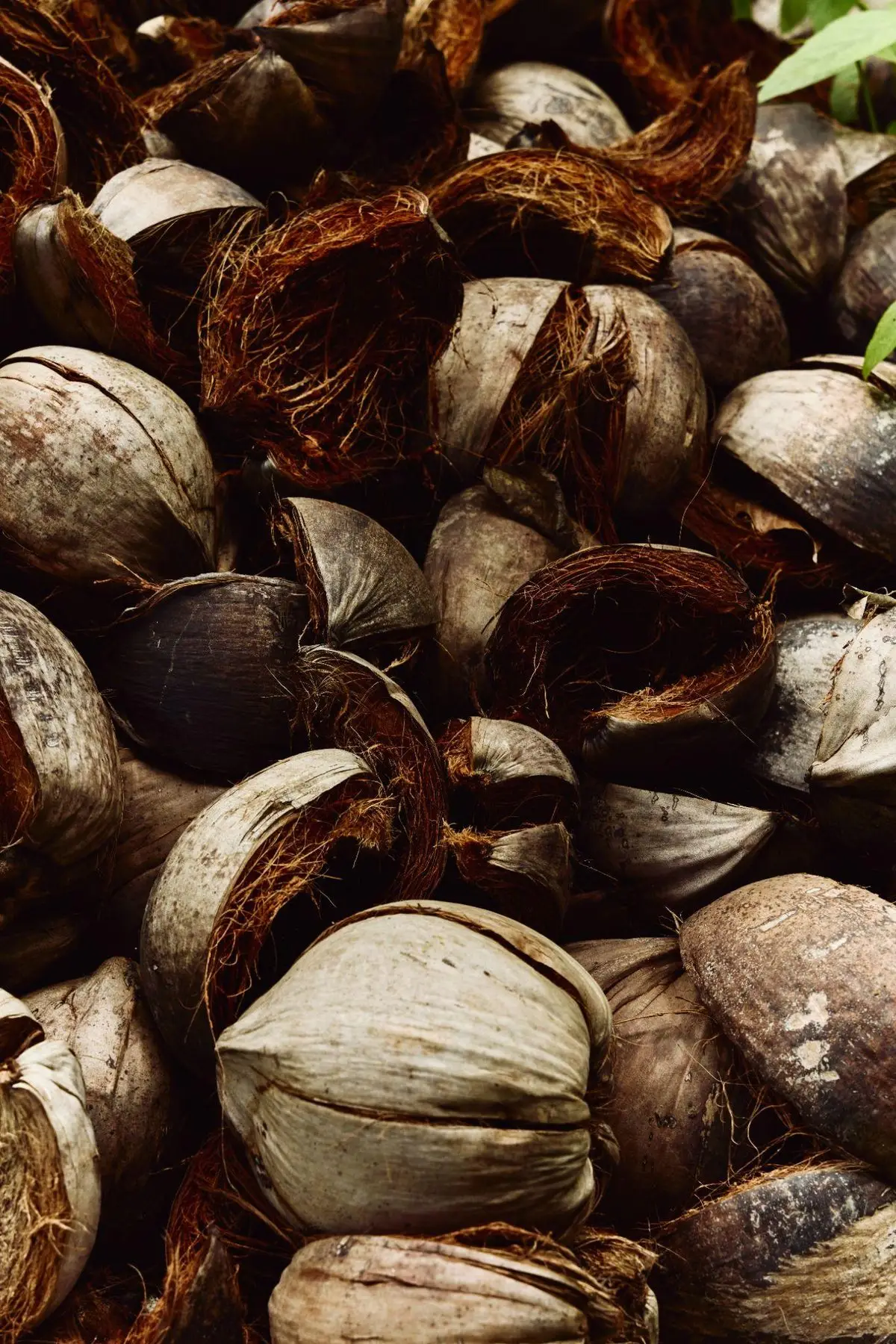
Studies have found that it can take anywhere from several years to several decades for a coconut to decompose, and in unusual conditions even longer. This means both the shell and husk can survive for years, piling up faster than they rot. Now, imagine that in the billions.
A coconut husk can be transformed into usable fiber and coco pith through decortication—a process wherein a decorticatingCircular Design & EconomyDecorticatingDecorticating is the process of removing an outer covering, usually in agricultural or manufacturing contexts. One example is removing the husk from a coconut to separate the “meat” and fiber…Read more in the Glossary → machine repeatedly beats and crushes the husk until the long fiber strands come loose from the surrounding pith and dust.
Before working with coconuts, Bibandor was a shoemaker in Marikina. In 1985, she moved from the Coconut Capital to the Shoe Capital of the Philippines, where she learned a new trade and slowly made a name for herself. Shoemaking was very good business in those days, and Bibandor, along with her husband, made themselves indispensable as artisans. Some of her proudest works were for premium Filipino shoe brands like Otto Shoes and Tribu Sandals, as well as labels sold under SM, the Philippines’ original shoemart.
Fate, however, had other things in store for the couple. Despite their successes, they faced challenges with employers that left them betrayed, worn out, and disappointed. And so, after 32 years in Metro Manila, they packed their bags and returned home.
In Gumaca, the Bibandors’ reputation as shoemakers preceded them—eventually opening doors for them to work as trainers for different livelihood programs. In one of those training sessions, Bibandor met a woman who commissioned her to create an initial design for hotel slippers made from coconut fibers.
Little did Bibandor know that design would end up in the hands of a social entrepreneur in Manila, whose life was about to become deeply intertwined with her own.
“It was Ate Jo who actually found me first,” said Camille Albarracin, Founder of Everything Green, a social enterpriseCircular Design & EconomySocial enterpriseA revenue-generating business whose primary objective is to solve social or environmental challenges, reinvesting profits into its mission.Read more in the Glossary → that creates innovative products out of bio-based materials.
As the story goes, Bibandor reached out to Albarracin after searching her first name and the words “Everything Green” on Facebook. She introduced herself as the designer behind Everything Green’s prototype shoes, and when Albarracin asked her questions about the design, she confidently answered them all.
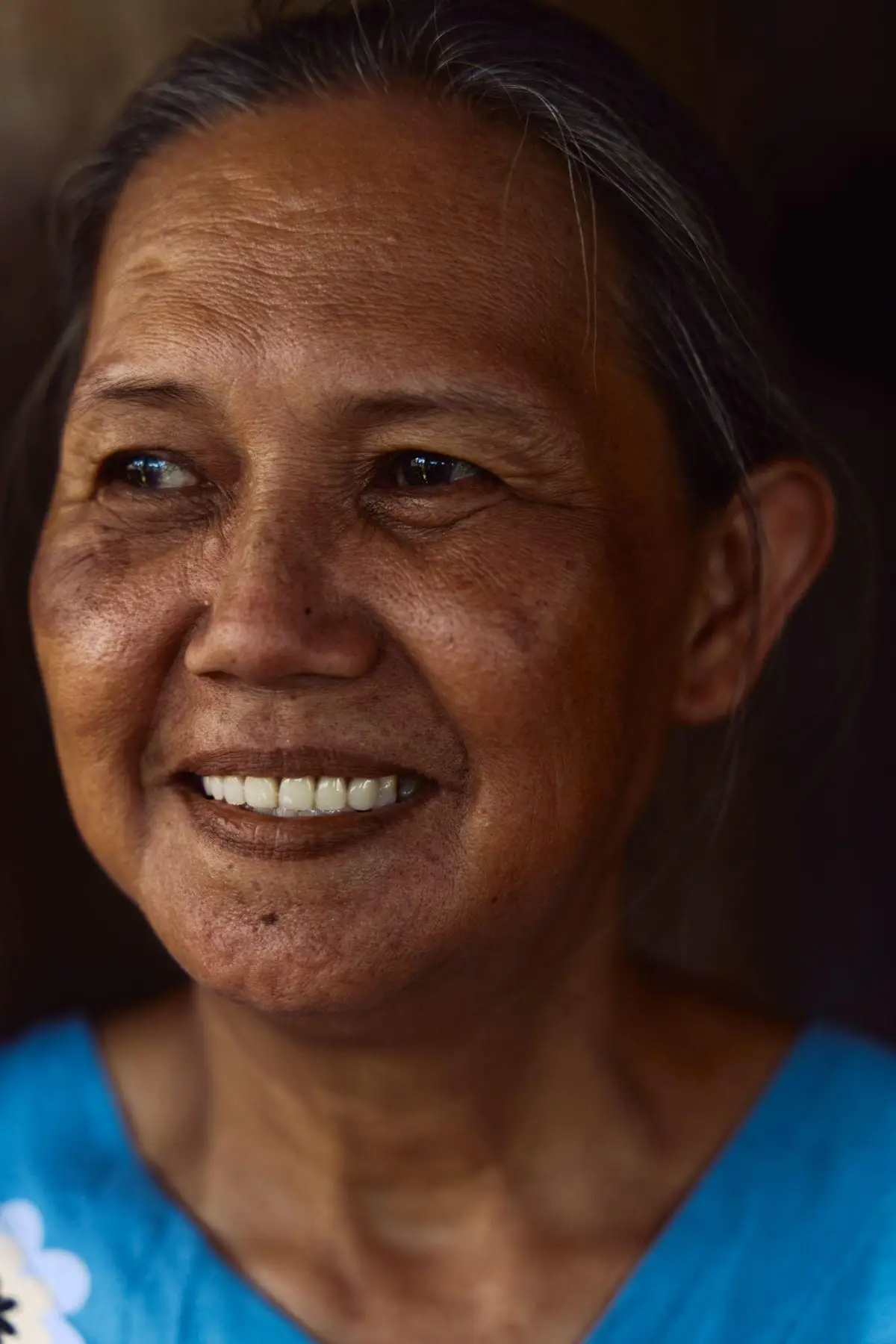
“Nakita niya na parang ako nga ‘yung gumawa nung mga sapatos, so sa akin na siya umorder sa susunod,” said Bibandor.
[She realized that I’m the one who made the shoes, so she ordered directly from me the next time.]
And so began a long partnership between the two—a partnership that has weathered many highs and lows, including a global pandemic. They made a good pair: one with the sharp business acumen, the other with the power to execute.
Bibandor’s biggest order to date happened in 2022, when a big hotel chain ordered 1,000 pairs of hotel slippers from Everything Green. Working with other artisans from Marikina, they fulfilled the purchase order within three months. For hand stitching 500 pairs of slippers, Bibandor earned a net income of ₱72 per pair, or ₱36,000 in total—money that she used to build the second floor of their house.
A year later, they received another offer to supply slippers to a hotel chain overseas. However, the purchase order was beyond the amount they could produce: 500,000 pairs every quarter.
Without a supply chain in place, it was an impossible order to fulfill. But during our visit in Quezon, we caught a glimpse of what the future could be.
A facility without lights
Forty minutes away from Bibandor’s house stands a new coconut processing facility. This facility sits on farmland owned by Glenda Alpuerto, the regional coordinator of the 4K women’s party-list, and a native of Gumaca.
Alpuerto envisioned setting up a decorticating facility as early as 2020, with the goal of providing alternative livelihood for women in their district. The plan back then was simple: the facility would buy husks from coconut farmers and process them to create fibers. These fibers would then be distributed to the different barangays, where the women could twine them and turn them into ropes or geonets for sale.
“Because the goal, really, is to give women an additional source of livelihood, a way to help their families when copra sales are not enough,” Alpuerto says.
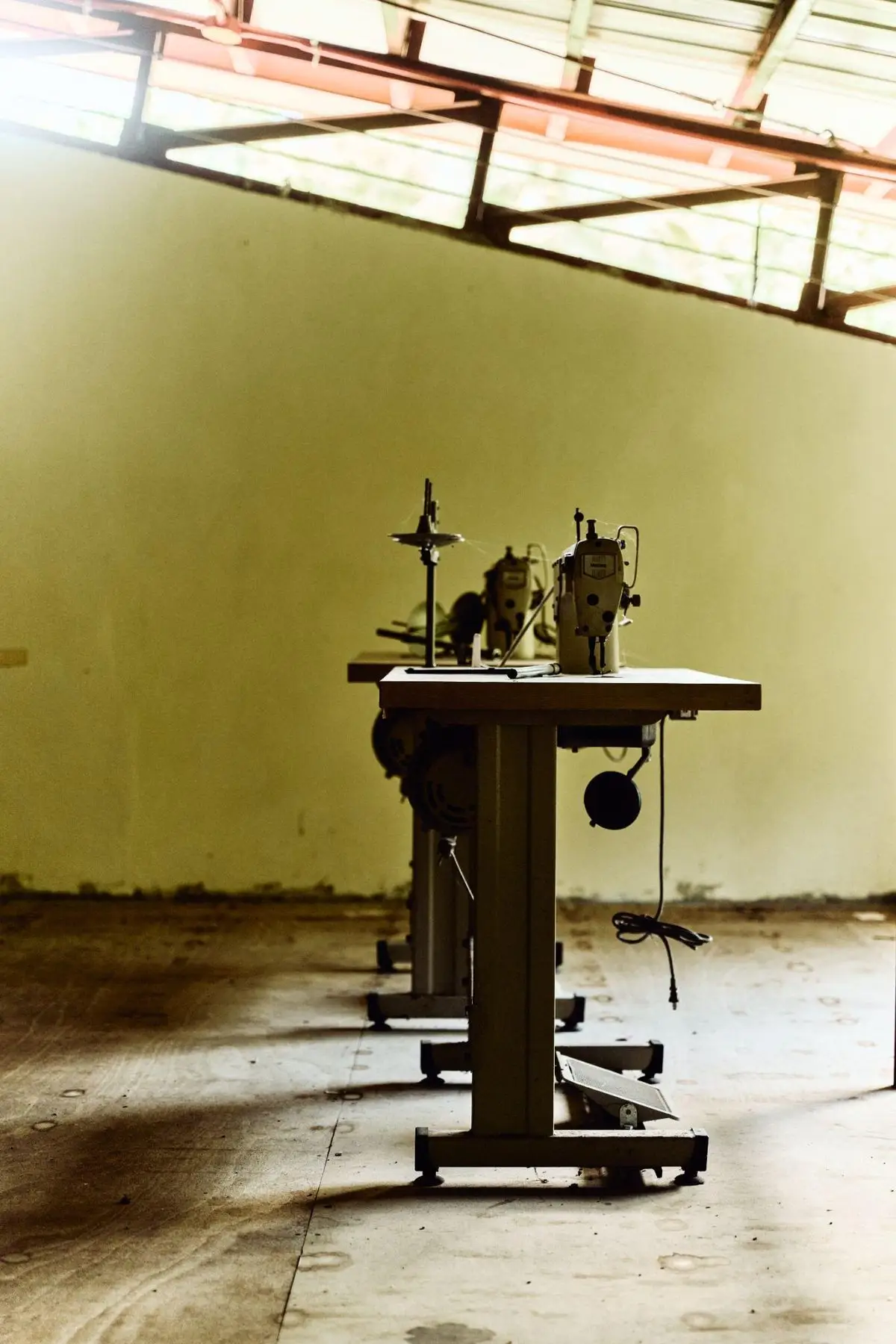
Copra prices are largely dependent on global demand and thus often fluctuate, going as high as ₱60 to ₱70 per kilo, and falling to as low as ₱20 per kilo.
Six years later, a partnership with Everything Green opened new doors for the facility to scale and evolve.
With support from relevant government agencies, the facility grew from having just one decorticating machine to two; and was also given an organic waste composter and incinerator to boot. Since October 2025, around 120 people from barangays within the 4th district of Quezon have also been trained in several skills, including how to operate the machines, how to create biochar, and how to create coco pads out of fibers.
Each skill had its place in the mini supply chain Alpuerto and Albarracin were trying to build, with the intention of providing work, and therefore relief, where it is most needed. The intentionality goes as far as the decorticating machines themselves; true to the facility’s original vision, even the machines were sized specifically for women to operate—not too heavy, not too tall.
Melanie Castillo, a resident of Barangay Biga, is one of the women trained to operate the machines. The wife of a coconut farmer, she tells me she looks forward to the day the facility is finally operational, so she can put the skills she learned to use and earn additional income for her family.
Once, a senior government official sent over three trucks of coconut husks when they heard about the facility, catching Alpuerto by surprise: “I told them we didn’t even have any machines yet! But they had been excited to hear about what we were building because the farmers needed the extra money.”

When asked how much money the women would stand to earn from working at the processing facility, Alpuerto said they were still figuring out the numbers. In Candelaria, another district in Quezon, the price of coconut husk is around 20 centavos—assuming 1 coconut husk equals 1 kilo, that is roughly ₱200 for one metric ton.
According to data from the Philippine Statistics Authority, Quezon alone produced over 1.2 million metric tons of mature coconut husks in 2025. By that math, that would mean roughly ₱240 million worth of additional livelihood.
Unfortunately, the lights remain off in the facility.
The current electricity system in Gumaca is not built to handle commercial and industrial use. An additional ₱16 million worth of investment is needed to build the right infrastructure. Alpuerto tells me that despite having the congressman’s and the governor’s support, the capital needed is too high to justify spending on a single district. Another option would be to use generator sets, like they did during the facility’s first demonstration, but even then, they would need to invest around ₱700,000 to ₱800,000 per set, plus money for fuel.

The cost of delay
Ironically, money is not the problem—in fact, there is plenty of it sitting around.
The Coconut Farmers and Industry Development Plan (CFIDP), adopted in 2022, is the roadmap for developing the Philippines’ coconut industry. It is fueled by money recovered from the controversial Coco Levy FundPH Laws & FrameworksCoco Levy FundA tax imposed on coconut farmers by the Marcos Sr. administration between 1971 and 1982. The fund was originally intended to develop the coconut industry and alleviate farmers out of…Read more in the Glossary →—which stood at about ₱75 billion as of 2022.
Farmer cooperatives registered under the Philippine Coconut Authority may apply to receive a grant from the trust fund, depending on the project type.
However, program implementations remain “painfully slow,” with only a few government agencies choosing to utilize the fund, said industry expert Agnes Cristobal.
After 25 years of working in the coconut industry, Cristobal laments that the Philippines has lagged behind neighboring countries like Thailand and Vietnam when it comes to coconut industrialization. Thailand, for example, has more advanced husk processors despite possessing less coconut supply than the Philippines, while Vietnam is slowly gaining ground due to strategic trade policies and investing in developing high-value products.
Raw materials are also more expensive in the Philippines compared to its ASEAN neighbors, largely due to the country’s high electricity prices.
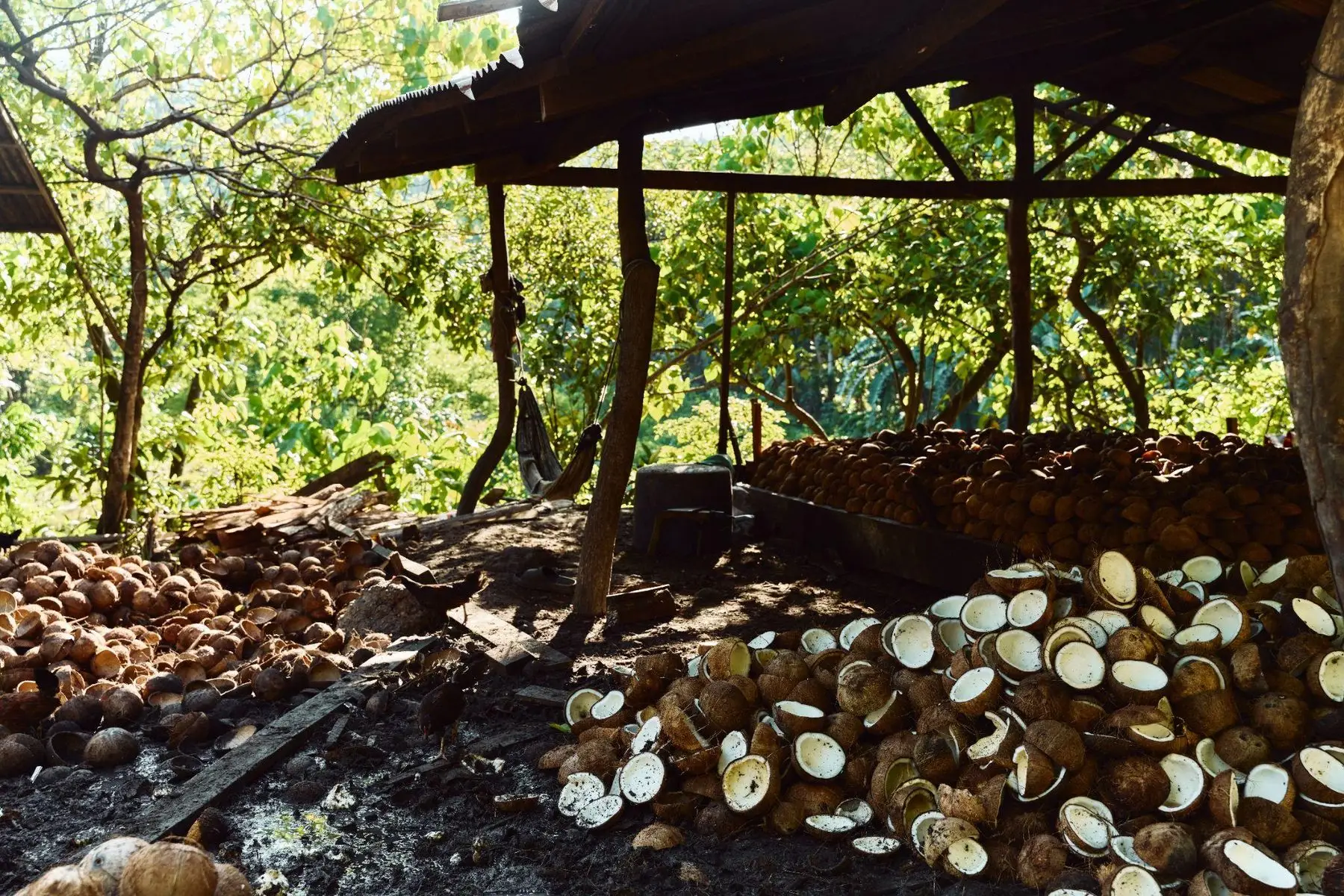
Cristobal’s frustrations come from her role as industry advisor to NaturLoop, a Philippine-Swiss climate tech startup that sells CocoBoards: wood alternatives made of coconut fiber.
Founded in 2020 by CEO Daniel Dinizo, NaturLoop transforms coconut husk waste into medium-density fiberboards—materials commonly used for interior and furniture designs. The company began as a spinoff of research Dinizo did as a student at the University of Bern; eventually, its mission became about accelerating the innovation and use of agricultural resources.
For Dinizo, who comes from a family of woodworkers, the dream was to create a product that would make the humble husk indispensable. Instead of importing wood, what if the Philippines could turn what it already had lying in its backyard into a high-quality product for export—diverting agricultural waste, reducing carbon emissions, and ultimately uplifting the lives of more farmers?
“It opened the door to a bigger challenge, and I think the scale became real and the timeline became real too,” he said.
NaturLoop sources its coconut fiber from a pre-processing center in Cabadbaran City, Agusan del Norte, which is operated by a local coconut business called 3 Kings Export. The facility upcycles around 200,000 coconut husks a month. A portion of this volume goes to NaturLoop, which then ships the processed coco fibers to its production facility in Sweden.
“If we could purchase more husks at the farm level and increase the volume—instead of just buying 10 truckloads, we buy 100 truckloads—that would mean more money for the farmers,” said Jerelle Marquez, NaturLoop Head of Operations.
I asked Dinizo if the current partnership with 3 Kings is enough to supply the current orders they have. “For our needs right now, yes,” he said. “But in the future, it will be important to find manufacturing partners that have the appetite to put up large scale factories.”
For Dinizo, the way to bring down costs is to scale up production, ideally within the same region where the raw materials are from. They plan to pilot a small batch of CocoBoard production in Thailand, to see if it is possible for all components—from husk collection to processing and manufacturing—to happen within one country. If all goes well, it will be the blueprint for the Philippines.
“In the future, we don’t want the raw material traveling more than 30, 50 kilometers. Trucking coconuts to your factory is a huge cost driver,” Dinizo said.
For Cristobal, the danger of not acting now is that the Philippines loses the momentum and opportunity to be part of a bigger, global supply chain.
“We have the supply, we have the people, and you can converse with the people in the production facility. That’s an advantage.”
Agnes Cristobal · Coconut industry expert
“We need to strike while the iron is hot,” she said. Beyond supply, the Philippines also has a strong labor force that is willing—and most of all, ready—to work, a factor she emphasizes we shouldn’t take for granted.
“In other countries, there will always be a language barrier. In the Philippines, we don’t have that. We have the supply, we have the people, and you can converse with the people in the production facility. That’s an advantage,” Cristobal said.
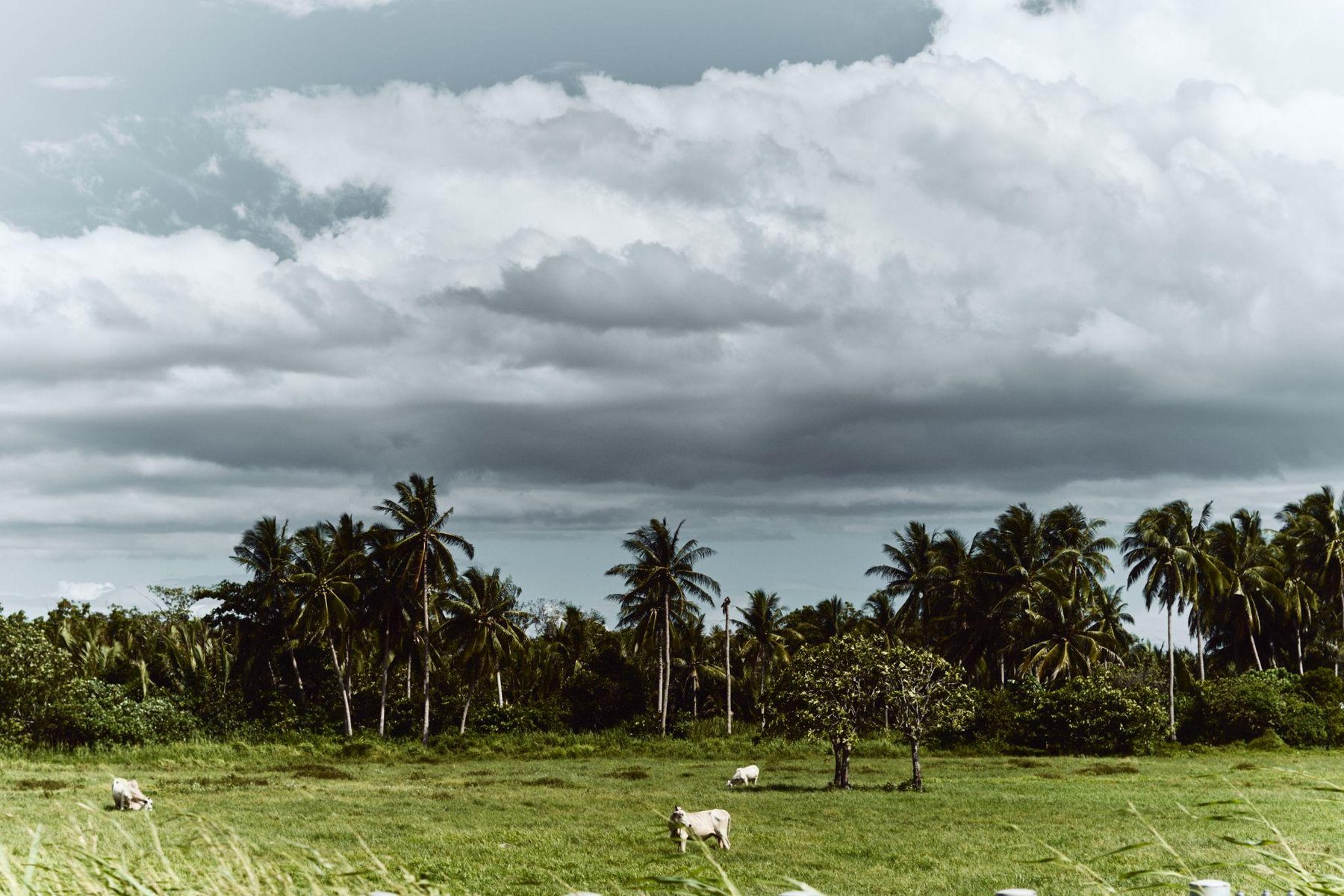
A luxury no one can afford
Back in Gumaca, Alpuerto wonders aloud if it’s worth asking the mayors to financially contribute to power the facility.
But as she works out her next fundraising move, workers like Castillo are left with no choice but to work odd jobs while waiting for the facility to turn on the lights.
When we part ways, Castillo tells us she is still heading to a nearby farm to clear out weeds. We joke that her nails, which are painted red on this day, are too polished for the job. She laughs it off, saying she has to be ready for anything.
“Alam mo naman tayong mga kababaihan, kailangan dumiskarte para sa pamilya,” she says.
[You know us women, we have to find ways to earn more money and support our family.]
Castillo would earn no more than ₱350 from cutting weeds, well below the regional minimum wage. Tomorrow, she has another gig sweeping for a hairdresser.
Meanwhile, in the house by the main road, a seamstress sits at her desk and starts running her machine. She still has a nurse’s uniform to complete—one of a few small orders she has managed to obtain. Ten sacks of loose coconut fiber lie stowed away in her shed, waiting for their second life. As the southwest wind blows, another coconut fruit falls.
Correction: An earlier version of this article incorrectly referred to Jocelyn Bibandor by her maiden surname, ‘Boncacas.’
The rack
Every story in this issue.
 Nº 1 · CoconutsReading now
 Nº 1 · Ukay-ukayOpen →
 Nº 1 · CacaoOpen →
 Nº 1 · E-wasteOpen →
 Nº 1 · SachetsOpen →
 Nº 1 · JeepneysOpen →