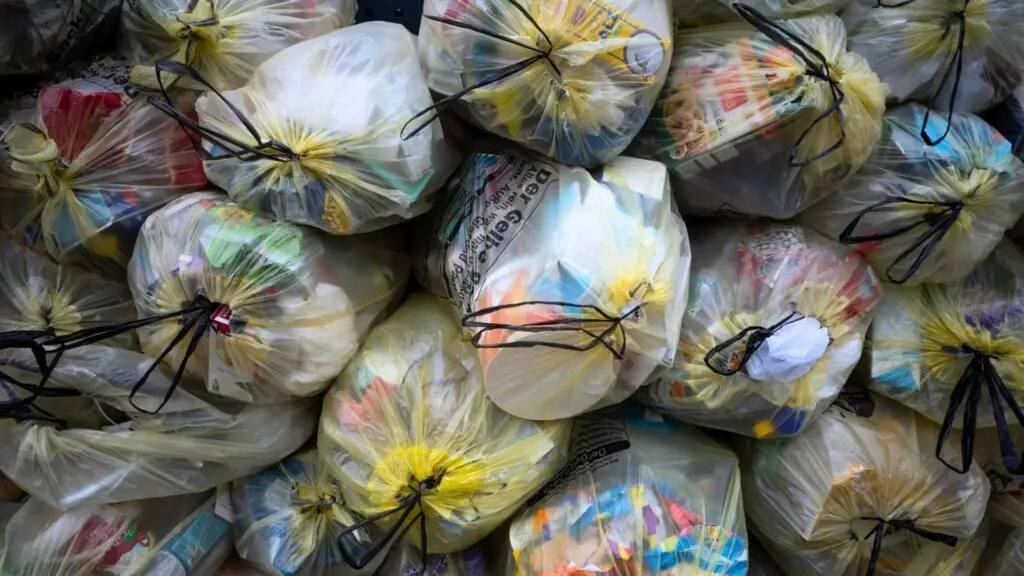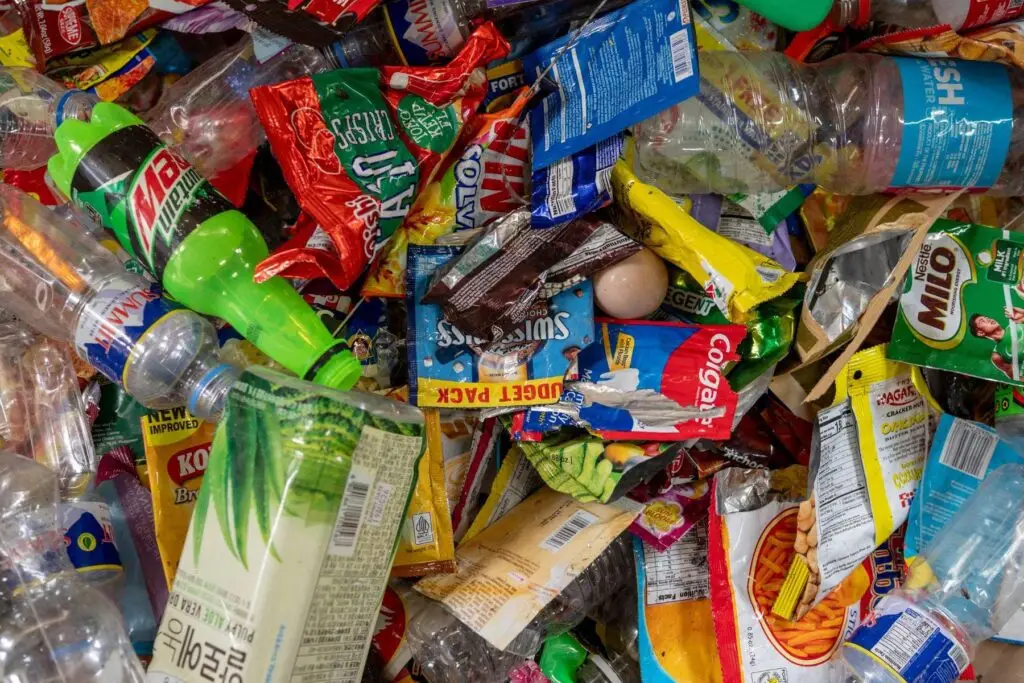


December 12, 2025 · In 1989, Taiwan was in its “Garbage Island” era: overwhelmed by rapid urbanization, industrial growth, and consumer waste, with less than 10% recycled. Open dumping was common, and landfills were overflowing. But fast-forward to the present, and Taiwan’s green-technology industry is actually profitable—it contributed 2 percent of GDP, or approximately NT$15 billion, in 2024.
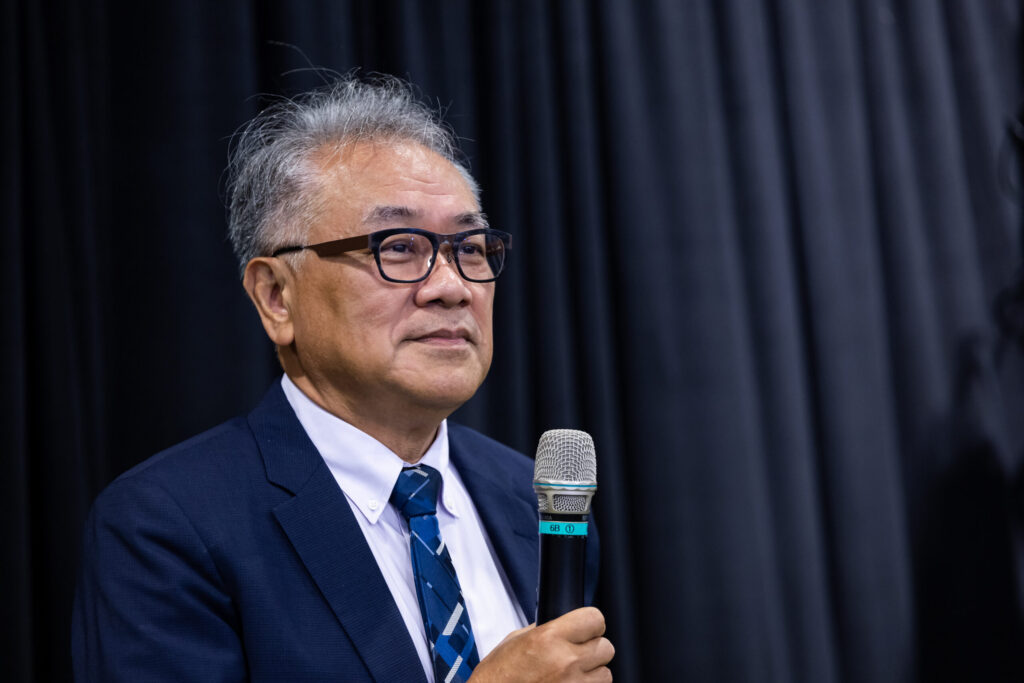
The chairman of Circular Taiwan Network, Charles Huang, considers it his job to persuade others to follow suit.
Huang will talk about the circular economyCircular Design & EconomyCircular economyAn economic model designed to keep materials in continuous use through maintenance, reuse, remanufacturing, and recycling, decoupling economic activity from the consumption of finite resources.Read more in the Glossary → to anyone. As the man who literally wrote the book on Taiwan’s circular journey, he prefaces our conversation by saying, “We were not very different from you.”
Since its founding in 2015, CTN has worked across all layers of society—government agencies, civil society organizations, universities, research institutes, and the media—to accelerate Taiwan’s shift toward a fully circular economy.
In a circular economy, waste is a design flaw—products and materials stay in use for as long as possible and waste is reduced or eliminated entirely at every stage. Garbage and carbon emissions are treated not as an inevitability but a resource problem; a starting point for new value.
Huang believes firmly that the global problem with waste inherently lies in the linear economic model, which creates externalities that cause damage to both people and planet. “A lot of manufacturing creates pollution to the water, the air, and the soil. And who is paying for that?”
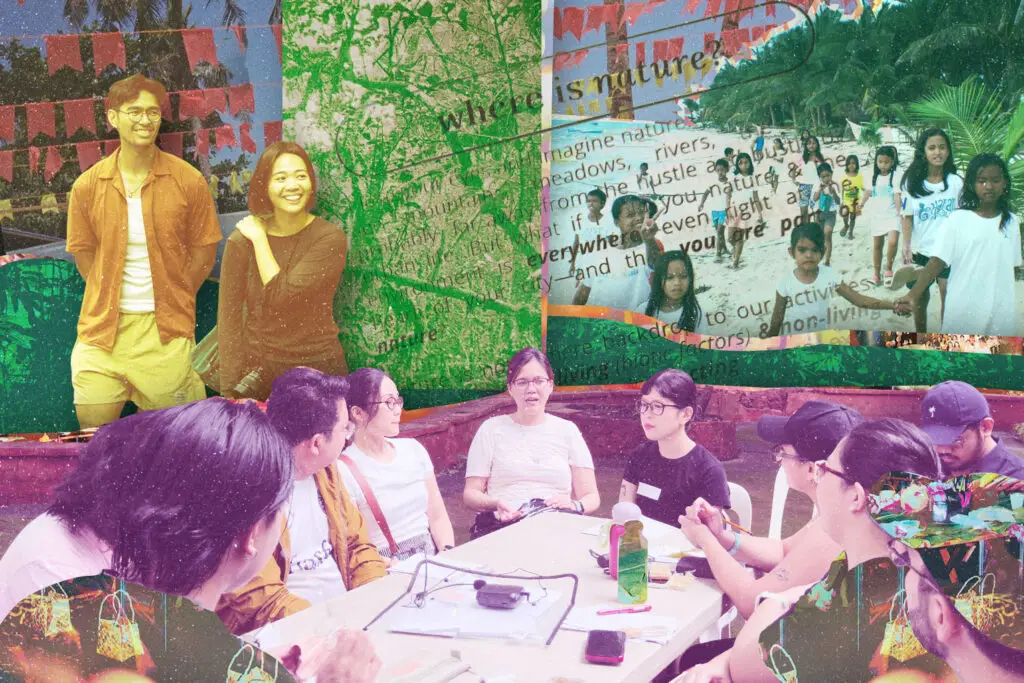
CTN has proposed a framework called “The Circular Trilogy,” which is based on the core principle that good ideas, bolstered by good governance, lead to good business. At the Asia Pacific Circular Economy Roundtable and Hotspot 2025 in Taiwan, Team Sustina sat down with the widely regarded “Godfather of Circularity.”
Sustina: Circular Trilogy. It’s the first time I heard this phrase. Is this a framework by you in the Circular Taiwan Network?
Huang: It started with us. We have been promoting that concept with the government here as well as overseas, using that as a more holistic, systemic sort of roadmap for transition into the circular economy. As I said in the speech today, a lot of the existing circular economy and related policies in the EU and other countries, especially European countries, the UK, and even some NGOs, don’t go far enough.
In the Circular Trilogy, you talk about cross-border circular governance. How can cross-border circular governance be achieved, particularly in Asia, where there are different levels of transparency, legislation, and maturity?
I will answer that question, but remind me. Because your question begs for a more important concept. That is, for countries in the Global South, the circular economy is even more important than in the developed world.
If the Philippines were to remain on the current economic model, it would continue to be exploited by other countries. They want to sell you more product, and they want to buy more product when your price is cheaper. And so, you are also polluting your country.
This is the story of Taiwan over the last 50 years. Yes, we became an “economic power.” However, we actually are the victims of a lot of externalities. A lot of manufacturing creates pollution in the water, the air, and the soil. Who is paying for that? It’s the people who live on this island. Who benefits from that? Maybe the Americans, Japanese, or Europeans who buy from us. This is very similar to what would happen, or what is happening, in the Philippines too.
The current economic model is really about extracting exclusiveness and exclusivity. In other words, one country exploits the other country. So this is the key thing: for countries in the developing world, I tell them this is a great opportunity to “leapfrog” into the circular economy.
How do we leapstart? Let me focus on one key way. One of the things [governments] can do is in political-economic trade. If you think about your country’s trade negotiations today, it’s usually about the removal of trade barriers. Why do you want to remove trade barriers? Removing trade barriers means that countries like the Philippines to sell more products to the US or vice versa.
As a result, both can buy and trade more with each other. But the result is that you have to manufacture more products, which means you will be accelerating your pollution. So, a “successful” trade talk today is not good for both countries.
Trade negotiations should begin to talk about encouraging circular business models rather than accelerating linear business models.
Can I bring us—you said to remind you—back to the question: What does cross-border circular governance look like? For example, in the Philippines, our legislation is very young. Can [circularity] exist with an imperfect government system?
Very difficult. Almost impossible. I should take out “almost.” But it’s not the end of the world.
Of course, in the perfect system, government is first, and then policy and legislation follow. Is there another entry point?
There are many ways you can begin. But when transitioning to something new, it has to begin with a paradigm shift.
I’m sure you have a lot of regulations defining waste. But when you have laws that are on a regulatory basis—stick-driven, penalty-driven—you actually encourage people to dump waste because it doesn’t cost any money. The linear model treats many materials as waste. You have to pay to be processed. If not, you violate the law and are penalized. Everything is a cost.
Based on my experience, it won’t be easy. You journalists have a big role to play. Keep talking about the Circular Trilogy. Make sure it’s a good idea before you pump.
We have a relatively big Filipino delegation today. What message would you like us to take home?
First, understand the problem today. The problem is that the economic model you have today is flawed. Because it is filled with externalities, this is why people suffer.
In 2016, under the Ministry of Economic Affairs, Taiwan set up a Circular Economy Promotion Division. This is something you can do. Somewhere to begin.
Finally, of course, the reason we have this conference is that the Philippines and Taiwan can work together.