


November 24, 2025 · At the heart of IMMA Village in Wanhua District in Taiwan is a large room bathed in warm light, full of broken machines. Long communal tables anchor the space, next to a wall of hand tools, and shelves lined with glass jars and storage baskets filled with mechanical components. The deeper we go, the busier it gets: In one corner sits a pile of miscellaneous electronic refuse—from broken electric fan covers to old DVD players—just beside it, display tables are stacked with newly repaired appliances. It’s hard to tell where one begins and one ends.
But what holds my attention are the people intent on repairing them. A man is intent on fixing a microwave. If not for our guide, I wouldn’t have understood why it was worth such effort, seeing that it had already been thrown in the trash. But it was explained to us that when fully repaired, it would be resold for as much as NT$400 (roughly ₱750).
Later, I learned that workshops are held to teach locals how to repair and resell old appliances, providing jobs to those who otherwise wouldn’t have them.

Located in the basement of a former military retail building, IMMA Village in Taipei’s old Wanhua district is home to over 10 social welfare organizations—all working together to create programs that address local community issues, like collecting leftover food and practicing repair and reuse. To step inside it was to step into a different world. A world where waste did not exist, where every person and item was treated with great value and therefore, not easily discarded.
“At IMMA, everyone is invited to take part and imagine a future that takes care of everyone,” says Huang Fanghui, co-founder of OneCode Village, one of the NGOs that operate within IMMA Village.
Standing inside this repurposed space, I think about how it didn’t look very different from the heritage buildings we had in Manila that have fallen into ruin. If we could repurpose our old buildings and turn them into regenerative spaces, how much waste could we save? More importantly, how many lives could be changed?

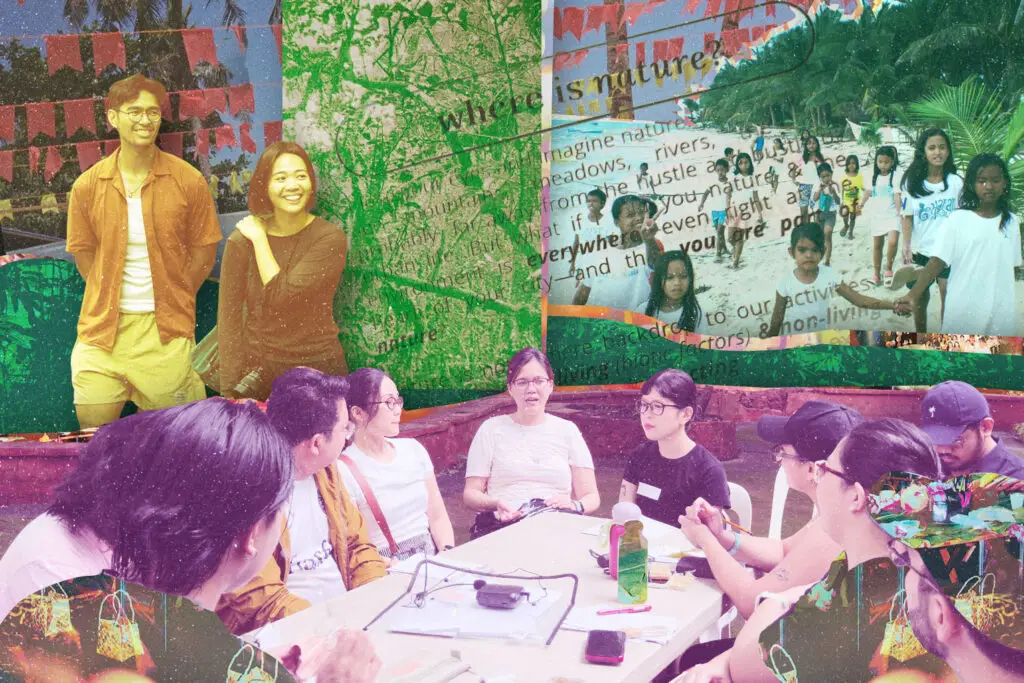
On October 20-23, the Asia-Pacific Circular Economy Roundtable & Hotspot gathered over 500 participants from around the world to push the needle on a regional roadmap towards circularity. The program included a day for site visits to initiatives like IMMA Village, so that we could witness circularity in action.
The central theme behind APCER 2025’s program is that good ideas, combined with good governance, lead to good business. This is what Charles Huang, founder of the Circular Taiwan Network, coined the Circular Trilogy. The premise is that countries must begin to shift from the linear extractive model of take-make-waste to a shared responsibility framework if we want to create a resilient and sustainable economic model for the future.
“One of the good ideas in the Circular Trilogy is about moving away from excessive ownership of product to usage,” Huang told me. “I think that should be universal, especially when resources are becoming more imbalanced.”
In 1989, Taiwan’s solid waste management system was overwhelmed by rapid urbanization, industrial growth, and increased consumer waste, leading to what was widely described as Taiwan’s “Garbage Island” era. Less than 10% of generated municipal waste was recycled, and the majority was disposed of via landfills and open dumping.
But twenty-seven years later, in 2024, Taiwan’s green-technology industry contributed 2 percent of GDP, or approximately NT$15 billion in added value. The industry generated 380,000 new jobs; 100,000 of which belong under the circular economyCircular Design & EconomyCircular economyAn economic model designed to keep materials in continuous use through maintenance, reuse, remanufacturing, and recycling, decoupling economic activity from the consumption of finite resources.Read more in the Glossary → market.
“If you change the law so [waste] becomes a resource, you create an industry where you create jobs,” said Huang. “What’s good is universal. A good idea will create a more sustainable culture.”
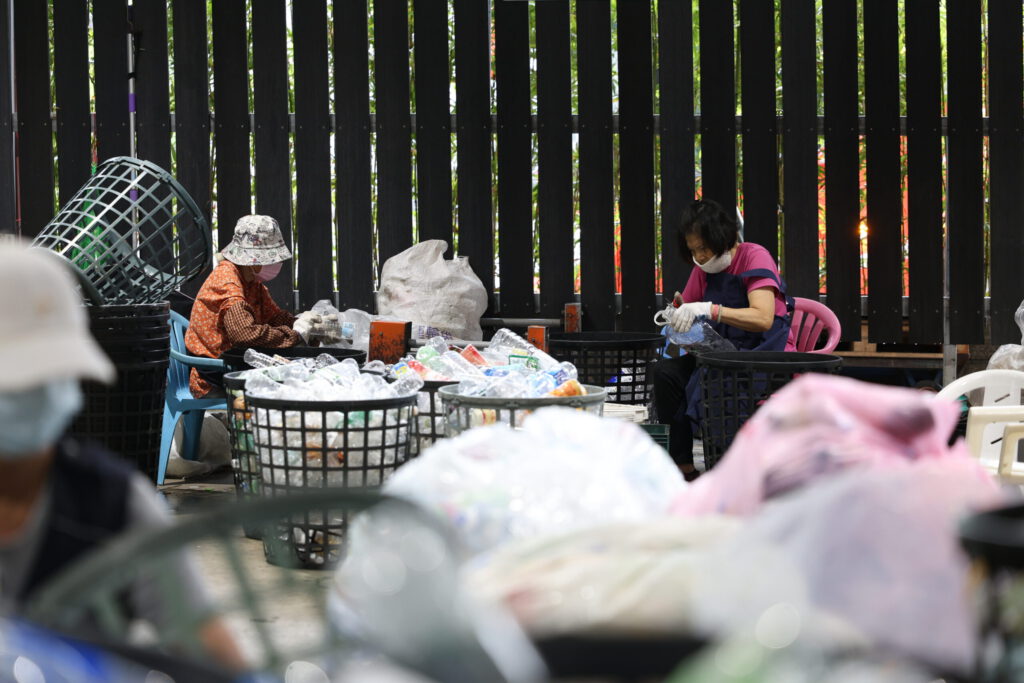
At our next site visit, we watched volunteers at the Tzu Chi Neihu Recycling Center—which ironically stands at a former landfillLocal Climate & EcologySanitary landfill vs open dumpsiteEngineered waste disposal facilities designed with liners and leachate management (sanitary) versus unregulated, uncontained waste piles (open dumps).Read more in the Glossary →—sort through containers of recycled plastics and paper. Most of them, I noticed, were elderly women. Our guide tells us that senior citizens often come and volunteer at the recycling center because it makes them feel like they still have a sense of purpose. “You see, recycling is like a senior care program too,” he said.

Tzu Chi is a global foundation well-known for integrating environmental stewardship and social care. It also operates poverty and disaster relief missions in the Philippines. Its large-scale recycling efforts started in the early 1990s; to date, the foundation has over 9,000 recycling centers and collection points, and around 100,000 volunteers in Taiwan.
About 40% of Tzu Chi’s recycling volunteers are aged 65 or older. In recent years, some centers have even begun working with government agencies to officially double as community care centers for senior citizens.
As of 2025, it is estimated that over 100,000 people are engaged in the informal waste sector in the Philippines, though waste worker groups and partner NGOs believe there are more. And although waste workers are considered essential workers, only 4,000 waste workers (0.04 percent) nationwide reportedly receive annual wages. (On average, a waste picker earns less than ₱85 per hour of labor.) The rest are unrecorded.
While we don’t have any official consolidated data—which speaks to the level of maturity of the circular economy in the Philippines—Carlo Delantar, founder of Circulo and one of the pioneers of circular economy in the Philippines, says we can look to some “useful proxies.”
Based on estimates from the International Labour Organization and the Philippine Statistics Authority, around 7 million Filipinos (or 17 percent of workers) were employed in the broader green sector as early as 2016. UNDP’s 2024 baseline report also highlights that while circularity is gaining traction, the Philippines still needs to systematically track employment tied to circular activities.
When asked if the model of circular economy could help address some of the Philippines’ social issues, Delantar’s answer was a resounding yes.
“Absolutely—provided it’s intentionally designed that way. Circularity can create decent local jobs, formalize and uplift informal waste workers, lower household costs through refill, repair and reuse systems, and improve climate and disaster resilience, especially in vulnerable communities. Because circular systems are inherently local, they can drive community-level development, support MSMEs, and redistribute value that would otherwise be lost in linear, extractive models.”

Marginalized and vulnerable groups more commonly find themselves in the waste economy, especially in countries like the Philippines, where the work is not yet legally formalized. Numerous local case studies have shown that women comprise a large share of the informal waste workforce; and sometimes, even their children are involved. This is particularly alarming when we realize that waste pickers in the Philippines work in precarious conditions and are often exposed to dangerous hazards without proper gear and equipment.
At Tzu Chi, it struck me that the recyclables being sorted were already cleaned. When I ask our guide who cleans them, he says that the public is encouraged to clean their recyclables beforehand. There are guidelines Taiwan’s strong recycling culture is the result of decades of integrated environmental education within schools and communities.
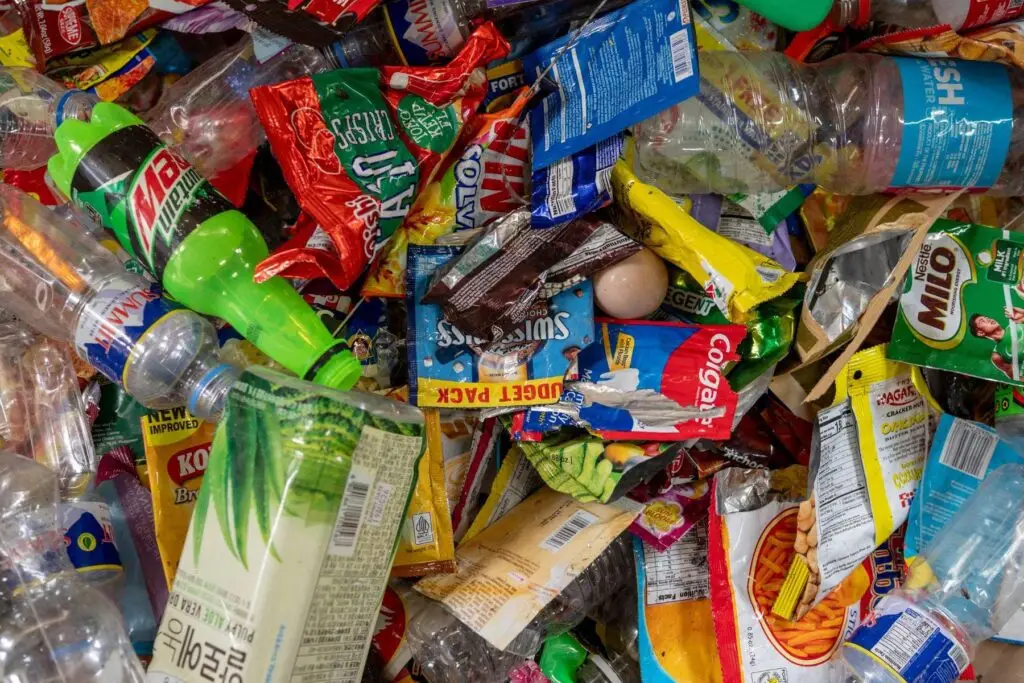
Once the recyclables are sorted at the center, they are delivered to different partner organizations—one of which is social enterpriseCircular Design & EconomySocial enterpriseA revenue-generating business whose primary objective is to solve social or environmental challenges, reinvesting profits into its mission.Read more in the Glossary → Da.ai Technology, which upcycles PET bottles. The bottles, broken down into pure plastic pellets, are then transformed into textile strands that are woven together to create Tzu Chi’s famous compassion blankets. These blankets are sent to people in need, especially to disaster survivors around the world.
On the second day of APCER, I met JK Asturias, a sustainabilityGlobal EssentialsSustainabilitySustainability is the ability to manage and use resources to meet present needs without compromising future generations. It can be examined through environmental, economic, or societal lenses. These are the…Read more in the Glossary → consultant, fellow Filipino, and a survivor of Typhoon Yolanda (internationally known as Haiyan). As I was telling him about my experience at Tzu Chi, he quickly responds: “I know them! Typhoon Yolanda survivors from Tacloban know the name Tzu Chi,” he said.
Like many others, Asturias and his family received a compassion blanket from Tzu Chi during disaster relief operations. “I will never forget the warmth of that blanket—and how, for a moment, it restored dignity and safety to those of us that lost everything in the storm.”
It seemed incredulous to think that plastic bottles diverted from Taiwan’s landfills could reach Filipinos all the way in Tacloban in a big and meaningful way, but that seems to be the magic of a circular mindset.
“It was more useful in its second life. You take something that was built on capitalism and convenience and build it towards restoring safety and dignity to people affected by calamity,” Asturias says. To this day, the blanket is still with him.