
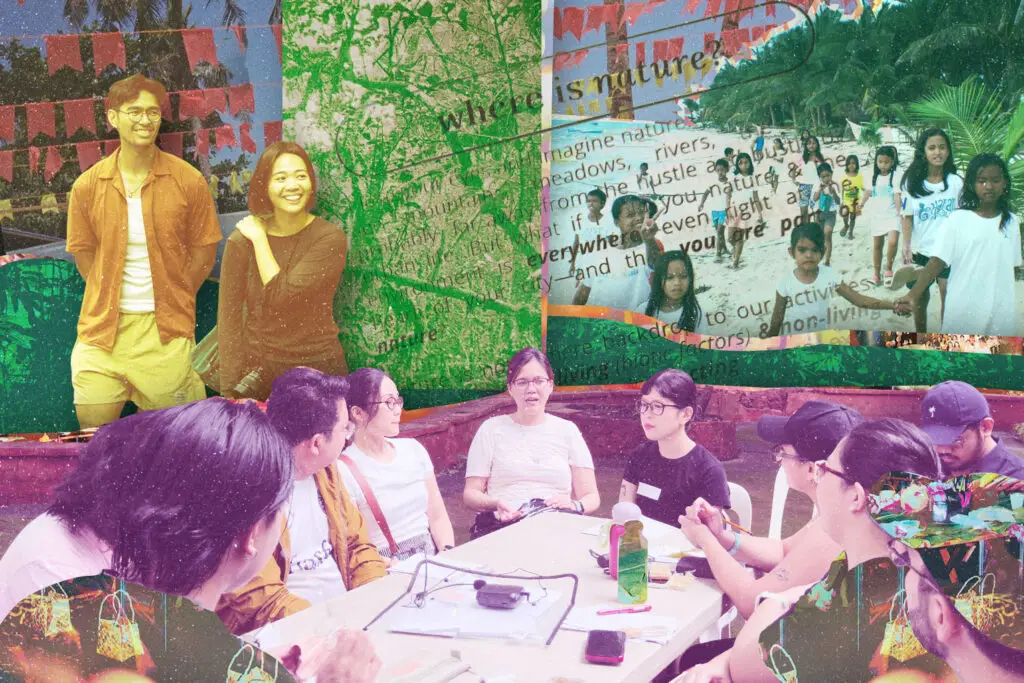





March 3, 2026 · On February 24, over 100 non-state actors across business, finance, knowledge institutions, and civil society organizations gathered at the Asian Institute of Management for the ASEAN Climate Action Dialogue. Here, experts convened to discuss the implementation pathways behind climate adaptation and mitigation strategies in Southeast Asia.
Organized by the Global Compact Network Philippines and the European Chamber of Commerce’s Race to Zero Philippines, the event localized the One United Action Agenda discussed at COP30 into the ASEAN context. It is designed to be the first step that makes this agenda a reality.
“We are no longer just mobilizing commitments, we are mobilizing systems,” said Florian Gottein, Executive Director of the European Chamber of Commerce of the Philippines (ECCP), during his opening address.
ECCP is the official accelerator of the United Nations Framework Convention on Climate Change campaign in the Philippines, serving as a bridge between local solutions and global systems across ASEAN climate initiatives. Too often, existing carbon projects operate in silos, and there is a lack of clear, interoperable systems with sound data. “Our shared goal is to help change them through this dialogue,” said Gottein.
Build legal frameworks, build credibility
“Carbon marketsGlobal EssentialsCarbon markets & carbon creditsTrading systems where verified greenhouse gas emission reductions or removals are commodified, typically representing one metric tonne of CO2 equivalent.Read more in the Glossary → without integrity are worse than no markets at all. They are reputational risks,” said Rep. Jose Alba. “If designed poorly, it invites speculation. If designed carefully, it has the potential of mobilizing transformation.”
In his keynote speech, Rep. Alba discussed three pending legislative bills that will act as safeguards and guidelines to carbon markets in the Philippines. These are the Low Carbon Investment Act (HB 7705), the Carbon Rights Act (HB 10635), and the Green Infrastructure Bill (HB 4888). He stressed the need for clear policies, robust systems, and strong domestic institutions to ensure the integrity and success of ASEAN’s carbon markets. (Read: Notes from the Philippine Decarbonization Forum: ‘Credible climate action requires credible data’)
The urgency of harmonizing legal architectures across ASEAN was repeatedly emphasized in the first panel discussion. With the European Union’s Carbon Border Adjustment Mechanism (CBAM) set to activate in 2026, which puts a tariff on carbon-intensive imports, the region is compelled to take domestic decarbonizationGlobal EssentialsDecarbonizationThe systematic reduction and ultimate elimination of anthropogenic greenhouse gas emissions from an economy or corporate value chain.Read more in the Glossary → efforts more seriously.
“If we are not ready internally, it will be a big challenge for our businesses economically,” said Rep. Alba. “The question is not whether we will survive the next big typhoon, but whether we will survive the next economic challenge related to tariffs.”

On financing, interoperability, and trust
Price disparities remain one of the biggest barriers to a functional carbon market in the ASEAN region. Without common standards and policies guiding the implementation of carbon markets, credits flow wherever prices are lowest, rather than where genuine emission reduction is the greatest.
“Carbon markets only work when buyers trust the credit, when sellers can access finance, and when countries have the system to connect,” said Solar Futures Alliance Director Shaurya Ritwik.
During a panel discussion moderated by Sustina Executive Director Anna Reyes, key speakers emphasized the necessity of blended finance, harmonized carbon registries, and regulatory support to push carbon markets off the ground. Most importantly, speakers emphasized that the system must protect smallholder farmers, who are the backbone of the ASEAN economy.
“If we lose the trust of the communities and the people we want this system to serve—the nature stewards, the frontline defenders—if we [place] standards and financialization and regulatory priorities above the culture and the communities on the ground, and they lose trust in this process, then the whole system loses trust,” said Dr. David Dao, Co-Founder and Chief Scientist of GainForest.
Dr. Ammarind Daraphop, co-founder of Spiro Carbon Group, also highlighted the importance of developing robust verification technologies to safeguard the integrity of carbon markets. “Today, it’s no longer just about counting carbon—it’s about building the digital infrastructure that turns farmers’ sustainability practices into a high integrity, bankable financial asset.”

Moving forward, together
As carbon markets in Southeast Asia move from concept to reality, building capacity for the Philippines is crucial to level the playing field. Dr. Nicole Granz, Climate Action and Disaster Resilience Project Cluster Head at GIZ Philippines and Pacific Island Countries, highly encouraged the plenary to leverage the learning mechanisms already available within the region—including in countries like Singapore, Thailand, and Vietnam—to leapfrog into a system.
“It takes time […] to develop a critical mass of actors on the different stages of the value chain. It’s not only the finance that needs to be made available now, but we also need to overcome the time lag in terms of the capacity building needs that we have,” she said.
“The leadership of non-state actors, businesses, investors, civil society and knowledge institutions are not peripheral. They are central to mobilizing finance, scaling innovation and embedding sustainability across value chains,” closed Maria Luz Javier, Vice Chairperson of Global Compact Network Philippines. “Let us move forward, not as isolated actors, but as a unified force for climate resilience, sustainable development, and a net zeroGlobal EssentialsNet zeroThe state where anthropogenic greenhouse gas emissions are reduced to the absolute minimum, with any residual emissions permanently removed from the atmosphere.Read more in the Glossary → future.”