


December 3, 2025 · On Friday, November 28, mangroveLocal Climate & EcologyMangrovesCoastal wetland ecosystems capable of sequestering massive amounts of blue carbon while buffering coastlines against storm surges.Read more in the Glossary → conservationists, advocates, scientists, and academics gathered online for “Mangrove Ecosystems with Digital and AI Technologies” (MEDIATE), a knowledge-sharing event organized by the tech consultancy firm Thinking Machines, in partnership with Oceanus Conservation and GainForest.
Oceanus Conservation is a science-based nonprofit that focuses on conserving and restoring blue carbonLocal Climate & EcologyBlue carbonCarbon sequestered and stored by coastal and marine ecosystems, primarily mangroves, seagrass meadows, and tidal marshes.Read more in the Glossary → habitats—such as mangroves and seagrassLocal Climate & EcologySeagrass meadowsSubmerged marine flowering plants that provide critical nursery habitats and sequester blue carbon. Often overlooked in favor of mangroves and corals, their preservation is essential for comprehensive coastal ecosystem management.Read more in the Glossary → meadows—in the Philippines, while GainForest is a global nonprofit dedicated to decentralizing nature research and finance to support environmental stewardship projects.
Intending to foster cross-sector collaboration, the session featured a series of lightning talks and breakout sessions among organizations working towards mangrove monitoring, conservation, and restoration. The workshop is part of a larger, ongoing project by Thinking Machines, Oceanus Conservation, and GainForest to strengthen digital monitoring of mangrove ecosystems in Surigao del Sur using AI and machine-learning tools.
Global Green Growth Institute (GGI) Asia Deputy Director Marcel J. Silvius opened the session by stressing the need for flexibility and adaptability in projects that involve both people and nature. “We cannot just work on a blueprint,” he said.

Danna Ang, Remote Sensing Analyst of Thinking Machines, presented the organization’s mangrove monitoring work in the municipalities of Cagwait and Bislig in Surigao del Sur, funded by the Brunei Darussalam-Indonesia-Malaysia-Philippines East ASEAN Growth Area (BIMP-EAGA) and the Republic of Korea Cooperation Fund (BKCF).
Ang highlighted the use of drones for faster survey implementation, smartphones for data collection, and AI for estimating mangrove inventories and measuring seedling survival rates. With support from Oceanus Conservation, local community members collect and validate information on the ground and receive financial compensation from GainForest for their contributions. The data is then processed, visualized, and stored on GainForest’s Green Globe website, where it can easily be accessed for transparency reporting to donors, local governments, and the like.

Meanwhile, establishing baseline data and boosting knowledge transfer among community members were common themes across presentations from academia: Dr. Ariel Blanco from Philippine Space Agency (PhilSA) and University of the Philippines presented the Mangrove Vegetation Index (MVI), which has been cited in over 300 research papers, and maps the extent of mangrove forests using remote-sensing technologies. The map analyzes the changes in Philippine mangrove forests across decades, based on different environmental and climatic variables. Under PhilSA, they are working on an updated version of the 2023 National Mangrove Map.
Professor Dawn Satumbaga from Ateneo de Manila University spoke about The Blue Map project, a publicly available digital database on blue carbon restoration projects in the Philippines. Beyond listing down projects, the map is designed to facilitate funding between implementers and funding institutions.
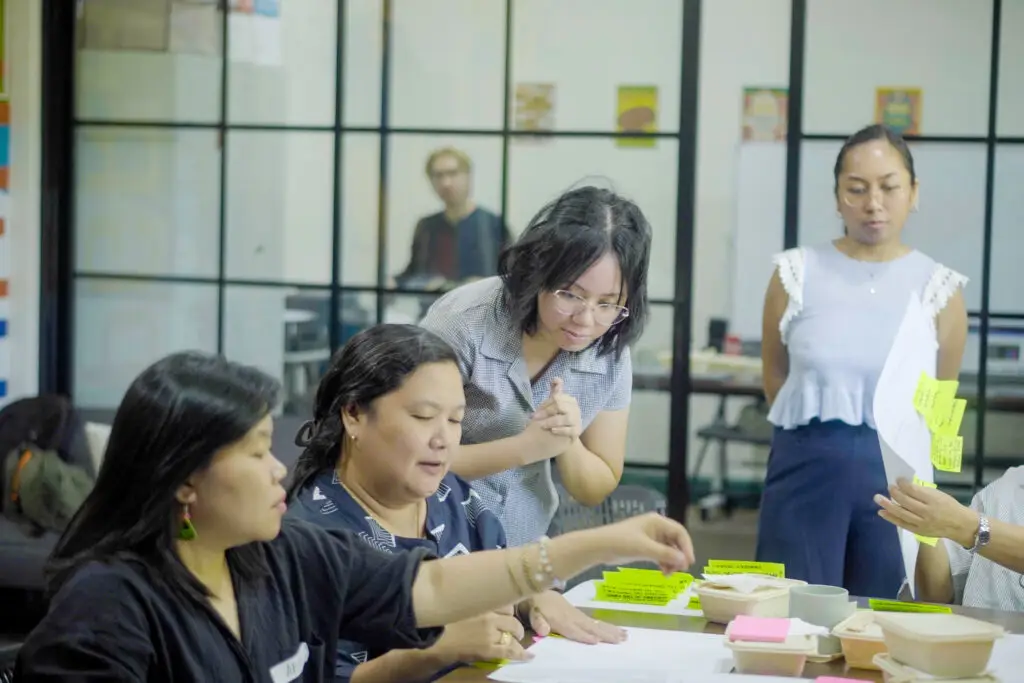
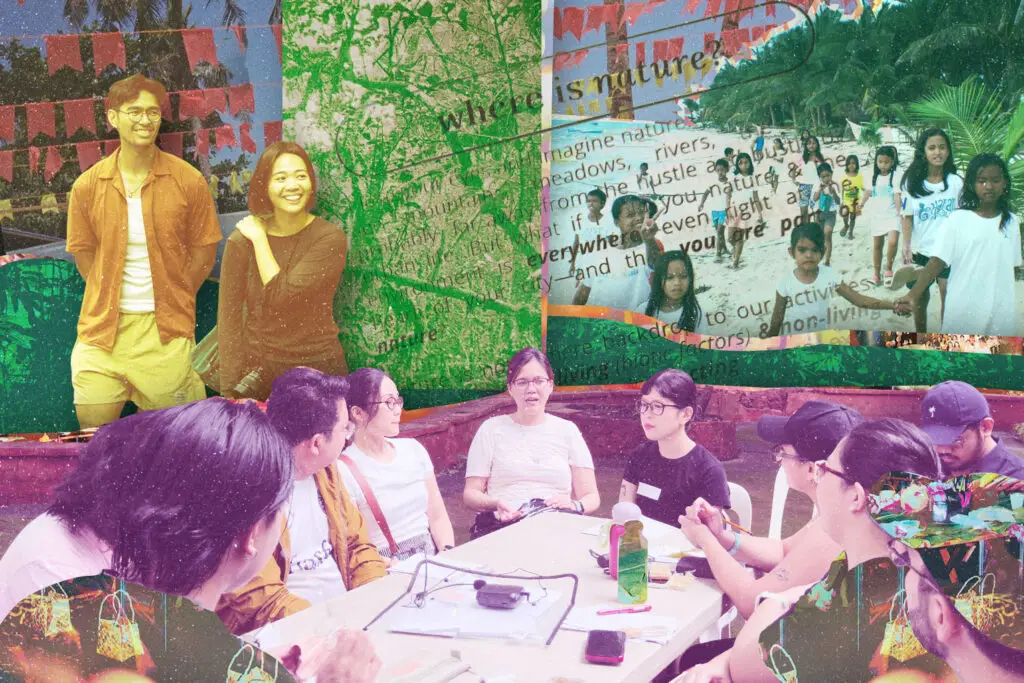
Halfway through the workshop, participants broke into small groups to discuss key insights gathered from the lightning talks, common challenges on the ground, and how they might apply these in their line of work.
It was clear during the synthesis session that increasing data literacy, identifying sustainable funding opportunities, and enhancing technology transfer were necessary gaps to fill to increase the impact in mangrove conservation. Balancing the need to democratize data with who gets to have access was also an important point raised.

The event closed with final remarks from Francis Camille Rivera, founder of blue carbon nonprofit Oceanus Conservation. Energized by the morning’s talks, she took care to emphasize that while technology can strengthen and provide new ways of seeing the ecosystems we aim to protect, it cannot replace work done on the ground.
“Innovation is not just about algorithms, but it’s really about collaboration, co-creation, and making sure communities remain at the heart of every conservation,” Rivera said.
The information and insights from the project will be summarized in a policy note that will be shared with the public once ready.
Dig deeper:
Baloloy et al. (2020). Development and application of a new mangrove vegetation index (MVI) for rapid and accurate mangrove mapping.
Thinking Machines. (2025). AI Applications In Conservation Start With Good, Clean Data.
Oceanus Conservation. (Feb 2025). AI can help us save mangroves. We want to do better, starting with Bislig City.