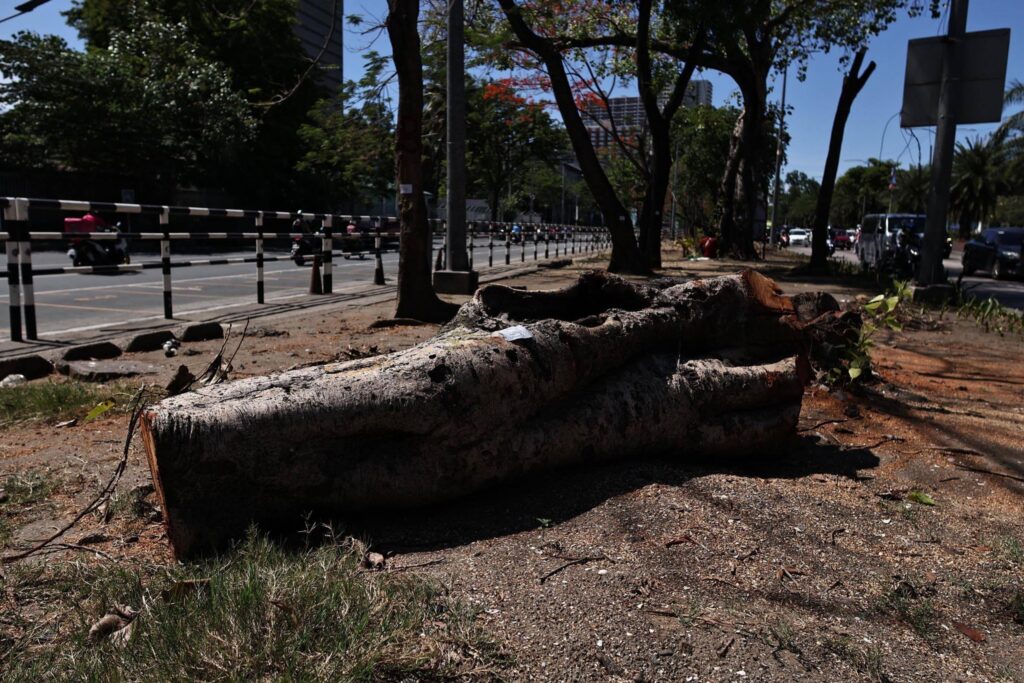



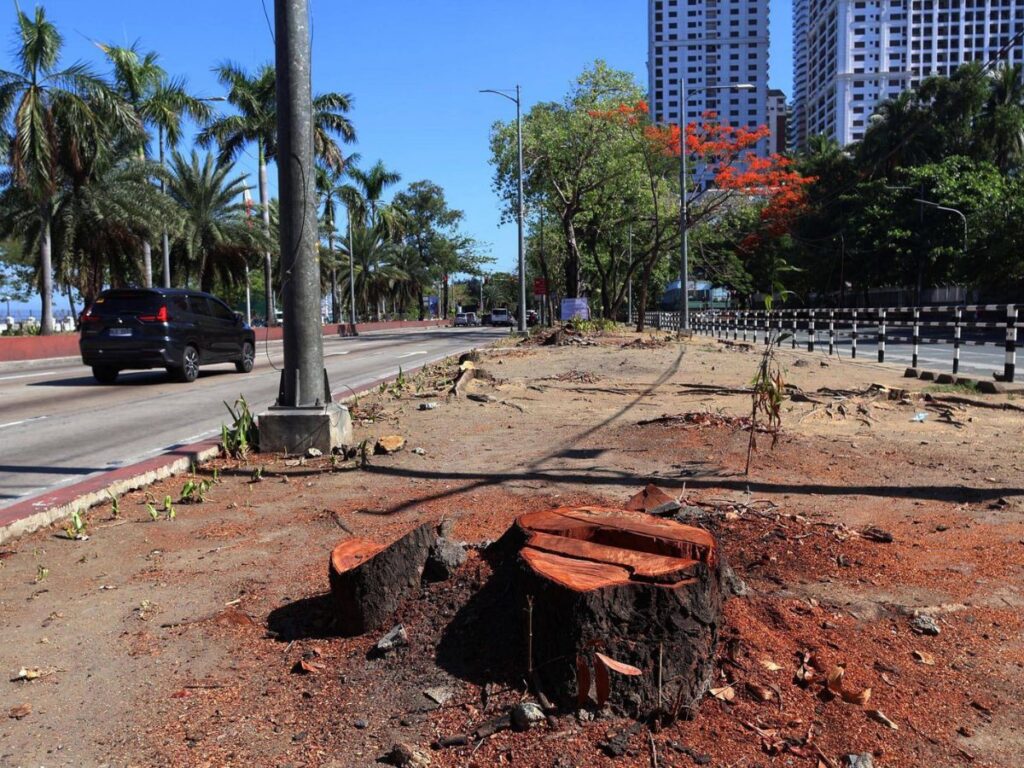
June 5, 2026 · On May 20, the Department of Environment and Natural ResourcesPH Laws & FrameworksDepartment of Environment and Natural Resources (DENR)The Philippine executive department managing forests, protected areas, mining permits, and pollution control. It is the primary regulatory counterparty for environmental compliance, natural capital valuation, and the issuance of permits governing resource extraction and land-use changes.Read more in the Glossary → (DENR) issued a statement in response to the ongoing mass cutting of narra trees around Quirino Avenue to make way for the Southern Access Link Expressway (SALEX) project.
“To offset the trees that were cut, the project proponent is required to undertake large-scale replacement planting within the next planting season as a condition of the permit,” the DENR said in the statement.
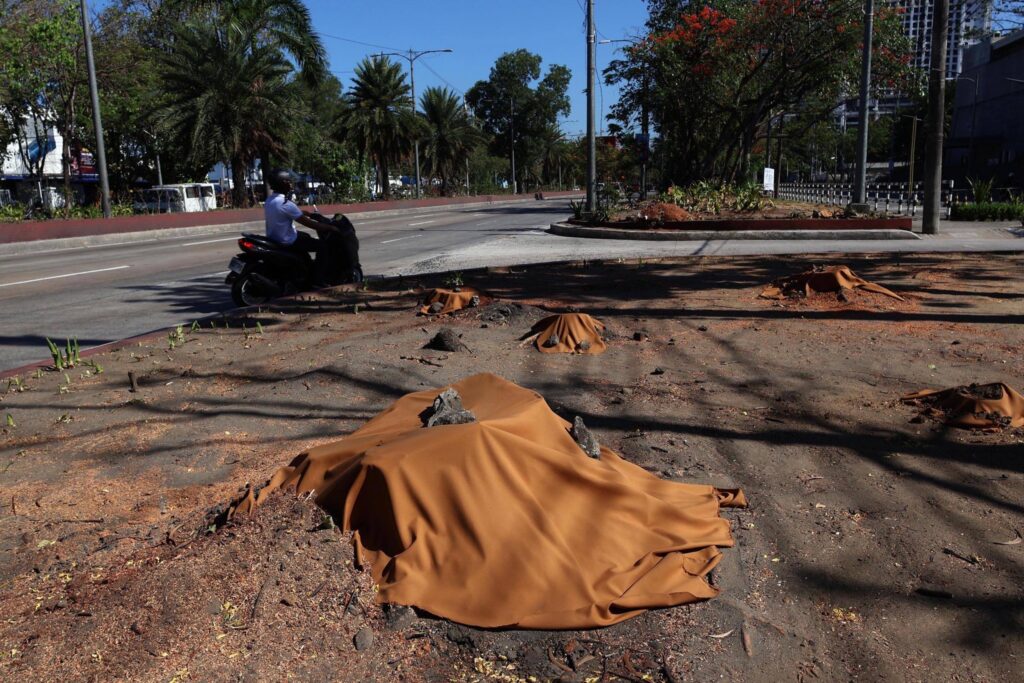
For large-scale infrastructural projects like SALEX, an earthballing permit is issued by the DENR. Earthballing is a common practice in urban forestry and landscaping, wherein young trees are moved by digging out the root system in a circular shape and keeping them in a compact “ball” wrapped in burlap or sack, to protect the roots during transport for when it is replanted.
However, it is also a process that has been criticized by scientists for its ineffectivity, as it poses significant risks and is associated with low survival rates, when trees are subjected to stress-related “transport shocks” which can kill them.
The claim of 100 seedlings for every tree cut
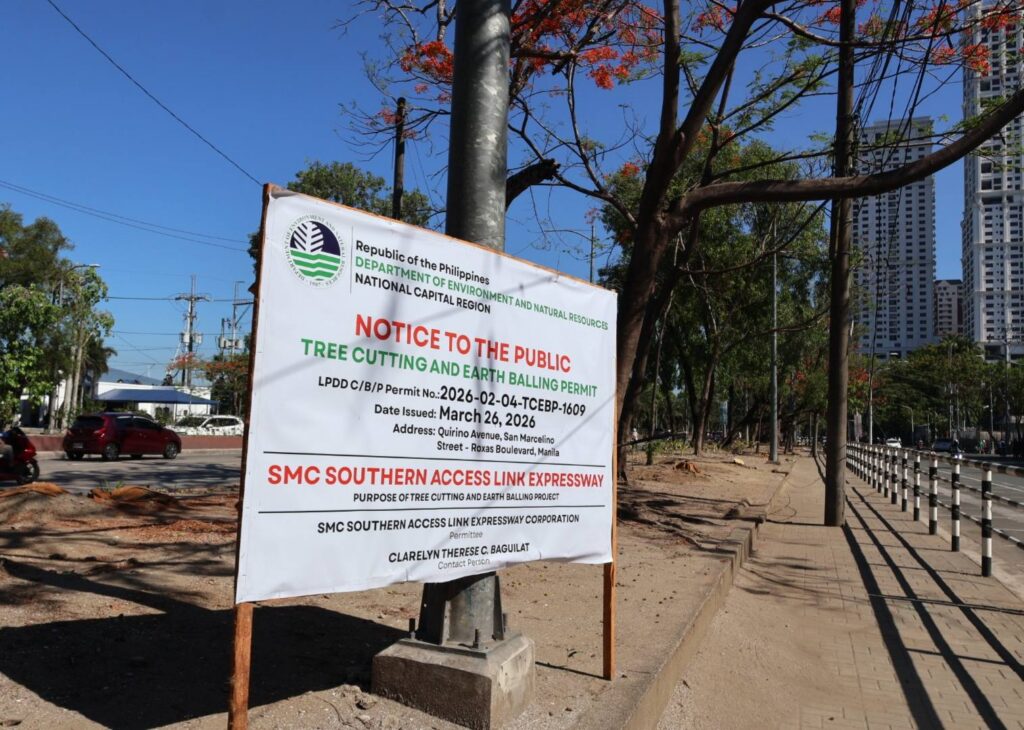
According to the DENR Manila Environmental Management and Protection Division, 225 out of the 617 trees permitted for cutting or earthballing have already been removed for the SALEX project which aims to connect the Skyway to Roxas Boulevard, under the directive of San Miguel Corporation Infrastructure (SMC).
As per the DENR Memorandum on Seedling Replacement Uniform Ratio, 100 indigenous seedlings must be planted for every tree cut. In accordance with this, the permit conditions require that a total of 50,700 seedlings must be planted within the City of Manila.
The provisions by the DENR are in support of their Enhanced National Greening Program, which aims to harmonize initiatives related to large-scale replanting. The DENR claims that since its establishment in 2011, more than 1.8 billion seedlings have been planted across 2.17 million hectares of land in the country. The mortality rate is not available publicly.
Is tree planting to replace felled trees sustainable?
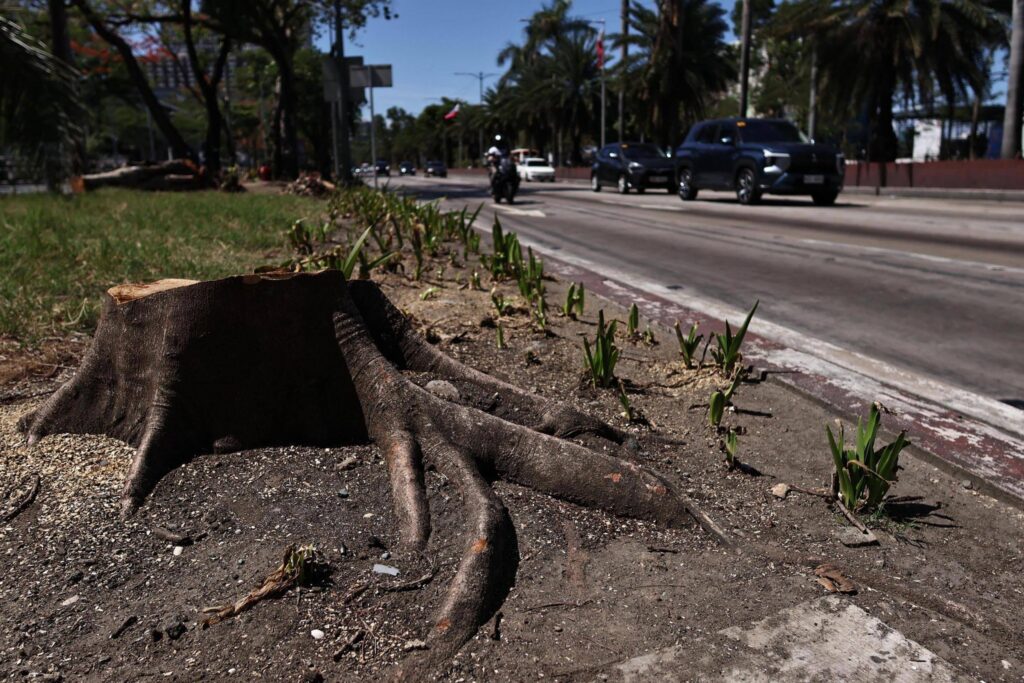
“In the Philippines, when we talk about tree planting activities, if it’s not done well, you’re basically doing something that would not be totally replacing the one you cut,” SustainabilityGlobal EssentialsSustainabilitySustainability is the ability to manage and use resources to meet present needs without compromising future generations. It can be examined through environmental, economic, or societal lenses. These are the…Read more in the Glossary → practitioner Jonas Dumdum of Nomura Research Institute said. “How can we be sure that the majority of the 50,000 seedlings would grow to maturity and really replace the ones that you cut down?”
“Native trees should be the priority, but it has to be properly identified based on the area in which it is planted,” he said, reinforcing the importance of contextualized approaches to ensure long-term survival and success.
For reforestationLocal Climate & EcologyReforestationThe active replanting and ecological restoration of degraded forest lands. In carbon project development, its financial viability depends on long-term survival rates, native species selection, and the prevention of leakage, moving beyond superficial tree-planting metrics to verifiable ecosystem restoration.Read more in the Glossary → or replanting projects to succeed, other vital environmental conditions must be prioritized and evaluated, such as species suitability, soil and hydrological conditions, maintenance plans, survival rates, and long-term monitoring.
As per the DENR’s guidelines, large-scale reseedling or reforestation projects require strict ecological monitoring and evaluation, through employing technical experts, non-government organizations (NGOs), academic institutions, and registered professional foresters.
Dumdum added: “Say a tree would reach, again, for the lack of a better term, adulthood in between about eight to ten years. It means that you need to invest about eight to ten years worth of time, money and resources to ensure that the trees that you were replacing would be more than worth the tree that you cut down. And when you do that, you need to ensure that it would be done by people that are on the ground, that are experts, that are really checking to see if it’s been done right.”
Reseeding or reforestation projects also remain a costly endeavor. Under the DENR’s Forest For Life program for example, each tree is approximated at ₱100.
“It’s better to let them [trees] live longer rather than cutting them down and then planting new ones because even the cost of planting the new ones, if done right, if you think about it, is more expensive.”
The bigger picture
The DENR stated that out of the 617 trees marked for removal, 538 are exotic species. While the DENR emphasized indigenous species and native trees are integral to ecological diversity and biological resilience, environmental and urban mobility groups have warned that the destruction of Metro Manila’s any remaining urban corridors threatens environmental sustainability, public health and public welfare by reducing the city’s capacity to mitigate climate stressors in the city such as as extreme heat and flooding.
According to environmental advocate Jerwin Baure, a PhD student at Sorbonne University studying the impact of warming and increased carbon dioxide emissions on marine organisms: “Mature trees already store substantial carbon and provide large canopy cover, while newly planted seedlings may take years or even decades to approximate these functions, if they survive at all.”
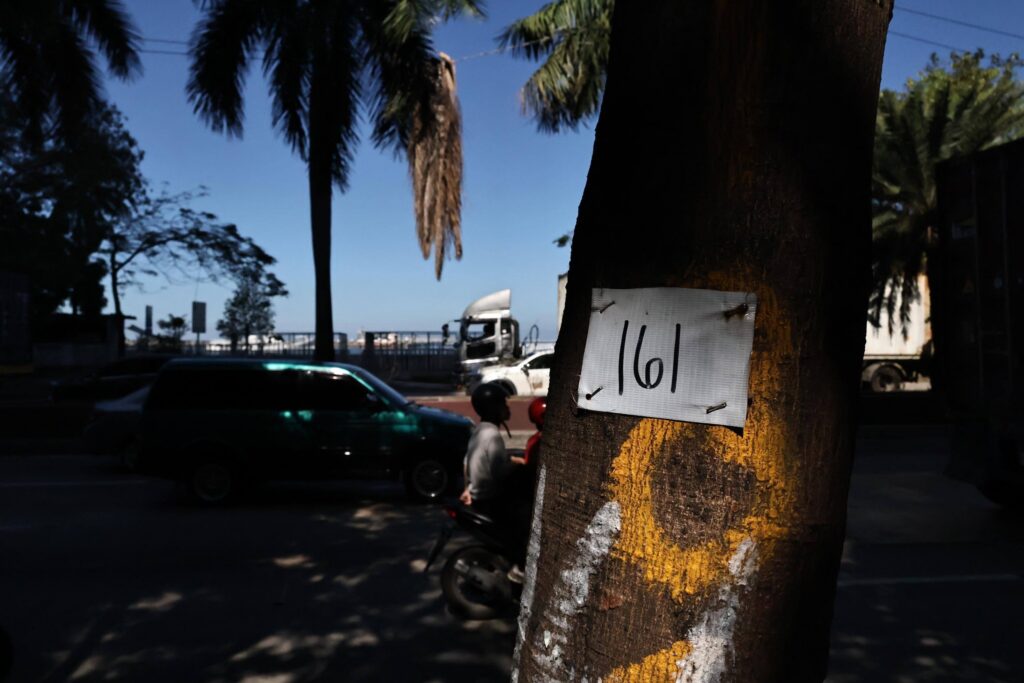
A 50-year-old narra tree was among those felled along Quirino Avenue. The SALEX project has a total concession period of 30 years, according to the issued Toll Operation Certificate, and an average tree planting project generally requires a three-year maintenance and protection period by the DENR.
“Tree-cutting permits in urban heat-risk areas should be subject to stricter technical review, public disclosure, community consultation, and long-term monitoring,” Baure said.
Who monitors the survival of young trees?
As per the DENR Memorandum and permit issued, sites for tree planting must be in coordination with the local government, which raises questions on the results of whether local existing communities or stakeholders were comprehensively consulted. Information on the technicalities of these reseedling projects currently remains limited, with no publicly available information regarding consultation records, long-term replacement, and monitoring plans for the sites. This includes mortality rates, which would indicate how many trees planted survived.
“After you’ve planted the seedlings, who’s going to take care of them after you leave? After you take the photo ops, after you’ve said that you’ve already committed to x thousand number of seedlings for growth, if you just leave them there, guess what? There will be a high possibility that a lot of the ones that you planted will not grow at all, or will die,” said Dumdum.
On May 29, five students filed a temporary environmental protection order (TEPO) against San Miguel Corporation to protest against the tree-cutting, and three of them were present at the clarificatory hearing on June 1. Petitioner Elisha Zantua, a 20-year old student taking up sustainability and environment at university, said in her testimony before the court: “For us many Filipino youth, we are the ones who will be facing [the problem] if we continue to allow the cutting of trees.”
As of June 2, the cutting of trees by SMC for the 40.62-kilometer SALEX project has voluntarily stopped. According to the DENR, replacement and transplantation activities across Manila are set to begin this June, with the following identified sites: Mehan Garden, Plaza Dilao, Manila Boys Town complex, Taft Avenue, Rizal Avenue and Roxas Boulevard.
Sustina reached out to DENR to request for information on how they monitor replanting activities. They have yet to respond as of publishing.